
Compliance Challenges in Crypto Exchange Development
How Business Owners Can Overcome Them

The cryptocurrency industry continues to expand as more businesses invest in digital asset trading platforms.
While launching a crypto exchange offers huge growth opportunities, it also comes with several compliance responsibilities.
Business owners must deal with changing regulations, KYC and AML requirements, data security standards, and licensing rules to operate legally and build user trust.
Understanding these challenges early can help businesses create a secure and regulation ready crypto exchange platform.
Let’s understand the key challenges first.
Compliance Challenges Faced by Crypto Exchange Owners
Crypto regulations continue to grow across different countries, and exchange owners face several compliance related challenges that can directly impact business growth and operational stability.
Constantly Changing Global Regulations
What works in one country may be restricted in another, this makes global expansion tricky.
KYC and AML Implementation Challenges
Exchanges must verify customer identities and monitor transactions to prevent money laundering and fraud. Managing KYC and AML processes efficiently can be challenging as user activity grows.
Data Privacy and Cybersecurity Regulations
Crypto exchanges must comply with data protection laws like GDPR while ensuring strong cybersecurity measures to safeguard user information and digital assets.
Licensing and Registration Complexities
Obtaining crypto exchange licenses involves meeting different legal requirements in each jurisdiction. The process can be time-consuming and complex for global businesses.
Transaction Monitoring and Reporting
Regulators require exchanges to track suspicious transactions and submit compliance reports. Without proper monitoring systems, maintaining regulatory compliance becomes difficult.
How Entrepreneurs Overcome Compliance Challenges in Crypto Exchange Development
Building a compliant crypto exchange becomes much easier when you follow the right approach from the start. Instead of reacting to regulations later, business owners should plan compliance into the core of their platform.
Choose the Right Jurisdiction for Exchange Registration
- Selecting the right location to set up your exchange is a key step. Different regions have different rules, approval processes, and tax systems for digital assets.
- Some offer clearer guidelines and smoother licensing, while others are more restrictive.
- Picking a supportive environment reduces legal uncertainty and helps operations run more efficiently from the start.
Integrate Advanced KYC/AML Solutions
- Identity checks and transaction safety measures are essential for any exchange.
- Modern tools using AI can quickly verify users, detect unusual activity, and flag risks in real time.
- This reduces manual effort, improves accuracy, and allows the platform to handle growth without compromising security checks.
Work with Legal and Compliance Experts
- Regulations in the crypto space are not static, so expert guidance is important.
- Professionals in blockchain law help interpret requirements, manage documentation, and avoid regulatory gaps.
- Periodic reviews of internal processes also ensure the platform continues to meet current obligations as it expands.
Build a Compliance First Crypto Exchange Architecture
- Regulatory readiness should be part of the system design itself.
- A well-planned structure includes secure data handling, detailed activity logs, and transparent recordkeeping.
- This setup makes it easier to track operations, meet audit requests, and maintain credibility with users and authorities.
Stay Updated with Regulatory Changes
- Rules in this industry evolve regularly, so staying informed is necessary.
- Monitoring official updates and industry sources helps businesses adjust quickly.
- Engaging with professional networks also provides early insights into upcoming shifts, reducing the risk of non compliance.
Essential Compliance Features Every Crypto Exchange Should Have
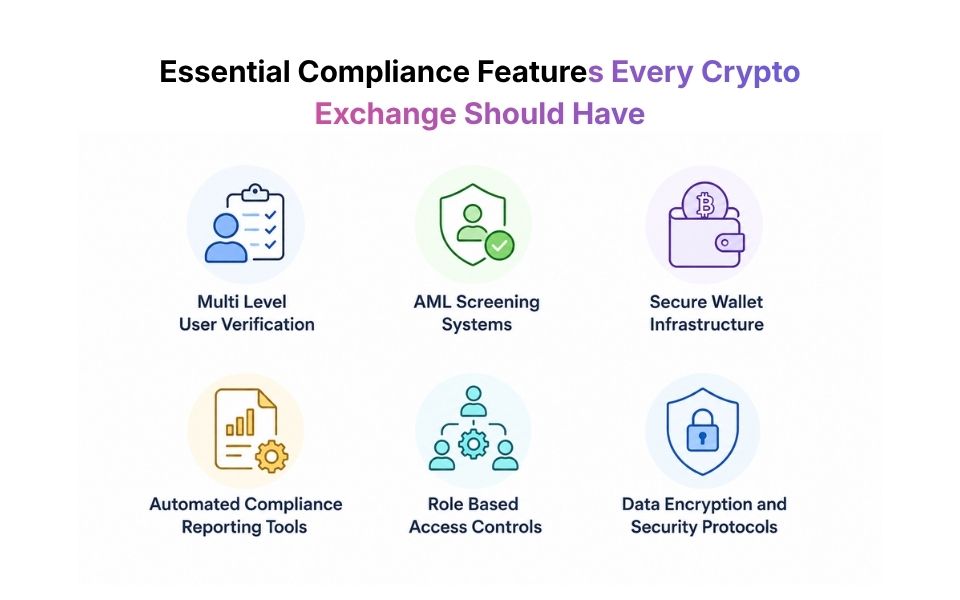
Multi Level User Verification
A strong verification system helps confirm user identities at different stages. This usually includes basic sign up checks, document verification, and additional screening for high value accounts. It reduces fraud risk and ensures only genuine users have access to the platform.
AML Screening Systems
Anti Money Laundering systems help detect and prevent suspicious financial activity. These tools monitor transactions in real time, flag unusual behavior, and support regulatory requirements by identifying high-risk patterns early.
Secure Wallet Infrastructure
A safe wallet system is essential for protecting user funds. This includes cold and hot wallet separation, secure key management, and regular security audits to reduce exposure to hacking attempts.
Automated Compliance Reporting Tools
These tools simplify the process of generating regulatory reports. Instead of manual tracking, the system automatically records transactions and creates reports required by authorities, saving time and reducing errors.
Role Based Access Controls
This feature ensures that only authorized team members can access sensitive system functions. Different access levels help prevent misuse and improve internal security management.
Data Encryption and Security Protocols
Encryption protects sensitive user and transaction data from unauthorized access. Strong security protocols ensure information remains safe during storage and transmission, reducing the risk of data breaches.
To Conclude
Building a crypto exchange is not just about technology, it is equally about meeting regulatory expectations. From identity verification and transaction monitoring to secure system design and reporting, compliance plays a central role in long-term success.
Entrepreneurs who plan for these requirements early can reduce risks, avoid penalties, and create a more trusted and scalable trading platform.
About the Creator
Augustin
Sharing easy-to-follow content about trading platforms, trading tech, modern fintech and blockchain development.
Enjoyed the story? Support the Creator.
Subscribe for free to receive all their stories in your feed.
Comments
There are no comments for this story
Be the first to respond and start the conversation.