
Cheapest Crypto Prop Firm; Lowest Fee Can Cost More
Why the Cheapest Crypto Prop Firm Isn’t Always the Most Cost Effective Option

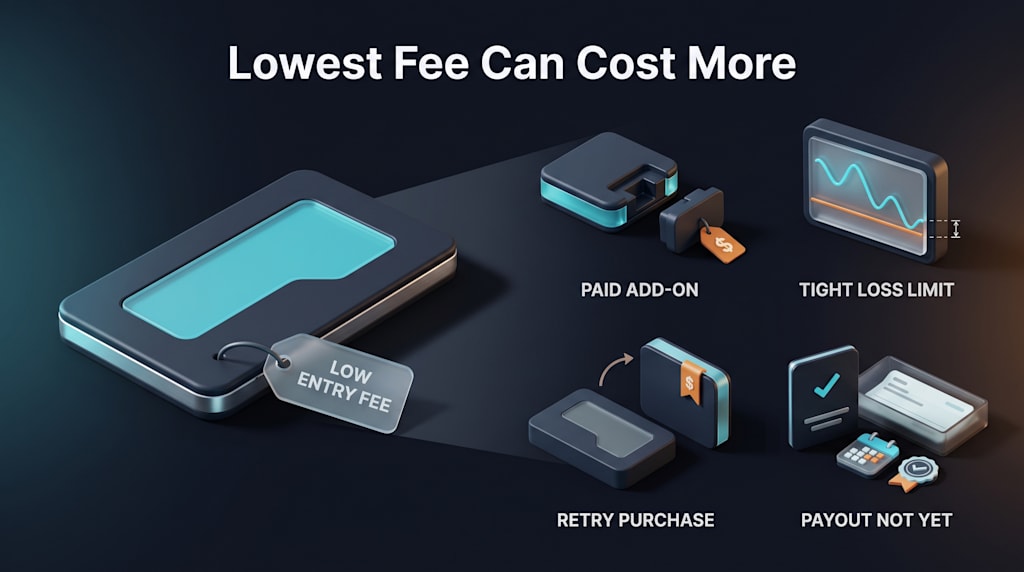
Imagine buying the least expensive crypto trading challenge you can find. The checkout price fits your budget, the advertised account looks substantial, and the rules seem manageable.
Then the details begin to matter. An optional feature turns out to be necessary for your strategy. The loss limit leaves less room than you expected. A failed attempt requires another purchase. Passing the challenge still does not make you immediately eligible for a withdrawal.
The original price has not changed. What changed is your understanding of what it buys.
Searching for the cheapest crypto prop firm therefore requires more than sorting prices from low to high. It means separating the cost of entering a program from the cost of remaining eligible to use it, and eventually receiving a payout.
What Is the Cheapest Crypto Prop Firm?
There is no universally cheapest crypto prop firm. The answer depends on the account size, funding model, mandatory charges, and definition of cheapest. The lowest advertised fee identifies the cheapest entry among comparable offers, but it does not establish the lowest total cost or the best fit for a trading strategy.
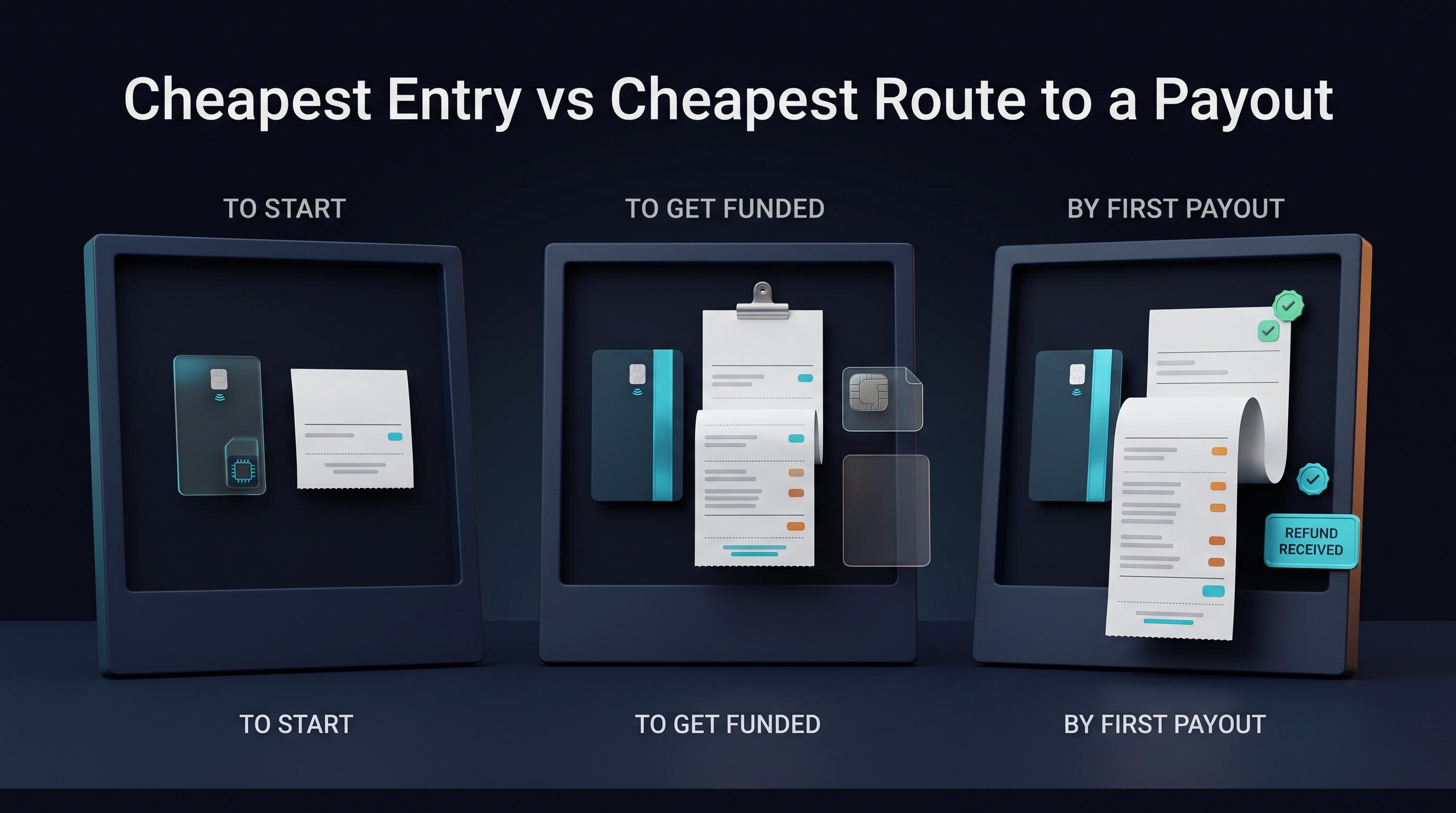
Cheapest Entry vs Cheapest Route to a Payout
Three different questions sit behind the same search:
What is the smallest payment required to begin?
What must I pay before receiving funded stage access?
What have I actually spent by the time I receive my first payout?
Those answers may point to different programs.
A low priced challenge might involve additional purchases if an account is breached. A higher priced plan might include features that another provider sells separately. A refundable evaluation fee only reduces your final net cost if you satisfy the refund conditions and receive the money.
This article explains how to compare those costs. It does not rank current providers or identify a market wide price winner.
Compare Programs, Not Just Firm Names
A firm can offer several products with different prices and rules. Its cheapest promotion may not represent its standard one step challenge or its instant funding account. The meaningful comparison unit is the specific program at a specific account size.
Before comparing two offers, record the model, account size, standard price, included features, and date of verification. Keep temporary discounts separate. Otherwise, a short lived promotion can make a structurally expensive product appear permanently cheap.
What Does a Cheap Crypto Prop Firm Actually Cost?
The full cost can include the purchase fee, mandatory extras, repeat purchases, ongoing account charges, trading costs, and withdrawal expenses. Not every program applies every charge. The task is to identify which costs are unavoidable for the exact plan and trading method you intend to use.
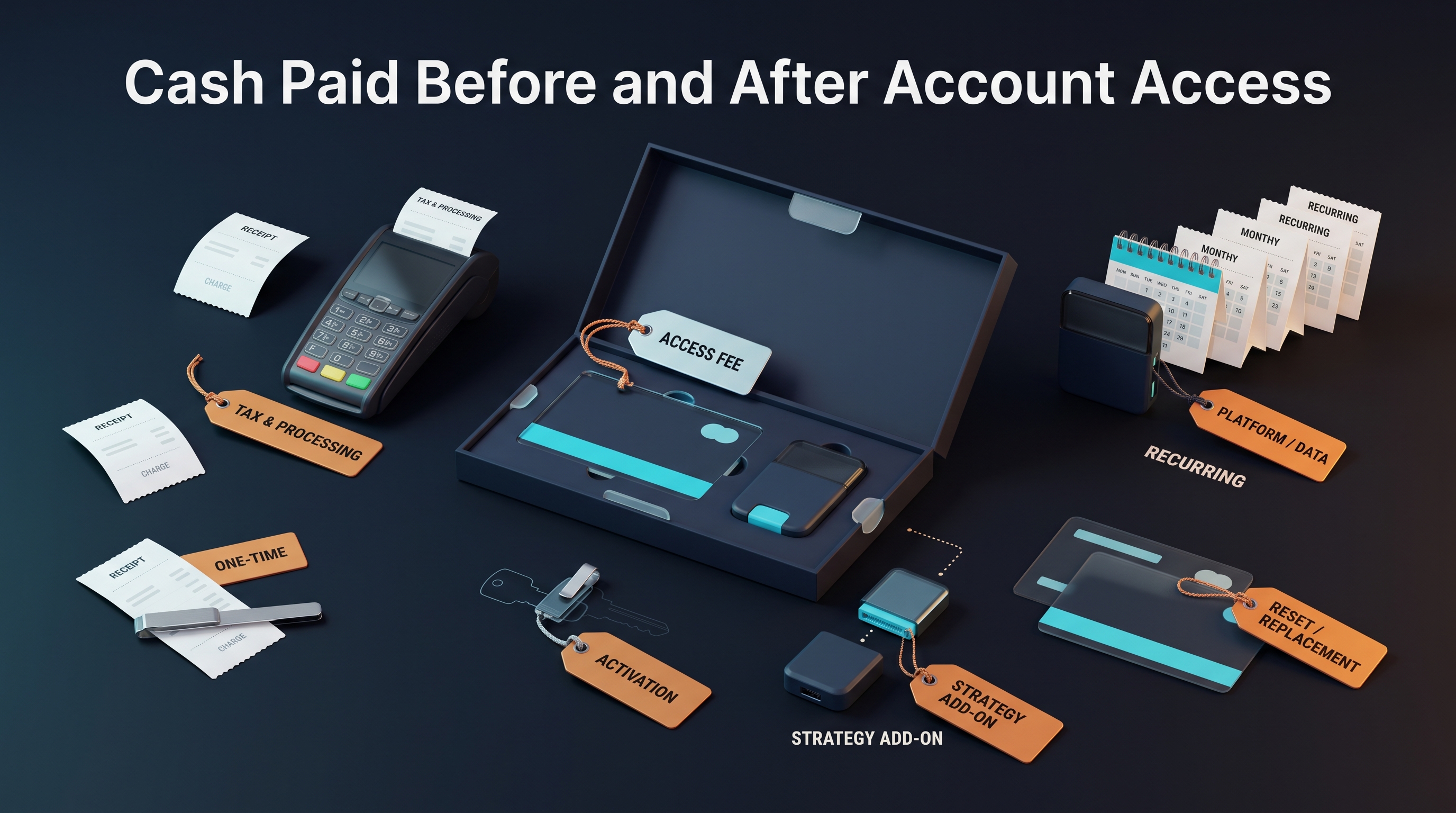
Cash Paid Before and After Account Access
Start with charges that require a direct payment:
Evaluation or instant access fee
Applicable taxes and payment processing charges
Required platform or data subscriptions
Activation fees, if charged
Add-ons needed for the intended strategy
Reset or replacement account purchases
An optional add on is not a universal mandatory cost. But if your strategy depends on the permission it provides, include it in your comparison. Also distinguish one time charges from recurring ones. An inexpensive monthly subscription and an inexpensive one time purchase are not equivalent.
Trading Costs That Affect Account Performance
Commissions, spreads, slippage, and applicable holding charges affect trading results rather than necessarily appearing as separate checkout payments.
That distinction matters in an evaluation. Execution costs can reduce progress toward a profit target and consume available drawdown room.
Ask how commission is charged, whether quoted rates apply per side or per completed trade, and what happens when a position remains open overnight. Do not assume that “swap free” means every possible holding cost is absent.
Profit Splits Are Not Purchase Fees
A profit split determines how much eligible profit the trader receives. It should not be added to the challenge fee as though it were another upfront payment.
However, it matters when considering cost recovery. A trader’s share of an approved payout must be sufficient to cover previously paid program expenses before those expenses have been recovered.
Keep these categories separate: cash paid to participate, costs affecting trading results, and the share of profit received.
Cheapest One Step Crypto Prop Firm Challenges
A one step crypto prop challenge uses a single evaluation phase before funded stage eligibility. To compare inexpensive one step programs, examine the entry fee alongside the profit target, daily loss limit, maximum drawdown, measurement method, and post pass conditions. One phase describes the structure; it does not establish the difficulty or total cost.
Read the Target and Loss Limits Together
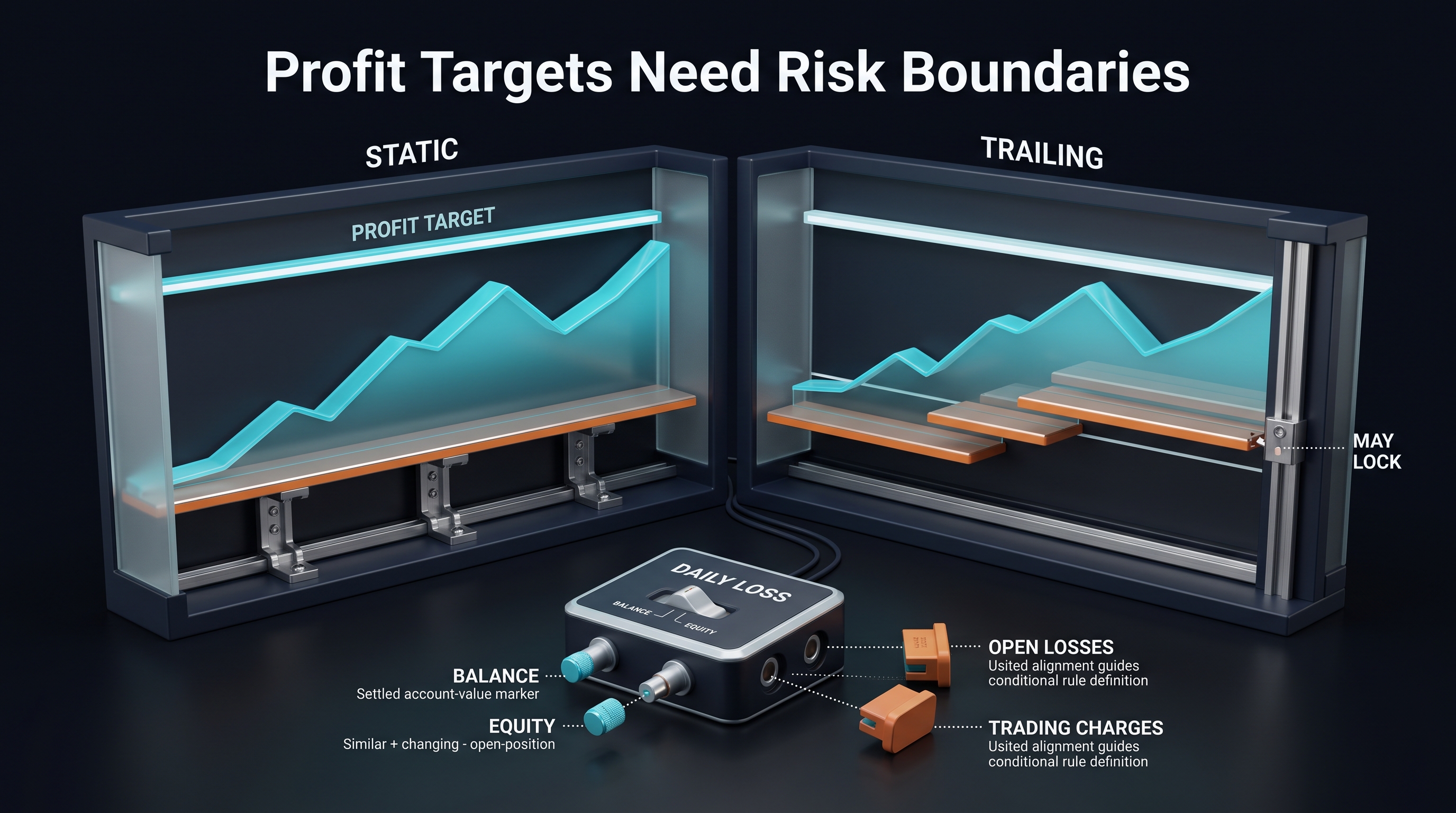
A profit target tells you what must be achieved. The drawdown rules define the boundaries within which you must achieve it. Neither number is useful in isolation.
Check whether maximum drawdown is static or trailing. A static threshold stays anchored to a defined reference. A trailing threshold moves according to the program’s rules and may eventually stop moving. The exact mechanism matters more than the label.
Then check whether daily loss uses balance, equity, or another specified calculation, and whether open losses and trading charges count.
Does One Step Mean Fewer Expenses?
Removing a second evaluation phase does not automatically reduce the amount a trader spends.
The total depends partly on what happens after an unsuccessful attempt. Is there a reset option? Must a new challenge be purchased? Does a promotional price remain available for the next purchase?
Passing also deserves its own cost check. Confirm whether funded access requires activation, a new subscription, identity verification, or acceptance of different trading conditions.
Compare the Funded Rules Before Buying
Do not stop reading at the evaluation requirements. A strategy that fits the challenge may face different conditions after passing. Check funded stage drawdown, permitted instruments, position limits, consistency requirements, and payout eligibility. The useful question is not simply, “Can this strategy pass?” It is, “Can this strategy operate under both stages without being rebuilt?”
Cheapest Instant Funding Crypto Prop Firms
Instant funding generally removes the preliminary evaluation challenge, but the exact meaning depends on the provider. It does not necessarily mean immediate withdrawal, unrestricted trading, or a live account. Compare the purchase price with the funded stage loss rules, account environment, and conditions that must be met before a payout.
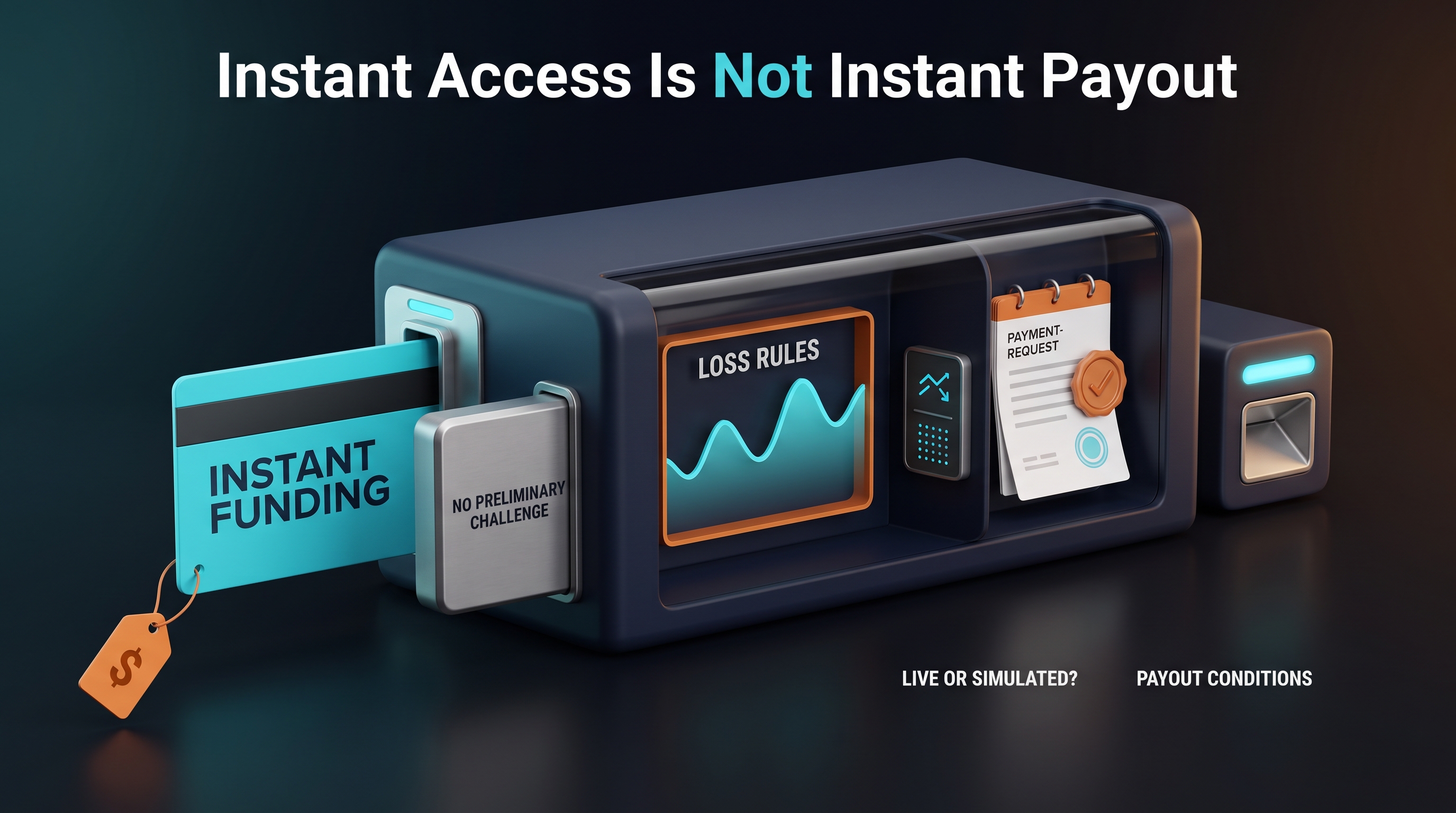
What Does Instant Actually Describe?
Separate three events:
Receiving account credentials
Being permitted to trade
Becoming eligible to request a withdrawal
A program may provide the first two quickly while attaching further requirements to the third.
Read the product terms rather than interpreting “instant” as a promise about the entire process.
Check What Must Happen Before Withdrawal
Look for:
Minimum qualifying trading days
Minimum payout amounts
Waiting periods or payout windows
Consistency requirements
Any profit or buffer requirement
Identity and compliance checks
A consistency rule may limit how much one profitable day can contribute to eligible results. Its exact formula and consequences need to be understood before trading.
These conditions can change the practical value of an inexpensive account even when they do not create an additional invoice.
Compare Instant Accounts Separately First
An instant account and a one step evaluation can offer similar advertised balances while providing different access and restrictions.
First compare instant programs with other instant programs at the same account size. Then compare funding models separately.
This prevents a low priced evaluation from being treated as an equivalent substitute for immediate trading access, or an instant product from being called better simply because it removes an evaluation.
Lowest Cost vs Best Value Crypto Prop Firms
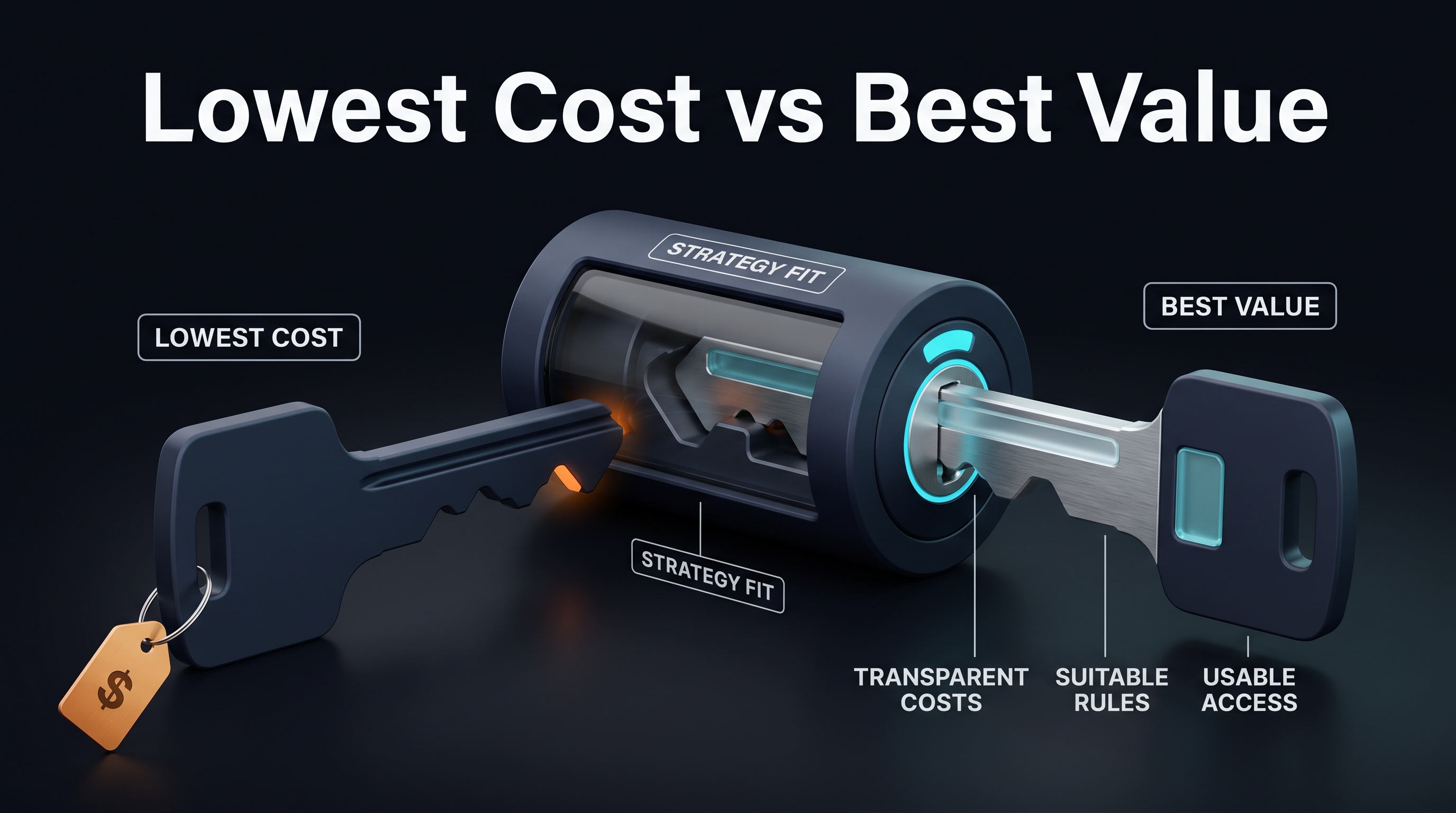
Lowest cost means the smallest expense under a clearly stated comparison. Best value means a useful combination of transparent costs, suitable rules, and usable account access. Neither guarantees profitability. An inexpensive program can be poor value if its restrictions conflict with the strategy intended to use it.
Account Size Is Not the Same as Loss Capacity
A large advertised balance can distract from a much smaller permitted loss.
That balance may represent simulated buying power rather than money the trader owns or can withdraw. The operational limit is determined by the contract, drawdown rules, daily loss calculation, and position restrictions.
A useful supplementary measure is the fee relative to the initial permitted loss allowance, not only relative to the advertised account size.
But this is not a complete ranking method. Two accounts with similar initial allowances may behave differently because one uses trailing drawdown or a tighter daily limit.
Value Depends on Trading Style
For a frequent intraday trader, execution costs and trading restrictions deserve close attention.
For a swing trader, overnight charges, weekend permissions, and the treatment of open equity may matter more.
For someone testing an unproven strategy, the relevant decision may be whether to purchase an evaluation at all. A free practice environment can reveal rule incompatibility without requiring repeated paid attempts.
Best value is not the program with the most impressive headline. It is the program whose cost and constraints can be understood before payment.
Crypto Specific Rules That Can Make a Cheap Account Expensive
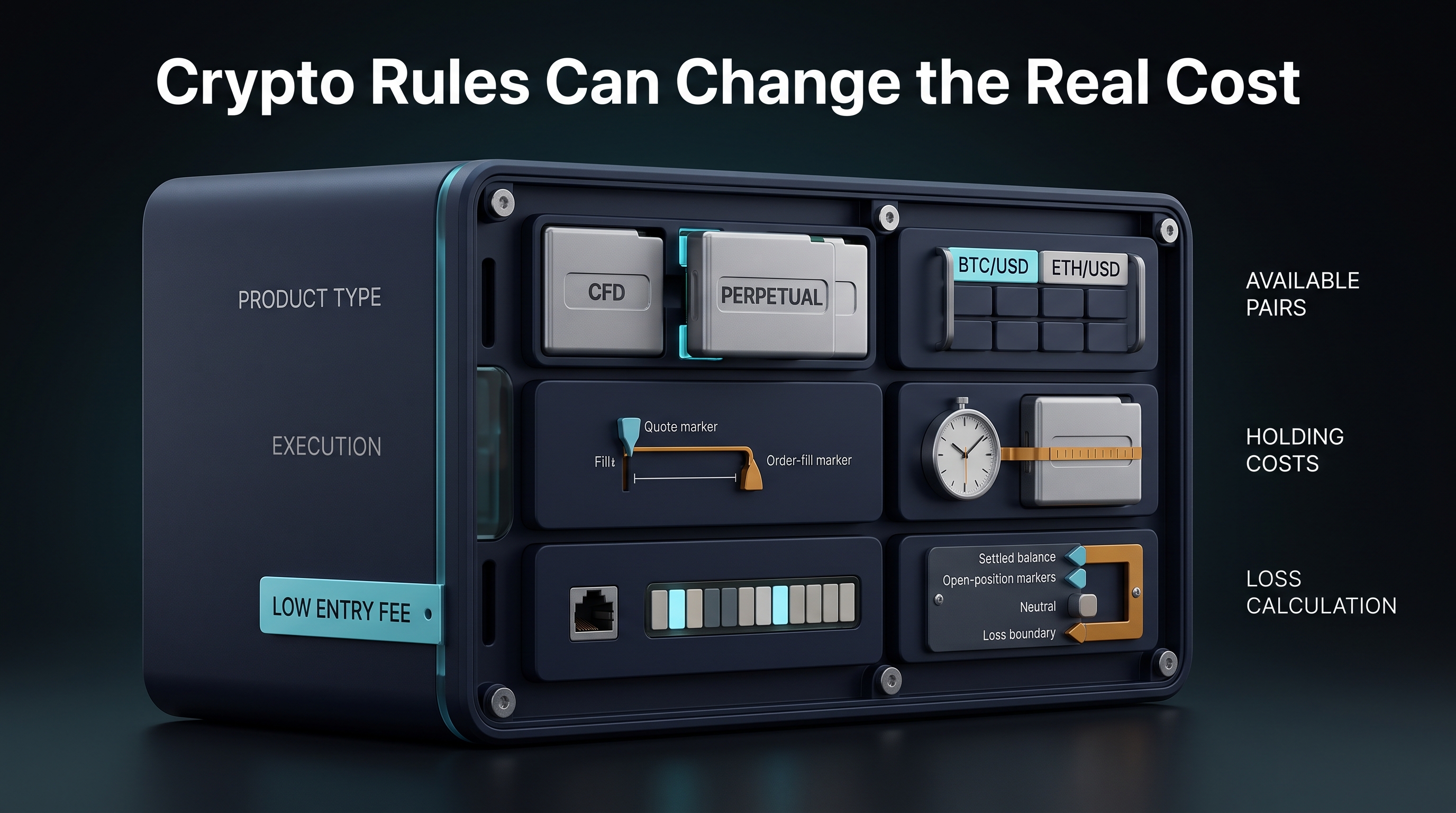
A crypto trading offer should be assessed by the instruments and account conditions it actually provides. Check whether the products are CFDs, perpetual contracts, or another structure; which pairs are available; and how execution, holding costs, market access, and loss calculations work for that account.
Crypto CFDs and Other Crypto Products Are Not Interchangeable
The presence of Bitcoin on an instrument list does not fully describe the trading experience.
Verify the product structure, contract specification, pricing source, leverage, and trading schedule. Do not transfer assumptions from a personal exchange account to a prop account simply because both display the same asset name.
Likewise, do not assume exchange funding rates and CFD rollover charges are identical. Confirm the actual charging mechanism.
A Continuous Market Does Not Guarantee Continuous Access
Crypto markets operate around the clock, but a provider’s account may have maintenance periods, instrument specific sessions, or restrictions on weekend trading and holding.
Distinguish permission to open a position from permission to keep one open.
Also record the daily loss reset time and its time zone. A trader holding through that boundary needs to understand how the next day’s limit is calculated.
Eligibility Can Override Every Pricing Advantage
Before assessing value, confirm country eligibility, identification requirements, and available payout methods.
Check whether requirements differ between purchasing, trading, and receiving a payout. The ability to complete checkout should not be treated as proof that every later requirement has been satisfied.
An account that cannot lawfully or contractually be used is not a bargain.
Is Instant Funding Cheaper Than a One Step Challenge?
Neither model is universally cheaper. A one step challenge can have a lower entry fee but involve replacement purchases after unsuccessful attempts. Instant funding removes the preliminary evaluation, but its purchase price and funded stage restrictions still matter. Compare complete costs under stated scenarios rather than treating either model as an automatic winner.
Use Scenarios, Not Invented Success Rates
Build two simple scenarios:
First attempt scenario: one purchase, all required charges, and the conditions preceding the first payout.
Replacement scenario: the same pathway with a specified number of additional purchases.
These are planning scenarios, not forecasts.
Do not attach an assumed probability of passing unless you have reliable evidence relevant to the specific program and trader. Even then, historical results do not guarantee future outcomes.
Account for Time Without Promising a Deadline
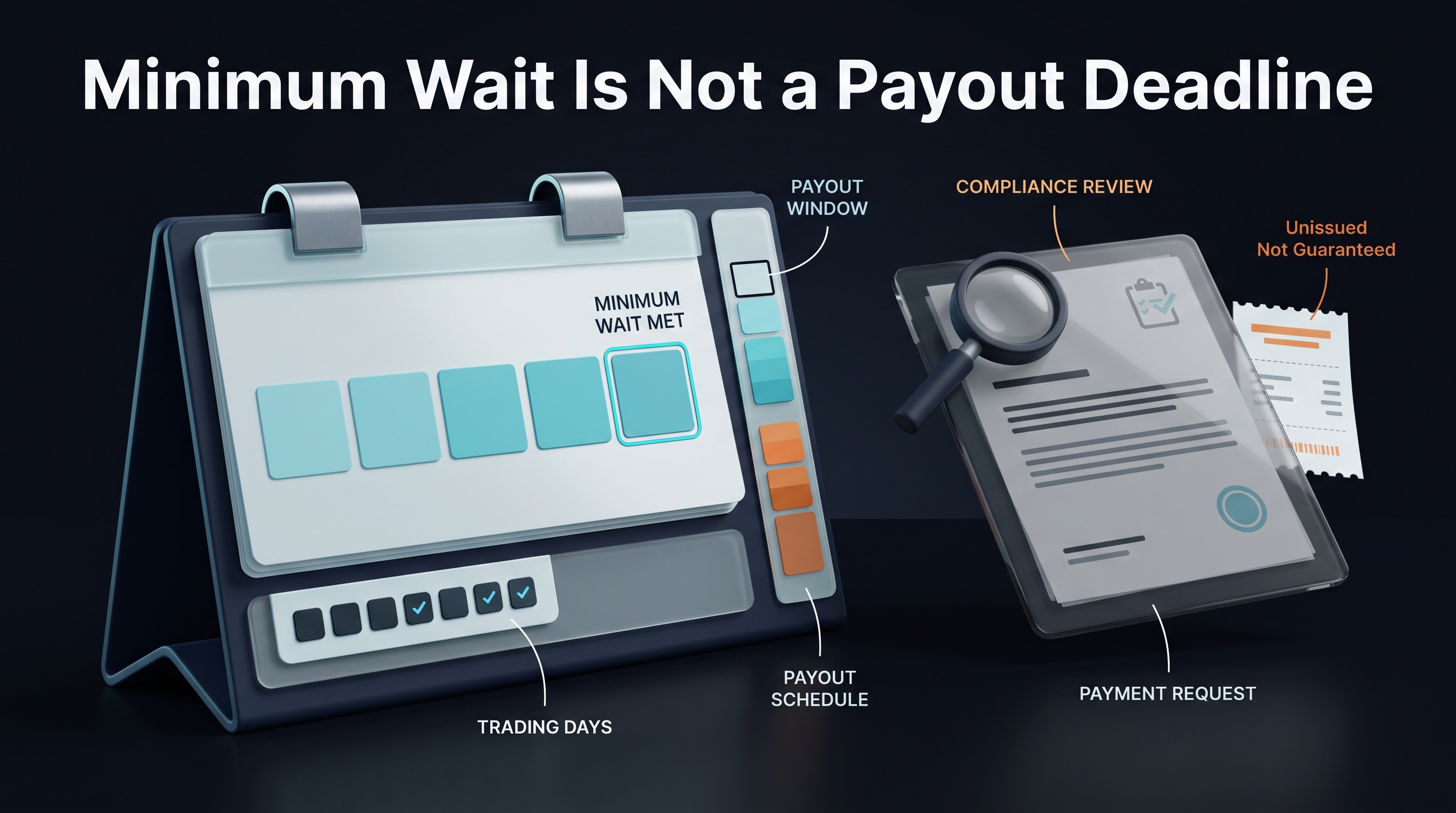
Minimum trading days and payout windows can delay eligibility. Compliance review can add another step.
Record published minimums, but do not convert them into a guaranteed time to funding or withdrawal. A minimum waiting period is not a promise that a payout will occur when it ends.
Are Cheap Crypto Prop Firm Challenge Fees Refundable?
Refundability depends on the individual program. A refund may require passing, reaching an eligible payout, or meeting additional conditions. Until the refund has been received, treat the purchase as money spent. “Refundable” does not mean free, and breaching an account does not automatically create a refund entitlement.
Read the Refund Trigger
Identify the event that makes a refund available. Is it passing the evaluation, receiving the first payout, or completing another requirement? Does the refund cover the full purchase price? Are taxes, add-ons, or processing charges excluded?
Also check whether the benefit is a cash refund or account credit. Credit toward another purchase is not equivalent to money returned.
Keep Upfront Affordability Separate
A future refund cannot fund the original purchase. Use the amount payable today when assessing affordability. Record a possible refund separately, along with its conditions. Only subtract it from realized net spending after it arrives.
How to Compare Crypto Prop Firm Costs Before Paying
A useful comparison matches similar programs, verifies their current standard prices, records compulsory charges, and checks both evaluation and funded stage rules. It also confirms eligibility and payout conditions. The goal is not to predict trading success; it is to understand the purchase before committing money.
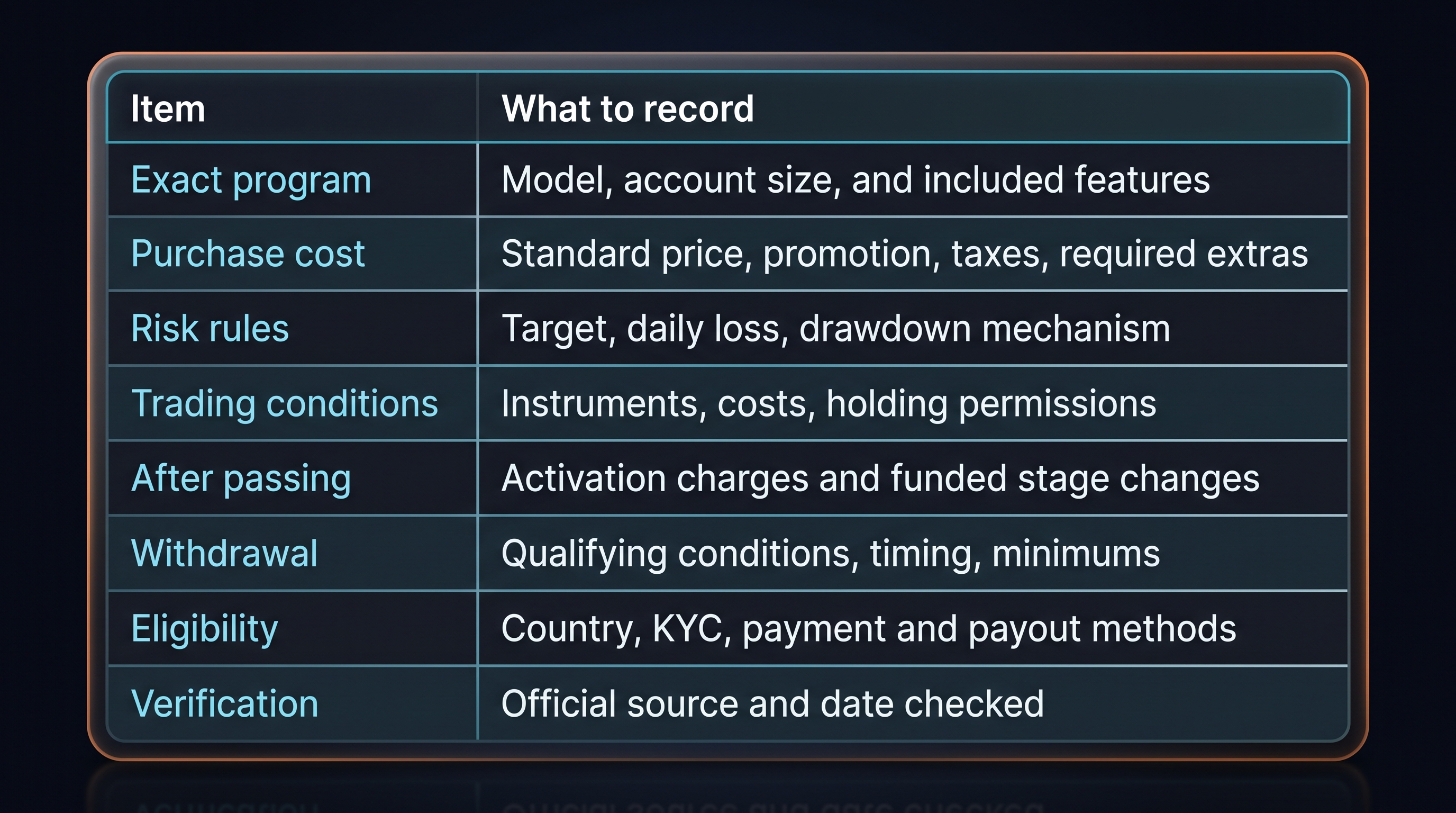
Build a Compact Verification Record, Use the provider’s current product documentation, terms, and checkout information. If those sources conflict, seek clarification before paying.
Set a Spending Limit Before the First Attempt
Decide how much you can afford to lose in program fees and how many purchases that budget allows.
If an attempt fails, investigate why before paying again. A strategy error, misunderstanding of equity based loss calculations, and a prohibited trading method require different responses.
A discounted replacement account does not resolve an unchanged incompatibility.
The cheapest crypto prop firm is a comparison result, not a permanent label. Prices, products, and rules can change, and the lowest checkout amount answers only the entry cost question. A careful decision starts with the exact program, follows every compulsory expense, and ends with the conditions governing usable access and actual withdrawal.
Disclaimer: Educational information only; not financial advice. Crypto trading involves substantial risk. Prop programs have provider specific terms and may use simulated accounts. Fees may be lost, and neither passing nor receiving a payout is guaranteed.
About the Creator
Sophie
Trader focused on Price Action & Order Flow.
Into crypto, fast execution, controlled risk, and quality setups.
Passing funded accounts and refining my trading every day.
Enjoyed the story? Support the Creator.
Subscribe for free to receive all their stories in your feed.
Comments
There are no comments for this story
Be the first to respond and start the conversation.