
CBOE Volatility Index (^VIX) Market Fear Spike: What It Means for Your Money
CBOE Volatility Index (^VIX) is a number that shows expected market volatility. CBOE Volatility Index (^VIX) rises when investors expect strong price movements.

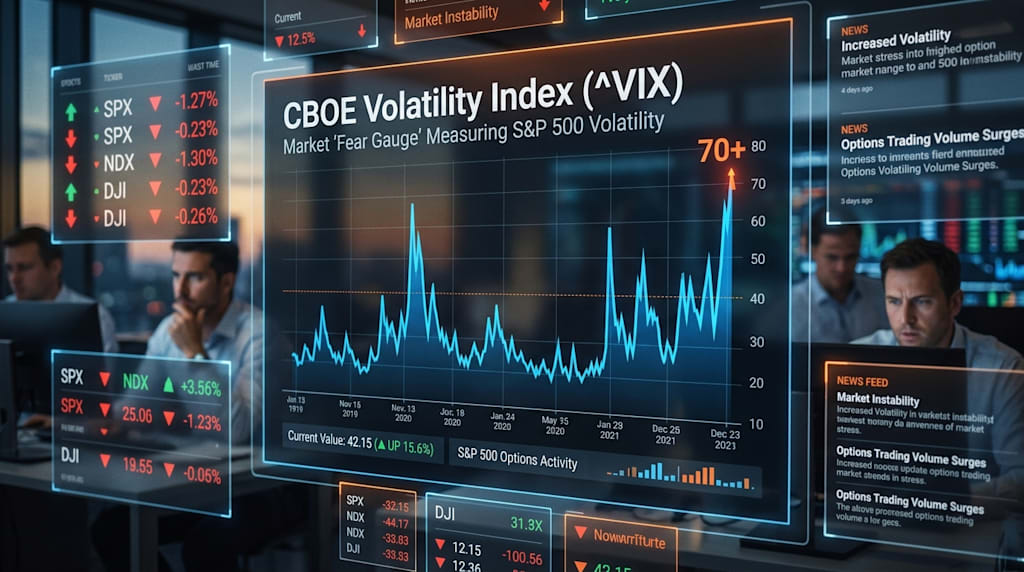
CBOE Volatility Index (^VIX) is a key market signal that shows fear and uncertainty in financial markets. CBOE Volatility Index (^VIX) helps investors understand how risky or calm the market feels. When the CBOE Volatility Index (^VIX) rises, it often means traders expect big price movements ahead. CBOE Volatility Index (^VIX) is becoming more important for UK investors because global markets are changing fast. Many people want to know if CBOE Volatility Index (^VIX) is warning about danger or just showing normal market fear. For deeper insight, you can also check this internal guide: CBOE Volatility Index (^VIX) Data Analysis
What is CBOE Volatility Index (^VIX)?
CBOE Volatility Index (^VIX) is a number that shows expected market volatility. CBOE Volatility Index (^VIX) rises when investors expect strong price movements. It falls when markets feel stable and calm. CBOE Volatility Index (^VIX) is not based on past prices. Instead, CBOE Volatility Index (^VIX) shows future expectations. This makes CBOE Volatility Index (^VIX) a forward-looking tool used by traders worldwide.
Simple meaning of CBOE Volatility Index (^VIX)
CBOE Volatility Index (^VIX) works like a fear meter. Low CBOE Volatility Index (^VIX) means confidence in the market. High CBOE Volatility Index (^VIX) means fear and uncertainty are growing.
Why CBOE Volatility Index (^VIX) is important for UK investors
CBOE Volatility Index (^VIX) is important because it shows how risky the market may become. When the CBOE Volatility Index (^VIX) rises quickly, it signals that investors are nervous. UK investors use CBOE Volatility Index (^VIX) to understand global trends because London markets often react to global news. CBOE Volatility Index (^VIX) helps investors prepare for sudden changes. CBOE Volatility Index (^VIX) also helps traders decide when to reduce risk or stay cautious.
How CBOE Volatility Index (^VIX) reflects market emotions
CBOE Volatility Index (^VIX) is closely linked to emotions like fear and confidence. When investors feel safe, CBOE Volatility Index (^VIX) stays low. When fear spreads, CBOE Volatility Index (^VIX) rises. CBOE Volatility Index (^VIX) can change quickly when major news hits the market. This includes inflation reports, political events, or financial stress. CBOE Volatility Index (^VIX) is often called the “fear gauge” because it clearly shows emotional shifts in markets.
Key signals from CBOE Volatility Index (^VIX)
Sharp increase in CBOE Volatility Index (^VIX)
A sudden rise in CBOE Volatility Index (^VIX) means fear is increasing quickly in the market.
Long high level of CBOE Volatility Index (^VIX)
If CBOE Volatility Index (^VIX) stays high for many days, it shows ongoing market stress.
Quick fall in CBOE Volatility Index (^VIX)
A fast drop in CBOE Volatility Index (^VIX) shows fear is reducing and confidence is returning.
Reaction to global events
CBOE Volatility Index (^VIX) often reacts to global crises or financial news very quickly.
Can CBOE Volatility Index (^VIX) predict market crashes?
CBOE Volatility Index (^VIX) cannot directly predict market crashes. However, CBOE Volatility Index (^VIX) can show early warning signs. When the CBOE Volatility Index (^VIX) rises sharply, it often means investors are worried. In past events, CBOE Volatility Index (^VIX) has increased before major market drops. Still, CBOE Volatility Index (^VIX) alone is not enough to predict crashes. It should be used with other market indicators. CBOE Volatility Index (^VIX) is best seen as a warning signal, not a prediction tool.
How investors should respond to CBOE Volatility Index (^VIX)
Investors should not panic when CBOE Volatility Index (^VIX) rises. Panic can lead to bad decisions. Instead, investors should look at long-term goals and stay calm. CBOE Volatility Index (^VIX) should be used as a guide, not a reason to act quickly. UK investors should also diversify their investments to reduce risk during high CBOE Volatility Index (^VIX) periods. CBOE Volatility Index (^VIX) is useful, but it should never control emotional decisions.
Common mistakes about CBOE Volatility Index (^VIX)
Believing CBOE Volatility Index (^VIX) always means crash
CBOE Volatility Index (^VIX) only shows fear levels, not exact future outcomes.
Reacting too quickly to CBOE Volatility Index (^VIX)
Some investors panic when CBOE Volatility Index (^VIX) rises, which can cause losses.
Ignoring other signals
CBOE Volatility Index (^VIX) should always be used with other market tools.
Over-relying on CBOE Volatility Index (^VIX)
Using only the CBOE Volatility Index (^VIX) can lead to wrong decisions.
What makes the CBOE Volatility Index (^VIX) move?
CBOE Volatility Index (^VIX) moves based on investor expectations. When fear rises, CBOE Volatility Index (^VIX) rises. When calm returns, CBOE Volatility Index (^VIX) falls. Big news events, global conflicts, and economic reports can all affect CBOE Volatility Index (^VIX). CBOE Volatility Index (^VIX) is very sensitive to market mood changes.
Final thoughts on CBOE Volatility Index (^VIX)
CBOE Volatility Index (^VIX) is an important tool for understanding market fear. CBOE Volatility Index (^VIX) helps investors see when risk is rising. CBOE Volatility Index (^VIX) rising does not always mean a crash is coming. It only shows uncertainty is increasing. UK investors should use CBOE Volatility Index (^VIX) as a guide and not depend only on it. Staying calm and informed is the best strategy in uncertain markets. In conclusion, CBOE Volatility Index (^VIX) helps explain market emotions, and understanding it can improve investment decisions over time.
About the Creator
luna
“I’m luna, a final-year marketing student with a love for social media trends and creative campaigns. Always up for new challenges.”
Enjoyed the story? Support the Creator.
Subscribe for free to receive all their stories in your feed.
Comments
There are no comments for this story
Be the first to respond and start the conversation.