
CBOE Volatility Index Shockwave: What Rising Fear Means for Global Stock Markets
CBOE Volatility Index shockwave movements are gaining attention from UK investors as global markets face rising uncertainty.
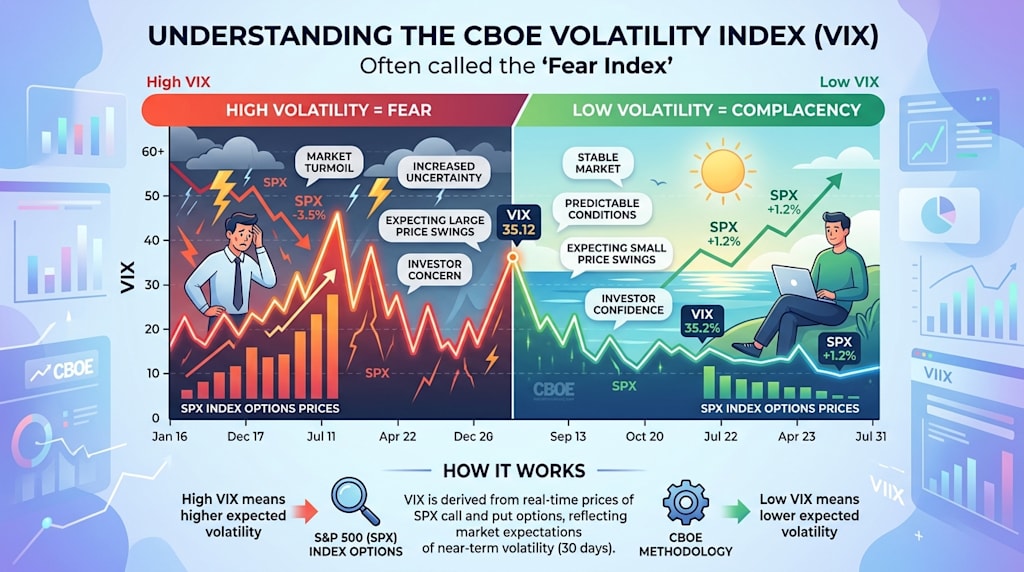
CBOE Volatility Index shockwave movements are gaining attention from UK investors as global markets face rising uncertainty. The CBOE Volatility Index is a widely followed measure of market fear that shows how nervous investors are about future price changes. When the CBOE Volatility Index moves sharply higher, it often signals that traders expect strong market swings. Many UK investors watch the CBOE Volatility Index to understand global risk and protect their money during unstable times. They will explain why the CBOE Volatility Index creates shockwaves, what it means, and how it impacts investors.
What the CBOE Volatility Index Shows in Markets
The CBOE Volatility Index shows expected market fear and uncertainty. The CBOE Volatility Index rises when investors think stock prices may move sharply in the near future. It falls when markets feel calm and steady. The CBOE Volatility Index is not linked to any single stock or company. Instead, it reflects overall market emotion. UK investors use the CBOE Volatility Index to measure global risk and understand how stable or unstable financial markets are.
Why the CBOE Volatility Index Creates Shockwaves
The CBOE Volatility Index can create shockwaves when it rises quickly in a short time. This often happens when unexpected news shakes investor confidence. Economic problems, political tension, or global events can trigger sudden fear. The CBOE Volatility Index reacts strongly when investors rush to adjust their positions. UK investors often see these shockwaves reflected in both US and UK stock markets almost instantly.
CBOE Volatility Index and Rising Market Fear
The CBOE Volatility Index is closely linked to market fear. When fear spreads, the CBOE Volatility Index moves higher. When confidence returns, it moves lower. A sudden rise in the CBOE Volatility Index shows that investors expect bigger price swings. UK traders often use this information to understand whether global markets are becoming more risky. The CBOE Volatility Index helps measure emotional stress in financial markets.
How UK Markets Respond to CBOE Volatility Index Moves
UK markets often react to changes in the CBOE Volatility Index. When the CBOE Volatility Index rises, investors in London may become more cautious. This can slow trading activity and reduce buying in stocks. When the CBOE Volatility Index falls, confidence returns, and markets may rise again. The CBOE Volatility Index plays an important role in helping UK investors track global sentiment.
Does a CBOE Volatility Index Shockwave Mean a Crash?
A CBOE Volatility Index shockwave does not always mean a crash is coming. It shows fear and uncertainty, not a guaranteed outcome. Sometimes the CBOE Volatility Index rises quickly due to short-term panic and then stabilizes. In other cases, it may rise before a market decline. UK investors should not assume that every CBOE Volatility Index spike leads to a crash. It is a warning sign, not a prediction.
Main Drivers Behind CBOE Volatility Index Movements
Several factors can drive the CBOE Volatility Index higher. Economic concerns like inflation, weak growth, or rising interest rates are common causes. Political events and global conflicts also increase uncertainty. Sudden market drops or poor company results can push the CBOE Volatility Index upward. UK investors watch these triggers closely because they often affect both US and UK financial markets.
How Investors Should Use the CBOE Volatility Index
The CBOE Volatility Index can help investors make better decisions. When the CBOE Volatility Index is high, it may be a signal to reduce risk or avoid unstable investments. When the CBOE Volatility Index is low, it often shows calmer market conditions. UK investors use the CBOE Volatility Index as a guide for understanding risk, not as a direct buy or sell signal. This helps improve long-term decision-making.
Common Misunderstandings About the CBOE Volatility Index
Many investors misunderstand the CBOE Volatility Index. Some believe it always predicts a crash, but it does not. Others ignore it completely and miss important warning signs. The CBOE Volatility Index is best used as a measure of market emotion. UK investors who understand this can avoid panic decisions and stay focused on long-term strategies.
Final Thoughts
The CBOE Volatility Index shockwave is a strong sign of rising market fear and uncertainty. It helps UK investors understand when global risk is increasing and when caution is needed. However, it does not confirm a stock market crash. The CBOE Volatility Index should always be used with other financial signals for better clarity. The CBOE Volatility Index remains a powerful tool for reading market emotion and staying prepared during uncertain financial conditions.
About the Creator
Enjoyed the story? Support the Creator.
Subscribe for free to receive all their stories in your feed.
Comments
There are no comments for this story
Be the first to respond and start the conversation.