
CBOE Market Volatility Trends: What Rising Market Fear Could Mean for Investors
CBOE Market Volatility is becoming one of the most important signals for investors in today’s fast-moving markets.
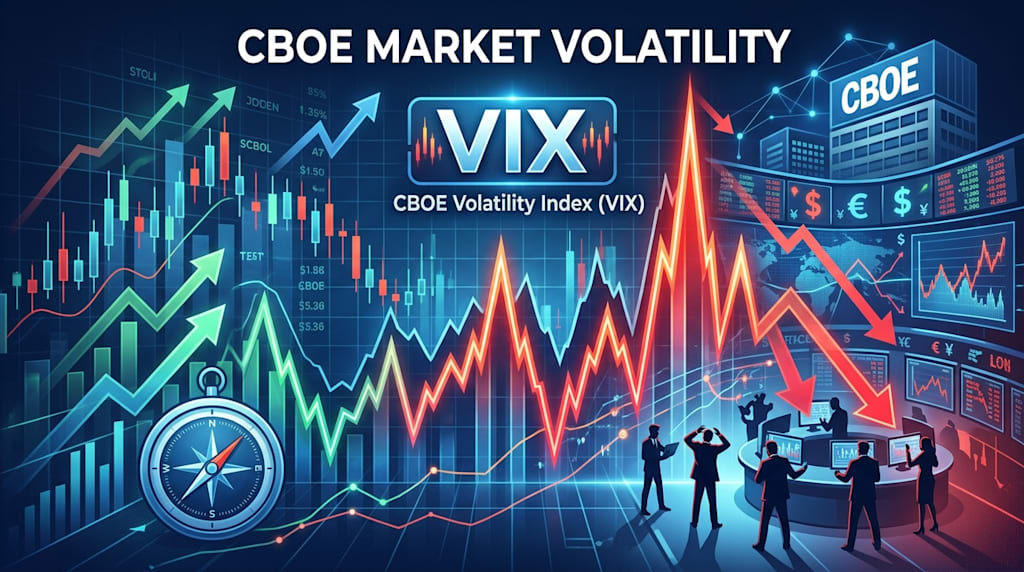
CBOE Market Volatility is becoming one of the most important signals for investors in today’s fast-moving markets. CBOE Market Volatility helps show how much uncertainty exists in the financial world. When CBOE Market Volatility rises, it often means investors are worried. When CBOE Market Volatility falls, it usually means markets feel stable again. For UK investors, CBOE Market Volatility is very important because global markets are closely linked. A change in CBOE Market Volatility in the US can quickly affect UK stocks, savings, and investment funds. This is why many traders and long-term investors track CBOE Market Volatility every day.
Understanding the meaning of CBOE Market Volatility
CBOE Market Volatility is a simple way to measure expected market movement. It does not tell you exact prices. Instead, it shows how much prices may move in the near future. When CBOE Market Volatility is low, markets are calm. Prices move in small steps, and investors feel confident. When CBOE Market Volatility is high, it means big price swings may happen. This measure is linked to the Chicago Board Options Exchange, which created the system to track market expectations. CBOE Market Volatility is often seen as a “fear gauge” because it rises when investors feel uncertain.
Why CBOE Market Volatility changes so often
CBOE Market Volatility does not stay fixed. It changes every day based on news, emotions, and global events.
Global news impact
Big global events can push CBOE Market Volatility higher very quickly. Political changes, wars, or financial problems can all create fear in markets.
Economic reports
When inflation or job data is released, CBOE Market Volatility can react. If the news is unexpected, the change can be strong.
Investor emotions
Fear and confidence play a huge role in CBOE Market Volatility. When investors panic, CBOE Market Volatility rises. When they feel safe, it falls.
How CBOE Market Volatility affects UK investors
Even though CBOE Market Volatility is based in the US, its effects reach the UK market very quickly.
Impact on UK stocks
When CBOE Market Volatility rises, UK shares may also become unstable. Prices can move up and down faster than normal.
Impact on savings and funds
Many UK investment funds include global stocks. So when CBOE Market Volatility increases, fund values may change.
Impact on investor confidence
CBOE Market Volatility also affects how UK investors feel. High volatility often leads to fear, while low volatility brings confidence.
Reading CBOE Market Volatility like a signal
CBOE Market Volatility can be used as a guide if you understand its patterns.
Sudden spikes
A fast rise in CBOE Market Volatility usually means panic in the market. Investors are unsure and reacting quickly.
Slow decline
When CBOE Market Volatility slowly drops, it may mean markets are becoming stable again.
Long stable periods
Long periods of low CBOE Market Volatility often show strong confidence in the market.
Common mistakes when using CBOE Market Volatility
Many investors make simple mistakes when they follow CBOE Market Volatility.
Following fear too quickly
When CBOE Market Volatility rises, some investors sell everything in panic. This can lead to losses.
Ignoring long-term trends
CBOE Market Volatility moves in cycles. Focusing only on short-term changes can lead to wrong decisions.
Misunderstanding signals
CBOE Market Volatility does not predict exact prices. It only shows expected movement, not direction.
Smart ways to respond to CBOE Market Volatility
CBOE Market Volatility can be useful if you use it with a calm mindset.
Stay patient during changes
When CBOE Market Volatility rises, avoid rushing. Market fear is often temporary.
Diversify investments
Spreading investments helps reduce risk when CBOE Market Volatility is high.
Focus on long-term plans
Short-term changes in CBOE Market Volatility should not change your long-term goals.
CBOE Market Volatility outlook for investors in 2026
CBOE Market Volatility is expected to stay active in 2026. Many global factors will continue to influence markets.
Economic pressure
Inflation, interest rates, and growth concerns may keep CBOE Market Volatility moving.
Global uncertainty
Political changes and global events can create sudden spikes in CBOE Market Volatility.
Investor reactions
Market behaviour will continue to play a major role in how CBOE Market Volatility changes.
How beginners can understand CBOE Market Volatility easily
New investors often feel confused by CBOE Market Volatility, but it is simple when broken down.
Start with basics
Learn what CBOE Market Volatility shows before using it in decisions.
Watch trends, not daily moves
Focus on the direction of CBOE Market Volatility over time instead of short jumps.
Learn slowly
Understanding CBOE Market Volatility takes time. Small steps help build confidence.
Final thoughts on CBOE Market Volatility
CBOE Market Volatility is one of the most useful signals in modern investing. It shows how markets feel and where uncertainty is growing. For UK investors, CBOE Market Volatility can help in understanding risk and spotting opportunities. When used carefully, CBOE Market Volatility can guide better decisions and reduce emotional trading. The key is to stay calm, watch patterns, and think long term. Over time, CBOE Market Volatility becomes less confusing and more useful for building stronger investment choices.
About the Creator
Enjoyed the story? Support the Creator.
Subscribe for free to receive all their stories in your feed.
Comments
There are no comments for this story
Be the first to respond and start the conversation.