
Beyond North Food: Building Value Where It Was Always Meant to Exist
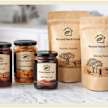
BEYOND NORTH FOOD is a Namibian social enterprise built on a simple but often overlooked idea. Value should begin where the resource begins. Working across northern Namibia, the venture focuses on indigenous crops and wild foods such as !nara, omahangu, mahangu, baobab, and marula. These are transformed into market-ready products for retail, hospitality, and export-adjacent markets. This is not a heritage project. It is a structured commercial effort to correct a long-standing imbalance where value has historically been extracted from producers instead of being built with them. The business is grounded in supply chain integrity, traceability, fair participation, and disciplined market execution. To move from concept into scale, BEYOND NORTH FOOD is raising between N$350,000 and N$1,000,000 in equity. This will support the first phase of infrastructure, systems, and market readiness.
There is a quiet contradiction in the way food moves through the world.
In some places, value grows as products move further away from their source. By the time something reaches a shelf, it has been refined, packaged, branded, and priced in a way that often has little to do with where it began.
But in other places, value disappears along the way. Northern Namibia is one of those places.
Across the region, indigenous crops and wild foods have existed for generations! Nara, omahangu, mahangu, baobab, marula. These are not new discoveries. They are part of long-standing systems of knowledge, survival, and culture.
Yet today, many of these foods exist in a strange position.
- Valuable, but not fully valued.
The issue is not the resource itself.
It is everything around it.
What happens after harvest is often where things begin to break down. Aggregation is inconsistent. Handling varies. Processing is limited. Products move through informal pathways, often without structure, without identity, and without the ability to reach stronger markets.
By the time these products arrive anywhere close to formal retail or hospitality spaces, much of their potential has already been lost.
Not because people do not care. But because the system to support them has never fully existed.
At the same time, something else is happening.
Across different parts of the world, there is a growing shift in how people think about food. There is more attention on where products come from, how they are sourced, and what they represent. There is interest in ingredients that are natural, traceable, and connected to place.
There is also a growing awareness that some of the most resilient and valuable crops are not the most industrial ones but the ones that have adapted over time within specific environments.
In that sense, the gap becomes more visible.
On one side, there is supply that carries history, resilience, and identity. On the other, there is demand looking for exactly that. What sits in between is the missing structure.
This is where a different approach begins to take shape. Not as a sudden breakthrough, but as a deliberate attempt to reconnect what has always been there.
The idea is simple.
- What if value did not begin at the point of sale but at the point of origin?
- What if the systems that surround food were built in a way that allowed producers to participate more fully, not just as suppliers, but as part of the value itself?
- What if products carried their origin clearly, instead of losing it along the way?
Thinking this way shifts the focus.
It moves away from treating food as a standalone product and toward understanding it as part of a wider system. A system that includes people, place, knowledge, and process. It also changes how growth is approached.
- Instead of scaling by replacing what already exists, it becomes possible to scale by strengthening it.
- Instead of competing through volume alone, there is room to compete through identity, quality, and consistency.
None of this happens automatically.
- It requires coordination.
- It requires structure.
- It requires intention.
It means creating clearer pathways between producers and markets. It means improving how products are handled and processed. It means developing ways for food to carry not just nutritional value but also context. It also means building something that can hold all of this together without losing its grounding.
Because at its core, this is not only about food.
- It is about participation.
- It is about whether the people closest to the resource are also closest to the value it creates.
- It is about whether systems can be built in a way that does not extract first and distribute later but includes them from the beginning.
There is no single solution that resolves everything at once. But there are starting points. Moments where intention becomes structure, and structure begins to shift outcomes. If value has been disappearing along the way, then the work ahead is not to chase it further down the chain. It is to return to where it begins.
And build from there.
About the Creator
Mr. Abraham Pahangwashimwe - BEYOND NORTH INVESTMENT CC
Serious investors and strategic partners may get in touch with us directly @.
Phone NO: +264 81 659 3601 (WINDHOEK, NAMIBIA),
Email : [email protected]
#BeyondNorth #Namibia #Entrepreneurship #Innovation #Community
Enjoyed the story? Support the Creator.
Subscribe for free to receive all their stories in your feed.
Comments
There are no comments for this story
Be the first to respond and start the conversation.