
What the Democratic Landslide Says About the Impact of Social Media
Humanity Wins

Social media have been blamed by the best of 'em for the ascension of Trump, Trumpism, and Maga-Americans. Andrey Mir convincingly argued in Postjournalism and the Death of Journalism: the Media after Trump: Manufacturing Anger and Polarization (2020) that the replacement of truth by likes and shares of posts on social media were responsible for the success of Trump and the Republican lies, and Ezra Klein ("I Didn’t Want It to Be True, but the Medium Really Is the Message", 2022, The New York Times) in a general way blamed social media, supported by McLuhan's famous "the medium is the message," as the source of the successful assault on democracy in American politics.
So what are we to make of the profoundly comprehensive replacement of the Republican deceit with Democratic truth in the election last week, where Democrats now have invincible margins of at least 255 seats in the House of Representatives and 55 seats in the Senate, as well governorships in a wide range of states? Social media still prize likes and shares well above truth. That's a fact. But how to reconcile that fact with the proximate obvious fact that the Democrats did so well last week?
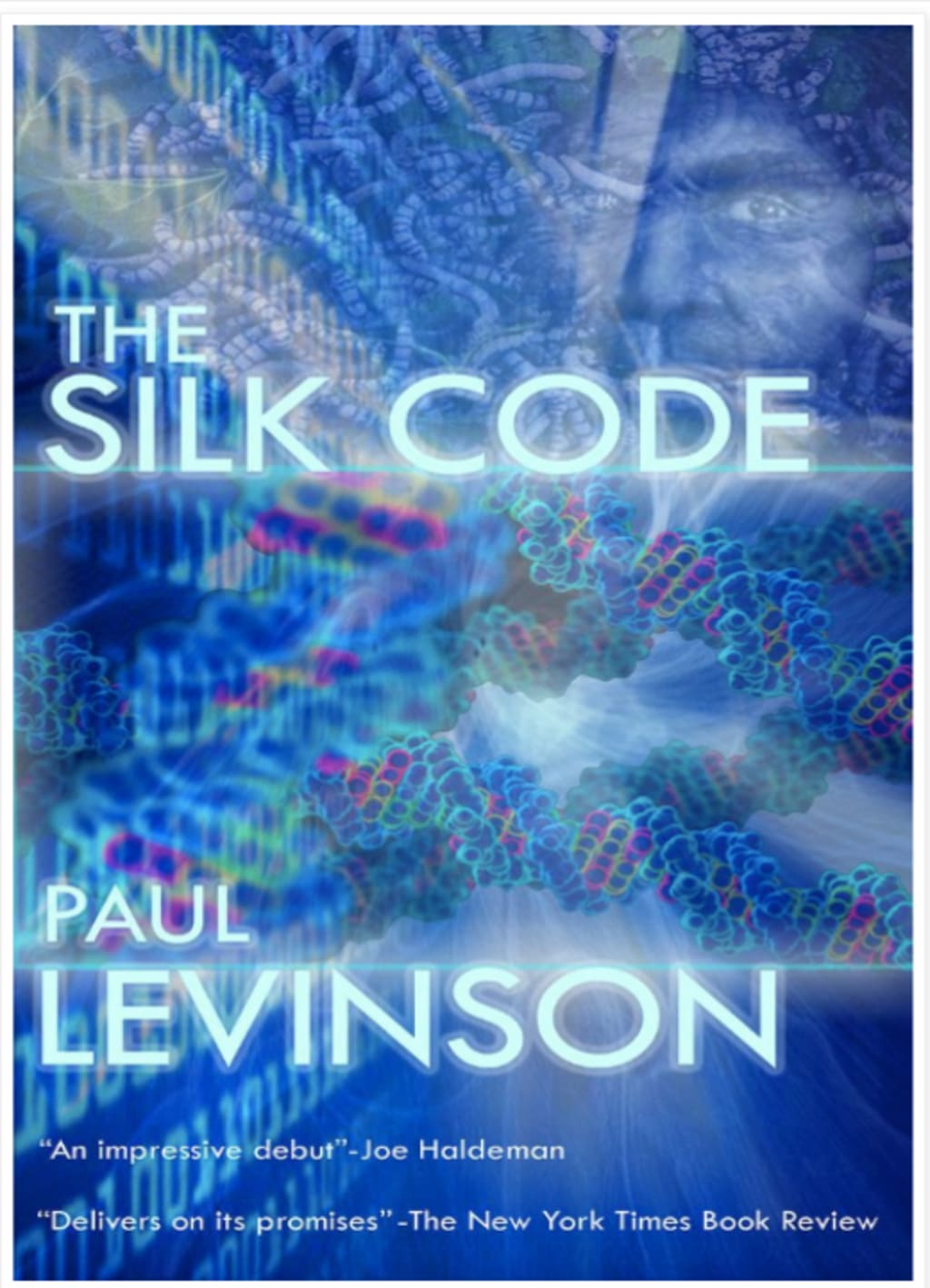
The answer must be that media determinism has its limits. Yes, it influences and directs our behavior in many ways -- the success of advertising demonstrates that point -- but media are not the final word in what moves us to vote, and buy things, political and otherwise. Decades ago, when my first novel The Silk Code was published by Tor Books, and began to sell very well, Tom Doherty, then head of Tor Books (now Chairman Emeritus of the Tor Group), took me to lunch, and asked me what I would like to see Tor do for the novel. "How about a full-page ad in The New York Times?" I half-seriously replied, hoping to build on the good review that Gerald Jonas had just provided. Tom smiled, and told me that years of publishing had taught him the important lesson that an ad like that would likely result in only a couple of hundred sales. "Would what result in more sales?" I asked, between bitefuls of the delicious lunch. "Word of mouth" from close relatives and close friends, he replied.
That was back in the Fall of 1999, a crucial few years before the advent of social media. We certainly make friends of a kind on social media, sure, but they are not the same as in-person friends and not at all the same as close relatives. Those human relationships have far more sway than anything we may read, watch, or hear online. An in-person smile trumps any parasocial mode of communication.
And therefore I think the Democratic victory is not only good news indeed for humanity, but the result of the human thirst for truth, that transcends the power of social media. The "autocratic breakthrough" is the term sociologists use to describe the instant when a democracy, besieged from the inside by people and groups who want to destroy it, who want to replace it with a dictatorship, achieve their goal. They work for years, chipping away at democratic practices, demonizing opponents, arresting them, imprisoning them, deporting them, killing them. They stock the government with their supporters. They replace the truth with lies. And though the people who believe in the democracy, who stand up to the fascist tide, do their best to oppose the destructive wave, they eventually are worn down, and the autocratic breakthrough happens. This is exactly what happened in Germany in 1934, when Hitler the Chancellor became Hitler the Führer. Our election last week defied the diminishment of truth in social media, and took a big step in making sure the autocratic breakthrough won't happen here.
About the Creator
Paul Levinson
Novels The Silk Code, The Plot To Save Socrates, It's Real Life: An Alternate History of The Beatles; LPs Twice Upon A Rhyme & Welcome Up; nonfiction The Soft Edge & Digital McLuhan, translated into 15 languages. Prof, Fordham Univ.
Enjoyed the story? Support the Creator.
Subscribe for free to receive all their stories in your feed. You could also become a paid subscriber, letting them know you appreciate their work.
Comments
There are no comments for this story
Be the first to respond and start the conversation.