
U.S. Army Engineer Equipment Readiness
EXPERT SCARCITY LEADS TO ABUNDANT DEADLINES

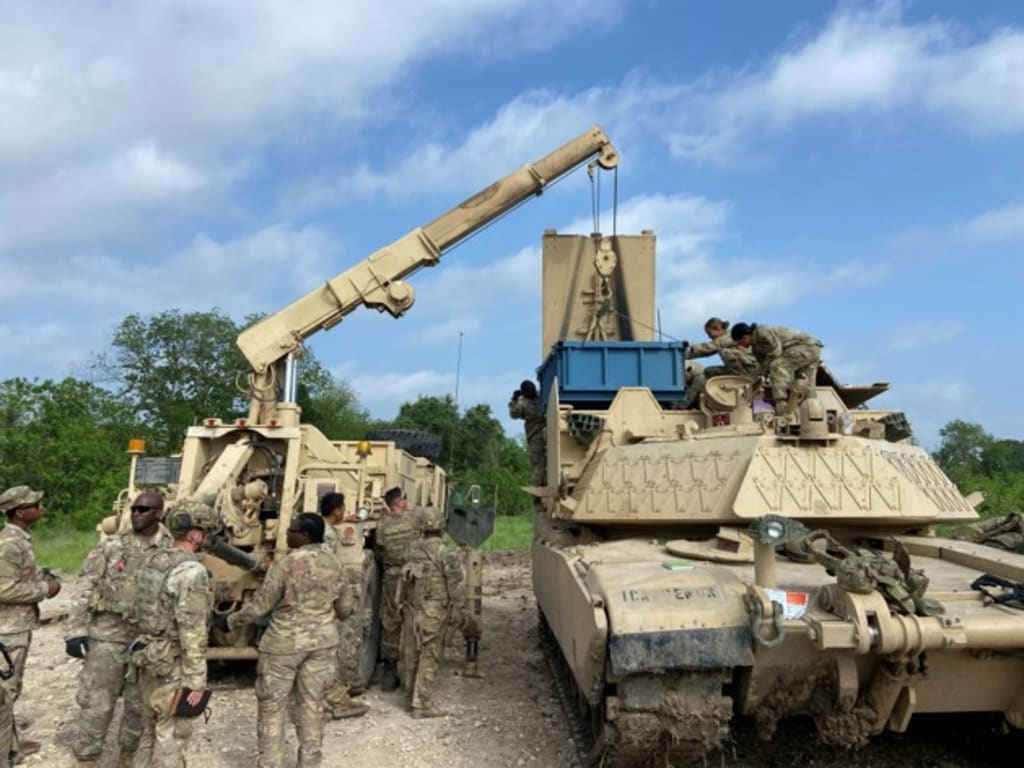
By the end of 2027, the United States Army will only have 56 Active-Duty Combat Engineer Companies spread out across its force. Of those 56, 34 are designated as Combat Engineer Company – Armored (CEC-A), which makes up 60% of the Engineer Regiment’s combat capability.[1] What is common across all of these CEC-As and various National Guard Engineer Companies is that they possess Assault Breacher Vehicles (ABVs) and Joint Assault Bridges (JABs), which serve as the primary breaching assets for armored brigades. Each CEC-A is assigned three ABVs and four JABs; however, across the Army, they are plagued with maintenance issues that lead to readiness concerns. The current engineer breaching vehicles have systematically low operational readiness (OR) rates due to high op-tempo, poor supply chains, and extreme lack of expert knowledge; and fixing these issues cannot be solved at the individual unit level but rather from the top of the Engineer Regiment.
The first major issue stems from class IX parts and the current procurement process. Like any Army unit, maintenance delays can occur due to back-ordered parts or price changes; however, due to how unique the ABV and JAB are, the problems become exacerbated. Many ABV and JAB specific parts are manufactured from a single source, causing major delays to maintenance in the form of long-lead back-ordered parts. To cite some examples from the ABV, the sensor gimbal (also known as the Integrated Viewer System), which sits on the turret and serves as the vehicle commander’s primary viewer when buttoned up, can be considered a crucial component and will delay the vehicle if inoperable. The part is commonly broken from environmental factors due to how sensitive it is; sun exposure can damage the optic, water can damage its wiring harness, and extreme rough terrain driving can damage the internal gimbal. Lenardo DRS is the sole producer of the gimbal and will not sell the technical data package (TDP) to the U.S. Government. What this means is that the Army is unable to conduct repairs, bench testing, or source internal parts.[2] This leads to an issue of vehicles becoming permanently deadlined. As a temporary fix, in March 2026, a contract was approved for DRS to supply 50 more gimbals, however no repair contract was created, which will lead to the same issue in later years. Other critical components of the ABV, which are required for its sole purpose of breaching have similar issues like the gimbal. The Full Width Mine Plow (FWMP), Combat Dozer Blade (CDB), and the Lane Marking System (LMS) are all designed and manufactured by Pearson Engineering. Another single-source product, only now, these are large components with many parts that break over time, but almost always are long lead due to a bottleneck in the supply chain. What’s even worse about Pearson Engineering products are the fact that they are manufactured in the United Kingdom, meaning the cost and time to get replacement parts are even greater.[3] A lack of redundancy in the manufacturing and procurement process, can lead to massive maintenance delays during times of conflict. Another issue tied to the parts problem is that the ABV and JAB are built on the legacy M1A1 chassis, not the improved M1A2 that all active-duty armored units are currently using. Many legacy parts are no longer manufactured, therefore, the only way to get replacements when specific components break is to conduct a controlled exchange from another vehicle. Specific examples this applies to are unique electrical components and the old .50 cal machine gun mounts. The last issue in terms of parts and procurement is that ABVs are currently sold to other countries’ militaries as part of the Foreign Military Sales (FMS) program, specifically Ukraine and Australia.[4] The caveat to this is that the vehicles that are sold and delivered must be fully mission capable, therefore, a sizeable amount the class IX stock needed to fix U.S. vehicles are allocated to refurbishing the FMS ones at the Anniston Army Depot prior to delivery.[5]
To address this specific issue and increase OR rate via parts and procurement, the Engineer Regiment can implement multiple changes. First, an increase to unit Shop Stockage Listing (SSL) to accommodate more long-lead parts, specifically for ABVs and JABs. Traditionally, many lines of a battalion’s SSL are saved for common vehicles such as the M2 Bradley, LMTV, JLTV, etc., and only a small portion is reserved for engineer-specific vehicles. While Engineer Battalions should still retain some common lines, it would be beneficial for them to allocate more toward ABVs and JABs due to the percentage of long lead parts and supplement, if needed, from their respective maneuver battalions for additional parts for more common vehicles.[6] Next, the Engineer Regiment needs to demand a stop to all single-source and overseas procurement of highly sought-after parts and implement a directive to produce contracts with multiple U.S. manufacturers to produce common parts. In addition to this directive, the Regiment should recommend to Congress a pause of FMS for Engineer Tracked Vehicles until U.S. owned ABVs and JABs reach an OR rate of 90% or greater. Lastly, the Engineer Regiment needs to revise the timeline for Army Material Command’s (AMC) Anniston Army Depot “reset” program to complete fixing and refurbishing the Active Duty’s outdated fleet. When an ABV or JAB is being reset or refurbished, that takes a critical asset away from the brigade for months at a time. The current process is slow and continues to have delays due to the training cycle and continual rotations of Armored Brigades. This leads to the next issue of OPTEMPO.
As stated above, High Operation Tempos within Armored Brigade Combat Teams (ABCT) put a strain on Engineer Equipment and do not allow for proper maintenance and service windows, leading to further problems. ABCT Training Cycles typically consist of a gunnery or mounted machine gun (MMG) certification, Squad Certifications, Platoon Certifications, Company Certifications, Combined Arms Live Fire Exercises (CALFEX), a Combat Training Center (CTC) rotation, and roughly once every three years, a Europe rotation[7]. Throughout this training cycle, engineers must be one step ahead on their certifications so that they can support maneuver battalions during their own certifications. This leads to a yearly timeline where engineers are in the field training more frequently than other units. The second-order effect to this is that there is typically no structured service window for ABVs and JABs but rather, they are fit in the calendar when available, which leads to inefficiencies. As mentioned earlier in this paper, ABVs and JABs are built on the M1A1 chassis. The older these vehicles get, the more man-hours of maintenance are required to keep them running. Often, the training calendar does not accommodate for that time. More often than not, when mechanics are pulling pack to complete annual services on these vehicles, they will find additional issues which will cause delays in the overall service. The constant operational requirements to use these vehicles can lead to commanders having to assume more risk than normal and expedite services in order to provide mobility to the maneuver.
To help fix this issue of OPTEMPO affecting maintenance, engineer units can centralize battalion 91As and block off extended windows to service the ABV/JAB fleet at one time. This is similar to how an armored battalion will service an entire tank platoon at one time, as modeled in TC 3-20.31-9 (Armor Platoon Services). As stated in the TC this time is dedicated to services and nothing else. In the Armor world, they treat services just like any other operation, by producing an OPORD, conducting rehearsals, executing with daily reporting, and refining as they go along. A tank platoon is generally given three weeks to conduct its services; week 1 for the hull, week 2 for the turret, and week 3 for any ancillary services.[8] Engineer Battalions need to be encouraged to incorporate this style of maintenance into servicing ABVs and JABs. Additionally, commanders should make an effort to only use/take out the heavy tracks when necessary to avoid additional wear and tear on the old platforms. For example, do not bring ABVs and JABs to squad certifications just to fill the “troop to seat” roster.
The final and largest issue that exists today is the lack of expert knowledge for operating and maintaining the ABVs and JABs. It leads to more “user error” faults from operators and prolonged services due to maintainer mistakes or additional research required to fix a niche problem not taught in AIT. There are not enough B6 (Combat Engineer Heavy Track) and D8 (JAB/ABV Maintainer) certified Soldiers in engineer formations to meet MTOE requirements or to spread the vast amount of knowledge required to keep these vehicles running. Historically, the Engineer School House offers three B6 classes a year with 30 slots per class. That means the Regiment is only providing 90 qualified operators to CEC-As each year, despite nearly all crews changing or becoming turbulent on a yearly basis. The supply does not meet the demand that is needed. The problem gets worse when we look at maintainers. There are only two options to train a 91A, who is normally only familiar with repairing a standard M1A2SEPv3 Abrams, on the intricacies of an ABV and JAB. The first, which is most common, is on-the-job training and takes time due to the learning curve. The second, which is preferred but scarce, is to send that maintainer to D8 at Ft. Benning. This school is even smaller than B6, offering four classes a year with six seats per class.[9] However, even if every 91A in an Engineer Battalion was D8 qualified, the current modified table of organization and equipment (MTOE) for CEC-As does not provide enough mechanics to do the work necessary for these vehicles. The best way to measure this is the Platform:Maintainer ratio. For a CEC-A, there are seven Engineer Heavy Tracks and only 3 91As. When comparing this across an ABCT, in an Engineer Battalion, the Platform:Maintainer ratio for 91As is higher than any other battalion (Cavalry Squadron (0.875), Armored Combined Arms Battalion (1.035), and Infantry Combined Arms Battalion (1.071). For the Engineer Regiment, the ratios are 1.667 for the legacy Brigade Engineer Battalion (BEB) and 2.333 for the Combat Engineer Battalions, which house the new CEC-As.[10] This disproportionate representation will lead to years of maintenance delays and could further degrade the state of the ABV and JAB fleet.
The first effort to fix the manning issue is for the Engineer Regiment to streamline the process to send and increase the number of selected Soldiers with orders to Heavy Installations (Hood, Bliss, Riley, and Stewart) directly to B6 from AIT. This can be done by expanding the allowable slots per class or increasing the yearly number of classes held. The effort should come from T2COM and not line units to give up their Soldiers. The current system leans too heavily on Engineer units to send their Soldiers who are already slotted on a crew, however, if that Soldier becomes slotted for Basic Leader Course (BLC) or the unit has an upcoming CTC rotation, B6 will be shelfed and prioritized last. Battalions should receive certified Soldiers from the get-go so that way they can focus solely on their training cycle. And on the maintainer side, the regiment needs to implement a mandate that 91As in Engineer Battalions are D8 Qualified, don’t make it an “option.” The cost to maintain Engineer Heavy Tracks is great; therefore the investment needs to come up front in training experts to help prevent and fix expensive faults.
The counterargument to the proposed solutions and implementations above is most likely that they create too much additional cost to implement in an already tight defense budget that is always under scrutiny. Additionally, it would take too much time to implement all the changes, and it would not work with the compressed timelines that ABCTs face. Another risk of spending so much on creating experts is that the Army is a constant revolving door of people. On average, a Soldier is in a unit for 3-4 years, and many Soldiers get out after their first contract. This would create a poor return on investment for T2COM. A differing approach that some may argue is that these are efforts to place a band-aid on outdated platforms which may only have a decade left in service. Rather, they would argue to field newer breaching systems that will have less overall maintenance issues. To counter the identified issues, the upfront cost incurred to implement the proposed solutions will in turn save millions of dollars in the future by limiting repeat maintenance issues that occur year after year. To the second point, even if the ABV and JAB were replaced, the systems in place will lead to the same problems the Army is already facing. By starting to implement the changes now, all kinks will be worked out and refined to have a maintenance and manpower structure in place that will never lead to systematically low OR rates again.
Regardless of the issues at hand, many institutional changes cannot be made at the individual company or battalion level, they must be made from the Engineer Regiment down. companies and battalions are often the ones that identify the issues and make recommendations to solve them; however, with the U.S. Army’s current structure, it requires strong regimental leadership to turn those recommendations into practice. It starts with leaders addressing challenges that have been known for years, but remain unacted on, then they must create a strict timeline for change with quantitative criteria that must be met and finally increase and mandate institutional training for engineer-specific vehicles as well as revamp the supply chain for niche parts.
[1] LTC Rob Dion and Rick Morales, ARSTRUC 28-32 Engineer Overview, June 25, 2025.
[2] Army Material Command, “General Discussion Regarding the ABV Sensor Gimbal” April 24, 2025.
[3] System for Award Management, “38--Assault Breacher Vehicle (ABV) Market Survey: Full Width Mine Plow, Combat Dozer Blade and Lane Marking System,” July 15, 2008, https://sam.gov/opp/3ed23ec10a5ea413f6b360560add4c2d/view.
[4] Department of the Army, OE Data Integration Network (ODIN), 2026, https://odin.t2com.army.mil/WEG/Asset/M1150_American_Assault_Breacher_Vehicle.
[5] Department of the Army, “Anniston Army Depot,” 2026, https://anad.army.mil/home/about/mission.
[6] MAJ Kistler, Philip, “Centralize to Optimize: A Framework to Improve Readiness for Armored Engineer Formations,” December 2, 2025.
[7] Department of the Army, TC 3-20.31-9, Armor Platoon Services, July 10, 2024.
[8] Department of the Army, FM 7-0, Training, June 14, 2021.
[9] Department of the Army, Army Training Requirements and Recourses System (ATRRS), 2026,
[10] Kistler, “Centralize to Optimize.”
About the Creator
Sam Shroyer
I am an active-duty Engineer Officer in the US Army with a BS in Environmental Engineering from West Point. My previous positions include the following:
- Assistant Training Officer
- Sapper Platoon Leader
- Company Executive Officer
Enjoyed the story? Support the Creator.
Subscribe for free to receive all their stories in your feed.
Comments
There are no comments for this story
Be the first to respond and start the conversation.