
Trump Said No to Saudi Arabia: The Red Sea Will Pay the Price
A refused phone call, a Houthi advance, and the two chokepoints that could decide the next oil shock.
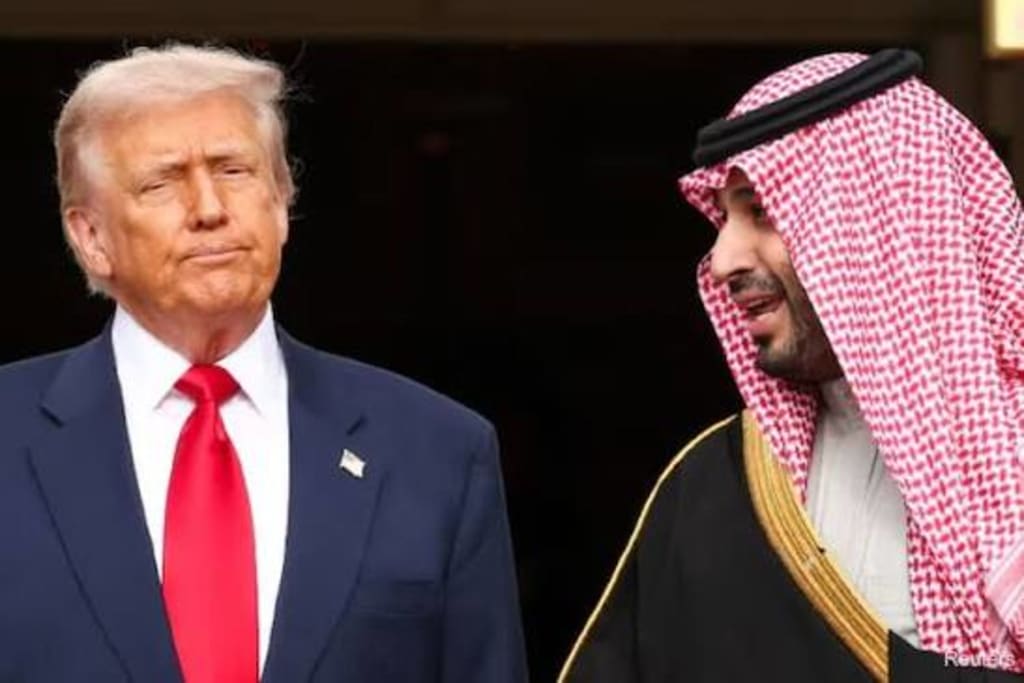
The weight of a “no”
On September 10, 2026, Saudi Crown Prince Mohammed bin Salman called Trump twice.
The first call was a briefing on Yemen. Hours later, he called again to ask U.S. forces to strike the Houthis.
Trump said no.
The refusal carried more weight than a routine diplomatic rebuff. For three decades, Saudi security and U.S. security were nearly the same thing. That was true in the 1991 Gulf War. It was true in the 2015 Yemen war. Now, when Saudi Arabia most needs U.S. force, America has declined. The word marks a shift in the old security arrangement.
I. A ranking of priorities: Hormuz is closer than Mandeb
The “no” comes from where the United States stands now.
Since the U.S.-Iran war began in late February 2026, the Strait of Hormuz has nearly stopped. The waterway carries about one-fifth of global oil trade. Transits have fallen to single digits. Before the war, about 125 large merchant ships passed through daily. The U.S. investment in the war is heavy. White House advisers, including Vice President Vance, have told Trump the war “could last the remainder of his term,” until January 2029.
Trump’s instruction is clear: U.S. forces should stay focused on Iran and the Strait of Hormuz. They should not open a new front.
Washington is ranking priorities under limited resources. In its calculus, the Strait of Hormuz is a core interest. The Bab el-Mandeb is an important interest. Saudi Arabia’s ground war in Yemen is at most a peripheral interest. A senior U.S. official put it this way: “The United States is focused on protecting core national security interests, such as ensuring freedom of navigation in the Red Sea, while empowering our regional partners to take the lead in managing and resolving regional security challenges.”
The key word is “empowering.” The United States wants partners to take the lead. It is shifting from direct intervener in the Middle East to offshore balancer. After Trump returned to office, the Middle East strategic contraction built around “America First” and “offshore balancing” has accelerated and become more transactional. U.S. military and intelligence agencies have privately discussed reducing permanent personnel and facilities in the Middle East if the U.S.-Iran conflict can be ended.
No direct troops still allows involvement. About 200 U.S. troops remain in Saudi Arabia. The United States has promised intelligence and related data on the Houthis. The CENTCOM commander, Cooper, traveled to Saudi Arabia for an emergency coordination meeting. The U.S. strategy is to give intelligence, targeting, and technical support, but not boots. That keeps pressure on the Houthis while keeping U.S. risk and cost low.
Trump rejected more than a Saudi request. He rejected an old Middle East security contract: the United States supplies people and guns, allies supply money and land. That contract is being rewritten. Your war, you fight. I can help, but I will not do it for you.
II. The adversary has changed: from guerrilla to tollbooth operator
The United States is cautious because the adversary has changed.
On September 3, the Houthis launched a large offensive. In nine days, they captured six districts in Taiz and Hodeidah provinces, an area of 5,400 square kilometers. They targeted seven divisions and thirty-eight brigades, causing hundreds of casualties or captures. They also intercepted thirty-two Saudi aircraft sorties and shot down nine drones.
A quasi-regular army produced these results.
The Houthis’ strategic logic matters more than the labels outsiders use. For years, people have called them “Iranian proxies” or “unifiers of North Yemen.” Neither label is accurate. The Houthi-controlled population is about 21 million to 24 million, or 52 to 60 percent of Yemen’s total. They hold the capital, Sanaa, and almost all the densely populated western highlands. By population and geography, they are already the de facto main body of Yemen. But their core logic is not maximizing territory. It is controlling economic nodes that can be monetized: ports, trade routes, strategic chokepoints.
This is why the Houthis care far less about the Marib oil and gas fields than about Mocha port and the Bab el-Mandeb. Oil fields require enormous technical and capital investment before they can be monetized. Ports and shipping lanes produce immediate cash flow and strategic premium. After taking Mocha, the Houthis upgraded from firing missiles from the mountains to stationing artillery on the coast and being able to blockade the Bab el-Mandeb. They became a tollbooth operator capable of affecting global shipping.
Iran’s investment made that jump possible. Iran airlifted Islamic Revolutionary Guard Corps commanders, military advisers, and missile- and drone-related equipment to Yemen in July. In early September, Iran told the Houthis to intensify attacks on Saudi Arabia and promised additional funds, weapons, and senior officers. Iran mainly provides weapons, technology, and strategic support. Houthi cash flow comes from trade taxes, the port economy, smuggling, and resource cuts in controlled areas.
The collapse of the Saudi-led coalition exposed a deeper problem. The forces Saudi Arabia backs are at least four mutually distrustful factions patched together. They are not subordinate to one another, and each has its own interests. The Houthis attack the seams between factions. Defense lines collapse in a chain. The “Mecca Joint Defense Agreement” signed in August, a trilateral common defense treaty among Saudi Arabia, Pakistan, and Turkey, was first tested after Houthi missile and drone attacks inside Saudi Arabia. Pakistan and Turkey were both unwilling to intervene directly. Turkey only issued a condemnation and did not mention fulfilling the agreement at all.
Saudi Arabia spent eleven years and hundreds of billions of dollars building a coalition. It did not hold for eleven days against the Houthi offensive.
III. Double strangulation: the backup pipeline at Mandeb is being pinched
Houthi control over the Bab el-Mandeb matters enormously.
The Bab el-Mandeb lies between Yemen, Djibouti, and Eritrea. At its narrowest point it is about 29 kilometers wide. It is the throat connecting the Red Sea and the Gulf of Aden, and the southern gateway to the Suez Canal. About 7 percent of global oil trade passes through it.
Timing is key. After the Strait of Hormuz was nearly halted by the U.S.-Iran war, Saudi Arabia quickly rerouted crude exports through the east-west pipeline to Yanbu on the Red Sea. Yanbu’s export volume peaked at about 4.5 million barrels per day. Most of it, about 3 million barrels per day, shipped out via the Bab el-Mandeb.
After Hormuz was blocked, the Bab el-Mandeb became the backup pipeline for Middle Eastern oil exports. Now that backup pipeline is being pinched.
Under Houthi threat, Saudi crude flows through the Bab el-Mandeb had already plunged to about 400,000 barrels per day in August. They are lower now. On September 10, after news that the Houthis had captured Mocha port, Brent and U.S. WTI crude both rose more than 7 percent, to $108 and $103 per barrel. Those were the highest levels since May. Capital Economics warned that if the situation worsens, oil prices could spike toward $120 per barrel.
Shipping patterns are changing in systemic ways. Since the Houthis began attacking merchant ships in late 2023, transit volume through the Bab el-Mandeb has fallen by 60 to 70 percent. In the past few days, it has fallen another 46 percent because of escalating fighting. Large numbers of tankers have been forced to reroute around the Cape of Good Hope. That adds about a month to voyages. Freight and insurance costs have soared.
The global energy market is experiencing a double strangulation. Hormuz directly cuts off Persian Gulf exports. The Bab el-Mandeb pinches the rerouting route. The combined effect is far worse than the interruption of a single chokepoint. The International Energy Agency estimates that even if strait traffic gradually recovers, global oil supply in 2026 will still fall by an average of 3.9 million barrels per day. The World Bank expects global energy prices to rise 24 percent.
The Houthis declared a ceasefire on September 11. That act shows their strategy. They want controlled chaos rather than a total blockade. They want to prove they can escalate at any time. A noose that can be tightened at will is more deterrent than a total cutoff. You never know when it will actually be tightened.
IV. Cracks in the old contract
Trump’s refusal looks tactical. It also accelerates a deeper trend: the restructuring of the Middle East security order.
Saudi Arabia faces a harsh reality. The military system it spent eleven years and hundreds of billions of dollars building is no match for the Houthis. The Mecca Joint Defense Agreement it hoped Pakistan and Turkey would uphold exposed its emptiness in its first test. The security guarantor it trusted most, the United States, chose empowerment over doing the work for them.
The United States is undergoing a Middle East strategic transformation. The USS Abraham Lincoln returned to its home port via the Pacific. The Pentagon is evaluating withdrawal from the Persian Gulf. Trump refused Saudi Arabia. These moves point in one direction: the United States is gradually exiting the Middle East. The process is accompanied by ambivalence. Washington wants to reduce its direct military presence, but it does not want Iran to fill the vacuum. Its solution is offshore balancing: using intelligence, weapons, and diplomatic support to empower regional allies so they can handle regional challenges themselves. The strategy has a practical problem. If allies’ capacity is insufficient, the United States must either stand by or re-engage.
Trump’s answer is to stand by. How long that answer holds depends on oil prices at the Bab el-Mandeb, shipping insurance in the Red Sea, and gas prices in the United States.
On Yemen’s mountainous battlefield, the Houthis use low-cost drones and missiles to drain Saudi Arabia’s high-value equipment. A Wing Loong-2 or CH-4 costs about $3 million. The suicide drones the Houthis use for interception may cost a fraction of that. Saudi Arabia does not care about drones being shot down. The Chinese drone production line has landed in Jeddah, with an annual capacity of about 48 aircraft. Replenishment is faster than losses. The real question is what the war means now. Saudi Arabia spent eleven years trying to solve a ground problem with air power. The Houthis’ ground offensive proved that controlling key geographic nodes is more efficient than aerial bombing.
The fighting at the Bab el-Mandeb has already changed the old security order. Trump’s single “no” made that change public.
About the Creator
Jin
Writer of reamstories
https://reamstories.com/jin
Enjoyed the story? Support the Creator.
Subscribe for free to receive all their stories in your feed. You could also become a paid subscriber, letting them know you appreciate their work.
Comments
There are no comments for this story
Be the first to respond and start the conversation.