white house
The epicenter of DC and by extension, the country: The White House is US government incarnate, it's hard to discern what goes on behind those walls...
No Taxes on Tips or Overtime? Trump’s Tax Bombshell Just Changed the Game
If you’ve ever stayed late to finish your shift or depended on tips to keep the lights on, this one's for you. Because as of this week, thanks to a massive new tax overhaul just pushed through by Donald Trump, tips and overtime pay may no longer be taxed at the federal level.
By Bevy Osuosabout a year ago in The Swamp
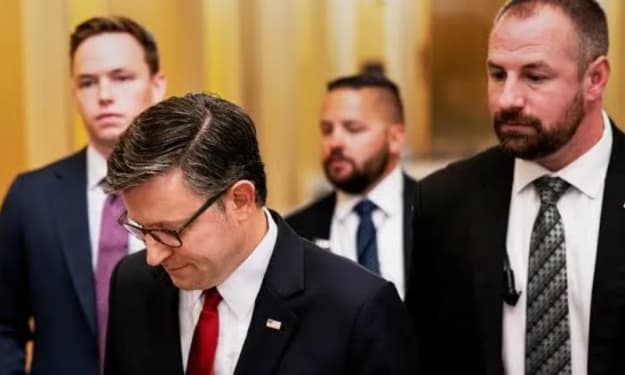
Johnson pushes to get House GOP holdouts to back tax bill
**Johnson Pushes to Get House GOP Holdouts to Back Tax Bill** House Speaker Mike Johnson is intensifying efforts to rally support among Republican holdouts in the House of Representatives as the GOP attempts to pass a significant tax package. The bill, which has been a priority for House Republicans, includes extensions of business tax breaks, increases in the child tax credit, and measures aimed at economic growth. However, internal party divisions have threatened its passage, with several conservative members withholding their support.
By GLOBAL NEWSabout a year ago in The Swamp
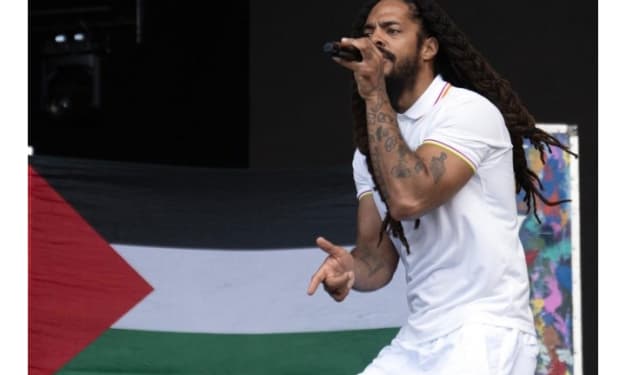
Why the U.S. Revoked Bob Vylan’s Visas: Music, Protest, and the Politics of Expression
In the ever-evolving intersection of music, activism, and politics, few stories highlight the fragile boundary between free expression and international diplomacy as sharply as the recent visa revocation of British punk-rap duo Bob Vylan by the United States. This unprecedented move has not only sparked outrage in artistic communities but also opened a broader conversation on the role of protest in music, the consequences of political speech, and how international artists are treated when they challenge dominant narratives. Who Is Bob Vylan? Bob Vylan, consisting of frontman Bobby Vylan and drummer Bobbie Vylan, is a genre-defying duo from London, England. Formed in 2017, the group blends punk, grime, and hip-hop in a way that is both aggressive and politically charged. They are known for confronting issues such as racism, police brutality, class inequality, and colonialism—all while maintaining an unapologetically anti-establishment tone. Their DIY ethos and fearless lyricism have earned them a loyal fanbase in the UK and abroad. Unlike many mainstream artists who dilute their messages for broader acceptance, Bob Vylan leans heavily into confrontation. And that’s precisely where their recent controversy begins. --- The Glastonbury Incident: Where It All Changed At Glastonbury Festival 2025, Bob Vylan’s performance on June 28 shocked some and energized others. On stage in front of a massive audience, Bobby Vylan led chants of: > "Free, Free Palestine!" "Death, Death to the IDF!" The chants—particularly the latter—ignited a political firestorm. While “Free Palestine” has been widely used in global pro-Palestinian movements, the phrase "Death to the IDF" (Israel Defense Forces) was perceived by many, especially U.S. officials, as crossing a line into incitement of violence. Shortly after the performance, the United States revoked the group’s visas, effectively banning them from entering the country for their upcoming U.S. tour. --- The U.S. Government's Justification The move was confirmed by Deputy Secretary of State Christopher Landau, who stated: > “Foreigners who glorify violence and hatred are not welcome visitors to our country.” From the U.S. perspective, the chant targeting the IDF—a branch of a close ally’s military—was not protected free speech but instead a potential incitement to violence and hate speech. U.S. immigration laws allow for the revocation of visas if individuals are deemed to promote or incite violent acts, even through artistic or political expression. This decision has drawn support from some pro-Israel organizations and lawmakers, but has equally ignited backlash from free speech advocates, artists, and civil liberties groups around the globe. --- The Fallout: Artistic Freedom vs. Political Consequences Bob Vylan’s supporters argue that the U.S. reaction reflects a double standard. American artists who engage in provocative or anti-government messaging rarely face such severe consequences—yet international performers seem to be treated with far less tolerance. Here’s the tension: the United States promotes itself as the global champion of freedom of speech, especially artistic freedom. But when that freedom is exercised by outsiders in a way that challenges U.S. foreign policy or offends political sensibilities, the door appears to close. --- Free Speech, or Incitement? Let’s examine the core issue: were Bob Vylan’s statements an exercise in free speech or an incitement to violence? The chant “Death to the IDF” is undeniably strong and controversial. It can be interpreted in multiple ways: some argue it is a condemnation of institutional violence, while others view it as a call for literal harm against individuals. In legal terms, the question of incitement depends on intent, imminence, and likelihood of actual violence—standards laid out in U.S. Supreme Court precedent (notably Brandenburg v. Ohio). Since Bob Vylan’s comments were made during a live music performance in the UK, with no direct link to violence, it’s unlikely that U.S. citizens or institutions were immediately endangered. Still, the symbolic power of such statements cannot be ignored—especially when related to one of the most sensitive geopolitical conflicts of our time. --- The Broader Context: Music as Protest This isn’t the first time music has collided with politics in a major way: In the 1960s, artists like Bob Dylan, Nina Simone, and Joan Baez were the voices of civil rights and anti-war movements. In the 1980s, Fela Kuti used Afrobeat to protest Nigeria’s military regime—often landing him in jail. In recent years, Kendrick Lamar, Beyoncé, and Childish Gambino have woven powerful political messages into their performances. What makes Bob Vylan’s case stand out is the international political tension and the governmental consequence. Artists from abroad can no longer assume their expression—even from stages thousands of miles away—will be treated as purely symbolic. In a hyperconnected, politically polarized world, words travel fast, and consequences are swift. --- Bob Vylan’s Response The group has not issued a full apology. In fact, Bobby Vylan defended their message in follow-up interviews and social media posts, asserting: > “We speak for the oppressed, not the oppressors. Music is our protest, and we won’t be silenced.” They argue that criticizing a government’s military actions—especially amid rising global outrage over civilian casualties in Gaza—should not be equated with hate speech. Their stance reflects a growing sentiment among younger audiences who demand that artists use their platforms to address injustice. --- Public Reaction: Divided Voices The public response to the visa cancellation has been deeply polarized. Supporters of Israel see it as a justified move against rhetoric that threatens the safety and legitimacy of the Jewish state. Pro-Palestinian activists view it as another example of Western hypocrisy and the silencing of voices demanding justice. Free speech advocates worry about the precedent this sets for the U.S. to police artistic expression—even when it originates outside its borders. On platforms like X (formerly Twitter), the hashtag #LetBobVylanIn trended for days. Meanwhile, some conservative commentators called for the group to be banned from more Western countries. --- What This Means for Other Artists This incident sends a clear signal: international performers are subject to the political climate of the countries they seek to enter. Messages that challenge dominant narratives—especially those tied to sensitive foreign alliances—can have serious ramifications. For artists, this means navigating a difficult path between authentic expression and pragmatic caution. For fans and activists, it raises the question: if art is supposed to challenge, provoke, and push boundaries—where exactly should the line be drawn? --- Conclusion: Art Will Always Be Political Bob Vylan’s visa controversy is not just a headline—it’s a cultural and political moment. It reflects the ongoing tensions between freedom and responsibility, protest and diplomacy, music and power. In a time when silence is often seen as complicity, artists like Bob Vylan choose to speak loudly. Whether one agrees with their message or not, their story forces us to reexamine the true cost of protest in a globalized world. As they face canceled tours and travel bans, their music remains a testament to a legacy that refuses to be muted.
By Ikram Ullahabout a year ago in The Swamp
What I Learned Growing Up in a Cult. Top Story - June 2025.
Earlier this week I was talking to a coworker about life. After a while, we somehow got on the subject of religion. I had to explain that I have an aversion to most organized forms of religion, having been raised in a church that at the time was very cult-like, and later after a split, the faction that stayed with the original leader went full cult. But that begs the question.
By Atomic Historianabout a year ago in The Swamp
Oil price jumps after US strikes Iran
"A Deep Dive into Global Energy Markets": "Oil Price Jumps After US Strikes Iran" In a move that has sent shockwaves through global markets, the price of crude oil spiked following a series of military strikes carried out by the United States against Iranian targets. The escalation of tensions between two of the world's most influential oil-producing nations has led to uncertainty in the energy sector, with far-reaching implications for both oil prices and the broader geopolitical landscape.
By GLOBAL NEWSabout a year ago in The Swamp
The United States' Democratic Backslide
On January 21st, 2025, Donald Trump began his second term as president. It was a day of mixed emotions throughout the nation. Some were elated, believing that problems would finally be fixed. For others, it was somber, their biggest fears a reality.
By caitodoesstuffabout a year ago in The Swamp
Bitcoin vs Open Interest Should traders be worried by THIS divergence
The price action of Bitcoin has recently been scrutinized, but savvy traders are also paying attention to something even more telling: a significant divergence between open interest in Bitcoin and its price. The derivatives market may be sending a cautious signal while the spot market maintains its optimism. Analysts are concerned about this divergence, which raises the question of whether traders should be concerned. Understanding what open interest actually entails is essential before delving into its ramifications. The total number of unresolved derivative contracts in the futures and options markets is referred to as open interest. It shows how much activity and participation there is in the market. An increase in open interest typically suggests that new money is flowing into the market, which can reinforce a trend. A decline could indicate that traders are closing positions, which could indicate indecisiveness or exhaustion of the trend. The price of Bitcoin has been either steady or showing signs of rising, hovering in bullish territory above key support levels in recent weeks. However, open interest in Bitcoin futures has not followed suit. In fact, in several instances, open interest has dropped or stagnated while prices climbed—a classic divergence.
By GLOBAL NEWSabout a year ago in The Swamp
It’s the Racism, Stupid
The Tea Party’s Legacy and the Rise of MAGA As I watched the “No Kings” protests unfold this Flag Day, I thought of how many opportunities we Americans had to stop the current fascist regime if only we’d had the courage to call out our festering racism earlier. Instead, the people who don’t think like the fascists but benefit from looking like the fascists didn’t hold them accountable. This is especially true for the eight years of Barack Obama's presidency, from 2008 through 2016. The election of the first Black president of the United States caused a tidal wave of white backlash that brought fascism to our shores.
By Kai Wilsonabout a year ago in The Swamp