white house
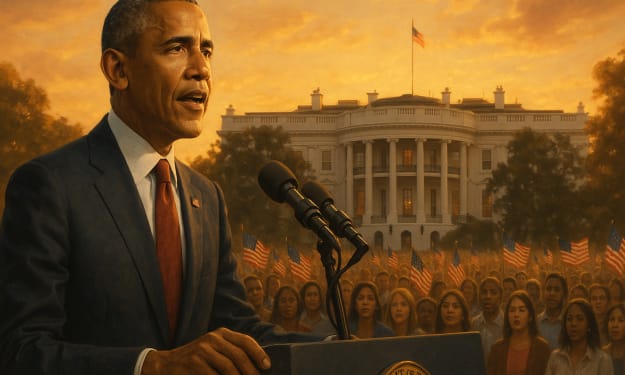
The epicenter of DC and by extension, the country: The White House is US government incarnate, it's hard to discern what goes on behind those walls...
What’s Going On with Trump’s Health?
In recent days, social media has been flooded with images and speculation about former U.S. President Donald Trump’s health. A visible bruise on his hand and noticeable swelling in his legs led many to question if something serious was going on behind the scenes. Was Trump hiding a medical condition? Was he seriously ill? Here’s what we know based on confirmed reports and official medical updates.
By Muhammad Adilabout a year ago in The Swamp
Trump Says Rosie O'Donnell Should Lose Her Citizenship — Her Response Broke the Internet
⚡ 1. Trump’s Startling Threat on Truth Social On July 12, former President Donald Trump posted on Truth Social that he’s “giving serious consideration” to revoking Rosie O’Donnell’s U.S. citizenship, labeling her a “threat to humanity” and suggesting she remain in Ireland, where she recently relocated. The dramatic declaration escalated their decades‑long feud, drawing widespread attention and outrage across the Internet.
By Bevy Osuosabout a year ago in The Swamp
Saddam Hussein: The Rise, Betrayal, and Fall of Iraq’s Last Lion.Hero or Villain
Introduction History is filled with leaders who divide the world between hero and villain. Saddam Hussein, Iraq’s iron-fisted dictator, was one of them. From his rise as a secular modernizer to a tyrant who used chemical weapons and clashed with superpowers, Saddam’s story is a window into betrayal, power games, and how the Middle East became the epicenter of endless conflict.This is not just the story of one man — it’s a reminder of how foreign interests, oil, and regional rivalries can ignite wars that shape generations to come.
By Saeed ullahabout a year ago in The Swamp
Air India Flight 171: The Mysterious Fuel Cutoff That Led to Disaster
1. A Catastrophe Minutes After Takeoff On June 12, 2025, Air India Flight 171—a Boeing 787‑8 Dreamliner—crash-landed into a residential hostel in Ahmedabad just 30 to 40 seconds after takeoff. The plane was en route from Ahmedabad to London Gatwick, carrying 230 passengers and 12 crew members. Of those aboard, 241 perished, and 19 were killed on the ground, with dozens more injured. Only one passenger survived, later identified as Vishwash Kumar Ramesh . The aircraft reached an altitude of just 625 feet, never climbing beyond 180 knots, before descending uncontrollably . In the chaos that followed, even experienced investigators struggled to identify what had so rapidly spiraled into tragedy. --- 2. Fuel Was Cut, Engines Shut Down The 15‑page preliminary report released by India’s Aircraft Accident Investigation Bureau (AAIB) offers the first insight: within seconds of takeoff, both fuel control switches—normally set to “RUN”—were found in the “CUTOFF” position on both engines, causing an immediate loss of thrust. Power was briefly restored when the switches were flipped back on, but the plane lacked sufficient altitude or time to recover . Investigators stressed that fuel contamination, bird strikes, or mechanical failure were ruled out. The report also confirmed one engine relit, while the other never regained full power . ---
By Ikram Ullahabout a year ago in The Swamp
The Epstein Files Fiasco:
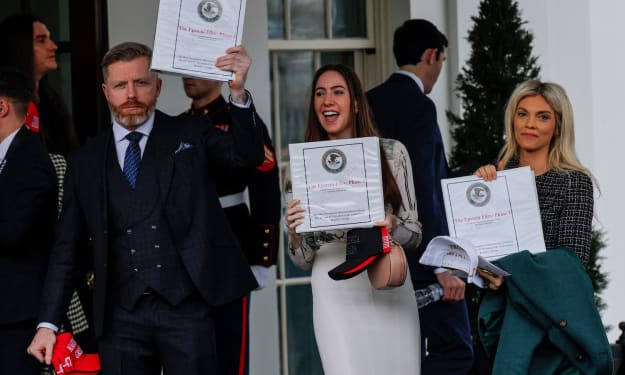
Picture this: March 2025, the MAGA faithful, freshly into a new administration, are strutting out of the White House, practically skipping like kids in a candy store. Why, you ask? Because they’re clutching the Epstein Files like they just won the lottery. “Justice is coming!” they chant jubilantly, as if they were in a poorly scripted superhero movie. Attorney General, Pam Bondi, in a separate interview displaying a smirk that could rival the Cheshire Cat, declares to the cameras, “You’re gonna want to stay tuned, America. The truth is about to drop, and heads are going to roll, because the Epstein Files and reports are on my desk!"
By Meko James about a year ago in The Swamp
Trump's Frustration with Putin and the Uncertain Future of the Russia-Ukraine War
The ongoing war in Ukraine continues to test the diplomatic resolve of world leaders, with recent developments highlighting growing frustration in the United States. President Donald Trump, who once vowed to end the war in Ukraine within 24 hours of taking office, now faces mounting obstacles in his attempts to broker peace. Despite multiple rounds of negotiations and increasing diplomatic engagement, a ceasefire remains elusive as Russia intensifies its military campaign against Ukraine. In recent days, US Secretary of State Marco Rubio has met twice with Russian Foreign Minister Sergey Lavrov, underscoring Washington's persistent efforts to bring the conflict to a close. These talks, held on the sidelines of the ASEAN summit in Malaysia, lasted nearly an hour but yielded no immediate breakthroughs. Instead, they highlighted the widening gap between American aspirations for peace and Moscow’s hardened stance. Trump's public tone towards Russian President Vladimir Putin has also shifted. Previously criticized for his seemingly warm approach to the Kremlin, Trump has lately expressed disappointment over Putin's reluctance to show flexibility. “We get a lot of meaningless talk from Putin. He’s very nice, but in the end, it means nothing,” Trump remarked. This growing frustration has raised questions about whether Trump's stance on Russia is evolving into something more confrontational. Despite these comments, experts remain skeptical about any fundamental shift in Trump’s approach. Analysts argue that previous signs of a harder stance have failed to translate into significant policy changes. While some see an opportunity for a new direction in US foreign policy, others caution against premature conclusions. Trump's unpredictability remains a defining feature of his diplomacy, leaving allies and adversaries alike uncertain about what comes next. Meanwhile, the Biden-era military aid pipeline to Ukraine has continued under Trump’s leadership, albeit with some turbulence. Earlier this month, the Trump administration briefly paused arms shipments to Kyiv, only to resume them days later. Trump explained the reversal by emphasizing Ukraine's need to defend itself amidst Russia’s renewed offensives. However, in a significant change, Trump announced that future weapons would be sold to NATO, which would then transfer them to Ukraine. “We’re sending weapons to NATO, and NATO is paying for them, one hundred percent,” Trump clarified, describing the deal as part of an arrangement finalized during the NATO summit in The Hague. Despite these moves, Trump’s decision to continue arming Ukraine has sparked backlash from within his political base. Several prominent figures in the conservative movement expressed disappointment, questioning the wisdom of further entangling the United States in what they perceive as a costly and unwinnable conflict. For many in Trump’s MAGA (Make America Great Again) base, the Ukraine war represents a distraction from America’s domestic priorities. Alongside military support, Washington is weighing new economic measures to pressure Moscow. A bipartisan bill in Congress seeks to expand sanctions against Russia, targeting not only Russian industries but also countries that continue to purchase Russian oil, gas, and uranium. If passed, this would mark a major escalation in the West's efforts to isolate Russia economically. However, Russia's energy trade with China, India, and Turkey remains robust, limiting the global impact of Western sanctions. Despite imposing over 21,000 sanctions since the invasion began, the Russian economy has endured, buoyed by energy exports to Asia and limited European purchases of critical materials like uranium. Ukrainian President Volodymyr Zelenskyy continues to call on the West to tighten sanctions further, arguing that only sustained economic pressure can compel Moscow to negotiate peace in good faith. Trump has flirted with harsher economic measures, even threatening secondary tariffs on nations buying Russian oil. Yet, these threats have so far remained rhetorical. Whether Trump will ultimately back additional sanctions remains uncertain, given his past reluctance to impose meaningful costs on Russia. At the same time, the Trump administration has hinted at the possibility of disengagement. Secretary of State Rubio recently stated that the US could consider stepping back from the Ukraine conflict if diplomatic efforts fail to produce results. “It’s not our war. We have other priorities,” Rubio said, reflecting a sentiment that has gained traction in some corners of the US political landscape. Trump echoed these thoughts, albeit more cautiously, suggesting that the US remains committed to seeking a resolution but does not wish to remain entangled indefinitely. Nevertheless, the latest diplomatic meetings suggest the US is not abandoning peace efforts just yet. Rubio reported that during his discussions with Lavrov, new proposals for peace were exchanged. Although the specifics remain confidential, Rubio described them as a “different approach” that could open the door to renewed negotiations. Russia, for its part, also struck a cautiously optimistic tone, reaffirming its willingness to engage in dialogue and explore peaceful solutions. The path forward for the Russia-Ukraine war remains fraught with uncertainty. On one hand, intensified US-Russia diplomacy and continued arms supplies to Ukraine signal that Washington is not prepared to let Kyiv fall. On the other hand, growing domestic opposition, economic considerations, and diplomatic frustrations could push the US to recalibrate its involvement. For now, all eyes remain on Trump and Putin, whose complex relationship continues to shape the fate of a war that has already spanned more than three years. Whether through diplomacy, deterrence, or disengagement, the next chapter in the Russia-Ukraine conflict will be defined by the decisions made in Washington and Moscow in the weeks ahead.
By Ikram Ullahabout a year ago in The Swamp
"Genius or Chaos? The Polarizing Legacies of Trump and Musk in Modern America"
Genius or Chaos? The Polarizing Legacies of Trump and Musk in Modern America From the White House to SpaceX, How Two Controversial Icons Are Redefining Power, Innovation, and Public Opinion in the 21st Century --- In a time defined by rapid change, populism, and disruption, few figures embody the chaos and creativity of the 21st century like Donald J. Trump and Elon Musk. One a businessman-turned-president, the other a tech mogul-turned-cultural provocateur. Together, they’ve redefined the limits of influence—blurring the lines between politics, innovation, and spectacle. Some see them as visionaries. Others as dangerous egomaniacs. But no one can deny their impact. Whether it’s Trump tweeting foreign policy from the White House, or Musk reshaping the auto, space, and social media industries in his image, both men are polarizing symbols of a deeper shift happening across America—and the world. So, what happens when ambition meets controversy? When genius collides with unpredictability? Let’s explore how Trump and Musk are altering the very definition of leadership, technology, and public discourse. --- The Outsider’s Appeal: Disruption as a Brand Donald Trump and Elon Musk have mastered the art of disruption. In very different ways, they’ve positioned themselves as outsiders willing to break the rules—and millions have followed them because of it. Trump’s Rise was built on being the anti-politician. He mocked the establishment, used reality TV to build a loyal base, and turned presidential debates into viral moments. Love him or hate him, Trump made politics more accessible—and theatrical—than ever before. Musk’s Ascent, meanwhile, comes from Silicon Valley, where he turned companies like Tesla and SpaceX into empires by promising to break the mold. While traditional automakers were cautious, Musk bet everything on electric cars and won. While NASA was underfunded, Musk launched reusable rockets into orbit and put a Tesla Roadster in space. He thrives on big, bold, risky ideas—and unapologetic tweets. Their common thread? They built cult-like followings not just because of what they do, but how they do it. With showmanship, audacity, and an utter disregard for convention. --- Twitter, Free Speech, and Chaos It’s impossible to understand either man without understanding Twitter (now X). The platform has been their weapon of choice—a digital arena where both have fought battles, spread messages, and ignited global debates. Trump famously weaponized Twitter during his presidency. He bypassed traditional media to speak directly to his followers, often in bombastic, impulsive, and controversial language. His tweets could crash markets, shape policy, or spark international incidents. Eventually, the platform banned him—an unprecedented move for a sitting president. Enter Elon Musk. In 2022, he bought Twitter, rebranded it to “X,” and declared it a bastion for “free speech.” He reversed bans, including Trump’s, and fired thousands of employees. The results? A mix of chaos, misinformation, innovation, and a fundamental question: Should one billionaire control the global town square? While Trump used Twitter to change politics, Musk has used it to change Twitter itself. Both have turned a simple app into a battleground for ideology, culture, and control. --- Innovation vs. Ego: The Double-Edged Sword Elon Musk is often called a genius. And in many ways, he is. Tesla revolutionized the EV industry. SpaceX made spaceflight cheaper and more ambitious. Neuralink is attempting to merge brains with machines. He’s even building tunnels under cities with The Boring Company. But his critics argue that Musk’s ego often gets in the way. His erratic tweets have sparked lawsuits, moved stock prices, and led to SEC fines. His leadership at Twitter (X) has been described as chaotic, impulsive, and sometimes petty. While he promises to save humanity, he also posts memes at midnight that raise eyebrows—and stock prices. Similarly, Donald Trump’s rise was built on the promise of disruption—but it often veered into ego-driven theatrics. From the infamous “very fine people” comment after Charlottesville, to the Capitol riot on January 6th, critics say Trump’s leadership was less about policy and more about personal loyalty and grievance. Supporters, however, claim he stood up to the establishment and fought for forgotten Americans. In both men, we see the danger—and allure—of unchecked ego wrapped in brilliance. --- Cult of Personality: More Than Just Men Trump and Musk aren’t just individuals—they are movements. The MAGA Movement is more than a slogan. It’s a cultural force that redefined the Republican Party, inspired millions, and sparked a wave of populist politics around the world. Trump’s influence endures, even after leaving office. He remains the GOP frontrunner and could very well return to the White House. The Musk Effect has made him a symbol for tech-savvy libertarians, crypto enthusiasts, and those skeptical of traditional authority. His followers hang on his every word—whether he’s promising a Mars colony, mocking legacy media, or musing about AI. Musk memes become news. His tweets move markets. His fans believe he’s a once-in-a-generation genius. Both men blur the line between celebrity and leadership. They’ve replaced institutions with personalities. And in doing so, they’ve sparked a new kind of loyalty—fierce, emotional, and deeply personal. --- Critics vs. Loyalists: A Nation Divided What makes Trump and Musk so fascinating is not just who they are—but how people react to them. To their critics, Trump is a threat to democracy, and Musk is an irresponsible billionaire. They see danger in their unpredictability, recklessness, and disregard for norms. To them, these men represent a broader erosion of truth, civility, and accountability. To their supporters, Trump is a fighter who stood up for the forgotten American, while Musk is a visionary who’s building the future. They admire their courage to speak freely, fight political correctness, and challenge the elite. This divide reflects a deeper rift in modern America—between progress and nostalgia, globalism and nationalism, control and freedom. Trump and Musk didn’t create this divide, but they’ve become its avatars. --- Legacy in the Making It’s too early to define the final legacy of either man. Trump may run for president again. Musk continues to push boundaries in AI, space, and energy. Both are reshaping their fields in real time. Their legacies will depend not just on what they build—but what they break along the way. Will Trump be remembered as the man who shattered political norms—or the one who nearly shattered democracy? Will Musk be seen as a messiah of innovation—or a cautionary tale of unchecked ambition? Only history will tell. But one thing is certain: They’ve already changed the world—and there’s no going back. --- Final Thoughts: Genius or Chaos? The story of Donald Trump and Elon Musk is not just about two powerful men. It’s about a changing world. One where charisma can replace credentials, where tweets can become policy, and where influence no longer comes from institutions—but from individuals who dare to rewrite the rules. In Trump, we see the rise of populism. In Musk, the rise of techno-libertarianism. Both inspire, both enrage. And both remind us that in the 21st century, genius and chaos often walk hand in hand. Whether you love them or loathe them, one thing is clear: You can’t ignore them.
By Hasbanullahabout a year ago in The Swamp
From Inspiration to Isolation
In Lahore, where I watch global news unfold, the images from Gaza—shattered homes, grieving families—stream relentlessly on social media. As a Pakistani observer, I see not just a humanitarian catastrophe but a crisis for America’s global standing. The U.S., long a beacon of moral leadership, risks losing its credibility by contradicting its values with its actions.
By Zeeshan Aliabout a year ago in The Swamp
Investors traded a record $6.6 trillion worth of stock in the first half of 2025
In the first half of 2025, "Global Stock Trading Hits Record $6.6 Trillion" Global stock markets witnessed an unprecedented surge in activity in the first half of 2025, as total trading volumes soared to a record \$6.6 trillion. This milestone, the highest half-year figure in history, reflects heightened investor engagement driven by a mix of economic optimism, technological advancements, and a new wave of retail participation reshaping the financial landscape.
By GLOBAL NEWSabout a year ago in The Swamp
“What If a Nuclear Bomb Drops Tomorrow? Here’s How You Can Actually Survive”
☢️ What If a Nuclear Bomb Drops Tomorrow? Here’s How You Can Actually Survive It’s just another normal morning. You’re scrolling your phone, sipping chai, maybe planning the day. And then… your screen flashes. “Emergency Alert: Nuclear Strike Incoming. Seek Shelter Immediately.” Sounds like a movie, right? But what if it wasn’t? What if, right now, somewhere in the world, a nuclear bomb was in the air — and you had only minutes (maybe seconds) to save your life? This isn’t science fiction. This is survival. Let’s break down exactly what happens when a nuclear bomb is dropped — and more importantly, what you must do to survive. --- 💥 Step 1: What Happens in the First 30 Seconds? A flash — brighter than the sun A massive fireball — temperatures reach millions of degrees A shockwave — wind faster than a hurricane, shattering glass, crushing buildings A deadly mushroom cloud — carrying radioactive fallout into the sky If you’re at ground zero (direct hit) — survival is almost impossible. But most people won’t be at ground zero. They’ll be within a few miles — and they can survive if they act fast. --- 🛡️ Step 2: Don’t Look at the Flash — Drop, Cover, Shield! Your eyes could melt. Literally. Looking at the blast causes instant blindness, even if you’re miles away. As soon as you see the flash: Drop to the ground — instantly. Cover your head — protect your face, ears, and neck. If you're outside, try to hide behind a wall or inside a car. This isn’t overreaction — it’s proven advice from Cold War survival manuals. --- 🏃 Step 3: Get Inside Fast (Within 10 Minutes) The bomb drops. The sky goes silent. But the real danger is just beginning. Radioactive fallout — tiny particles of deadly dust — will start raining down in the next few minutes. This dust can kill within hours if inhaled or absorbed. You must: Get indoors. Any building is better than none. Go as deep inside as possible — ideally underground, or the center of a concrete structure. Shut all doors, windows, and vents. Block cracks with wet towels if needed. Even a parking garage or basement can reduce radiation by 90%. --- 🧭 Step 4: Stay Put — For At Least 24 to 72 Hours Here’s the hardest part: don’t run outside. Most people who died in Hiroshima and Nagasaki after the initial blast… died because they went outside. Fallout levels drop massively after the first 24–48 hours. If you leave too early, you expose yourself to deadly radiation. Stay put. Ration food and water. Listen to radio/phone for updates (if working). Wait for official instructions. If you have a basement, that’s your bunker now. Welcome to survival mode. --- 🧰 Step 5: What to Keep in a “Nuclear Go-Bag”? You never know when panic might strike. A small go-bag can save your life. Here’s what you should have: Water bottles (3-day supply) Dry food (high-calorie, non-perishable) Flashlight with batteries Battery-powered or crank radio N95 masks (for fallout dust) Plastic sheets and duct tape (to seal doors/windows) First aid kit Potassium Iodide pills (protects your thyroid from radiation) This isn’t paranoia — it’s preparation. --- 🤯 Real Facts That Will Shock You You don’t need a bunker to survive — just 1 meter of concrete or 2 feet of dirt can shield you from deadly radiation. Most modern cities don’t have public shelters anymore. Radiation exposure isn’t always instant. It takes hours or days to cause symptoms — which gives you time to act. After 2 weeks, most areas become safe enough to exit. --- 🧠 Why We Must Talk About This Governments don’t want to cause panic. So most people don’t know what to do during a nuclear emergency. But ignorance = death. By knowing the basics, you don’t just save yourself — you can save your family, neighbors, and even strangers. We live in a time where world tensions rise and fall every day. Knowing how to survive a nuclear blast doesn’t make you paranoid. It makes you smart. --- 🏁 Final Words: You Can Survive — If You Know What to Do If a nuclear bomb ever falls — the world will never be the same. But you can be one of the survivors. Not because you’re lucky — but because you were ready. Remember this: > “The difference between panic and survival… is preparation.” Stay alert. Stay informed. And never underestimate the power of knowledge. ---
By James World about a year ago in The Swamp