supreme court
The highest court has the highest stakes. Analysis of Supreme Court justices and their always-controversial rulings.
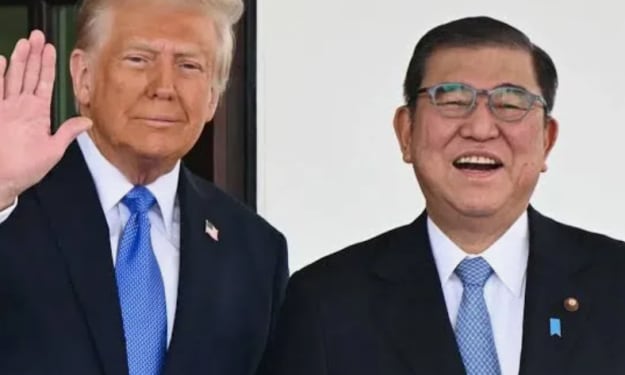
US-Japan trade deal gives Trump control over $550 billion in investments. It could be ‘vapor ware’ — and a model for other countries
**The US-Japan trade agreement grants Trump control over investments worth $550 billion. It Might Be "Vapor Ware" and Serve as an Example for Other Countries** Former President Donald Trump claimed in a high-profile announcement that a new US-Japan trade deal gave the United States leverage over 550 billion dollars in Japanese investment. The deal has been met with both enthusiasm and skepticism, with Trump hailing it as a landmark achievement for American manufacturing and job creation. Some have dubbed it potential "vapor ware" due to critics' claims that the numbers may be exaggerated, the agreements are non-binding, and the economic impact is speculative. Nonetheless, the way the deal is structured and presented may be used as a model for US trade negotiations in the future, especially if the administration is focused on optics and unilateral gain. At the heart of the agreement is a framework wherein Japan pledged to direct investment toward American industries — especially manufacturing, infrastructure, and emerging technologies. During his presidency, Trump put bilateral trade agreements ahead of multilateral ones and hailed the agreement as an example of nationalist economics. It is in line with his "America First" platform, which places an emphasis on bringing manufacturing jobs back to the United States and reducing reliance on supply chains from other countries. However, experts caution that the headline figure of \$550 billion is misleading. Before the agreement was signed, a significant portion of the pledged investment was already in the works. Financial analysts point out that Japanese companies like Toyota, SoftBank, and Mitsubishi have been present in the United States for a considerable amount of time. Trump can take credit for the trade deal because it simply brings together anticipated and existing investments under a new political banner. Furthermore, the agreement lacks specific enforcement mechanisms. It does not include tariff adjustments, guarantees of market access, or procedures for resolving disputes like traditional trade pacts do. Instead, it resembles a memorandum of understanding, which is advantageous from a political standpoint but has no legal force. Because of this, some economists have referred to it as "vapor ware," which refers to a policy that makes headlines but does not result in significant change. The deal's strategy reflects a larger trend in the way trade agreements are being used as political capital, despite the ambiguity. By framing the deal as a huge economic win — regardless of its actual substance — Trump leveraged it for domestic approval and international prestige. His administration argued that the mere announcement of the deal created a “confidence effect,” encouraging private-sector investment and lifting stock markets.
By GLOBAL NEWSabout a year ago in The Swamp
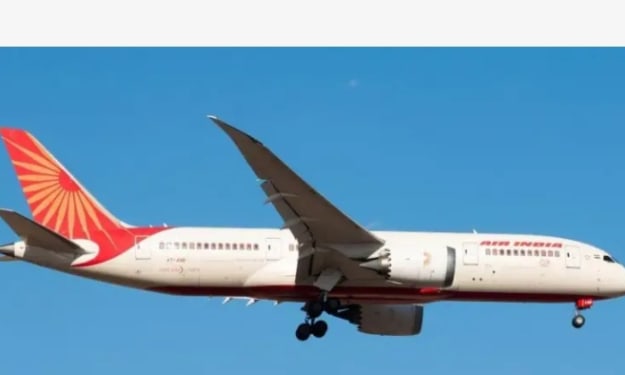
Air India Flight 171: The Mysterious Fuel Cutoff That Led to Disaster
1. A Catastrophe Minutes After Takeoff On June 12, 2025, Air India Flight 171—a Boeing 787‑8 Dreamliner—crash-landed into a residential hostel in Ahmedabad just 30 to 40 seconds after takeoff. The plane was en route from Ahmedabad to London Gatwick, carrying 230 passengers and 12 crew members. Of those aboard, 241 perished, and 19 were killed on the ground, with dozens more injured. Only one passenger survived, later identified as Vishwash Kumar Ramesh . The aircraft reached an altitude of just 625 feet, never climbing beyond 180 knots, before descending uncontrollably . In the chaos that followed, even experienced investigators struggled to identify what had so rapidly spiraled into tragedy. --- 2. Fuel Was Cut, Engines Shut Down The 15‑page preliminary report released by India’s Aircraft Accident Investigation Bureau (AAIB) offers the first insight: within seconds of takeoff, both fuel control switches—normally set to “RUN”—were found in the “CUTOFF” position on both engines, causing an immediate loss of thrust. Power was briefly restored when the switches were flipped back on, but the plane lacked sufficient altitude or time to recover . Investigators stressed that fuel contamination, bird strikes, or mechanical failure were ruled out. The report also confirmed one engine relit, while the other never regained full power . ---
By Ikram Ullahabout a year ago in The Swamp
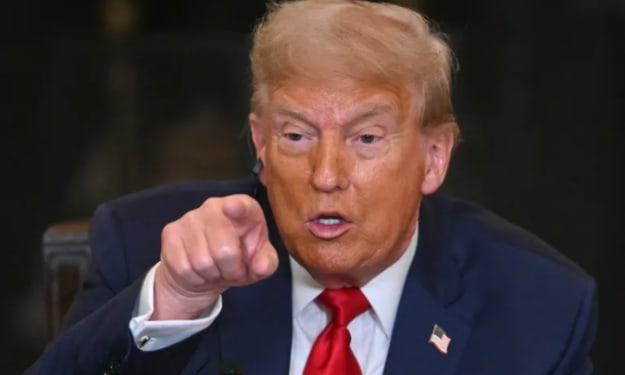
Trump's Frustration with Putin and the Uncertain Future of the Russia-Ukraine War
The ongoing war in Ukraine continues to test the diplomatic resolve of world leaders, with recent developments highlighting growing frustration in the United States. President Donald Trump, who once vowed to end the war in Ukraine within 24 hours of taking office, now faces mounting obstacles in his attempts to broker peace. Despite multiple rounds of negotiations and increasing diplomatic engagement, a ceasefire remains elusive as Russia intensifies its military campaign against Ukraine. In recent days, US Secretary of State Marco Rubio has met twice with Russian Foreign Minister Sergey Lavrov, underscoring Washington's persistent efforts to bring the conflict to a close. These talks, held on the sidelines of the ASEAN summit in Malaysia, lasted nearly an hour but yielded no immediate breakthroughs. Instead, they highlighted the widening gap between American aspirations for peace and Moscow’s hardened stance. Trump's public tone towards Russian President Vladimir Putin has also shifted. Previously criticized for his seemingly warm approach to the Kremlin, Trump has lately expressed disappointment over Putin's reluctance to show flexibility. “We get a lot of meaningless talk from Putin. He’s very nice, but in the end, it means nothing,” Trump remarked. This growing frustration has raised questions about whether Trump's stance on Russia is evolving into something more confrontational. Despite these comments, experts remain skeptical about any fundamental shift in Trump’s approach. Analysts argue that previous signs of a harder stance have failed to translate into significant policy changes. While some see an opportunity for a new direction in US foreign policy, others caution against premature conclusions. Trump's unpredictability remains a defining feature of his diplomacy, leaving allies and adversaries alike uncertain about what comes next. Meanwhile, the Biden-era military aid pipeline to Ukraine has continued under Trump’s leadership, albeit with some turbulence. Earlier this month, the Trump administration briefly paused arms shipments to Kyiv, only to resume them days later. Trump explained the reversal by emphasizing Ukraine's need to defend itself amidst Russia’s renewed offensives. However, in a significant change, Trump announced that future weapons would be sold to NATO, which would then transfer them to Ukraine. “We’re sending weapons to NATO, and NATO is paying for them, one hundred percent,” Trump clarified, describing the deal as part of an arrangement finalized during the NATO summit in The Hague. Despite these moves, Trump’s decision to continue arming Ukraine has sparked backlash from within his political base. Several prominent figures in the conservative movement expressed disappointment, questioning the wisdom of further entangling the United States in what they perceive as a costly and unwinnable conflict. For many in Trump’s MAGA (Make America Great Again) base, the Ukraine war represents a distraction from America’s domestic priorities. Alongside military support, Washington is weighing new economic measures to pressure Moscow. A bipartisan bill in Congress seeks to expand sanctions against Russia, targeting not only Russian industries but also countries that continue to purchase Russian oil, gas, and uranium. If passed, this would mark a major escalation in the West's efforts to isolate Russia economically. However, Russia's energy trade with China, India, and Turkey remains robust, limiting the global impact of Western sanctions. Despite imposing over 21,000 sanctions since the invasion began, the Russian economy has endured, buoyed by energy exports to Asia and limited European purchases of critical materials like uranium. Ukrainian President Volodymyr Zelenskyy continues to call on the West to tighten sanctions further, arguing that only sustained economic pressure can compel Moscow to negotiate peace in good faith. Trump has flirted with harsher economic measures, even threatening secondary tariffs on nations buying Russian oil. Yet, these threats have so far remained rhetorical. Whether Trump will ultimately back additional sanctions remains uncertain, given his past reluctance to impose meaningful costs on Russia. At the same time, the Trump administration has hinted at the possibility of disengagement. Secretary of State Rubio recently stated that the US could consider stepping back from the Ukraine conflict if diplomatic efforts fail to produce results. “It’s not our war. We have other priorities,” Rubio said, reflecting a sentiment that has gained traction in some corners of the US political landscape. Trump echoed these thoughts, albeit more cautiously, suggesting that the US remains committed to seeking a resolution but does not wish to remain entangled indefinitely. Nevertheless, the latest diplomatic meetings suggest the US is not abandoning peace efforts just yet. Rubio reported that during his discussions with Lavrov, new proposals for peace were exchanged. Although the specifics remain confidential, Rubio described them as a “different approach” that could open the door to renewed negotiations. Russia, for its part, also struck a cautiously optimistic tone, reaffirming its willingness to engage in dialogue and explore peaceful solutions. The path forward for the Russia-Ukraine war remains fraught with uncertainty. On one hand, intensified US-Russia diplomacy and continued arms supplies to Ukraine signal that Washington is not prepared to let Kyiv fall. On the other hand, growing domestic opposition, economic considerations, and diplomatic frustrations could push the US to recalibrate its involvement. For now, all eyes remain on Trump and Putin, whose complex relationship continues to shape the fate of a war that has already spanned more than three years. Whether through diplomacy, deterrence, or disengagement, the next chapter in the Russia-Ukraine conflict will be defined by the decisions made in Washington and Moscow in the weeks ahead.
By Ikram Ullahabout a year ago in The Swamp
Investors traded a record $6.6 trillion worth of stock in the first half of 2025
In the first half of 2025, "Global Stock Trading Hits Record $6.6 Trillion" Global stock markets witnessed an unprecedented surge in activity in the first half of 2025, as total trading volumes soared to a record \$6.6 trillion. This milestone, the highest half-year figure in history, reflects heightened investor engagement driven by a mix of economic optimism, technological advancements, and a new wave of retail participation reshaping the financial landscape.
By GLOBAL NEWSabout a year ago in The Swamp
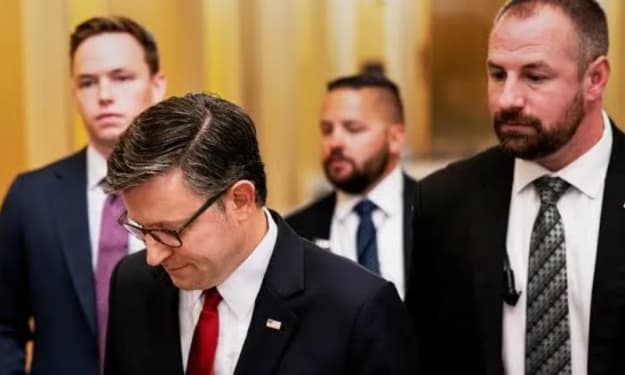
Johnson pushes to get House GOP holdouts to back tax bill
**Johnson Pushes to Get House GOP Holdouts to Back Tax Bill** House Speaker Mike Johnson is intensifying efforts to rally support among Republican holdouts in the House of Representatives as the GOP attempts to pass a significant tax package. The bill, which has been a priority for House Republicans, includes extensions of business tax breaks, increases in the child tax credit, and measures aimed at economic growth. However, internal party divisions have threatened its passage, with several conservative members withholding their support.
By GLOBAL NEWSabout a year ago in The Swamp
SCOTUS vs LGBTQ. Top Story - July 2025.
What is the purpose of schools? To educate the next generation of citizens for our country. To prepare them to become a functional member of society. When you live in a country created from a diverse set of cultures, then schools need to prepare the next generation to collaborate with a diverse workforce. Most educators would agree with this ideology of education and design classrooms to accommodate a diverse range of students from any background and culture. On June 27, 2025 the Supreme Court ruled against diversity, excluding LGBTQ+ representation in public schools.
By Iris Harrisabout a year ago in The Swamp
What I Learned Growing Up in a Cult. Top Story - June 2025.
Earlier this week I was talking to a coworker about life. After a while, we somehow got on the subject of religion. I had to explain that I have an aversion to most organized forms of religion, having been raised in a church that at the time was very cult-like, and later after a split, the faction that stayed with the original leader went full cult. But that begs the question.
By Atomic Historianabout a year ago in The Swamp
The Fear That Shapes Us
“In times of universal deceit, telling the truth becomes a revolutionary act.” — George Orwell e World on Edge It begins in silence. A mother turns off the news and looks at her child differently. A father locks the door, not from robbers, but from headlines. An elderly man walks past a newspaper stand and mutters, “They’re lying again.” All over the world—from the White House to West Bank, from Tehran to Tel Aviv, from Kashmir to Kyiv—fear has replaced logic. Power has replaced truth. And for many, the only real battlefield is the human mind. --- 🧠 Fear as a Political Weapon Fear is the most ancient, primal human response. But in the hands of modern politics, it has evolved into a silent psychological weapon. Governments no longer need bullets to dominate minds. They have talking heads, clickbait headlines, deepfakes, and carefully scripted press releases. Through them, fear becomes systematic—administered like medicine and justified like war. We are told to fear: The other religion. The immigrant. The foreign power. Our own freedom of thought. But what if the enemy is not across borders, but inside the broadcast? --- 🔁 The Psychological Cycle Psychologically, fear triggers fight, flight, or freeze. But in global affairs, it creates something worse: submissive obedience. The average citizen, overwhelmed and anxious, begins to: Distrust everything Avoid complex truth Seek refuge in simplified lies Justify inhumane actions in the name of safety That is how entire populations slowly begin to accept war as defense, censorship as order, and power as morality. --- 🏛️ Superpowers or Superpredators? Let’s be honest: The term “superpower” has lost its dignity. Once a symbol of stability and guidance, today it reminds us of: Proxy wars fought in poor countries Weapon sales in the name of peace Diplomacy used for economic bullying Alliances built on shared paranoia, not shared values Whether it’s America’s role in Ukraine, China's eye on Taiwan, or Israel’s actions in Gaza, we must ask ourselves: When does power become the enemy of humanity? --- 🪞 A Mirror to Our Own Minds This isn’t just geopolitics. It’s psychology. Each headline we read, each image of a bombing or protest, triggers something inside us. Some feel anger. Some feel numbness. Some feel guilt. But very few ask: Why do I feel this way? Here are a few reasons: Childhood trauma reawakened by images of suffering Groupthink that pushes us to echo what others say Cognitive dissonance when we support a cause that harms innocents Moral fatigue when we stop caring because caring hurts too much --- ⚖️ Truth Is Not Neutral Anymore “Stay neutral” is a lie told by those who benefit from imbalance. Neutrality, in the face of genocide, is not wisdom—it’s compliance. Silence, in the face of lies, is not peace—it’s permission. And apathy, in the face of global suffering, is not protection—it’s participation. We live in a time when morality has been hijacked by narratives. Where media houses sell you rage per click. Where empathy is algorithmically filtered. Where the victims are judged by their side of the map. --- 🌐 A Global Mind in Crisis Let’s zoom out: Humanity is not just at war with itself—it is at war with truth. And the battleground is your mind. Each day, you are being shaped. Each day, you are nudged closer to acceptance or resistance. Each day, you are choosing—consciously or unconsciously—between fear and understanding. So what will you choose today? --- 🔦 A Call to Mental Resistance It’s time we stopped looking at world affairs like sports. This is not “us vs them.” This is “truth vs illusion.” And the most dangerous weapon of the 21st century is not a nuclear bomb. It is a narrative. Let’s reclaim our minds. Question what you believe Ask where your beliefs come from Listen deeply to those who suffer And if you must take a side—choose the side of the voiceless --- 📣 Final Reflection History will not remember your Twitter debates. It will remember your silence when your voice could save lives. Truth is not just about facts—it’s about courage. And today, to seek truth is to resist. --- 🧩 Engage With Humanity, Not Headlines If this reflection sparked something in you, share it. Let’s rebuild the world, not with weapons, but with awareness. Your mind is not a battlefield. It is a seed. Water it with truth. ---
By Riaz Gillani Exclusiveabout a year ago in The Swamp
Oil price jumps after US strikes Iran
"A Deep Dive into Global Energy Markets": "Oil Price Jumps After US Strikes Iran" In a move that has sent shockwaves through global markets, the price of crude oil spiked following a series of military strikes carried out by the United States against Iranian targets. The escalation of tensions between two of the world's most influential oil-producing nations has led to uncertainty in the energy sector, with far-reaching implications for both oil prices and the broader geopolitical landscape.
By GLOBAL NEWSabout a year ago in The Swamp