social media
The scoop on social media for influencers, lobbyists, budding politicians and civilians with a stake in the Swamp's trending issues.
Investors traded a record $6.6 trillion worth of stock in the first half of 2025
In the first half of 2025, "Global Stock Trading Hits Record $6.6 Trillion" Global stock markets witnessed an unprecedented surge in activity in the first half of 2025, as total trading volumes soared to a record \$6.6 trillion. This milestone, the highest half-year figure in history, reflects heightened investor engagement driven by a mix of economic optimism, technological advancements, and a new wave of retail participation reshaping the financial landscape.
By GLOBAL NEWSabout a year ago in The Swamp
“What If the Sun Didn’t Rise Tomorrow? The Chilling Reality We’re Not Ready For”
🌑 What If the Sun Didn’t Rise Tomorrow? The Chilling Reality We’re Not Ready For You wake up. It’s morning… but it’s pitch black. No sunrise. No light in the sky. No birds chirping. Just darkness — deep, endless, cold. You wait. Five minutes. Ten minutes. An hour. Still no light. Panic spreads. Phones blow up. The internet explodes. News anchors are speechless. Something terrifying has happened: The sun didn’t rise. This isn’t science fiction. It’s a nightmare science warns us could happen — from space disasters to apocalyptic climate collapse. And if it does, the world will change… fast. --- 🌌 Step 1: The First 24 Hours — Confusion, Fear, Denial At first, people will think it’s an eclipse. A freak event. Maybe a thick cloud cover. Maybe the Earth tilted? But when the night lasts all day — people lose control. Stock markets crash. Stores are looted. Roads jammed with people fleeing “somewhere brighter.” Governments issue emergency messages: “Stay indoors. Stay calm.” But how do you stay calm when it feels like the Earth just gave up? --- ❄️ Step 2: The Temperature Freefall — Cold Like You’ve Never Felt Before Within 24 hours of no sunlight, the Earth begins cooling — fast. Cities drop to 0°C or lower by Day 2. By Week 1, global temperatures plummet to -17°C and below. Plants stop photosynthesis. Crops start to die. Electricity grids overload as heaters run nonstop. Blackouts begin. And the cold? It’s not like winter. It’s a creeping, suffocating darkness that takes over homes, cars, lungs. You can’t just throw on a jacket. You need insulation. Heat sources. Survival gear. And fast. --- 🧠 Step 3: Human Behavior Breaks Down — The Psychological Collapse Humans aren’t wired for endless darkness. Our brains rely on circadian rhythm, which is controlled by sunlight. Without the sun: People lose track of time — is it day? night? does it matter? Insomnia, hallucinations, paranoia set in. Crime skyrockets. Suicides spike. Mental health collapses faster than the food supply. Imagine: Every clock is ticking… but not towards morning. Towards madness. --- 🌍 Step 4: Nature Starts to Die — And So Do We Plants stop growing. Trees begin dying. Insects, birds, and animals vanish. Pollination stops. Photosynthesis ends. The oxygen level drops. The food chain shatters. In just 30 days, Earth begins to resemble Mars — lifeless, silent, and frozen. Oceans start freezing over. Fish populations collapse. Agriculture is wiped out. The last fruits rot in abandoned markets. And then… people start dying. Not from bombs. Not from war. But from something worse: > Silence. Starvation. Cold. --- 🚨 Could This Actually Happen? As terrifying as it sounds — YES, in multiple scenarios: ☄️ 1. Asteroid Impact A massive asteroid could eject billions of tons of dust into the atmosphere, blocking the sun for months or years. 🌋 2. Mega Volcanic Eruption Like the super-eruption of Yellowstone — it could cause a “volcanic winter” with no sunlight reaching Earth. 🕳️ 3. Black Hole Drift A passing black hole or cosmic event could literally shift Earth’s orbit, pushing us away from the sun. 🛰️ 4. Artificial Disaster A man-made geoengineering experiment gone wrong — nuclear war, atmospheric pollution — could dim or block sunlight permanently. --- 🧰 How Would You Survive? If the sun didn’t rise again, the only way to live would be: Find shelter underground, insulated, and sealable. Stockpile food that doesn't rely on farming (freeze-dried, canned, high-calorie). Create light using solar batteries, generators, or LED-based systems. Stay warm with firewood, thermal gear, or heat bricks. Build community — survival is impossible alone. And hope. Always hope. --- 🧪 Could We Replace the Sun? Scientists have imagined giant mirrors in space, artificial suns powered by fusion, or even “light cities” under domes. But the truth is: Nothing can fully replace the sun. It’s not just light — it’s life. No sunlight = no future. Unless we prepare today. --- 🏁 Final Words — Would Humanity Survive? If the sun didn’t rise tomorrow, most of the world would die within a few weeks to months. But a small percentage could survive — in bunkers, labs, or isolated heated zones. And maybe… they’d tell stories of a time when the sky turned blue, when mornings had light, when life meant warmth. A time that sounds like a legend. So next time you see a sunrise — remember this: > It’s not just a beautiful view. It’s your life support. Don’t take it for granted.
By James World about a year ago in The Swamp
“What If a Nuclear Bomb Drops Tomorrow? Here’s How You Can Actually Survive”
☢️ What If a Nuclear Bomb Drops Tomorrow? Here’s How You Can Actually Survive It’s just another normal morning. You’re scrolling your phone, sipping chai, maybe planning the day. And then… your screen flashes. “Emergency Alert: Nuclear Strike Incoming. Seek Shelter Immediately.” Sounds like a movie, right? But what if it wasn’t? What if, right now, somewhere in the world, a nuclear bomb was in the air — and you had only minutes (maybe seconds) to save your life? This isn’t science fiction. This is survival. Let’s break down exactly what happens when a nuclear bomb is dropped — and more importantly, what you must do to survive. --- 💥 Step 1: What Happens in the First 30 Seconds? A flash — brighter than the sun A massive fireball — temperatures reach millions of degrees A shockwave — wind faster than a hurricane, shattering glass, crushing buildings A deadly mushroom cloud — carrying radioactive fallout into the sky If you’re at ground zero (direct hit) — survival is almost impossible. But most people won’t be at ground zero. They’ll be within a few miles — and they can survive if they act fast. --- 🛡️ Step 2: Don’t Look at the Flash — Drop, Cover, Shield! Your eyes could melt. Literally. Looking at the blast causes instant blindness, even if you’re miles away. As soon as you see the flash: Drop to the ground — instantly. Cover your head — protect your face, ears, and neck. If you're outside, try to hide behind a wall or inside a car. This isn’t overreaction — it’s proven advice from Cold War survival manuals. --- 🏃 Step 3: Get Inside Fast (Within 10 Minutes) The bomb drops. The sky goes silent. But the real danger is just beginning. Radioactive fallout — tiny particles of deadly dust — will start raining down in the next few minutes. This dust can kill within hours if inhaled or absorbed. You must: Get indoors. Any building is better than none. Go as deep inside as possible — ideally underground, or the center of a concrete structure. Shut all doors, windows, and vents. Block cracks with wet towels if needed. Even a parking garage or basement can reduce radiation by 90%. --- 🧭 Step 4: Stay Put — For At Least 24 to 72 Hours Here’s the hardest part: don’t run outside. Most people who died in Hiroshima and Nagasaki after the initial blast… died because they went outside. Fallout levels drop massively after the first 24–48 hours. If you leave too early, you expose yourself to deadly radiation. Stay put. Ration food and water. Listen to radio/phone for updates (if working). Wait for official instructions. If you have a basement, that’s your bunker now. Welcome to survival mode. --- 🧰 Step 5: What to Keep in a “Nuclear Go-Bag”? You never know when panic might strike. A small go-bag can save your life. Here’s what you should have: Water bottles (3-day supply) Dry food (high-calorie, non-perishable) Flashlight with batteries Battery-powered or crank radio N95 masks (for fallout dust) Plastic sheets and duct tape (to seal doors/windows) First aid kit Potassium Iodide pills (protects your thyroid from radiation) This isn’t paranoia — it’s preparation. --- 🤯 Real Facts That Will Shock You You don’t need a bunker to survive — just 1 meter of concrete or 2 feet of dirt can shield you from deadly radiation. Most modern cities don’t have public shelters anymore. Radiation exposure isn’t always instant. It takes hours or days to cause symptoms — which gives you time to act. After 2 weeks, most areas become safe enough to exit. --- 🧠 Why We Must Talk About This Governments don’t want to cause panic. So most people don’t know what to do during a nuclear emergency. But ignorance = death. By knowing the basics, you don’t just save yourself — you can save your family, neighbors, and even strangers. We live in a time where world tensions rise and fall every day. Knowing how to survive a nuclear blast doesn’t make you paranoid. It makes you smart. --- 🏁 Final Words: You Can Survive — If You Know What to Do If a nuclear bomb ever falls — the world will never be the same. But you can be one of the survivors. Not because you’re lucky — but because you were ready. Remember this: > “The difference between panic and survival… is preparation.” Stay alert. Stay informed. And never underestimate the power of knowledge. ---
By James World about a year ago in The Swamp
“Digital Fatigue Is Real”
It’s 7:00 a.m. Your phone screen lights up. Dozens of emails, Slack messages, social media alerts, and AI-generated reminders flash before you’ve had your first sip of coffee. This is not the future. This is the daily norm for millions of professionals across the Western world. And it’s silently creating a wave of burnout far more damaging than most CEOs or governments are ready to admit.
By Tousif Arafatabout a year ago in The Swamp
The AI-171 Mystery Solved?
Aviation accidents often send shockwaves across the world, not only because of the lives at stake but also due to the technical complexity behind every incident. One such incident that stirred debate and speculation was the mysterious emergency landing of Air India Flight AI-171, a Boeing 787 Dreamliner, in 2017. Recently, content creator and analyst Dhruv Rathee released a comprehensive breakdown of this event, shedding light on what really happened — and what it reveals about aviation safety today.
By Zabih hijranabout a year ago in The Swamp
When Does the Big Beautiful Bill Take Effect?
What Is the Big Beautiful Bill?⏳ Commonly known as the “One Big Beautiful Bill Act” (OBBBA) or Big Beautiful Bill (BBB), this massive tax-and-spending reconciliation package passed Congress in early July 2025 . It merges tax cuts, assistance program reductions, and major budget reallocations into a sweeping policy.
By Bevy Osuosabout a year ago in The Swamp
Johnson pushes to get House GOP holdouts to back tax bill
**Johnson Pushes to Get House GOP Holdouts to Back Tax Bill** House Speaker Mike Johnson is intensifying efforts to rally support among Republican holdouts in the House of Representatives as the GOP attempts to pass a significant tax package. The bill, which has been a priority for House Republicans, includes extensions of business tax breaks, increases in the child tax credit, and measures aimed at economic growth. However, internal party divisions have threatened its passage, with several conservative members withholding their support.
By GLOBAL NEWSabout a year ago in The Swamp
The Power and Responsibility of Influencers in Our Society
In today’s interconnected world, public figures have assumed a variety of roles, and some individuals are recognized as influencers in our society. Names such as Tariq Pathan, Aleem Shah Khilji, Qaim Ali Shah, Afsar Afghan, Shahid Anwar, and Wakeel Khan have become household names, with many people listening intently to their words and following their guidance. However, the central question remains: Is the influence exerted by these figures always positive? In this article, we take a serious, balanced look at both the benefits and drawbacks of influencers in our society.
By Amer Khan✍️about a year ago in The Swamp
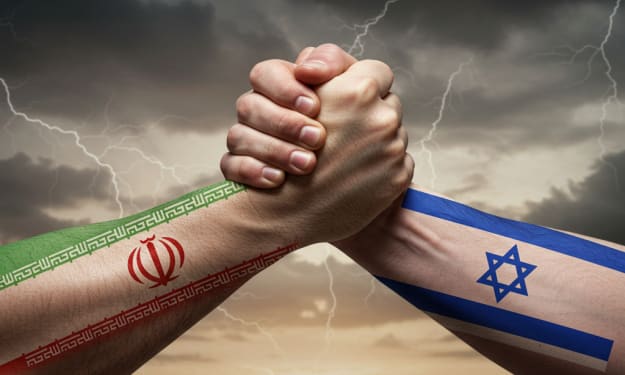
Iran vs Israel: A Dangerous Dance in the Middle East
Introduction The relationship between Iran and Israel has long been one of the most fraught and potentially explosive rivalries in international politics. Rooted in ideology, power politics, religious tensions, and shifting regional alliances, this bitter animosity has shaped Middle Eastern geopolitics for over four decades. The “Iran vs Israel” conflict isn’t a traditional war, but a complex confrontation that plays out across cyber warfare, proxy battles, intelligence operations, rhetoric, and regional power struggles.Understanding the dynamics of this rivalry is critical not only for regional peace but also for global security, as any escalation has the potential to draw in multiple international actors and destabilize an already fragile region.
By LegacyWordsabout a year ago in The Swamp