politics
Politics does not dictate our collective cultural mindset as much as it simply reflects it; We've got to look in the mirror sometimes, and we've got one.
The Most Shocking Revelation of the Clinton Epstein Testimony
In 2019, Jeffrey Epstein, a man who made multiple trips to visit the Whitehouse during the Clinton years, and was tied to at least one other president, Donald J. Trump, was indicted and taken into custody on human trafficking charges as a result of a long standing investigation into illicit sexual encounters, sex with and the trafficking of minors, and other varied accusations.
By Jason Morton8 months ago in The Swamp
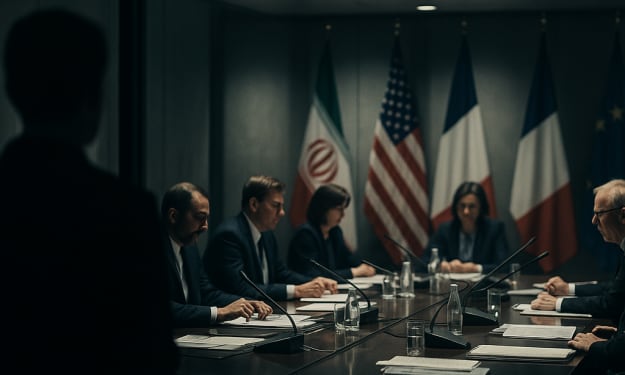
Amid escalating geopolitical tensions in the Middle East, the People’s Republic of China has issued an urgent call for the protection of commercial vessels navigating the Strait of Hormuz — a strategic maritime chokepoint whose safety underpins global energy flows and international commerce. Beijing’s appeal comes as global shipping costs skyrocket due to the dramatic slowdown in traffic through the strait, driven by military confrontations and mounting security risks around Iran. � The Guardian. AI-Generated.
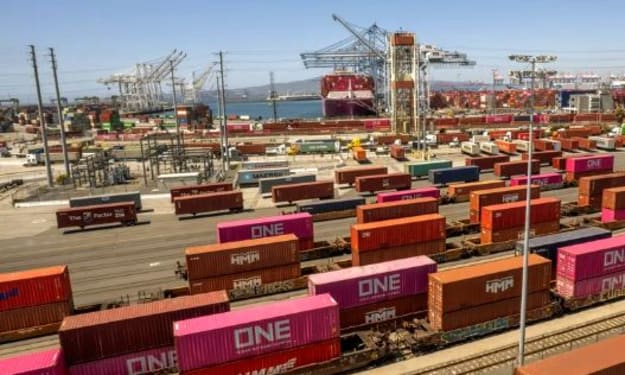
The Strait of Hormuz — just 21 miles wide at its narrowest point between Iran and Oman — links the Persian Gulf with the Arabian Sea and the wider world. It is one of the most critical passages in global trade, boasting roughly 20% of worldwide seaborne crude oil and liquefied natural gas (LNG) shipments passing through its waters under normal conditions. � The Guardian However, sustained attacks by Iranian forces on vessels and infrastructure in response to military strikes have pushed the Strait perilously close to a full closure. The resulting reduction in maritime traffic has sent freight rates and insurance premiums to historic highs, imperiling global supply chains and energy markets. � The Guardian A Strategic Worry for China China’s appeal for maritime security was articulated through its Foreign Ministry, which urged “all parties” involved in the conflict to immediately cease military operations and safeguard navigation through the strait. Beijing stressed that maintaining maritime safety in the Hormuz corridor serves not only China’s interests but those of the entire international community. � Madhyamam The stakes for China are exceptionally high. As the world’s largest importer of oil and fossil gas, a significant portion of Beijing’s energy needs — including crude and LNG shipments from the Middle East — rely on unimpeded access through this narrow sea route. Disruptions therefore pose a direct threat to China’s energy security, economic stability, and industrial output. � ایران اینترنشنال | Iran International Beyond energy, the closure of Hormuz affects global shipping costs and logistics, with major carriers forced to either suspend services or reroute vessels around Africa’s Cape of Good Hope, adding weeks to transit times and substantially increasing operational costs. � The Guardian Skyrocketing Shipping Costs One of the most dramatic consequences of the standoff has been the explosion in shipping expenses. Spot tanker rates — particularly for Very Large Crude Carriers (VLCCs) bound for China — have surpassed $424,000 per day, a remarkable surge from typical charter rates. This surge reflects both the disruption risk premium and the scarcity of willing carriers to traverse the area. � The Guardian Insurance markets have responded by withdrawing war-risk coverage for the region altogether or expanding high-risk designations to encompass broader swaths of the Gulf. Without affordable war-risk insurance, many carriers are forced into costly reroutes or face the prospect of uninsured voyages, further pushing up freight rates for shippers worldwide. � The Guardian The knock-on effects ripple beyond energy: manufacturers and exporters that depend on timely and affordable delivery of goods are now contending with higher transport surcharges, extended delivery windows, and unpredictable logistics chains. Traders and consumers in Asia, Europe, and beyond are beginning to feel these pressures in increased costs for refined products, agricultural commodities, and industrial supplies. � The Economic Times The Broader Geopolitical Context The deterioration of security in the Strait of Hormuz results from an intensifying confrontation involving Iran, the United States, and Israel. After U.S. and Israeli strikes against Iranian targets, Tehran launched retaliatory attacks on shipping and Gulf naval assets, bringing the fragile waterway close to paralysis. � The Guardian Iran’s Revolutionary Guards have openly threatened commercial ships attempting passage, promising military action against vessels deemed hostile or in violation of Tehran’s orders — a stark escalation that has alarmed navies and governments worldwide. � Reuters Although the U.S. military maintains that the strait remains open, maritime behavior underscores a de facto closure: shipping counts have plummeted, numerous vessels have been struck or damaged, and many companies are rerouting or anchoring ships to avoid the area altogether. � Reuters Global Responses and Economic Impacts China’s call for the protection of vessels echoes similar concerns from other international actors. Greece’s shipping minister, representing one of the world’s largest maritime fleets, has also warned of the “alarming” situation in the Strait of Hormuz and called for the safety of shipping and seafarers to be upheld. � MarineLink In the U.S., President Donald Trump has issued directives considering naval escorts for tankers and measures to stabilize shipping flows — a signal of how seriously Washington views the crisis. � Reuters Still, the broader economic implications are unmistakable. Oil prices have surged as supply chains tighten, and stock markets have recoiled at the prospect of rising inflation spurred by higher energy costs. Both producers and consumers are bracing for increased volatility in the months ahead. � Yahoo Finance What Comes Next? The future of the Strait of Hormuz — and with it, a stable global energy and shipping environment — hinges on diplomatic breakthroughs that could reduce or resolve the conflict’s underlying drivers. China’s appeal for maritime security is both a strategic necessity and a call for broader international cooperation to prevent the further erosion of global trade norms. As Beijing pushes for de-escalation, the world watches a critical maritime artery remain at the center of geopolitical rivalry — where the cost of inaction is measured not only in dollars but in the stability of global commerce itself.
By Jameel Jamali8 months ago in The Swamp
In a blistering exchange that underscored deepening divisions within his own party, Thom Tillis sharply criticized Kristi Noem during a high-profile hearing before the United States Senate, calling her leadership a “disaster” in remarks that quickly reverberated across Capitol Hill.. AI-Generated.
The confrontation unfolded during testimony focused on border security, federal-state coordination, and emergency management preparedness—issues that have become flashpoints in national political discourse. While partisan clashes are hardly unusual in Washington, Tillis’s pointed rebuke stood out because it came from a fellow Republican, highlighting fractures within the Republican Party over strategy, tone, and governance. A Fiery Opening Statement Tillis, known for his measured demeanor, did not mince words. In his opening remarks, he accused Noem of pursuing headline-grabbing initiatives at the expense of practical results. He argued that leadership requires coalition-building and administrative competence, not simply rhetorical defiance. “Leadership is about outcomes,” Tillis said, his voice firm. “When policies create chaos instead of solutions, that’s not strength—that’s a disaster.” Though he did not question Noem’s political instincts or communication skills, he suggested that her approach to managing federal partnerships and addressing border challenges had been counterproductive. His comments appeared aimed at what he described as “performative governance”—a style he argued generates media attention but undermines long-term institutional trust. Policy Disagreements at the Core At the heart of the exchange were disputes over immigration enforcement coordination and federal disaster response protocols. Tillis pressed for clarity on how state-led initiatives would align with national standards, particularly in areas that require close collaboration with the Department of Homeland Security. He expressed concern that unilateral state actions, without comprehensive consultation, risk legal conflicts and operational confusion. According to Tillis, sustainable policy must operate within a framework that ensures consistency across jurisdictions. Noem, for her part, defended her record vigorously. She maintained that her administration had stepped in where federal authorities had fallen short, framing her decisions as necessary interventions rather than political theater. She emphasized her commitment to what she described as constitutional principles and local autonomy. “Our responsibility is to protect our citizens,” she responded. “When federal systems fail, states have to lead.” Party Tensions Surface The exchange illuminated broader tensions within the Republican Party. While many GOP leaders have championed assertive state action on immigration and public safety, others have urged caution, warning that confrontational tactics can complicate negotiations and alienate moderate voters. Tillis’s remarks suggested a growing impatience among some Senate Republicans with strategies that prioritize symbolic victories over legislative progress. His criticism also carried strategic undertones. As a senator from a politically competitive state, Tillis has often emphasized pragmatism and bipartisan dealmaking. The hearing room reflected this divide. Some Republican colleagues appeared visibly uncomfortable as the criticism unfolded, while members of the Democratic Party watched with interest, occasionally nodding as Tillis pressed his case. Broader Implications Political analysts say the clash could have ripple effects beyond the immediate policy debate. Public disagreements within a party can signal ideological recalibration—or deeper instability. In this case, the dispute may reflect a broader struggle over the party’s identity heading into future election cycles. For Noem, who has cultivated a national profile through assertive public positions, the criticism represents a rare intra-party challenge delivered on a prominent stage. Whether it dents her standing among conservative voters remains to be seen. In many political circles, clashes with establishment figures can bolster outsider credentials. For Tillis, the moment reinforced his brand as a legislator willing to break ranks when he believes governance is at stake. However, such moves carry political risk in a polarized environment where party unity is often prized. Governance Versus Grandstanding? Beyond personalities, the hearing highlighted a recurring question in American politics: What constitutes effective leadership? Is it bold, attention-commanding action that energizes a political base? Or is it incremental, collaborative work that yields slower but steadier results? Tillis framed his argument around institutional stability. He warned that undermining established processes could weaken public confidence in government as a whole. He called for recommitment to what he described as “competent administration” and stressed that durable reform requires coordination rather than confrontation. Noem countered that bureaucratic inertia has long impeded meaningful change. She argued that disruption can be necessary when systems fail to deliver security or fairness. Public Reaction and Next Steps Reaction to the exchange was swift. Commentators across the political spectrum seized on the sharp language, debating whether Tillis’s remarks signaled a broader shift in Senate dynamics. Advocacy groups aligned with both leaders issued statements defending their respective records. While it remains unclear whether the dispute will translate into legislative consequences, the episode underscores the challenges facing lawmakers attempting to navigate a complex policy landscape amid intense political scrutiny. Ultimately, the hearing served as a vivid reminder that leadership debates are not confined to party lines. In calling Noem’s leadership a “disaster,” Tillis did more than criticize a colleague—he reignited an enduring conversation about governance, accountability, and the direction of conservative politics in America. As Congress continues grappling with immigration reform, disaster preparedness, and federal-state relations, the underlying tensions exposed in that Senate chamber are unlikely to dissipate. Whether they lead to recalibration or further division may shape the political terrain for years to come.
By Jameel Jamali8 months ago in The Swamp
An Emboldened Israel Is Seizing Opportunities to Remake the Region. AI-Generated.
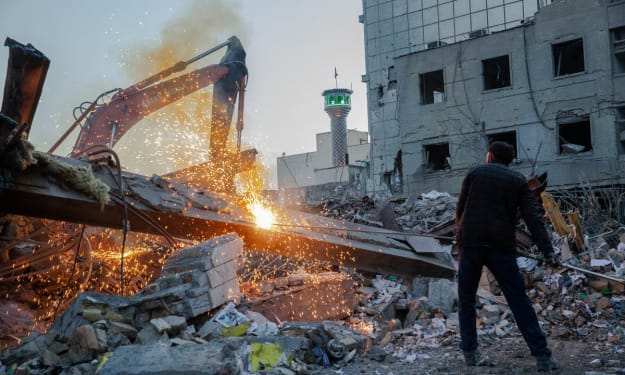
In recent years, Israel’s posture in the Middle East has shifted from defensive caution to assertive geopolitical strategy. What was once a state primarily focused on survival amid hostile neighbors has transformed into a power projecting influence across borders and reshaping regional dynamics. Motivated by security concerns, shifting alliances, and historic grievances, Israel is seizing opportunities to remake the Middle East in ways once thought improbable — forging unexpected partnerships, targeting adversaries directly, and redefining its role on the global stage. From Isolation to Strategic Partnerships For decades, the Middle East was largely divided along clear fault lines: Israel encircled by Arab states that refused to recognize it, and Sunni-Shia tensions carving sectarian divides across capitals. But the past decade has seen profound realignments. The Abraham Accords — a series of normalization agreements with the United Arab Emirates, Bahrain, Morocco, and Sudan — opened doors that generations of diplomats struggled to pry ajar. These agreements rewired the regional architecture, creating a new axis that combines diplomatic recognition with economic cooperation and technological exchange. The logic driving these partnerships extends beyond diplomatic ceremony. Gulf states, worried about Iran’s expanding influence and nuclear ambitions, saw strategic benefit in aligning with Israel’s advanced defense capabilities. Israel, for its part, gained legitimacy and economic opportunity. Together, these partners began to redraw the lines of cooperation in the Middle East — not around old enmities but around shared concerns and mutual interests. This shift did not emerge in a vacuum. Decades of conflict and failed negotiations left many Arab states rethinking their priorities. The rise of non-state actors, proxy wars in Yemen and Syria, and the destabilizing influence of extremist groups accelerated a realpolitik approach. The result? A Middle East in which old hostilities are being overshadowed by pragmatic alliances. A New Focus: Iran as Central Adversary One of the most defining features of Israel’s recent assertiveness has been its laser-focus on Iran. For Israel’s leaders, Tehran is more than a rival — it is an existential threat. Iran’s ballistic missile programs, its support for proxy militias like Hezbollah and the Houthis, and its pursuit of nuclear capability have all been portrayed by Jerusalem as red lines that cannot be ignored. This has driven Israel to adopt a more aggressive posture. From covert cyberoperations to targeted airstrikes in Syria, Israeli forces have confronted Iranian influence far beyond their borders. Perhaps the most consequential moment came when Israel, coordinating with the United States, executed a strike that resulted in the death of Iran’s supreme leader — an action that sent shockwaves through global capitals and marked a dramatic departure from conventional Middle Eastern conflict norms. Whether one views these actions as defensive or provocative, there is no question they reflect a new confidence. Israel is no longer content with merely reacting to threats; it is shaping the strategic environment in real time. Weaponizing Innovation and Diplomacy Israel’s rise as a regional power is not limited to military action. Its economy — particularly its technology sector — has become a cornerstone of influence. Startups in cybersecurity, artificial intelligence, water management, and agricultural technology attract global investors and have become tools of soft power. When technology exports go hand-in-hand with diplomatic ties, influence deepens. Investors and governments in Asia, Africa, and the Middle East are increasingly engaging with Israeli firms, not just for profit but for access to innovation. This economic outreach amplifies Israel’s regional footprint in ways that military might alone cannot achieve. Moreover, Israel has leveraged its tech leadership to build security partnerships with countries once hostile or indifferent. Intelligence sharing, joint military exercises, and border security collaborations no longer belong to a distant future; they are current policy choices shaping regional interdependence. In essence, Israel is exporting stability — or at least the promise of it — and that has value in an unstable neighborhood. Challenges and Backlash However bold Israel’s ambitions may be, they are not without pushback. Iran’s axis of allied militias and security partners remains a potent force. Hezbollah in Lebanon, the Houthis in Yemen, and pro-Tehran militias in Iraq and Syria continue to challenge Israel’s strategy. Attacks on shipping lanes in the Red Sea, rocket barrages from Lebanon, and proxy confrontations along Israel’s northern border have underscored the limits of military dominance. Additionally, public opinion in many Arab states remains divided. While governments may pursue normalization and cooperation, populations — particularly in countries with significant Palestinian solidarity movements — can be less enthusiastic. Pro-Palestinian protests continue across North Africa and the Levant, reminding leaders that domestic sentiment can complicate diplomatic foresight. And lurking over every strategic decision is the unresolved Israeli-Palestinian conflict. For many in the Arab and Muslim world, no normalization or tech partnership can fully outweigh the humanitarian and political struggle in Gaza and the West Bank. Attempts by Israel to sidestep this issue have given rise to new forms of regional activism that reject normalization without progress on Palestinian statehood. The New Middle Eastern Order Still, the overall trajectory is unmistakable: Israel is no longer a pariah state; it is a central actor in the Middle East with both the capability and willingness to shape outcomes. This shift has not only altered Jerusalem’s role but has reshaped regional perceptions of power and security. From trilateral security pacts to economic corridors stretching from the Gulf to the Mediterranean, the architecture of the region is changing. Whether this transformation leads to sustained peace or persistent instability remains an open question. The old certainties — of entrenched hostility and rigid blocs — are fading. In their place are dynamic alliances, competitive interests, and an increasingly assertive Israel. Israel’s strategy, built on military strength, technological innovation, and diplomatic outreach, shows how a nation once defined by siege can become a linchpin of regional geopolitics. In a region long characterized by turmoil, an emboldened Israel is seizing opportunities not just to defend itself, but to redefine the Middle East’s strategic landscape — for better or for worse. --- If you’d like, I can also craft a sub-headline, SEO optimized version, or social media teaser for this article!
By Jameel Jamali8 months ago in The Swamp
For the best part of 48 hours, first the defence secretary and then the foreign secretary were struggling to cogently articulate in public what the government made of the US and Israel’s attacks on Iran and why. But in the Commons… is not just the opening of an article: it is the snapshot of a defining moment in UK political communication, foreign policy ambiguity, and public expectations of clarity from elected officials in times of international crisis. Over recent days, Britain’s top ministers have found themselves on the back foot — caught between geopolitical alliances, legal ambiguity, and growing domestic unease — as they attempt to explain the government’s posture toward the unprecedented US–Israel military strikes on Iran. . AI-Generated.
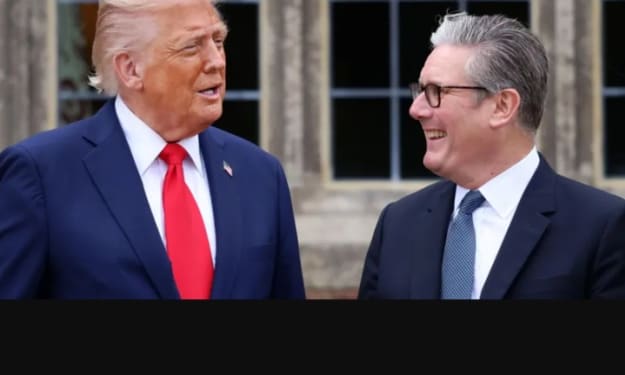
In Westminster, during urgent exchanges, MPs pressed the Defence Secretary, John Healey, and Foreign Secretary Yvette Cooper to articulate precisely where the UK stands on what has quickly become one of the gravest confrontations since the 2003 Iraq War. The challenge for ministers has been to walk a tightrope: offering support to longstanding allies while trying to reassure Parliament and the British public that the UK is not being dragged into an open-ended conflict. At the core of the difficulty is the UK government’s approach to the twin realities of military action and legal justification. In early public comments, Defence Secretary Healey stopped short of affirmatively backing the US–Israeli strikes that killed Iran’s Supreme Leader Ayatollah Ali Khamenei, emphasising instead that it was for the United States to “set out the legal basis of the action it took.” This left observers — both MPs and journalists — seeking clarification: did the government approve of these strikes, or was it merely deferring to another ally’s rationale while offering belated support? Healey’s careful choice of words underlines a deeper unease about the legal framework for these operations. Even as he reiterated that the UK played no direct part in the initial bombings, he highlighted the dangers posed by Iran’s subsequent bombardments — including missile and drone attacks that have endangered British bases and citizens. The emphasis on “defensive operations” reflects a determination not to be seen committing British forces to offensive war, but it also illustrates the government’s communication dilemma: how to acknowledge UK involvement without appearing to endorse an action many view as controversially extralegal. Following this initial uncertainty, Foreign Secretary Yvette Cooper took to the airwaves and, later, to the Commons to defend the government’s shift on military bases. She explained — amid rising political pressure — that the UK had granted the United States permission to use British military bases for defensive strikes, specifically targeting Iranian missile storage sites and launchers. Cooper stressed that this decision aimed to protect British nationals and allies in the Gulf region, home to around 300,000 British citizens, from Iranian retaliatory attacks. Yet even this defence has not quelled the debate. Critics from opposition benches and wider civil society argue that the distinction between defensive support and participation in a foreign military campaign is blurred in practice. Calls have grown louder for more transparent legal justification and a parliamentary vote on the use of UK bases, with some MPs drawing uncomfortable parallels to the contested decision to join the 2003 Iraq invasion, where claims about weapons of mass destruction later proved false. The foreign secretary’s attempts to articulate this position thus ended up sounding reactive — constantly adjusting to fresh developments rather than proactively outlining a coherent strategy. This was not lost on members of the Commons, some of whom pushed back forcefully, describing the government’s explanations as confused and lacking a firm ethical grounding. The debate shifted away from simple diplomatic support and towards deep questions about the rule of international law, sovereignty, and the role of British foreign policy in a volatile global environment. While ministers stressed that the UK is committed to protecting its citizens and upholding international law, there’s no escaping the political reality: defence and foreign secretaries have been placed in the position of defending decisions that not only have regional ramifications but also profound domestic repercussions. Even as Starmer’s government moved to allow US operations from UK soil, voices in Parliament warned that such decisions risk entangling Britain in an unpopular and potentially illegal conflict. In the Commons, the uncertainty also highlighted a broader trust issue between the government and the public. Voters increasingly demand clarity about why and how Britain engages — or refrains from engaging — in military actions led by other powers. The fact that ministers took nearly 48 hours to articulate a clear line reflects both the rapidity of events and the inherent difficulty in balancing diplomatic alliance with legal and moral scrutiny. All of this suggests that beyond the immediate crisis lies a more enduring political challenge: crafting a British foreign policy that is principled, legally sound, and clearly communicated. At a time when global tensions are high and public confidence in political leadership is volatile, the ability to explain the why behind critical decisions is as important as the decisions themselves. And for the UK’s defence and foreign secretaries, this episode in the Commons may be remembered not just for what was decided — but for how long it took to say it out loud.
By Jameel Jamali8 months ago in The Swamp