politics
Politics does not dictate our collective cultural mindset as much as it simply reflects it; We've got to look in the mirror sometimes, and we've got one.
Colorado Governor Signals He’ll Commute Sentence of Election Denier. AI-Generated.
In a move that has reignited debate over justice, democracy, and political accountability, Colorado’s governor has signaled his intention to commute the prison sentence of a prominent election denier convicted of election-related crimes. The announcement has stirred passionate reactions across party lines, raising complex questions about executive clemency, the limits of political protest, and the long shadow cast by the 2020 presidential election. The case centers on a former local election official who became a vocal proponent of false claims that the 2020 election was stolen. After being charged and later convicted for actions related to election security breaches, the official was sentenced to prison. Prosecutors argued that the misconduct undermined public trust in democratic institutions, while supporters insisted the punishment was politically motivated. Now, Governor Jared Polis has indicated he is considering commuting the sentence. While stopping short of a full pardon, a commutation would reduce the length of the prison term, effectively shortening the individual’s incarceration while leaving the conviction intact. Polis, a Democrat known for his libertarian streak on certain criminal justice issues, framed the potential decision as part of a broader philosophy on sentencing reform. In public remarks, he emphasized concerns about proportionality and fairness, suggesting that the punishment may exceed what is appropriate compared to similar offenses. However, he also made clear that he does not endorse election denialism or attempts to interfere with election processes. The case has drawn national attention because it touches on the continuing fallout from the 2020 presidential contest between Donald Trump and Joe Biden. Despite repeated court rulings and audits affirming the integrity of the election, a segment of the electorate continues to question its legitimacy. Election denial has since become a powerful political force, influencing campaigns and policy debates across the country. Critics of the proposed commutation argue that reducing the sentence could send the wrong message at a time when election officials nationwide face threats and harassment. They contend that accountability is essential to preserving democratic norms. In their view, weakening consequences for election-related misconduct risks emboldening others who might attempt to manipulate or undermine voting systems. Supporters, on the other hand, see the governor’s consideration as a measured and principled use of executive authority. They argue that the justice system must remain impartial and that penalties should be consistent with those imposed in comparable cases. Some civil liberties advocates have also noted that the line between political speech—however controversial—and criminal conduct must be carefully maintained. Executive clemency has long been a feature of American governance, designed as a check within the justice system. Governors in every state possess the authority to grant pardons or commute sentences, though the political ramifications often make such decisions contentious. In Colorado, the governor’s clemency powers are broad but subject to public scrutiny and political consequences. The underlying conviction in this case stemmed from actions that prosecutors said breached election security protocols. The court found that the defendant facilitated unauthorized access to sensitive voting equipment, allegedly in pursuit of evidence supporting claims of widespread fraud. Investigators concluded that the actions compromised the integrity of election infrastructure, even if no votes were altered. This distinction—between actual vote tampering and compromising secure systems—has become central to the debate. For some observers, any unauthorized interference with election equipment represents a serious threat, regardless of motive. For others, the absence of proven vote manipulation mitigates the severity of the offense. The governor’s signal does not guarantee immediate action. Clemency decisions often involve consultation with legal advisers, review boards, and victim impact statements where applicable. Polis has suggested that he is weighing these factors carefully, acknowledging the symbolic weight of any decision in a politically charged environment. Colorado itself has been at the forefront of efforts to strengthen election transparency and security. State officials have repeatedly defended the reliability of their voting systems, emphasizing rigorous audits and bipartisan oversight. The controversy surrounding this case has only intensified scrutiny of those safeguards. Nationally, the debate reflects a broader tension between justice reform and democratic resilience. In recent years, bipartisan movements have pushed to reduce prison populations and reassess lengthy sentences for nonviolent offenses. At the same time, the January 6, 2021 attack on the U.S. Capitol underscored the potential dangers of election misinformation escalating into direct action. Polis’s potential commutation sits at the intersection of these competing concerns. It tests whether calls for sentencing reform can coexist with firm consequences for conduct that touches on the electoral process. The governor’s critics fear that any reduction in sentence may blur the moral clarity needed to defend democratic institutions. His supporters argue that clemency, when applied judiciously, strengthens rather than weakens the justice system. Public reaction in Colorado has been sharply divided. Some residents have organized petitions urging the governor to reconsider, while others have praised him for examining the fairness of the sentence independently of political pressure. Lawmakers from both parties have weighed in, reflecting the complexity of an issue that defies simple partisan framing. Ultimately, the decision will likely shape Polis’s political legacy. As a governor with national visibility, his actions are watched closely beyond state borders. A commutation could reinforce his reputation as a criminal justice reform advocate, but it could also expose him to criticism from those who see election integrity as a line that must not be softened. The broader lesson may be that the aftershocks of the 2020 election continue to reverberate through American politics. Questions about trust, truth, and accountability remain unsettled. Whether or not the sentence is ultimately commuted, the debate itself highlights the enduring fragility of democratic norms in a polarized era. In signaling his intention, Governor Polis has ignited a conversation that reaches beyond one individual case. It forces Americans to grapple with how a democracy balances mercy with accountability—and how it defends its institutions without abandoning principles of proportional justice.
By Jameel Jamali8 months ago in The Swamp
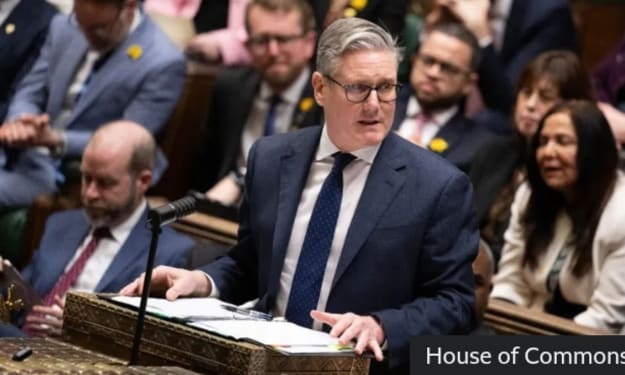
Britain Arrests a Lawmaker’s Husband on Suspicion of Spying for China. AI-Generated.
The arrest of a British lawmaker’s husband on suspicion of spying for China has sent shockwaves through the United Kingdom’s political establishment. The case, which intersects national security, diplomatic tensions, and domestic politics, underscores the increasingly complex relationship between Britain and Beijing. As authorities investigate the allegations, the development raises serious questions about foreign influence, intelligence operations, and the safeguards surrounding democratic institutions. According to reports, the suspect was detained under the UK’s national security framework on suspicion of providing sensitive information to Chinese entities. The arrest was carried out by officers linked to counterterrorism and national security units, reflecting the seriousness of the allegations. While details remain limited due to the ongoing investigation, officials have confirmed that the case is being treated as a potential breach of the Official Secrets Act. The arrest comes amid heightened scrutiny of Chinese activities in the UK and across Europe. Over the past several years, Britain has recalibrated its stance toward Beijing. Once eager to promote a “golden era” of economic partnership, successive governments have adopted a more cautious approach, particularly in areas involving telecommunications, research collaboration, and critical infrastructure. Tensions escalated significantly after the UK government restricted the involvement of Chinese technology giant Huawei in Britain’s 5G network rollout. Officials cited national security risks and concerns about potential state influence. This marked a turning point in relations and signaled London’s willingness to prioritize security over economic considerations. The current case appears to fit within this broader shift. British intelligence agencies, including MI5, have repeatedly warned about the growing sophistication of foreign intelligence operations on British soil. In recent years, MI5 has publicly cautioned lawmakers about potential influence campaigns targeting Parliament. These warnings reflect the evolving nature of espionage, which increasingly blends cyber operations, political engagement, and personal connections. Although the suspect has not been formally charged at the time of writing, the fact that he is married to a sitting Member of Parliament intensifies the political implications. Lawmakers routinely handle sensitive briefings, engage in private strategy discussions, and maintain access to classified material. Even indirect access through close personal relationships can pose potential vulnerabilities. The lawmaker in question has publicly stated cooperation with authorities and denied any knowledge of wrongdoing. Political leaders from across party lines have emphasized the importance of due process while reaffirming their commitment to protecting national security. The case has also sparked debate about whether additional safeguards are needed for individuals closely connected to elected officials. Diplomatically, the arrest adds strain to already fragile relations between London and Beijing. China has frequently rejected allegations of espionage and foreign interference, describing them as politically motivated or rooted in “Cold War mentality.” The Chinese embassy in the UK has previously condemned similar accusations as baseless and harmful to bilateral ties. Yet Western governments remain wary. Across the Atlantic, the United States has pursued multiple prosecutions linked to alleged Chinese intelligence activities. Within Europe, several countries have expelled diplomats or launched investigations into suspected influence networks. Britain’s latest arrest suggests that such concerns are not isolated incidents but part of a broader geopolitical pattern. The case also unfolds against the backdrop of Britain’s evolving foreign policy identity after Brexit. As the UK seeks to redefine its global role, it faces the delicate challenge of balancing economic engagement with strategic caution. China remains one of the world’s largest economies and a key trading partner. At the same time, British officials have designated China as a “systemic competitor,” reflecting a nuanced but wary stance. Security analysts note that espionage is not a relic of the Cold War but a persistent reality of international relations. Modern intelligence gathering often exploits personal relationships, digital platforms, and professional networks. The alleged involvement of a lawmaker’s spouse highlights how intelligence services may target individuals with indirect but valuable access. Public reaction within Britain has been mixed. Some view the arrest as evidence that security services are vigilant and proactive. Others worry about the potential for political fallout or media sensationalism before the legal process runs its course. Civil liberties advocates caution that national security cases must be handled with transparency and fairness to maintain public trust. Legal experts point out that prosecutions under the Official Secrets Act can be complex. Authorities must demonstrate not only the unauthorized disclosure of information but also intent and awareness of wrongdoing. If charges are ultimately filed, the trial could shed light on the methods and motivations allegedly involved. Beyond the courtroom, the incident may influence parliamentary procedures. Discussions are already underway about reviewing security briefings for MPs and strengthening counterintelligence awareness programs. Such measures could include expanded vetting processes or updated guidance on handling sensitive information. The political ramifications are equally significant. Opposition parties are likely to scrutinize the government’s broader China strategy, questioning whether existing safeguards were sufficient. At the same time, policymakers may face pressure to adopt a firmer stance toward foreign influence operations. For Beijing, the case represents another diplomatic challenge in its relationship with Western democracies. Chinese officials have consistently denied engaging in espionage or interference, framing such accusations as attempts to contain China’s rise. Nevertheless, repeated incidents across multiple countries have fueled skepticism and mistrust. As the investigation continues, it remains essential to distinguish allegations from proven facts. The principle of innocent until proven guilty remains a cornerstone of British justice. However, the mere suspicion of espionage within the inner circle of a lawmaker underscores the delicate balance between openness and security in democratic systems. Ultimately, the arrest serves as a stark reminder that geopolitical rivalries increasingly play out not only in distant capitals but within domestic political spheres. Britain’s response—legal, political, and diplomatic—will signal how seriously it views the evolving challenge of foreign intelligence operations. Whether this case leads to convictions or not, it has already reinforced the reality that national security concerns are deeply intertwined with the personal and political fabric of modern governance.
By Jameel Jamali8 months ago in The Swamp
Amazon UAE Data Center Hit by Drone Attack. AI-Generated.
In an era where data powers economies and cloud computing underpins daily life, the idea that a data center could become a target of war feels unsettling. Yet this is exactly what happened when drone attacks damaged cloud facilities operated by Amazon in the Middle East. The incident, which struck data centers in the United Arab Emirates and neighboring Bahrain, marks a new chapter in how geopolitical conflict can disrupt not only physical infrastructure but also the digital services millions rely on every day.
By Sajida Sikandar8 months ago in The Swamp