politics
Politics does not dictate our collective cultural mindset as much as it simply reflects it; We've got to look in the mirror sometimes, and we've got one.
"Merchant of Menace": Why Is Pakistani Scientist Dr. Abdul Qadeer Khan’s Name Linked to Iran’s Nuclear Program?
"Merchant of Menace": Why Is Pakistani Scientist Dr. Abdul Qadeer Khan’s Name Linked to Iran’s Nuclear Program? On February 4, 2004, the people of Pakistan witnessed a scene on their television screens that was nothing short of an explosion — and its echoes were heard around the world. This explosion was metaphorical — when Dr. Abdul Qadeer Khan, the leading figure of Pakistan's nuclear program, admitted on state television that he had illegally sold nuclear secrets to other countries without the knowledge of the Pakistani government. Wearing a suit and tie, Dr. Abdul Qadeer Khan, in simple English, stated in his confession: “Investigations have established that many reported activities did take place and were initiated at my behest.” He added, “In my interviews with the concerned government officials, I had to confront evidence and outcomes, and I voluntarily acknowledged that most of them are true and accurate.” “My dear brothers and sisters, I have chosen to appear before you to express my deep remorse and offer an unconditional apology. I also want to clarify that these activities were never authorized by the government.” At the time, then-President General Pervez Musharraf placed Dr. Abdul Qadeer Khan under house arrest, cutting off his contact with the outside world. Yet, Pakistan and Dr. Khan remained in the global spotlight. On February 14, 2004, Time Magazine featured Dr. Khan on its cover with the headline: “Merchant of Menace.” Similar headlines were published around the world. However, in Pakistan, questions arose about his statement. A recurring question was: How could such an important scientist sell nuclear secrets and technology for so long without anyone knowing — especially the military and intelligence agencies? Four years later, Dr. Abdul Qadeer Khan told The Guardian in an interview that he had read his confession from a piece of paper that had been handed to him. It should be noted that Dr. Khan was accused of selling nuclear secrets through a clandestine network to Iran, North Korea, and Libya, assisting in the development of their nuclear programs. Iran, North Korea, and Libya This story actually began in the 1990s. According to a BBC report published in December 2004, British intelligence agencies and the U.S. CIA managed to penetrate Dr. Khan’s secret network in the late 1990s. These agencies conducted several operations and even placed one of their officers inside the network. According to the same report and sources from the British Intelligence Headquarters, they uncovered Dr. Abdul Qadeer Khan’s buyers, fake companies, financial networks, and a web of laboratories. As more information revealed that Dr. Khan had established an international network supplying nuclear weapons-related equipment, the UK’s Joint Intelligence Committee began expressing concern as early as 2000. But the most crucial evidence came in December 2003, when CIA and MI6 officers received documents from Libyan authorities as Libya agreed to abandon its nuclear program. Inside brown envelopes were nuclear weapon designs. According to the information, these designs and related components for the nuclear program were supplied by Pakistani nuclear scientist Dr. Abdul Qadeer Khan, giving the U.S. strong grounds to pressure Pakistan to take action against him. Pakistani Government’s “Admission” In March 2005, then-Pakistani Information Minister Sheikh Rashid also admitted that Dr. Khan had provided nuclear technology to Iran, though the government was unaware of the transaction. This was the first time a Pakistani government representative made such a confession. Sheikh Rashid Ahmed told the Associated Press in a phone interview: “Dr. Abdul Qadeer gave some centrifuges to Iran,” and “he helped Iran in his personal capacity, and the Government of Pakistan had nothing to do with it.” According to a BBC report published in October 2021, Iran’s Natanz facility’s centrifuge program appears to be largely based on the designs and materials initially supplied by Dr. Khan’s network. That same report mentions that in one meeting, Dr. Khan’s representatives gave Iran a list of materials and components used in developing a nuclear program — complete with pricing — allowing Iranian officials to place orders accordingly. In response to these allegations, according to an Al Jazeera report published in December 2004, Iran’s foreign ministry admitted to purchasing materials from certain dealers but said, “We don’t know where those materials originated from.” The statement also emphasized that Iran’s nuclear program was peaceful and that the country had no interest in developing atomic bombs. It is important to note that Natanz is a significant uranium enrichment facility in Iran, located about 250 kilometers south of Tehran. It began operations in February 2007, in violation of United Nations Security Council resolutions, and was recently targeted in Israeli attacks. Its current status is unclear, but both former U.S. President Trump and Israel have claimed that Iran’s nuclear weapon development capability has been neutralized. Before the attacks, the facility reportedly consisted of three large underground buildings, capable of running 50,000 centrifuges. However, by the time of recent U.S. and Israeli strikes, about 14,000 centrifuges were installed — with nearly 11,000 in operation. Natanz has previously also been targeted by cyberattacks and sabotage, believed to be joint operations by the U.S. and Israel.
By Ikram Ullahabout a year ago in The Swamp
Russia vs Ukraine: What’s Really Happening in 2025 (A Brutally Honest Breakdown)
I’ve been following this war since the day it began. Not as a soldier, not as a politician, not even as a journalist. Just as a human being who cares deeply about truth, suffering, and the ripple effect of violence. And as I write this in mid-2025, I’m painfully aware of how numb we’ve all become to the phrase Russia vs Ukraine. It’s been over three years. Thousands of headlines. Millions of lives changed. And yet, how many of us really know what’s happening right now?
By Bevy Osuosabout a year ago in The Swamp
Israel vs Iran: The Shadow War Edging Toward Global Catastrophe
Start writing...Introduction: Beyond Borders, Beyond Control For over four decades, Israel and Iran have been engaged in a deadly rivalry—one that has never fully erupted into declared war, but has never truly been at peace. What began as diplomatic hostility has mutated into a sprawling and chaotic conflict, fought through hackers, spies, militias, and missiles. Today, the situation is no longer about ideology or even territory—it's about survival. And the fuse is dangerously short. --- Historical Roots of a Bitter Enmity The animosity began with Iran’s 1979 Islamic Revolution, which replaced a Western-aligned monarchy with a hardline anti-Israel theocracy. Iran quickly branded Israel as an “illegitimate Zionist regime,” while Israel, in turn, identified Iran as the greatest long-term threat to its existence. Over the years, these two states have supported opposite sides in nearly every regional conflict—from Syria’s civil war to Lebanon’s internal struggles. What makes this conflict unique is its asymmetrical nature: Israel is a highly advanced military power with covert Western alliances, while Iran relies on regional proxies, ideology, and long-term strategy. --- The Cyber and Espionage War In the digital age, war doesn’t need tanks. Israel and Iran have taken the battlefield to cyberspace and beyond. In 2010, the infamous Stuxnet worm, allegedly developed by Israel and the United States, crippled Iran’s nuclear centrifuges. It was the first instance of cyber warfare affecting physical infrastructure. In response, Iranian hackers launched numerous cyberattacks on Israeli water systems, hospitals, and financial institutions. Israeli intelligence, particularly Mossad, has been blamed for the assassination of multiple Iranian nuclear scientists in operations straight out of a spy thriller. These silent skirmishes rarely make headlines—but they push both nations closer to red lines neither wants to cross, yet neither is willing to avoid. --- Missiles, Drones, and Proxy Militias: A New Phase The last five years have seen a terrifying transformation: the silent war is turning loud. Iran has armed Hezbollah and Palestinian Islamic Jihad with thousands of rockets, aimed at Israeli cities. Israel has launched hundreds of airstrikes in Syria, targeting Iranian Revolutionary Guard Corps (IRGC) bases and weapon shipments. Iranian drones have struck Israeli-owned ships, while Israel has retaliated with precision strikes deep within Iranian territory. In April 2025, Iran allegedly supplied advanced missiles to Hezbollah, prompting an unprecedented Israeli bombing campaign near the Syrian-Lebanese border. Civilians were caught in the crossfire. The situation spiraled into an international diplomatic emergency. --- The Nuclear Wildcard Israel is widely believed to possess over 80 nuclear warheads, though it follows a policy of ambiguity. Iran denies it is building a nuclear bomb but continues to enrich uranium at levels that exceed limits set in the defunct JCPOA agreement. The possibility of a pre-emptive Israeli strike on Iran’s nuclear facilities is growing more likely by the day. If that happens, Iran has promised to retaliate with full-scale war, unleashing Hezbollah, launching missile attacks, and possibly closing the Strait of Hormuz, a crucial oil route. The global economy would be shaken instantly. --- Civilian Lives in the Crossfire It is easy to talk about military strategy and geopolitics. But beneath every headline are the stories of millions of civilians—from Gaza and Tel Aviv to Tehran and Beirut—who live in daily fear. Families in southern Israel run to bomb shelters during rocket sirens. Syrian and Lebanese villages are caught between Israeli jets and Iranian-backed militias. Inside Iran, dissenters who oppose war are silenced or jailed. War has become normal, and that is perhaps the greatest tragedy of all. --- International Response: Ineffective or Indifferent? The international community has largely failed to defuse this ticking time bomb. The United States, once a stabilizing influence, is increasingly inward-focused. Russia and China have stepped in as arms suppliers and political allies—fueling the fire instead of dousing it. The United Nations issues statements, but lacks the teeth to enforce peace. Regional players like Qatar, Oman, and Turkey try backchannel diplomacy, but without much success. Everyone fears the consequences but no one has the power—or will—to stop the coming explosion. --- What the Future Holds: A Grim Outlook As things stand in mid-2025, war is no longer a question of if—it is a question of how big. Will it be a limited missile exchange? Will it involve nuclear weapons? Will global powers get dragged into a regional firestorm? What is certain is this: every month of inaction brings us closer to irreversible devastation. The shadow war is no longer in the shadows. And if diplomacy doesn’t act fast, the cost will be measured in lives, economies, and global stability. --- Conclusion: The World Cannot Afford to Look Away Israel and Iran are more than just two nations at odds—they are symbols of deeper global fault lines: religion vs. secularism, democracy vs. theocracy, and nationalism vs. revolution. As their conflict grows louder, the silence of the international community becomes more dangerous. The world must decide—will it intervene now, or wait until the smoke of missiles replaces the fog of diplomacy?
By Abid Ali Khanabout a year ago in The Swamp
The Contradictions of Western Ideals:
Growing up in Muslim societies, I often felt caught between two worlds: the traditional Islamic values we held sacred and the Western ideals we were taught to admire—but also fear. As I matured, I found myself increasingly drawn to Western concepts like liberal democracy, freedom of speech, secularism, and Enlightenment rationality. These ideals appeared to represent human dignity, progress, and justice. But over time, the contradictions behind them became impossible to ignore.
By Zeeshan Aliabout a year ago in The Swamp
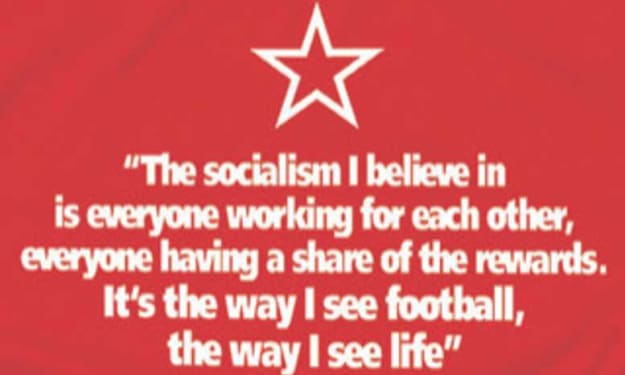
The Meaning Of Socialism
Introduction I follow a few left-wing American commentators who do embrace Socialism in their politics but still manage to denigrate it in their posts. These are a few of the ones I am talking about, Bernie Sanders, Dean Obediah and Robert Reichs:
By Mike Singleton 💜 Mikeydred about a year ago in The Swamp
Why the World Doesn’t Really Want Peace
Why the World Doesn’t Really Want Peace (And Why That Should Terrify Us) If every world leader stood on a stage today and claimed they wanted peace, would you believe them? Most people would. Because peace sounds noble, beautiful, and human. But the harsh truth is: the world doesn’t truly want peace. At least not the kind of peace that challenges power, money, and control.
By Muhammad zeeshanabout a year ago in The Swamp
What I Learned Growing Up in a Cult. Top Story - June 2025.
Earlier this week I was talking to a coworker about life. After a while, we somehow got on the subject of religion. I had to explain that I have an aversion to most organized forms of religion, having been raised in a church that at the time was very cult-like, and later after a split, the faction that stayed with the original leader went full cult. But that begs the question.
By Atomic Historianabout a year ago in The Swamp
NATO Summit in The Hague Signals Shift Toward Greater Defense Spending
has placed renewed emphasis on alliance unity, military readiness, and a significant increase in defense spending among member states. A Turning Point for NATO NATO Secretary General Jens Stoltenberg opened the summit with an urgent call for greater resolve in the face of new and evolving global threats. “Our security environment is more unpredictable than ever,” he said. “Authoritarian regimes are challenging the rules-based international order. NATO must adapt—not tomorrow, but today.” The summit comes just weeks after coordinated U.S. and Israeli strikes on Iranian military targets in retaliation for Tehran’s alleged involvement in regional destabilization. The events reignited concerns over the alliance’s readiness for potential escalation in the Middle East and the possibility of broader global conflict. A Renewed Push for Defense Spending One of the clearest outcomes from the summit has been a recommitment to defense spending goals. Since the 2014 Wales Summit, NATO members have pledged to allocate at least 2% of their GDP to defense. While progress has been uneven, the latest events have accelerated urgency. Germany, France, Italy, and Spain—previously among those criticized for lagging behind—have all announced updated timelines to meet or exceed the 2% benchmark by 2027. In a major policy shift, Germany unveiled a €30 billion increase to its annual defense budget, with new investments in cyber defense, air mobility, and NATO’s rapid reaction forces. U.S. Defense Secretary Kathleen Hicks, representing the Biden administration, applauded the movement. “America remains committed to NATO, but we must see fairer burden sharing. The security of the transatlantic alliance cannot rest on U.S. shoulders alone.” Alliance Cohesion Tested Despite strong rhetoric of unity, the summit revealed underlying concerns about alliance cohesion, particularly with looming elections in several NATO countries and shifting domestic attitudes toward defense priorities. Hungary and Slovakia have expressed reservations about increased troop commitments, citing economic pressures and political opposition at home. Meanwhile, Turkish President Erdoğan voiced frustrations over NATO’s stance on regional conflicts and criticized what he called “Western double standards” in Middle East policy. However, these tensions have not derailed the summit’s core goals. A joint communiqué issued Tuesday reaffirmed “unwavering solidarity” among members and outlined concrete steps to modernize NATO’s military posture, including: Establishing a new NATO Cyber Command Center based in Brussels Expanding rapid deployment capabilities with a proposed 300,000-strong high-readiness force Increasing joint exercises in the Baltic and Black Sea regions Enhancing intelligence-sharing protocols among members Geopolitical Ripple Effects Outside observers are closely watching how NATO’s moves will be interpreted by global rivals. Russia, though currently entangled in internal political turmoil and economic slowdown, responded harshly to the summit’s opening statements. A Kremlin spokesperson warned that NATO’s “aggressive expansion of military infrastructure” could “destabilize European security for decades.” China, while not directly addressed in the summit’s early briefings, looms large in NATO’s long-term strategic outlook. The alliance’s recent Strategic Concept document labeled Beijing as a “systemic challenge,” and this year’s discussions have included preliminary talks about expanding cooperation with Indo-Pacific partners such as Japan, South Korea, and Australia. Iran, the focal point of recent conflict, issued a statement through state media accusing NATO of “provoking regional instability through militarization and coercive diplomacy.” The regime has also increased military drills in the Persian Gulf and threatened to restrict access through the Strait of Hormuz, a move that could have significant global economic implications. Public Sentiment and Political Ramifications Back in Europe and North America, public support for NATO remains high, particularly in Eastern European countries like Poland, Estonia, and Romania, where the Russian threat feels most immediate. In Western Europe, however, opinions are more mixed. Recent polling by the European Policy Centre shows growing concern over the cost of defense increases, especially among younger voters more focused on climate and social issues. In the U.S., where presidential elections are just months away, NATO is again becoming a campaign issue. Former President Donald Trump, a prominent critic of the alliance during his tenure, has warned against “blank checks to Europe” and has suggested withdrawing troops unless burden-sharing improves. Analysts believe this dynamic could shape future U.S. involvement in NATO and have encouraged European members to take greater initiative in defense planning and procurement. Looking Forward: What Happens Next? While many of the summit’s announcements focus on long-term goals, there are immediate operational implications. NATO will begin a new round of joint military exercises in late July, including simulated cyberattacks, coordinated missile defense drills, and enhanced maritime patrols in the Mediterranean. The alliance is also set to release a classified review of its nuclear posture later this year, in response to Russia’s deployment of tactical nuclear weapons in Belarus and growing concerns about Iran’s nuclear ambitions. Stoltenberg concluded the summit with a message of cautious optimism: “NATO is not just a military alliance. It is a community of values. Today we have shown that even in uncertain times, we stand together—united, committed, and ready.” Conclusion The 2025 NATO summit in The Hague has reinforced the alliance’s strategic priorities amid rising global tensions. With defense spending on the rise and new military commitments on the table, NATO appears to be entering a phase of renewal. Yet the path ahead is not without challenges—from internal divisions to external threats. What is clear, however, is that the decisions made this week will shape the alliance’s trajectory for years to come. ---
By Shehzad Khanabout a year ago in The Swamp