politics
Politics does not dictate our collective cultural mindset as much as it simply reflects it; We've got to look in the mirror sometimes, and we've got one.
No Taxes on Tips or Overtime? Trump’s Tax Bombshell Just Changed the Game
If you’ve ever stayed late to finish your shift or depended on tips to keep the lights on, this one's for you. Because as of this week, thanks to a massive new tax overhaul just pushed through by Donald Trump, tips and overtime pay may no longer be taxed at the federal level.
By Bevy Osuosabout a year ago in The Swamp
Embrace Hope and Be Happy - First Of All, Dump The Right Wing And Fascists
Introduction In July 2016, the spiteful imbeciles that call themselves the Tory party were six years into the destruction of the UK's economy and infrastructure and delivered a coup-de-grace by taking us out of the world largest trading bloc to pander to the racists, bullies, and tax avoiding cheats and the right wing media backed them up to the hilt. The USA got its first dose of Trump.
By Mike Singleton 💜 Mikeydred about a year ago in The Swamp
World War 3 in the Making? Iran vs Israel Conflict Could Engulf the Entire Middle East
A Dangerous Spark in a Volatile Region The Middle East has long been a powder keg of conflict, but recent events between Iran and Israel have reignited global fears of a catastrophic war. With drone strikes, cyber warfare, and open missile attacks, the possibility of a broader war — even a third world war — no longer seems far-fetched. In 2024 and 2025, tensions have surged like never before. The air is thick with threats, alliances are shifting, and every nation with a stake in the region is on high alert. But how did we get here, and what happens next? --- Decades of Silent War Erupts in Flames The roots of the Iran-Israel conflict go back over four decades. Since the 1979 Iranian Revolution, Iran has adopted a strong anti-Israel stance, refusing to recognize the state of Israel. In return, Israel has considered Iran its most serious strategic threat. For years, the war between the two played out behind the scenes — cyberattacks, targeted killings, sabotage missions, and proxy battles in Syria and Lebanon. The world largely ignored these silent escalations. But 2024 changed everything. In April of that year, an Israeli airstrike hit an Iranian diplomatic site in Syria, killing high-ranking IRGC officials. Iran's response shocked the world: over 300 drones and ballistic missiles were launched directly at Israel — a bold and unprecedented act. Israel's Iron Dome and Western assistance helped intercept most of the attack, but the message was clear: Iran was done playing in the shadows. --- The Rise of Proxy Armies and Militia Chaos What makes this conflict more dangerous is that it's not just Iran and Israel involved. Across the region, powerful proxy groups are being activated like pieces on a deadly chessboard. Hezbollah, based in Lebanon, has one of the largest missile arsenals outside of national armies and is fully backed by Iran. Hamas and Islamic Jihad continue to fight from Gaza, drawing Israel into repeated airstrikes. Shiite militias in Iraq and Syria, some aligned with Iran, are attacking U.S. bases, increasing the danger of a direct clash between Washington and Tehran. The entire region is being militarized. Small-scale attacks are rapidly becoming full-scale confrontations. --- A Global Crisis in the Making The stakes are no longer regional. Superpowers are circling. The United States, Israel’s closest ally, has already deployed additional warships and troops to the region. President Biden has promised "ironclad" support for Israel. Russia, which has a working alliance with Iran, continues to play a dual game in Syria, complicating the battlefield. China, while quiet, is deepening trade and military ties with Tehran, challenging Western dominance. Oil prices have skyrocketed. Stock markets are nervous. Millions of civilians across the region are at risk. The humanitarian crisis is worsening by the day. --- Where Does Pakistan Stand? Pakistan, while not a direct participant in the conflict, cannot remain unaffected. Islamabad has always shown solidarity with the Palestinian people and remains wary of Israel’s military relationship with India. If the conflict expands, Pakistan might face pressure to take sides — a position that could have dangerous diplomatic consequences. Pakistan’s government is officially neutral, but public sentiment is strong. Demonstrations in support of Gaza and against Israeli aggression have spread in major cities. The people are watching closely — and emotionally invested. --- The Human Toll We Can't Ignore Amid all this geopolitical maneuvering, we must not forget the real victims — the ordinary people. In Gaza, southern Lebanon, and parts of Israel, children are growing up to the sound of sirens and explosions. Families are displaced. Hospitals are overwhelmed. Entire neighborhoods lie in ruins. War does not distinguish between soldier and civilian. And yet, this aspect is often ignored in media coverage. The focus remains on military strategies, alliances, and weapons — not the broken lives and lost futures. --- Is Peace Still Possible? There are calls for de-escalation. But with every retaliation, hope dims. The United Nations has proven ineffective. The Arab League remains divided. The West is largely aligned with Israel, while Russia and China quietly support Iran. The world is dangerously polarized. And in such a climate, a single miscalculation — a bomb hitting the wrong target, a drone straying into another country — could trigger a chain reaction no one can stop. --- Conclusion: The Future Hangs in the Balance The Iran-Israel conflict is not just another headline. It's a warning. It’s a reminder that power games between nations, when mixed with religious divides and historical grievances, can spiral into global disaster. And while politicians speak in measured tones, missiles speak louder. The world must act — not with more weapons, but with wisdom. Not with threats, but with peace talks. Not with silence, but with a unified voice for humanity. Because if this war goes any further, the question won’t be if it becomes a world war — it’ll be when.
By Abid Ali Khanabout a year ago in The Swamp
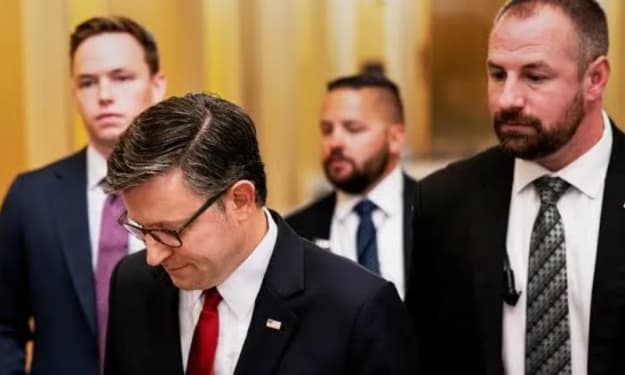
Johnson pushes to get House GOP holdouts to back tax bill
**Johnson Pushes to Get House GOP Holdouts to Back Tax Bill** House Speaker Mike Johnson is intensifying efforts to rally support among Republican holdouts in the House of Representatives as the GOP attempts to pass a significant tax package. The bill, which has been a priority for House Republicans, includes extensions of business tax breaks, increases in the child tax credit, and measures aimed at economic growth. However, internal party divisions have threatened its passage, with several conservative members withholding their support.
By GLOBAL NEWSabout a year ago in The Swamp
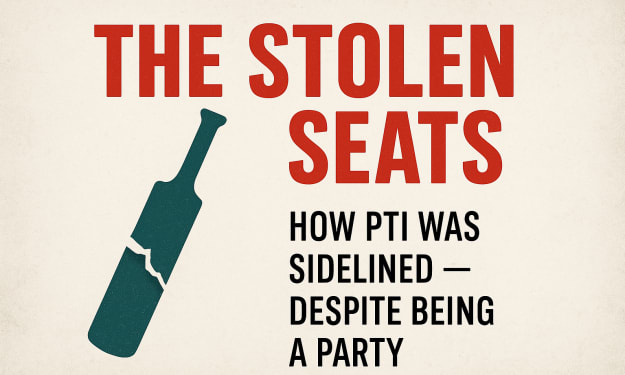
The Stolen Seats: How PTI Was Sidelined
In Pakistan’s February 2024 elections, millions voted for candidates backed by Pakistan Tehreek-e-Insaf (PTI). However, PTI could not use its well-known “cricket bat” election symbol. The Election Commission of Pakistan (ECP) said the party missed the deadline for its internal polls and classified PTI candidates as independents.
By Muhammad Adilabout a year ago in The Swamp
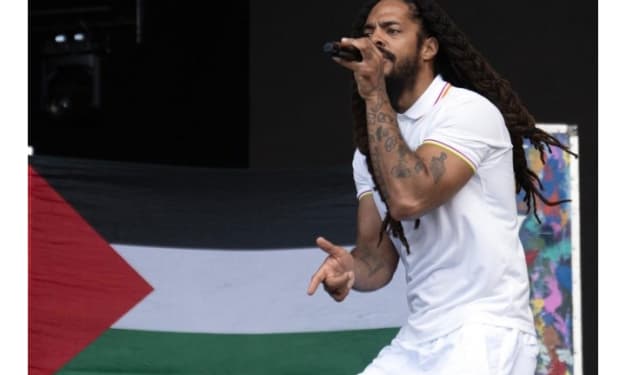
Why the U.S. Revoked Bob Vylan’s Visas: Music, Protest, and the Politics of Expression
In the ever-evolving intersection of music, activism, and politics, few stories highlight the fragile boundary between free expression and international diplomacy as sharply as the recent visa revocation of British punk-rap duo Bob Vylan by the United States. This unprecedented move has not only sparked outrage in artistic communities but also opened a broader conversation on the role of protest in music, the consequences of political speech, and how international artists are treated when they challenge dominant narratives. Who Is Bob Vylan? Bob Vylan, consisting of frontman Bobby Vylan and drummer Bobbie Vylan, is a genre-defying duo from London, England. Formed in 2017, the group blends punk, grime, and hip-hop in a way that is both aggressive and politically charged. They are known for confronting issues such as racism, police brutality, class inequality, and colonialism—all while maintaining an unapologetically anti-establishment tone. Their DIY ethos and fearless lyricism have earned them a loyal fanbase in the UK and abroad. Unlike many mainstream artists who dilute their messages for broader acceptance, Bob Vylan leans heavily into confrontation. And that’s precisely where their recent controversy begins. --- The Glastonbury Incident: Where It All Changed At Glastonbury Festival 2025, Bob Vylan’s performance on June 28 shocked some and energized others. On stage in front of a massive audience, Bobby Vylan led chants of: > "Free, Free Palestine!" "Death, Death to the IDF!" The chants—particularly the latter—ignited a political firestorm. While “Free Palestine” has been widely used in global pro-Palestinian movements, the phrase "Death to the IDF" (Israel Defense Forces) was perceived by many, especially U.S. officials, as crossing a line into incitement of violence. Shortly after the performance, the United States revoked the group’s visas, effectively banning them from entering the country for their upcoming U.S. tour. --- The U.S. Government's Justification The move was confirmed by Deputy Secretary of State Christopher Landau, who stated: > “Foreigners who glorify violence and hatred are not welcome visitors to our country.” From the U.S. perspective, the chant targeting the IDF—a branch of a close ally’s military—was not protected free speech but instead a potential incitement to violence and hate speech. U.S. immigration laws allow for the revocation of visas if individuals are deemed to promote or incite violent acts, even through artistic or political expression. This decision has drawn support from some pro-Israel organizations and lawmakers, but has equally ignited backlash from free speech advocates, artists, and civil liberties groups around the globe. --- The Fallout: Artistic Freedom vs. Political Consequences Bob Vylan’s supporters argue that the U.S. reaction reflects a double standard. American artists who engage in provocative or anti-government messaging rarely face such severe consequences—yet international performers seem to be treated with far less tolerance. Here’s the tension: the United States promotes itself as the global champion of freedom of speech, especially artistic freedom. But when that freedom is exercised by outsiders in a way that challenges U.S. foreign policy or offends political sensibilities, the door appears to close. --- Free Speech, or Incitement? Let’s examine the core issue: were Bob Vylan’s statements an exercise in free speech or an incitement to violence? The chant “Death to the IDF” is undeniably strong and controversial. It can be interpreted in multiple ways: some argue it is a condemnation of institutional violence, while others view it as a call for literal harm against individuals. In legal terms, the question of incitement depends on intent, imminence, and likelihood of actual violence—standards laid out in U.S. Supreme Court precedent (notably Brandenburg v. Ohio). Since Bob Vylan’s comments were made during a live music performance in the UK, with no direct link to violence, it’s unlikely that U.S. citizens or institutions were immediately endangered. Still, the symbolic power of such statements cannot be ignored—especially when related to one of the most sensitive geopolitical conflicts of our time. --- The Broader Context: Music as Protest This isn’t the first time music has collided with politics in a major way: In the 1960s, artists like Bob Dylan, Nina Simone, and Joan Baez were the voices of civil rights and anti-war movements. In the 1980s, Fela Kuti used Afrobeat to protest Nigeria’s military regime—often landing him in jail. In recent years, Kendrick Lamar, Beyoncé, and Childish Gambino have woven powerful political messages into their performances. What makes Bob Vylan’s case stand out is the international political tension and the governmental consequence. Artists from abroad can no longer assume their expression—even from stages thousands of miles away—will be treated as purely symbolic. In a hyperconnected, politically polarized world, words travel fast, and consequences are swift. --- Bob Vylan’s Response The group has not issued a full apology. In fact, Bobby Vylan defended their message in follow-up interviews and social media posts, asserting: > “We speak for the oppressed, not the oppressors. Music is our protest, and we won’t be silenced.” They argue that criticizing a government’s military actions—especially amid rising global outrage over civilian casualties in Gaza—should not be equated with hate speech. Their stance reflects a growing sentiment among younger audiences who demand that artists use their platforms to address injustice. --- Public Reaction: Divided Voices The public response to the visa cancellation has been deeply polarized. Supporters of Israel see it as a justified move against rhetoric that threatens the safety and legitimacy of the Jewish state. Pro-Palestinian activists view it as another example of Western hypocrisy and the silencing of voices demanding justice. Free speech advocates worry about the precedent this sets for the U.S. to police artistic expression—even when it originates outside its borders. On platforms like X (formerly Twitter), the hashtag #LetBobVylanIn trended for days. Meanwhile, some conservative commentators called for the group to be banned from more Western countries. --- What This Means for Other Artists This incident sends a clear signal: international performers are subject to the political climate of the countries they seek to enter. Messages that challenge dominant narratives—especially those tied to sensitive foreign alliances—can have serious ramifications. For artists, this means navigating a difficult path between authentic expression and pragmatic caution. For fans and activists, it raises the question: if art is supposed to challenge, provoke, and push boundaries—where exactly should the line be drawn? --- Conclusion: Art Will Always Be Political Bob Vylan’s visa controversy is not just a headline—it’s a cultural and political moment. It reflects the ongoing tensions between freedom and responsibility, protest and diplomacy, music and power. In a time when silence is often seen as complicity, artists like Bob Vylan choose to speak loudly. Whether one agrees with their message or not, their story forces us to reexamine the true cost of protest in a globalized world. As they face canceled tours and travel bans, their music remains a testament to a legacy that refuses to be muted.
By Ikram Ullahabout a year ago in The Swamp
World War 3 in 2025? Secret Predictions from Intelligence Experts
World War 3 in 2025? Secret Predictions from Intelligence Experts The wind of war doesn’t always begin with fire—it starts with whispers. Quiet leaks. Subtle shifts. Hidden alerts that most civilians never notice. But intelligence experts? They see the storm long before the clouds arrive. In shadowy corners of military rooms, encrypted emails, and confidential strategy documents, one chilling phrase has started to appear again and again: > “High probability of global military escalation by 2025.” No headlines. No speeches. Just quiet, rising fear. A War Waiting in the Wings In 2023 and 2024, global tensions accelerated at a pace not seen since the Cold War. Russia’s deepening war in Ukraine became more unpredictable. China’s naval movements near Taiwan turned from drills into provocations. Iran and Israel played a deadly game of silence and surprise, while the U.S. expanded its military footprint across Eastern Europe and the Pacific. But it was in late 2024 when a string of intelligence briefings shocked even seasoned analysts. A series of AI-generated war-game simulations—classified and run by NATO’s Strategic Forecasting Unit—predicted that under current conditions, a multi-front global conflict was "inevitable within 12–18 months." That brings us to mid-2025. We are inside that window now. The Hidden Warnings Leaked documents—first shared by an anonymous whistleblower on a dark web server—outlined a chilling forecast titled "WW3 Trajectory – Phase Zero." It wasn’t a declaration. It was a blueprint. The file, partially verified by cyber-researchers, predicted three initial "trigger zones" that could ignite a worldwide war: 1. Taiwan Strait Conflict 2. Nuclear Escalation in the Middle East 3. Russian Expansion Beyond Ukraine The document warned that if any two of these events occurred simultaneously, major powers would be forced to respond—creating a domino effect of alliances, retaliation, and global mobilization. Sound impossible? Look closer: In March 2025, China blockaded Taiwanese supply routes. In April, Iran tested a long-range missile, triggering Israeli airstrikes. And by May, Russian troops were spotted near Moldova’s border, in unmarked vehicles. Two out of three have already happened. Whispers from the CIA A former CIA analyst, whose voice was altered for anonymity in an exclusive podcast episode by The Grey Report, described internal agency chatter that chilled listeners: > “It’s no longer if. It’s how fast, how bad, and how deep the first 72 hours will go.” He claimed U.S. satellite intelligence had observed movement of tactical nuclear weapons in Belarus, and secret coordination between Russia and China using encrypted underwater cables—a level of secrecy not seen since before the invasion of Ukraine. He also stated that an internal briefing from Langley was titled “The Last Summer of Peace?” The Disappearing Diplomats Adding to the eerie quiet: the disappearance of diplomatic meetings. Back-channel talks that used to take place in Geneva and Vienna have dried up. U.S.–China calls are being postponed. Russian envoys have left several key European posts without explanation. According to British intelligence leaks, Russian diplomats in London were quietly moved back to Moscow under "national priority orders." Diplomats evacuate before the bombs fall. Civilian Clues and Public Denial Most of the public still scrolls through social media, unaware. Politicians avoid using the phrase "world war." Yet, the markets tremble. Oil prices hit a 10-year high. The global chip supply is tightening. And bunker builders in the U.S. and Europe have seen record sales since February 2025. One civilian signal stood out: the U.S. Department of Homeland Security quietly updated its official “Continuity of Government” plan—designed to keep the nation operating during nuclear war. It was uploaded without fanfare, buried in a Friday data dump. But cybersecurity sleuths noticed. Even more unsettling: private emails leaked from North American railway unions mention “quiet coordination with FEMA for emergency transport drills in Q3 2025.” Why prepare for mass rail mobilization if nothing is coming? The 48-Hour Theory One highly classified Pentagon scenario, known as “Black Silence,” models a surprise global war that unfolds in just 48 hours. It begins with: A cyberattack on U.S. early warning satellites Followed by a sudden Chinese invasion of Taiwan Then Russian missile launches into Poland or the Baltics Meanwhile, Iranian-backed militias begin assaults across Israel’s borders By the time world leaders respond, it’s already too late. Communications break down. Nuclear protocols activate. No time to react. Just automated retaliation. > In this simulation, over 1.2 billion lives are at risk within the first 14 days. A World on the Edge Are we already sleepwalking into this future? Military convoys now move at night. Drone surveillance over disputed territories has increased fivefold. Cyberattacks are happening daily—most never reach the news. Countries are hoarding gold, buying wheat reserves, and shifting toward closed economies. Yet the media focuses on elections, celebrity divorces, and sports scores. But behind closed doors, intelligence insiders say the clock is ticking—and midnight is closer than ever. Final Warning or False Alarm? Skeptics argue this could all be a high-stakes bluff. A global game of chicken meant to scare rivals into backing down. After all, war has been predicted before. The Cold War never exploded. The Cuban Missile Crisis ended without fire. But this time, there are more players, less communication, and deadlier technology. The question isn’t just “Will World War 3 happen?” It’s: “Has it already begun in silence?” Because not all wars start with a bang. Some start with a whisper. A signal missed. A leak ignored. A decision made in a locked room, far from cameras, far from mercy. --- If World War 3 starts tomorrow... would you even know today was your last day of peace?
By Ali Asad Ullahabout a year ago in The Swamp
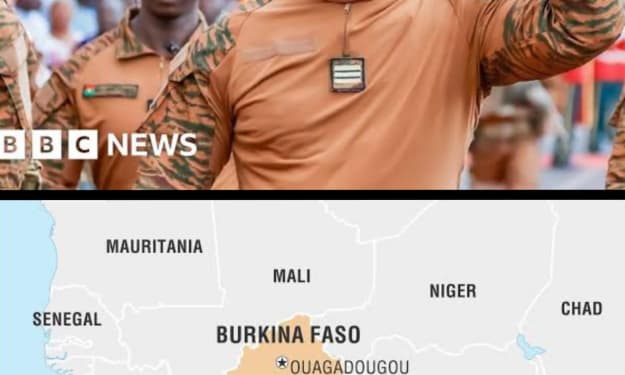
The Young Revolutionary Leader: Ibrahim Traoré and the New Face of Burkina Faso
“The Young Revolutionary Leader: Ibrahim Traoré and the New Face of Burkina Faso” Burkina Faso is a landlocked country located in West Africa, with a population of around 20 million. Its flag bears a resemblance to that of Pakistan’s Tehreek-e-Insaf party 🇧🇫, with red and green colors and a yellow star in the center. Formerly known as the Republic of Upper Volta, the country changed its name to Burkina Faso on August 4, 1984, which means “Land of the Upright People” — a title that reflects its people's desire for integrity and self-respect. A Colonial Past Under France Burkina Faso was a French colony, and its official language remains French to this day. France took control of the territory in 1896 and ruled it directly until 1960, when the country was granted nominal independence. However, the influence of France never truly disappeared. For decades, France retained control over Burkina Faso’s economy, trade, military decisions, and most importantly, its natural resources — especially gold. Despite being one of the world’s richest countries in gold reserves, Burkina Faso was denied the development of local refineries. Instead, French companies continued to extract gold, export it to Europe, and use it to enhance the glittering wealth of Paris, while Burkina Faso remained shackled in poverty. The local population received little to no benefit. As wealth was drained out, poverty, hunger, and crime increased inside the country. Politicians loyal to France continued to plunder public resources through corruption, while ordinary citizens lived in despair. The Rise of Discontent and Rebellion By the early 2010s, the situation had reached a boiling point. Frustrated by foreign interference and domestic misgovernance, tribal groups and youth began to resist. Armed rebellions grew. In 2015, elections were held, but once again, the winner was a pro-France president. Things only worsened. Then, in January 2022, the military stepped in and overthrew the civilian government. But the new leader, a military general, failed to deliver on promises. People's lives didn’t improve, nor did the army receive promised wage hikes. Discontent simmered within the military ranks. The Emergence of Ibrahim Traoré Just months later, Captain Ibrahim Traoré, a young army officer in his 30s, led a revolt against the general and seized power. Unlike his predecessors, Traoré immediately began making bold, revolutionary decisions. In January 2023, he terminated the security agreement with France, giving them one month to withdraw all French troops from Burkina Faso. This bold declaration shocked the international community. Many asked: Who is this fearless young leader who dares to challenge France? Strategic Alliances Beyond the West Once France’s soldiers left, Traoré turned eastward. He visited Moscow and met with President Vladimir Putin. Russia pledged military training and weapons support. Later, China supplied armored vehicles, and Türkiye provided modern drones, which are now being used by Burkina Faso's army in counter-insurgency operations. Traoré is deeply committed to national self-reliance. Recognizing that foreign companies were exploiting the country’s gold while locals remained unemployed, he founded Burkina Faso’s first gold refinery in 2023. This move was historic—it ensured that the profits from gold would now stay within the country, creating local jobs and boosting the national economy. He also revoked mining permits from foreign firms, including British companies, and nationalized several mines. These measures sent a clear message to the Western world: Africa has awakened, and the age of plundering is over. Rejecting Debt Dependence In August 2024, Ibrahim Traoré took yet another unprecedented step by refusing a $32 million loan offer from the International Monetary Fund (IMF). His message was loud and clear: “We must stand on our own feet.” This decision was widely praised by those who believe in economic sovereignty and freedom from debt traps. Welfare and Development Initiatives Despite being a military leader, Traoré is focused on social welfare. Aware that a large portion of his population sleeps hungry, he reached out to Russia, which responded with 25,000 tons of wheat in humanitarian aid. But Traoré does not want his country to become aid-dependent. To secure long-term food security, he imported thousands of modern agricultural machines from China and distributed them free of cost to farmers across the nation. Under his leadership, electricity access, previously limited to only 20% of the population, has begun to improve. With China's assistance, a 25,000-megawatt solar power project is under development. Additionally, Russia is helping build a nuclear power plant to provide sustainable energy for the future. In the infrastructure sector, he is constructing roads to connect remote villages with urban centers, realizing that economic development cannot happen without modern transportation. Moral Leadership and Pan-Islamic Solidarity Traoré's moral compass sets him apart from many global leaders. When offered funding for 400 mosques by certain Gulf countries, he respectfully declined, requesting that the money be redirected to Palestine, where “our brothers and sisters are starving.” This move earned him global respect and proved his genuine commitment to human values over political optics. A Role Model for African Youth At just 37 years old, Captain Ibrahim Traoré has become a symbol of hope for millions across Africa. He represents the dream of true independence, fearless leadership, and people-first governance. Many now consider him a modern-day revolutionary, inspiring a new generation of African leaders to reclaim their nations’ wealth, invest in their people, and challenge neocolonialism. His leadership reflects the very spirit described by Allama Iqbal in this timeless verse: > “O Lord, grant the Muslim heart that burning desire, That sets the soul aflame, that stirs the heart with fire.”
By Ikram Ullahabout a year ago in The Swamp
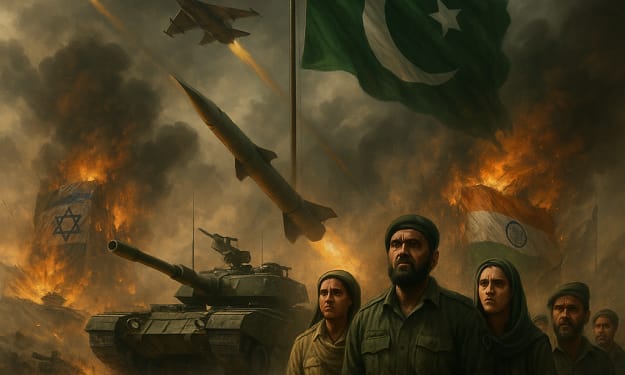
India and Israel Threaten War—But Pakistan Is Ready to Erase Their Names from History
Rising Tensions in South Asia: A Dangerous Game Begins In recent weeks, alarming reports have surfaced claiming that India, with alleged backing from Israel, may be planning a military offensive against Pakistan within the next 30 days. Though unconfirmed officially, the threats are spreading like wildfire across media platforms and strategic circles. If true, this isn't just a regional spat—it could ignite a storm that shakes the world order.
By Abid Ali Khanabout a year ago in The Swamp