politics
Politics does not dictate our collective cultural mindset as much as it simply reflects it; We've got to look in the mirror sometimes, and we've got one.
How Thousands of Secret Russian Documents Were Exposed. AI-Generated.
In an age where information moves faster than ever, secrecy has become increasingly difficult to maintain. This reality was underscored when thousands of secret Russian documents were exposed to the public, revealing sensitive details about government operations, military planning, and internal communications. The disclosure has sent shockwaves through intelligence communities worldwide and raised urgent questions about cybersecurity, transparency, and the vulnerability of state secrets.
By Ayesha Lashari9 months ago in The Swamp
Hong Kong Greets 2026 Without Fireworks After Deadliest Blaze in Decades. AI-Generated.
As 2026 arrived, Hong Kong did something it rarely does — it looked up at a silent sky. No fireworks burst over Victoria Harbour. No thunderous cheers echoed across the waterfront. Instead, the city welcomed the New Year with lights, music, and a mood that was far more reflective than celebratory. The decision to cancel the iconic fireworks display followed one of the darkest tragedies Hong Kong has experienced in decades: a deadly residential fire that claimed more than 160 lives.
By Aqib Hussain9 months ago in The Swamp
“Hezbollah Must Be Disarmed”: Trump Signals Support for Action in Exclusive Message to Netanyahu. AI-Generated.
A new wave of geopolitical tension has emerged in the Middle East following reports that former U.S. President Donald Trump told Israeli Prime Minister Benjamin Netanyahu that he would back an attack on Hezbollah, emphasizing that the militant group “must be disarmed.” The exclusive statement has sparked intense debate among diplomats, analysts, and regional observers, raising concerns about escalation in an already volatile region.
By Ayesha Lashari9 months ago in The Swamp
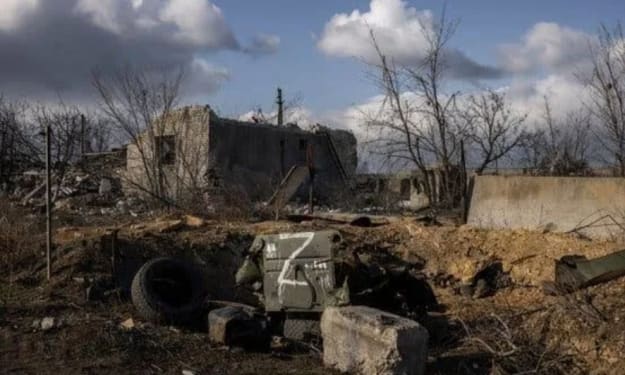
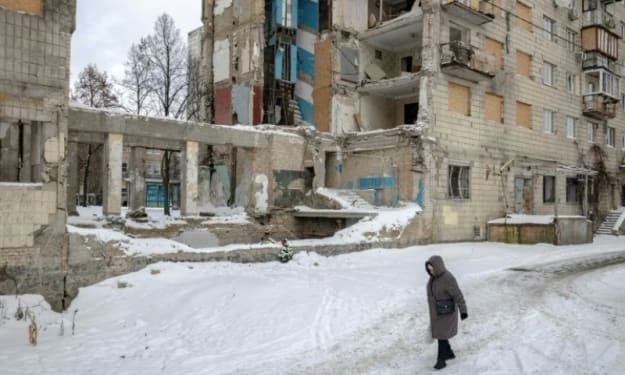
Russia-Ukraine War: List of Key Events, Day 1,407. AI-Generated.
As the Russia-Ukraine war reaches Day 1,407, the conflict shows no sign of resolution. What began as a full-scale invasion has evolved into one of the longest and most consequential wars in modern European history. Nearly four years in, the fighting continues across multiple fronts, diplomacy remains fragile, and civilians are still paying the highest price.
By Aqib Hussain9 months ago in The Swamp
How 2025 Changed the World
When historians eventually look back on 2025, they probably won’t treat it like 1914, 1939, or 2001. There was no single assassination, no mushroom cloud, no defining attack that instantly rewired the global system. Instead, 2025 belongs to a quieter but more consequential category of years — moments when the rules changed so thoroughly that the world before and after barely resemble one another.
By Lawrence Lease9 months ago in The Swamp
The Campania Regional Government and FICO: Governance, Development, and Regional Vision. AI-Generated.
The Campania Regional Government (Giunta Regionale Campania) plays a central role in shaping the economic, social, and institutional future of one of Italy’s most dynamic yet challenging regions. As the executive body of the region, it is responsible for turning political direction into concrete action. Within this framework, references to FICO—often associated with large-scale development models tied to food culture, sustainability, and innovation—highlight broader debates about governance, growth, and regional identity.
By Ayesha Lashari9 months ago in The Swamp
Christians Gathered in Manager Square, Bethlehem.
His Eminence, the Latin Patriarch of Jerusalem, Pierbattista Pizzaballa, spoke to the faithful. Saying the following: "You are the light, we are the light. The light of Bethlehem and the light of the world". He walked the streets, followed by Christians of every stripe, both Palestinians and foreign tourists.
By Nicholas Bishop9 months ago in The Swamp
Teyana Taylor and Aaron Pierre
Introduction In an era where celebrity relationships often unfold in the glare of social media, Teyana Taylor and Aaron Pierre have crafted something refreshingly authentic: a partnership rooted in artistic respect, shared ambition, and quiet devotion. Since their romance became public in 2024, fans have searched “Teyana Taylor Aaron Pierre” not just out of curiosity—but admiration.
By KAMRAN AHMAD9 months ago in The Swamp
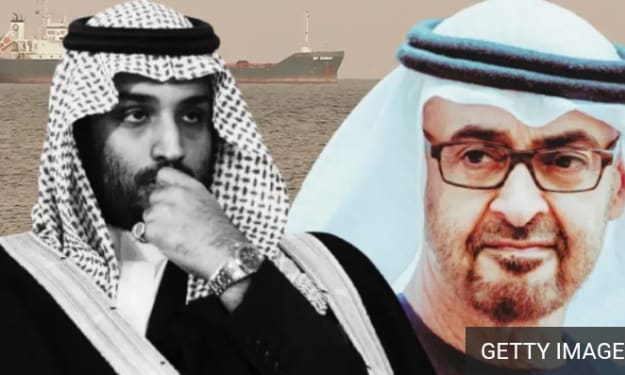
UAE Rejects Saudi Allegations and Announces End to Military Operations in Yemen: A Turning Point in the Conflict. AI-Generated.
The United Arab Emirates’ recent decision to reject Saudi allegations of arming factions in Yemen while simultaneously announcing the end of its military operations marks a significant moment in Middle Eastern geopolitics. This development not only reshapes the dynamics of the Yemen conflict but also raises broader questions about regional alliances, shifting strategies, and the future of one of the world’s most devastating humanitarian crises. For years, Yemen has been the center of a complex proxy war involving regional powers, local factions, and international interests. The UAE’s announcement signals a strategic recalibration that could alter the trajectory of the conflict—or expose deeper fractures within the Saudi-led coalition. Background: The Yemen War and the Saudi-Led Coalition The war in Yemen began in earnest in 2014 when Houthi rebels seized control of the capital, Sana’a, forcing the internationally recognized government into exile. In response, Saudi Arabia formed a coalition in 2015 to restore the Yemeni government, citing national security concerns and Iran’s alleged backing of the Houthis. The UAE quickly emerged as a key member of this coalition, contributing troops, air power, and logistical support. While Saudi Arabia focused primarily on confronting the Houthis, the UAE concentrated on southern Yemen, targeting extremist groups such as Al-Qaeda in the Arabian Peninsula (AQAP) and supporting local forces. Over time, however, differences in priorities and methods between Saudi Arabia and the UAE became increasingly visible. Saudi Allegations and UAE’s Firm Rejection Tensions escalated when Saudi-linked sources alleged that the UAE was indirectly supporting armed groups in Yemen, including factions that did not align with Riyadh’s objectives. Some claims suggested that Emirati-backed militias were undermining the unity of Yemen and complicating the coalition’s mission. The UAE responded forcefully, dismissing the allegations as unfounded and misleading. Emirati officials emphasized that their involvement in Yemen had always been focused on counterterrorism, regional stability, and humanitarian support—not fueling further conflict. According to the UAE, such accusations ignore the reality of its contributions, including securing key ports, combating extremist networks, and delivering large-scale humanitarian aid to Yemeni civilians. Announcement to End Military Operations Alongside rejecting Saudi allegations, the UAE announced that it was ending its direct military operations in Yemen. Officials described the move not as a withdrawal under pressure, but as a strategic transition from military engagement to diplomacy and stabilization. The UAE clarified that: It would reduce its military footprint significantly Local Yemeni forces would take greater responsibility for security Efforts would shift toward political dialogue and humanitarian assistance This announcement came amid growing international pressure to end the war and mounting criticism over civilian casualties and infrastructure destruction. Strategic Recalculation or Diplomatic Rift? Analysts are divided on what the UAE’s decision truly represents. Some view it as a pragmatic recalculation—recognizing that military intervention has failed to produce a decisive victory and has instead deepened the humanitarian catastrophe. Others see the move as evidence of a widening rift between Riyadh and Abu Dhabi. While the two countries remain strategic partners, their visions for Yemen’s future appear increasingly divergent. The UAE has shown support for southern Yemeni groups seeking autonomy, while Saudi Arabia continues to emphasize Yemen’s territorial unity under a central government. This divergence complicates coalition cohesion and raises questions about how long Saudi Arabia can sustain the conflict without full Emirati backing. Humanitarian Implications Yemen’s humanitarian crisis is among the worst in the world. Millions face food insecurity, disease outbreaks, and displacement. Years of fighting have destroyed hospitals, schools, and vital infrastructure. From a humanitarian perspective, the UAE’s decision to end military operations could reduce violence in certain regions, creating space for aid delivery and reconstruction. Emirati officials have highlighted their continued commitment to humanitarian programs, including food aid, medical assistance, and rebuilding efforts. However, critics caution that unless all major parties commit to de-escalation, one actor’s withdrawal may not be enough to bring meaningful relief to civilians. International and Regional Reactions The announcement has drawn mixed reactions globally. The United Nations and several humanitarian organizations welcomed the move as a positive step toward de-escalation. Some Western diplomats described it as an opportunity to reinvigorate peace talks. At the same time, regional observers warn that power vacuums left by withdrawing forces could be exploited by militias or extremist groups. The success of the UAE’s strategy will depend heavily on whether political solutions replace military ones. Iran, often accused of backing the Houthis, has so far responded cautiously, while other Gulf states are watching closely to see how the balance of power shifts. Saudi Arabia’s Position Going Forward For Saudi Arabia, the UAE’s announcement creates both challenges and opportunities. On one hand, it may increase pressure on Riyadh to reassess its own military strategy and seek a negotiated settlement. On the other hand, Saudi Arabia could face greater operational burdens if it continues the conflict largely on its own. The Saudi leadership has recently signaled openness to diplomacy, engaging in indirect talks and supporting ceasefire initiatives. The UAE’s move may accelerate this trend—or expose disagreements over the terms of peace. Yemen’s Fragmented Political Landscape Beyond regional politics, Yemen itself remains deeply divided. The Houthis control large parts of the north, while various factions dominate the south. Years of war have weakened central authority and empowered local actors. The UAE’s reduced military role may strengthen some southern groups it previously supported, potentially reshaping internal power dynamics. Whether this leads to stability or further fragmentation remains uncertain. Without an inclusive political process involving all major Yemeni stakeholders, military withdrawals alone are unlikely to secure lasting peace. A Shift from War to Diplomacy? The UAE insists that its decision reflects a belief that Yemen’s conflict cannot be solved through force alone. This sentiment echoes growing international consensus that diplomacy, not warfare, offers the only viable path forward. Ending military operations does not automatically mean peace—but it does signal recognition that the costs of continued fighting outweigh the benefits. If followed by meaningful negotiations, confidence-building measures, and reconstruction efforts, this shift could mark the beginning of a new phase. Conclusion: A Defining Moment for the Region The UAE’s rejection of Saudi allegations and its announcement to end military operations in Yemen represent a defining moment in the long-running conflict. Whether this move becomes a catalyst for peace or merely another chapter in a complex war depends on the actions of all parties involved. For Yemen’s suffering population, the hope is simple: that regional powers choose compromise over confrontation, diplomacy over destruction, and humanity over strategy. The world will be watching closely to see whether this decision leads to genuine progress—or whether the conflict continues under a different form. In a war that has already taken too much, the opportunity for peace must not be squandered.
By Zahid Hussain9 months ago in The Swamp
Stranger Things Finale Release Date
Introduction After nearly a decade of Demogorgons, mind flayers, and Eggo-fueled nostalgia, Stranger Things is preparing to say goodbye. With fans worldwide searching “Stranger Things finale release date,” “when does the last episode of Stranger Things come out?” and “what time is Stranger Things finale coming out?,” anticipation has reached fever pitch.
By KAMRAN AHMAD9 months ago in The Swamp
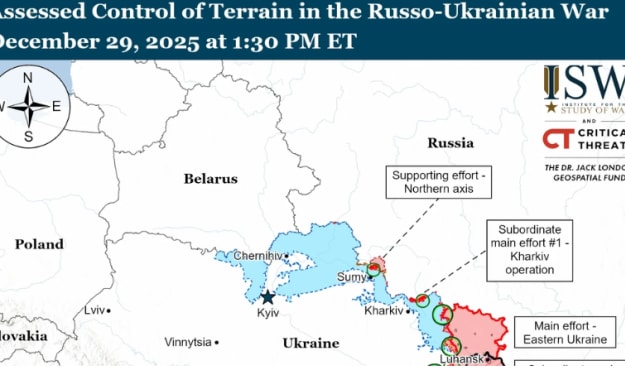
ISW Russian Offensive Campaign Assessment, December 29, 2025. AI-Generated.
On December 29, 2025, the Institute for the Study of War (ISW) published its Russian Offensive Campaign Assessment, offering a comprehensive snapshot of the evolving military, informational, and political dynamics shaping the conflict between Russia and Ukraine. This assessment, widely referenced by Western media and analysts, sheds light on battlefield activities, propaganda efforts, diplomatic maneuvering, and the broader strategic environment. �
By Aqib Hussain9 months ago in The Swamp