politicians
Reviews of the politicians kissing babies and running governments around the world; applaud and criticize the decisions they make and their implications.
Embrace Hope and Be Happy - First Of All, Dump The Right Wing And Fascists
Introduction In July 2016, the spiteful imbeciles that call themselves the Tory party were six years into the destruction of the UK's economy and infrastructure and delivered a coup-de-grace by taking us out of the world largest trading bloc to pander to the racists, bullies, and tax avoiding cheats and the right wing media backed them up to the hilt. The USA got its first dose of Trump.
By Mike Singleton 💜 Mikeydred about a year ago in The Swamp
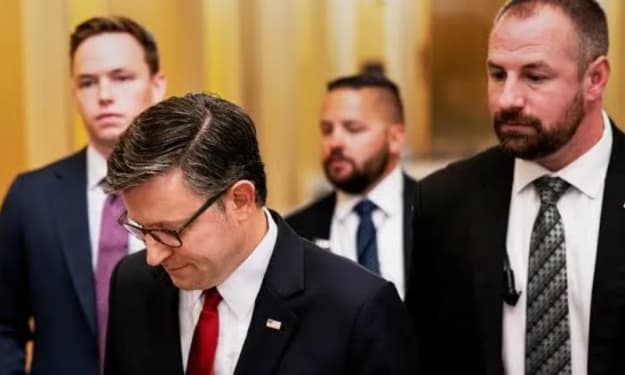
Johnson pushes to get House GOP holdouts to back tax bill
**Johnson Pushes to Get House GOP Holdouts to Back Tax Bill** House Speaker Mike Johnson is intensifying efforts to rally support among Republican holdouts in the House of Representatives as the GOP attempts to pass a significant tax package. The bill, which has been a priority for House Republicans, includes extensions of business tax breaks, increases in the child tax credit, and measures aimed at economic growth. However, internal party divisions have threatened its passage, with several conservative members withholding their support.
By GLOBAL NEWSabout a year ago in The Swamp
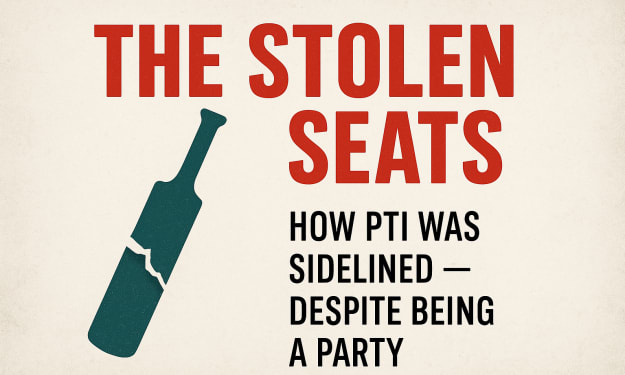
The Stolen Seats: How PTI Was Sidelined
In Pakistan’s February 2024 elections, millions voted for candidates backed by Pakistan Tehreek-e-Insaf (PTI). However, PTI could not use its well-known “cricket bat” election symbol. The Election Commission of Pakistan (ECP) said the party missed the deadline for its internal polls and classified PTI candidates as independents.
By Muhammad Adilabout a year ago in The Swamp
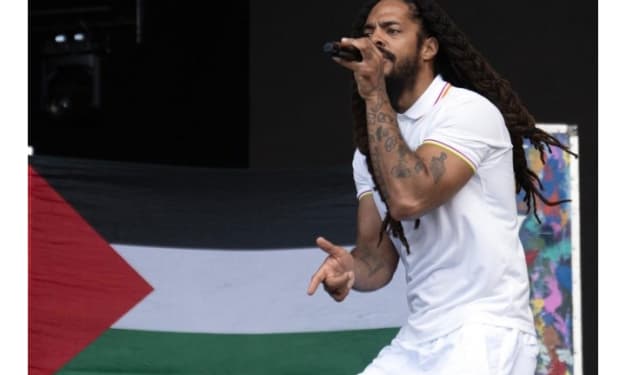
Why the U.S. Revoked Bob Vylan’s Visas: Music, Protest, and the Politics of Expression
In the ever-evolving intersection of music, activism, and politics, few stories highlight the fragile boundary between free expression and international diplomacy as sharply as the recent visa revocation of British punk-rap duo Bob Vylan by the United States. This unprecedented move has not only sparked outrage in artistic communities but also opened a broader conversation on the role of protest in music, the consequences of political speech, and how international artists are treated when they challenge dominant narratives. Who Is Bob Vylan? Bob Vylan, consisting of frontman Bobby Vylan and drummer Bobbie Vylan, is a genre-defying duo from London, England. Formed in 2017, the group blends punk, grime, and hip-hop in a way that is both aggressive and politically charged. They are known for confronting issues such as racism, police brutality, class inequality, and colonialism—all while maintaining an unapologetically anti-establishment tone. Their DIY ethos and fearless lyricism have earned them a loyal fanbase in the UK and abroad. Unlike many mainstream artists who dilute their messages for broader acceptance, Bob Vylan leans heavily into confrontation. And that’s precisely where their recent controversy begins. --- The Glastonbury Incident: Where It All Changed At Glastonbury Festival 2025, Bob Vylan’s performance on June 28 shocked some and energized others. On stage in front of a massive audience, Bobby Vylan led chants of: > "Free, Free Palestine!" "Death, Death to the IDF!" The chants—particularly the latter—ignited a political firestorm. While “Free Palestine” has been widely used in global pro-Palestinian movements, the phrase "Death to the IDF" (Israel Defense Forces) was perceived by many, especially U.S. officials, as crossing a line into incitement of violence. Shortly after the performance, the United States revoked the group’s visas, effectively banning them from entering the country for their upcoming U.S. tour. --- The U.S. Government's Justification The move was confirmed by Deputy Secretary of State Christopher Landau, who stated: > “Foreigners who glorify violence and hatred are not welcome visitors to our country.” From the U.S. perspective, the chant targeting the IDF—a branch of a close ally’s military—was not protected free speech but instead a potential incitement to violence and hate speech. U.S. immigration laws allow for the revocation of visas if individuals are deemed to promote or incite violent acts, even through artistic or political expression. This decision has drawn support from some pro-Israel organizations and lawmakers, but has equally ignited backlash from free speech advocates, artists, and civil liberties groups around the globe. --- The Fallout: Artistic Freedom vs. Political Consequences Bob Vylan’s supporters argue that the U.S. reaction reflects a double standard. American artists who engage in provocative or anti-government messaging rarely face such severe consequences—yet international performers seem to be treated with far less tolerance. Here’s the tension: the United States promotes itself as the global champion of freedom of speech, especially artistic freedom. But when that freedom is exercised by outsiders in a way that challenges U.S. foreign policy or offends political sensibilities, the door appears to close. --- Free Speech, or Incitement? Let’s examine the core issue: were Bob Vylan’s statements an exercise in free speech or an incitement to violence? The chant “Death to the IDF” is undeniably strong and controversial. It can be interpreted in multiple ways: some argue it is a condemnation of institutional violence, while others view it as a call for literal harm against individuals. In legal terms, the question of incitement depends on intent, imminence, and likelihood of actual violence—standards laid out in U.S. Supreme Court precedent (notably Brandenburg v. Ohio). Since Bob Vylan’s comments were made during a live music performance in the UK, with no direct link to violence, it’s unlikely that U.S. citizens or institutions were immediately endangered. Still, the symbolic power of such statements cannot be ignored—especially when related to one of the most sensitive geopolitical conflicts of our time. --- The Broader Context: Music as Protest This isn’t the first time music has collided with politics in a major way: In the 1960s, artists like Bob Dylan, Nina Simone, and Joan Baez were the voices of civil rights and anti-war movements. In the 1980s, Fela Kuti used Afrobeat to protest Nigeria’s military regime—often landing him in jail. In recent years, Kendrick Lamar, Beyoncé, and Childish Gambino have woven powerful political messages into their performances. What makes Bob Vylan’s case stand out is the international political tension and the governmental consequence. Artists from abroad can no longer assume their expression—even from stages thousands of miles away—will be treated as purely symbolic. In a hyperconnected, politically polarized world, words travel fast, and consequences are swift. --- Bob Vylan’s Response The group has not issued a full apology. In fact, Bobby Vylan defended their message in follow-up interviews and social media posts, asserting: > “We speak for the oppressed, not the oppressors. Music is our protest, and we won’t be silenced.” They argue that criticizing a government’s military actions—especially amid rising global outrage over civilian casualties in Gaza—should not be equated with hate speech. Their stance reflects a growing sentiment among younger audiences who demand that artists use their platforms to address injustice. --- Public Reaction: Divided Voices The public response to the visa cancellation has been deeply polarized. Supporters of Israel see it as a justified move against rhetoric that threatens the safety and legitimacy of the Jewish state. Pro-Palestinian activists view it as another example of Western hypocrisy and the silencing of voices demanding justice. Free speech advocates worry about the precedent this sets for the U.S. to police artistic expression—even when it originates outside its borders. On platforms like X (formerly Twitter), the hashtag #LetBobVylanIn trended for days. Meanwhile, some conservative commentators called for the group to be banned from more Western countries. --- What This Means for Other Artists This incident sends a clear signal: international performers are subject to the political climate of the countries they seek to enter. Messages that challenge dominant narratives—especially those tied to sensitive foreign alliances—can have serious ramifications. For artists, this means navigating a difficult path between authentic expression and pragmatic caution. For fans and activists, it raises the question: if art is supposed to challenge, provoke, and push boundaries—where exactly should the line be drawn? --- Conclusion: Art Will Always Be Political Bob Vylan’s visa controversy is not just a headline—it’s a cultural and political moment. It reflects the ongoing tensions between freedom and responsibility, protest and diplomacy, music and power. In a time when silence is often seen as complicity, artists like Bob Vylan choose to speak loudly. Whether one agrees with their message or not, their story forces us to reexamine the true cost of protest in a globalized world. As they face canceled tours and travel bans, their music remains a testament to a legacy that refuses to be muted.
By Ikram Ullahabout a year ago in The Swamp
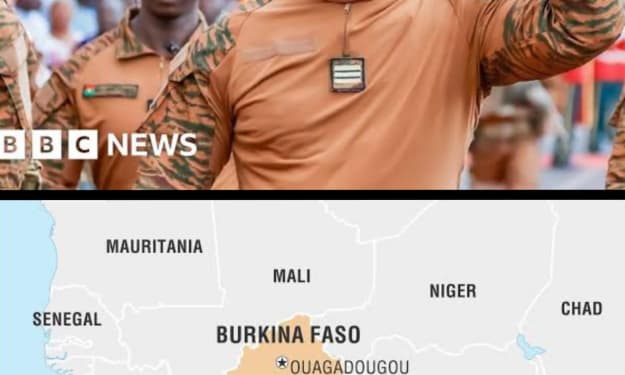
The Young Revolutionary Leader: Ibrahim Traoré and the New Face of Burkina Faso
“The Young Revolutionary Leader: Ibrahim Traoré and the New Face of Burkina Faso” Burkina Faso is a landlocked country located in West Africa, with a population of around 20 million. Its flag bears a resemblance to that of Pakistan’s Tehreek-e-Insaf party 🇧🇫, with red and green colors and a yellow star in the center. Formerly known as the Republic of Upper Volta, the country changed its name to Burkina Faso on August 4, 1984, which means “Land of the Upright People” — a title that reflects its people's desire for integrity and self-respect. A Colonial Past Under France Burkina Faso was a French colony, and its official language remains French to this day. France took control of the territory in 1896 and ruled it directly until 1960, when the country was granted nominal independence. However, the influence of France never truly disappeared. For decades, France retained control over Burkina Faso’s economy, trade, military decisions, and most importantly, its natural resources — especially gold. Despite being one of the world’s richest countries in gold reserves, Burkina Faso was denied the development of local refineries. Instead, French companies continued to extract gold, export it to Europe, and use it to enhance the glittering wealth of Paris, while Burkina Faso remained shackled in poverty. The local population received little to no benefit. As wealth was drained out, poverty, hunger, and crime increased inside the country. Politicians loyal to France continued to plunder public resources through corruption, while ordinary citizens lived in despair. The Rise of Discontent and Rebellion By the early 2010s, the situation had reached a boiling point. Frustrated by foreign interference and domestic misgovernance, tribal groups and youth began to resist. Armed rebellions grew. In 2015, elections were held, but once again, the winner was a pro-France president. Things only worsened. Then, in January 2022, the military stepped in and overthrew the civilian government. But the new leader, a military general, failed to deliver on promises. People's lives didn’t improve, nor did the army receive promised wage hikes. Discontent simmered within the military ranks. The Emergence of Ibrahim Traoré Just months later, Captain Ibrahim Traoré, a young army officer in his 30s, led a revolt against the general and seized power. Unlike his predecessors, Traoré immediately began making bold, revolutionary decisions. In January 2023, he terminated the security agreement with France, giving them one month to withdraw all French troops from Burkina Faso. This bold declaration shocked the international community. Many asked: Who is this fearless young leader who dares to challenge France? Strategic Alliances Beyond the West Once France’s soldiers left, Traoré turned eastward. He visited Moscow and met with President Vladimir Putin. Russia pledged military training and weapons support. Later, China supplied armored vehicles, and Türkiye provided modern drones, which are now being used by Burkina Faso's army in counter-insurgency operations. Traoré is deeply committed to national self-reliance. Recognizing that foreign companies were exploiting the country’s gold while locals remained unemployed, he founded Burkina Faso’s first gold refinery in 2023. This move was historic—it ensured that the profits from gold would now stay within the country, creating local jobs and boosting the national economy. He also revoked mining permits from foreign firms, including British companies, and nationalized several mines. These measures sent a clear message to the Western world: Africa has awakened, and the age of plundering is over. Rejecting Debt Dependence In August 2024, Ibrahim Traoré took yet another unprecedented step by refusing a $32 million loan offer from the International Monetary Fund (IMF). His message was loud and clear: “We must stand on our own feet.” This decision was widely praised by those who believe in economic sovereignty and freedom from debt traps. Welfare and Development Initiatives Despite being a military leader, Traoré is focused on social welfare. Aware that a large portion of his population sleeps hungry, he reached out to Russia, which responded with 25,000 tons of wheat in humanitarian aid. But Traoré does not want his country to become aid-dependent. To secure long-term food security, he imported thousands of modern agricultural machines from China and distributed them free of cost to farmers across the nation. Under his leadership, electricity access, previously limited to only 20% of the population, has begun to improve. With China's assistance, a 25,000-megawatt solar power project is under development. Additionally, Russia is helping build a nuclear power plant to provide sustainable energy for the future. In the infrastructure sector, he is constructing roads to connect remote villages with urban centers, realizing that economic development cannot happen without modern transportation. Moral Leadership and Pan-Islamic Solidarity Traoré's moral compass sets him apart from many global leaders. When offered funding for 400 mosques by certain Gulf countries, he respectfully declined, requesting that the money be redirected to Palestine, where “our brothers and sisters are starving.” This move earned him global respect and proved his genuine commitment to human values over political optics. A Role Model for African Youth At just 37 years old, Captain Ibrahim Traoré has become a symbol of hope for millions across Africa. He represents the dream of true independence, fearless leadership, and people-first governance. Many now consider him a modern-day revolutionary, inspiring a new generation of African leaders to reclaim their nations’ wealth, invest in their people, and challenge neocolonialism. His leadership reflects the very spirit described by Allama Iqbal in this timeless verse: > “O Lord, grant the Muslim heart that burning desire, That sets the soul aflame, that stirs the heart with fire.”
By Ikram Ullahabout a year ago in The Swamp
Russia vs Ukraine: What’s Really Happening in 2025 (A Brutally Honest Breakdown)
I’ve been following this war since the day it began. Not as a soldier, not as a politician, not even as a journalist. Just as a human being who cares deeply about truth, suffering, and the ripple effect of violence. And as I write this in mid-2025, I’m painfully aware of how numb we’ve all become to the phrase Russia vs Ukraine. It’s been over three years. Thousands of headlines. Millions of lives changed. And yet, how many of us really know what’s happening right now?
By Bevy Osuosabout a year ago in The Swamp
What I Learned Growing Up in a Cult. Top Story - June 2025.
Earlier this week I was talking to a coworker about life. After a while, we somehow got on the subject of religion. I had to explain that I have an aversion to most organized forms of religion, having been raised in a church that at the time was very cult-like, and later after a split, the faction that stayed with the original leader went full cult. But that begs the question.
By Atomic Historianabout a year ago in The Swamp
NATO Summit in The Hague Signals Shift Toward Greater Defense Spending
has placed renewed emphasis on alliance unity, military readiness, and a significant increase in defense spending among member states. A Turning Point for NATO NATO Secretary General Jens Stoltenberg opened the summit with an urgent call for greater resolve in the face of new and evolving global threats. “Our security environment is more unpredictable than ever,” he said. “Authoritarian regimes are challenging the rules-based international order. NATO must adapt—not tomorrow, but today.” The summit comes just weeks after coordinated U.S. and Israeli strikes on Iranian military targets in retaliation for Tehran’s alleged involvement in regional destabilization. The events reignited concerns over the alliance’s readiness for potential escalation in the Middle East and the possibility of broader global conflict. A Renewed Push for Defense Spending One of the clearest outcomes from the summit has been a recommitment to defense spending goals. Since the 2014 Wales Summit, NATO members have pledged to allocate at least 2% of their GDP to defense. While progress has been uneven, the latest events have accelerated urgency. Germany, France, Italy, and Spain—previously among those criticized for lagging behind—have all announced updated timelines to meet or exceed the 2% benchmark by 2027. In a major policy shift, Germany unveiled a €30 billion increase to its annual defense budget, with new investments in cyber defense, air mobility, and NATO’s rapid reaction forces. U.S. Defense Secretary Kathleen Hicks, representing the Biden administration, applauded the movement. “America remains committed to NATO, but we must see fairer burden sharing. The security of the transatlantic alliance cannot rest on U.S. shoulders alone.” Alliance Cohesion Tested Despite strong rhetoric of unity, the summit revealed underlying concerns about alliance cohesion, particularly with looming elections in several NATO countries and shifting domestic attitudes toward defense priorities. Hungary and Slovakia have expressed reservations about increased troop commitments, citing economic pressures and political opposition at home. Meanwhile, Turkish President Erdoğan voiced frustrations over NATO’s stance on regional conflicts and criticized what he called “Western double standards” in Middle East policy. However, these tensions have not derailed the summit’s core goals. A joint communiqué issued Tuesday reaffirmed “unwavering solidarity” among members and outlined concrete steps to modernize NATO’s military posture, including: Establishing a new NATO Cyber Command Center based in Brussels Expanding rapid deployment capabilities with a proposed 300,000-strong high-readiness force Increasing joint exercises in the Baltic and Black Sea regions Enhancing intelligence-sharing protocols among members Geopolitical Ripple Effects Outside observers are closely watching how NATO’s moves will be interpreted by global rivals. Russia, though currently entangled in internal political turmoil and economic slowdown, responded harshly to the summit’s opening statements. A Kremlin spokesperson warned that NATO’s “aggressive expansion of military infrastructure” could “destabilize European security for decades.” China, while not directly addressed in the summit’s early briefings, looms large in NATO’s long-term strategic outlook. The alliance’s recent Strategic Concept document labeled Beijing as a “systemic challenge,” and this year’s discussions have included preliminary talks about expanding cooperation with Indo-Pacific partners such as Japan, South Korea, and Australia. Iran, the focal point of recent conflict, issued a statement through state media accusing NATO of “provoking regional instability through militarization and coercive diplomacy.” The regime has also increased military drills in the Persian Gulf and threatened to restrict access through the Strait of Hormuz, a move that could have significant global economic implications. Public Sentiment and Political Ramifications Back in Europe and North America, public support for NATO remains high, particularly in Eastern European countries like Poland, Estonia, and Romania, where the Russian threat feels most immediate. In Western Europe, however, opinions are more mixed. Recent polling by the European Policy Centre shows growing concern over the cost of defense increases, especially among younger voters more focused on climate and social issues. In the U.S., where presidential elections are just months away, NATO is again becoming a campaign issue. Former President Donald Trump, a prominent critic of the alliance during his tenure, has warned against “blank checks to Europe” and has suggested withdrawing troops unless burden-sharing improves. Analysts believe this dynamic could shape future U.S. involvement in NATO and have encouraged European members to take greater initiative in defense planning and procurement. Looking Forward: What Happens Next? While many of the summit’s announcements focus on long-term goals, there are immediate operational implications. NATO will begin a new round of joint military exercises in late July, including simulated cyberattacks, coordinated missile defense drills, and enhanced maritime patrols in the Mediterranean. The alliance is also set to release a classified review of its nuclear posture later this year, in response to Russia’s deployment of tactical nuclear weapons in Belarus and growing concerns about Iran’s nuclear ambitions. Stoltenberg concluded the summit with a message of cautious optimism: “NATO is not just a military alliance. It is a community of values. Today we have shown that even in uncertain times, we stand together—united, committed, and ready.” Conclusion The 2025 NATO summit in The Hague has reinforced the alliance’s strategic priorities amid rising global tensions. With defense spending on the rise and new military commitments on the table, NATO appears to be entering a phase of renewal. Yet the path ahead is not without challenges—from internal divisions to external threats. What is clear, however, is that the decisions made this week will shape the alliance’s trajectory for years to come. ---
By Shehzad Khanabout a year ago in The Swamp