education
A place to hash out all opinions on education policy, charter schools, statewide testing, and what the political world is and isn't doing about it.
Make America ?????? Again.
I am upset. I avoid the news for a reason. It gives me anxiety. Or I get mad. Or I get sad. And then I have a very very hard time shaking that feeling. I'm on anxiety regulators for a reason. So unlike the rest of America, I do NOT start my day with the morning news. I start it with coffee, my kids, more coffee, some cleaning, more coffee, some singing with the birds like Snow White, more coffee, and then... yeah. More coffee.
By Hope Martin3 years ago in The Swamp
'Beep, Beep,' the Jeeps Weep
In a race for position, blaring horns accompanied by clouds of smoke filled the air. Four-wheeled vehicles, painted in vibrant colors and adorned with gaudy accessories, then began to speed down the street, shuttling people to the sound of roaring engines. This is an everyday scene in the Philippines, where loud and colorful jeepneys reign supreme.
By Angela Cantiga3 years ago in The Swamp
America - The New Type of 3rd World Country?
When I lived in Australia, it took a long time to get used to things there. Not only were the basic things like electric outlets, the prongs on something electric, the toilet flushes, light switches and the side of the road you drive on different.... but the people were different as well.
By Hope Martin3 years ago in The Swamp
Hate On A Saturday Morning
“That is not appropriate for any of our children. Now my religious rites tells me what I can and cannot do. I don't teach my children to be racist. I don't teach my children to be hateful. I teach them to be loving and caring and sharing. Now, where is this coming from that? I'm going to all of a sudden teach my children to hate gay people or Lesbian people. No. Leave your gender, leave your sexuality to yourself, to your bedroom. Don't bring it to our children. The more you attack our children, the more we gonna come after you guys and protest and say [inaudible]. Mother Fuckers.”– Public comment of Manuk Grigoryan
By Carl J. Petersen3 years ago in The Swamp
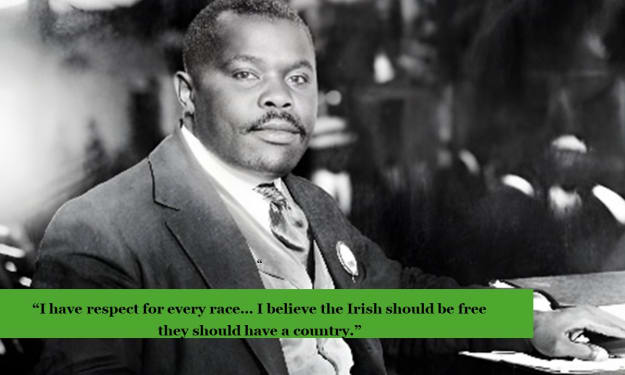
Marcus Garvey and the Irish Connection
The remarkable success of the Universal Negro Improvement Association and African Communities (Imperial) League (UNIA-ACL), led by Marcus Mosiah Garvey (1887-1940), the first National Hero of Jamaica, drew inspiration from various sources. While Booker T. Washington's vision of self-help through education and economics was a primary influence, Garvey's organizational strategies for the liberation of people of African descent closely mirrored the slogans and methods employed by Irish nationalists such as Padraig Pearse, Robert Emmet, Roger Casement, and Eamon de Valera.
By Geoffrey Philp 3 years ago in The Swamp
A Surprising Maternity
In our world, the marvel of parthenogenesis, the ability to reproduce without a male partner, is not confined to a few obscure species but is rather a fascinating phenomenon observed across various taxa. From humble moss and water fleas to industrious bees and even some reptiles and sharks, nature showcases its remarkable capacity for independent reproduction. At the Costa Rica Zoo, an extraordinary event unfolded when a female crocodile, residing in isolation from males for an impressive 16 years, defied conventional reproductive norms by laying fertile eggs. This solitary act of fertility astonished the zoo staff and sparked scientific inquiry into the intricate mechanisms of parthenogenesis. Genetic analysis confirmed that the embryos within the crocodile's eggs were solely derived from the mother, providing compelling evidence of her ability to self-fertilize—an unprecedented feat in the realm of crocodilian biology. Despite the absence of male genetic contribution, the crocodile embarked on a journey of maternal instinct, nurturing her clutch of eggs with unwavering dedication. The discovery sent ripples through the scientific community, prompting fervent speculation and debate about the implications of such a rare occurrence. Researchers delved into the crocodile's genetic makeup, scrutinizing her genome for clues that might shed light on the genetic pathways underlying parthenogenesis. Their investigations led to tantalizing discoveries, revealing a suite of genetic adaptations that appeared to facilitate the crocodile's extraordinary reproductive feat. Genes associated with reproductive processes, particularly those involved in gamete production and fertilization, exhibited unique patterns of expression suggestive of evolutionary tinkering to accommodate solitary reproduction. Moreover, comparative genomic analyses unveiled intriguing parallels between the crocodile's genetic blueprint and that of distant relatives, including birds and dinosaurs. This revelation fueled speculation that the ability to reproduce via parthenogenesis might be a legacy inherited from their ancient ancestors, a vestige of a bygone era when dinosaurs roamed the earth. As the scientific community grappled with the implications of this discovery, the crocodile herself became a focal point of fascination and intrigue. Visitors flocked to the zoo, eager to catch a glimpse of the enigmatic reptile whose remarkable journey had captured the world's imagination. Meanwhile, zoologists and conservationists pondered the broader implications of parthenogenesis for crocodile populations in the wild. Could this reproductive strategy offer a survival advantage in environments where mates are scarce or inaccessible? Or might it represent a desperate last resort in the face of dwindling genetic diversity and mounting environmental pressures? The answers remained elusive, shrouded in the mysteries of evolutionary biology and the complex interplay between genes, environment, and reproductive strategy. Yet, the story of the solo mother crocodile served as a poignant reminder of nature's boundless capacity for innovation and adaptation—a testament to the resilience of life in all its wondrous forms. Beyond the realm of crocodiles, the implications of parthenogenesis reverberated across disciplines, touching on themes of genetic diversity, reproductive biology, and the ethical dimensions of scientific inquiry. Ethicists grappled with questions surrounding the potential applications of reproductive technologies inspired by nature's ingenuity, wrestling with the moral complexities of manipulating the very building blocks of life. In laboratories around the world, scientists embarked on ambitious endeavors to unravel the secrets of parthenogenesis, seeking to harness its power for the betterment of humanity. From agricultural innovations aimed at enhancing crop resilience to medical breakthroughs promising new avenues for treating genetic diseases, the possibilities seemed endless. Yet, amid the excitement and promise of scientific progress, a note of caution sounded—a reminder of the need for humility in the face of nature's complexity and the imperative of ethical stewardship in the pursuit of knowledge. For as the story of the solo mother crocodile vividly illustrated, the wonders of the natural world are matched only by the depths of our curiosity and the responsibilities that accompany our quest for understandin
By Keith T. Torralba3 years ago in The Swamp