defense
Moving through the ranks of military activity including infrastructure, wars, our commander in chief and the nucleur arms race.
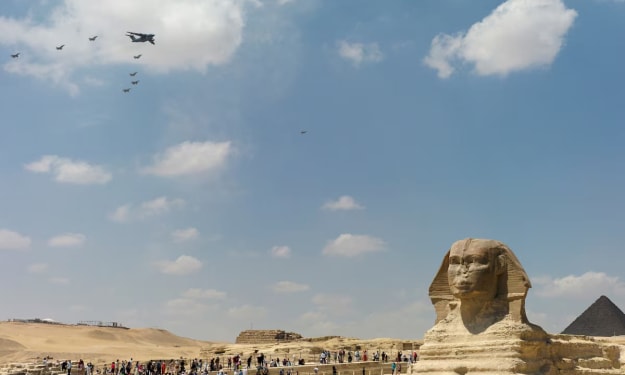
Chinese Fighter Jets Soar Over Egypt in First Joint Exercises
Chinese Fighter Jets Soar Over Egypt in First Joint Exercises In a significant move signaling deepening military cooperation Chinese fighter jets took to the skies over Egypt for the first time as part of joint aerial exercises between the two nations. The drills which commenced in early May 2025 mark a milestone in Sino Egyptian relations and reflect China’s growing strategic presence in the Middle East and North Africa (MENA) region. The exercise dubbed Sky Guardians-2025 involves China's J-10C multirole fighter jets and Egypt's Rafale and F-16 aircraft. Conducted at an undisclosed air base in Egypt’s western desert the joint maneuvers include air to air combat simulations, joint strike missions aerial refueling and electronic warfare scenarios. According to military analysts the operation is designed not only to boost interoperability between the two air forces but also to send a clear geopolitical message. This historic exercise reflects the warming ties between Beijing and Cairo. Egypt historically aligned with the West and reliant on American and European military hardware has diversified its international partnerships in recent years. As part of its Look East policy Cairo has sought closer ties with China Russia and other non Western powers. Chinese defense ministry spokesperson Senior Colonel Wu Qian stated The joint exercises with Egypt are a symbol of mutual trust and strategic cooperation. They aim to enhance combat readiness share tactical expertise and promote regional stability. Egyptian officials echoed similar sentiments emphasizing that the cooperation is in line with Egypt’s sovereign right to diversify its military alliances.
By Adnan Rasheedabout a year ago in The Swamp
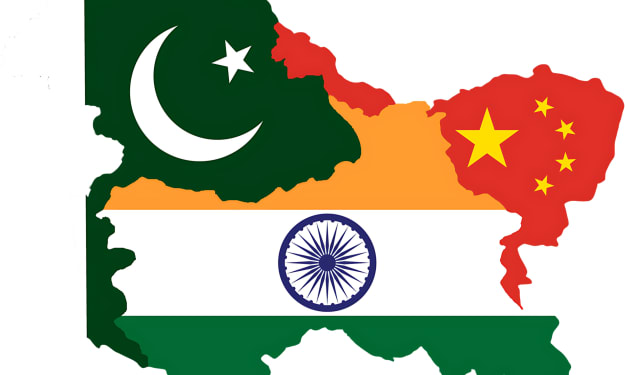
A Timeline of Tensions Between India and Pakistan Over Kashmir
A Timeline of Tensions Between India and Pakistan Over Kashmir The Kashmir conflict is one of the most protracted and volatile territorial disputes in the world rooted in the partition of British India in 1947. India and Pakistan both nuclear armed neighbors have fought multiple wars and engaged in recurring skirmishes over this contested region. This article outlines a detailed timeline of the tensions between the two nations over Kashmir.
By Adnan Rasheedabout a year ago in The Swamp
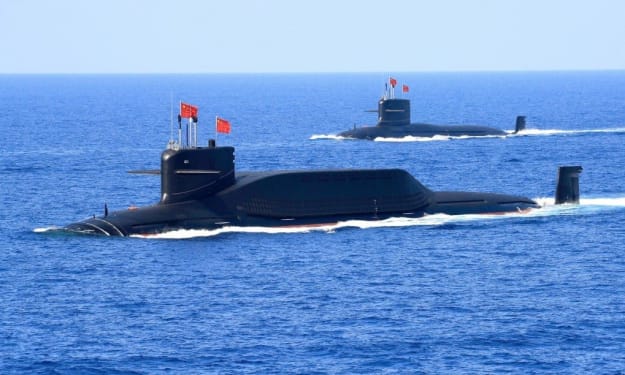
China’s Military Reveals Details of Type 094 Nuclear Submarine for First Time
China’s Military Reveals Details of Type 094 Nuclear Submarine for First Time In a significant move reflecting growing military transparency and strategic assertion China has officially released detailed information about its Type 094 nuclear powered ballistic missile submarine (SSBN) also known as the Jin class submarine. This is the first time that the People’s Liberation Army Navy (PLAN) has publicly acknowledged specific features of this crucial component of China’s second strike nuclear capability. The revelation coming through a state affiliated media outlet and military analysts offers insights into China’s evolving sea based nuclear deterrence modernization of its naval forces, and its strategic ambitions in regional and global maritime affairs. The Type 094 SSBN is China’s second generation nuclear powered ballistic missile submarine designed to replace the outdated Type 092 Xia class submarine. The Type 094 measures approximately 137 meters in length has a beam of around 12 meters and a submerged displacement of about 11,000 tons. It is powered by a nuclear reactor that allows the submarine to remain submerged for long periods without surfacing providing it with virtually unlimited range and extended patrol capability. According to the details shared the submarine can achieve speeds exceeding 20 knots while submerged and can carry out extended deterrence patrols in China's near seas and beyond. The Jin class submarine is designed to remain hidden and mobile while carrying out missions making it a central pillar of China’s strategic deterrent. Perhaps the most significant aspect of the Type 094 is its armament. Initially the submarine was designed to carry 12 JL-2 submarine launched ballistic missiles (SLBMs) which have a reported range of 7,200 kilometers. This allowed China to target parts of the United States such as Alaska and much of Asia and the Pacific region from waters closer to its coast. However new reports indicate that China has begun outfitting the Type 094 submarines with the more advanced JL-3 SLBMs. The JL-3 is believed to have a range of over 10,000 kilometers meaning the submarine could now strike targets across the entire continental United States from positions in the South China Sea or near Chinese territorial waters. This dramatically enhances the credibility of China’s second strike capability as the submarine can now perform its deterrent role without having to venture into vulnerable waters near enemy coastlines.
By Adnan Rasheedabout a year ago in The Swamp
The United States Embarrasses China with a Game Changing Discovery in the Rare Earth Race
The United States Embarrasses China with a Game Changing Discovery in the Rare Earth Race In a stunning development that has shaken the global rare earth supply chain the United States has made a groundbreaking discovery that could alter the balance of power in the critical minerals market long dominated by China. The revelation of a massive and previously untapped rare earth deposit within U.S. borders has sparked excitement among policymakers industry leaders and national security experts alike signaling a possible end to China’s near monopoly on these strategic resources. Rare earth elements (REEs) are a group of 17 metals essential to a wide range of high tech applications from smartphones electric vehicles and wind turbines to advanced military systems like jet fighters and missile guidance. Despite their name these elements are relatively abundant in the Earth’s crust but their extraction and processing are complex environmentally challenging and capital intensive. For decades China has been the world’s dominant player in the rare earth market controlling over 80% of global production and processing capabilities. This dominance has allowed Beijing to wield tremendous geopolitical leverage even threatening to restrict rare earth exports during times of political tension with the United States and its allies.
By Adnan Rasheedabout a year ago in The Swamp
India and Pakistan Face Off Over Kashmir Terror Attack: Is South Asia Headed for a Major Conflict?
rorist attack in Indian-administered Kashmir. The April 22 attack in the scenic town of Pahalgam, a popular destination for Hindu pilgrims, killed at least 26 people and injured dozens more. Claimed by a militant group called *The Resistance Front*, the incident has triggered a wave of retaliation from the Indian government and a strong counter-response from Pakistan, bringing the nuclear-armed neighbors to the brink of confrontation once again. As of late April 2025, both countries have taken dramatic diplomatic, military, and strategic measures that signal a sharp deterioration in relations. This sudden breakdown comes amid an already tense regional atmosphere and raises fears of yet another armed conflict over the disputed territory of Kashmir. The Kashmir Flashpoint: A History of Violence and Dispute The Kashmir region has long been a hotbed of conflict between India and Pakistan, dating back to the partition of British India in 1947. Both nations claim the region in full, but each controls a portion—India administers Jammu and Kashmir, while Pakistan governs what it calls Azad Kashmir. Over the decades, this unresolved territorial dispute has led to three full-scale wars and countless skirmishes along the Line of Control (LoC), the de facto border dividing the two parts of Kashmir. What makes this current situation particularly dangerous is the nature of the attack and its aftermath. The targeting of Hindu pilgrims in Pahalgam has not only shocked India but also inflamed religious and nationalistic sentiments. It is being seen not just as an act of terrorism, but a symbolic attack on India’s cultural and religious heritage. India has accused Pakistan of backing the militant group responsible for the attack, citing long-standing evidence of cross-border terrorism. While Pakistan denies any involvement, the Indian government insists that such organizations operate with impunity in Pakistani territory, using it as a base to strike inside India. India’s Strong Response: Diplomatic and Military Escalation In response to the Pahalgam attack, Indian Prime Minister Narendra Modi’s administration moved swiftly. Within hours, high-level security meetings were convened, and within days, India initiated a series of sweeping actions: Suspension of the Indus Waters Treaty: This landmark water-sharing agreement, brokered in 1960 by the World Bank, has withstood decades of conflict. Its suspension is a rare and bold move that signals how deeply New Delhi views the current crisis. Cancellation of all Pakistani visas: India has revoked all visas issued to Pakistani nationals, effectively shutting down travel and cultural exchanges between the two countries. Expulsion of Pakistani diplomats: Several Pakistani officials were ordered to leave India, and New Delhi recalled its own diplomats from Islamabad. Military freedom of action: The Indian Army has been given “full operational freedom” to respond to provocations along the LoC, indicating the possibility of cross-border operations or retaliatory strikes. These steps mark one of the most severe diplomatic breakdowns between the two countries in recent memory. They also suggest that India is preparing for a range of responses, including potential military retaliation. Pakistan's Reaction: Strategic Posturing and International Appeals Pakistan, in turn, has responded aggressively. Prime Minister Shehbaz Sharif condemned India’s actions and accused New Delhi of using the attack as a pretext to justify harsh measures against Kashmiris and provoke war. Pakistan’s countermeasures include: Closure of airspace to Indian aircraft, affecting both commercial and military flights. Suspension of bilateral agreements, including aspects of the 1972 Simla Agreement, which governs peaceful conflict resolution between the two nations. Mobilization of military forces along the LoC, accompanied by increased patrols and strategic deployments. Capture of an Indian soldier, who allegedly crossed the border accidentally, adding further strain to military relations. Pakistan has also appealed to international bodies such as the United Nations and the Organization of Islamic Cooperation (OIC) to intervene diplomatically. Islamabad claims India is inflaming the situation and using the tragedy to distract from alleged human rights abuses in Jammu and Kashmir. Global Concern: Calls for Restraint Amid Nuclear Risk Given that both India and Pakistan possess nuclear weapons, the situation has alarmed the international community. The United States, European Union, United Nations, and other key players have issued urgent calls for de-escalation and a return to diplomacy. U.S. Secretary of State Marco Rubio has announced plans to speak directly with his counterparts in New Delhi and Islamabad. The goal, according to the State Department, is to prevent any further deterioration of the situation and to encourage dialogue. Meanwhile, China—an ally of Pakistan and a regional power with interests in Kashmir—has issued a cautious statement urging restraint and peace, without clearly siding with either nation. The potential for regional spillover remains high, especially if either country initiates a military strike. Media and Public Opinion: Nationalism on the Rise The media on both sides of the border have intensified nationalist rhetoric. In India, television networks are calling for strong retaliatory action, echoing sentiments of revenge and justice for the victims of the Pahalgam massacre. In Pakistan, state media presents India’s actions as unjustified aggression and highlights the humanitarian crisis in Kashmir. Social media is flooded with polarized hashtags like #StandWithIndia, #StopTerror, #FreeKashmir, and #StopIndianAggression, reflecting deep divisions and the powerful role of digital platforms in shaping public opinion. What Lies Ahead: Dialogue or Confrontation? As the crisis unfolds, the coming days will be critical. If India proceeds with military retaliation, the chances of a wider conflict grow significantly. Past confrontations, like the Balakot airstrike in 2019 and the surgical strikes in 2016, suggest that India may consider limited but high-impact operations to punish militant bases in Pakistan. However, such actions could prompt massive retaliation from Pakistan, potentially leading to a cycle of violence neither side can easily control. The international community will need to act swiftly to mediate, but peace will ultimately depend on whether both governments prioritize stability over political gains. Conclusion The recent terror attack in Kashmir has reopened deep wounds between India and Pakistan, putting South Asia on a knife’s edge. With diplomatic ties unraveling and military forces mobilizing, the risk of escalation is real and immediate. Whether cooler heads prevail or the situation devolves into open conflict will depend on the choices made by leaders in New Delhi, Islamabad, and global capitals in the days to come. India-Pakistan Conflict
By NextGen Mobile Techabout a year ago in The Swamp
Philippine Forces Land on Contested South China Sea Feature
Philippine Forces Land on Contested South China Sea Feature In a bold move that has reignited tensions in the region Philippine forces landed on a contested feature in the South China Sea earlier this week asserting Manila’s claim to the disputed waters amid increasing Chinese activity. The operation confirmed by Philippine defense officials marks a significant escalation in the longstanding maritime dispute and underscores the country's determination to defend its territorial rights.
By Adnan Rasheedabout a year ago in The Swamp
India is Done Playing Nice: A Not-So-Subtle Approach to Diplomacy
In what can only be described as the diplomatic equivalent of flipping the table during a chess match, India has apparently reached the end of its legendary patience following the tragic Pahalgam attack in Kashmir. World leaders like US President Donald Trump and Russian President Vladimir Putin have condemned the massacre that claimed 28 lives-a statement so obvious it barely qualifies as news. The timing of the attack during US Vice President J.D. Vance's visit to India seems almost theatrically convenient, as if terrorists consult international diplomatic calendars when planning their atrocities.
By The INFORMER2 years ago in The Swamp
Pakistan vs India: Latest Tensions, History, and Future Relations
Pakistan vs India: Rising Tensions, Historic Rivalry, and the Road Ahead The phrase Pakistan vs India often conjures images of cricket matches, diplomatic talks, and military tensions. However, recent developments have reignited the intense rivalry between these two South Asian neighbors, grabbing global attention. With historic grievances and new flashpoints emerging, the world watches closely as Pakistan and India navigate another phase of strained relations.
By Madi Speaks2 years ago in The Swamp