defense
Moving through the ranks of military activity including infrastructure, wars, our commander in chief and the nucleur arms race.
Youm-e-Takbeer: Pakistan’s Peaceful Rise as a Responsible Nuclear Power
Youm-e-Takbeer: Pakistan’s Peaceful Nuclear Milestone :Explore the history and significance of Youm-e-Takbeer, Pakistan’s peaceful rise as a responsible nuclear power and symbol of strategic stability.
By Shamshair Khan Hasan Zaiabout a year ago in The Swamp
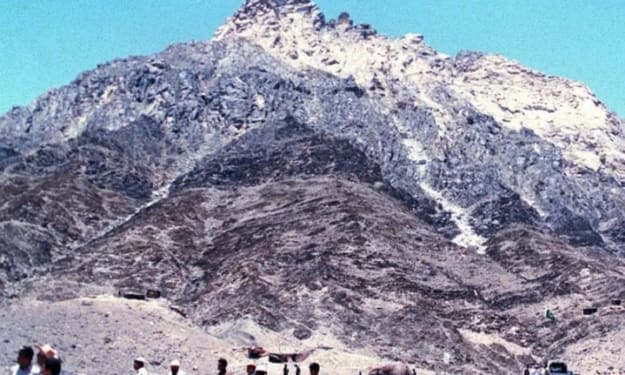
Why Chagai Was Chosen: The Hidden Story Behind Pakistan’s Nuclear Tests
From the Hijacking of the PIA Plane to the Chants of ‘Allahu Akbar’ in Chaghi: When the Black Granite of the Chaghi Mountain Turned White "To India!" the hijacker screamed, pressing a pistol to the pilot’s temple. Pakistan International Airlines (PIA) Flight 544 had taken off from the city of Turbat in Balochistan just ten minutes earlier when this threatening voice reached the pilot’s ears. The Fokker aircraft had departed from Turbat and was en route to Karachi, a city in the Sindh province. According to the pilot, Uzair Khan, the moment the hijacker was distracted by a noise from the rear of the aircraft, he pressed a button that sent a signal to radar indicating that the passenger plane had been hijacked. Later, in the documentary "Flight 544," Uzair Khan explained, “The hijacker had brought maps and such. He told me to keep flying straight. Flying straight would have eventually brought us to the Indian border.” “I told him that the aircraft didn’t have enough fuel. He accepted my request and said we should refuel at Bhuj Airport in Indian Gujarat and then fly to New Delhi.” He adds that after receiving these instructions, “As I neared the border, I used aviation code and said ‘Kilo Delta,’ a term used for the Pakistani city of Hyderabad. Then, while letting the hijacker hear, I asked airport control if this was Bhuj Airport in India. Air traffic control already knew the Pakistani aircraft had been hijacked, so they responded, ‘Yes, this is Bhuj Airport.’” He explains, “Thus, while convincing the hijacker that it was the Indian city of Bhuj, I managed to land at Pakistan’s Hyderabad Airport in the dark of night. That was exactly what I wanted.” This hijacking took place on May 24, 1998. Just days earlier, from May 11 to 13, India had conducted multiple nuclear tests, and it was widely expected that Pakistan would soon respond with its own. After landing at Hyderabad Airport, Pakistani officers there posed as Indian personnel. Following several hours of negotiation, they managed to overpower the three hijackers before dawn. No passengers or crew were harmed. The hijackers were members of the Baloch Students Organization (BSO). According to Pakistani authorities and media reports from that time, the motive behind the hijacking on May 24, 1998, was to prevent Pakistan from responding to India’s nuclear tests. A CNN report from May 1998 indicated that shortly before the hijacking, there were reports of Pakistan preparing a site in Balochistan for nuclear tests. This led to anti-government protests by some political groups in the province. The next day, leading newspapers across Pakistan reported on their front pages that the hijackers had demanded Pakistan not conduct nuclear tests in Balochistan and had also called for increased funding for the province. The three hijackers were later sentenced to death and were executed on May 28, 2015—exactly 17 years after Pakistan’s nuclear tests—at jails in Karachi and Hyderabad. --- How Did Pakistan Manage to Conduct Nuclear Tests on May 28, 1998? Dr. Samar’s Congratulations on India's Tests According to Dr. Samar Mubarakmand, a member of the Pakistan Atomic Energy Commission, he received a call from a friend in the military on the morning of May 11, 1998, informing him about India’s nuclear tests in Pokhran. Speaking at a Khwarizmi Science Society event in Lahore on November 30, 1998, Dr. Samar recounted, “I said, ‘Congratulations!’ I was genuinely happy.” His military friend responded, “You’re congratulating us on India’s nuclear tests?” To which he replied, “Yes, because now we’ll be able to conduct our own.” Dr. Samar explained that back in 1972, when then-Prime Minister Zulfikar Ali Bhutto gathered the country’s scientists in Multan, they had all taken an oath to develop nuclear weapons. After India conducted its first nuclear test in 1974 at Pokhran, Pakistan accelerated its nuclear program. Soon after, Dr. Abdul Qadeer Khan returned from abroad to join the effort. By the late 1980s, the Kahuta plant was complete, and Dr. A.Q. Khan was appointed its head, having previously worked there as a scientist. In this context, after India’s 1998 nuclear tests, it was widely expected that Pakistan would respond. During the same 1998 Lahore event, Dr. Samar said, “As expected, after India’s tests, the Prime Minister became very active. He asked me, ‘Are you ready for this?’ I replied, ‘Absolutely.’ He said, ‘Good! Prepare.’” On the international front, U.S. President Bill Clinton began efforts to prevent Pakistan from conducting nuclear tests, citing concerns of a nuclear conflict in South Asia. In their book “The Man From Pakistan,” Douglas Frantz and Catherine Collins detailed U.S. efforts and Pakistan’s response. They wrote that Clinton called Prime Minister Nawaz Sharif four times, offering incentives to dissuade him from testing. Clinton promised to forgive U.S. loans, remove the Pressler and Solarz amendments (which restricted aid to Pakistan), and secure new military assistance from Congress. In the book “Deception,” Adrian Levy and Catherine Scott-Clark noted that a U.S. delegation led by Deputy Secretary of State Strobe Talbott arrived in Islamabad on May 13, and Pakistan’s Foreign Minister Gohar Ayub reportedly mocked their offer of F-16 jets. In a 2006 interview in London, Nawaz Sharif said Clinton called him five times to urge restraint and avoid testing. “When Talbott came, they thought we would agree. Clinton thought the same. But only we knew what we were going to do.” Frantz and Collins further wrote that three days after India’s tests, CIA Director George Tenet told closed sessions of the U.S. Senate and Congress Intelligence Committees that satellite images showed underground nuclear test preparations in Pakistan’s Chaghi Hills.
By Ikram Ullahabout a year ago in The Swamp
Western Media and the Double Standard in Portraying Black Men
In the digital age, media narratives significantly shape public perception. However, a persistent issue remains: the portrayal of Black men in Western media often reflects deep-seated biases and double standards. These portrayals not only influence societal attitudes but also have tangible effects on the lives of Black individuals.
By Mohammad Ashiqueabout a year ago in The Swamp
North Korea Frigate Launch Ends in Disaster: Satellite Images Reveal Shocking Aftermath
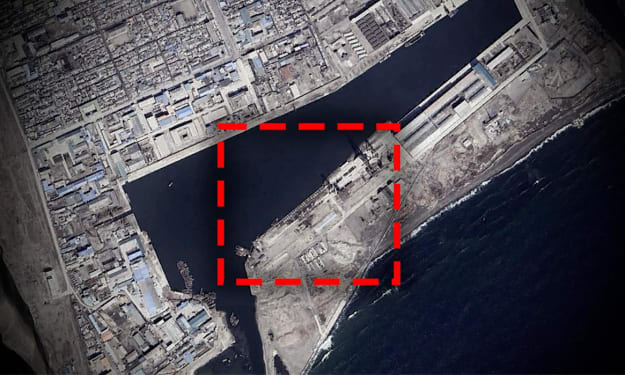
North Korea Frigate Launch Ends in Disaster: Satellite Images Reveal Shocking Aftermath A chilling satellite image recently captured over the Sea of Japan has brought into sharp focus the human and geopolitical consequences of a disastrous North Korean frigate launch attempt. What was initially hailed by Pyongyang as a bold step toward bolstering its maritime military capabilities has now become a haunting scene etched in grayscale smoke rising from a shattered vessel wreckage drifting in the waves and a stark reminder of the cost of unchecked ambition. While the North Korean state media remains silent unwilling to acknowledge the scale of the failure sources familiar with the incident suggest that the vessel a newly developed frigate rumored to be equipped with anti ship and surface to air missiles suffered a catastrophic failure during or shortly after launch. The satellite image, shared by commercial analysts and reviewed by international security experts shows extensive debris in the water and nearby shore facilities appearing scorched. But beyond the headlines and military analyses lies the untold human story one of ordinary sailors engineers and their families who were swept into this tragedy often against their will.
By Adnan Rasheedabout a year ago in The Swamp
Pakistan Promotes Army Chief Asim Munir to Field Marshal: Why It Matters
Pakistan Promotes Army Chief Asim Munir to Field Marshal: Why It Matters In a move steeped in symbolism and history Pakistan has promoted its current Chief of Army Staff General Asim Munir to the rank of Field Marshal a title that holds immense military prestige yet has rarely been bestowed in the country’s history. This development is not merely ceremonial it echoes through the corridors of power the barracks of soldiers and the hearts of millions of Pakistanis who have lived through decades of political instability military dominance and the ever changing tides of national security.
By Adnan Rasheedabout a year ago in The Swamp
What’s at Risk If Iran-US Nuclear Talks Collapse?
A Tense Balance in the Middle East The Iran–United States nuclear talks have long been a centerpiece of global diplomacy, drawing attention from world powers, economists, and security analysts alike. After years of negotiation, setbacks, and shifting political landscapes, the current stage of the Iran-US nuclear dialogue stands at a critical juncture. With mutual distrust growing, and global tensions rising from Ukraine to the South China Sea, the breakdown of these talks could carry far-reaching consequences for regional peace, global oil markets, and nuclear non-proliferation efforts.
By Keramatullah Wardakabout a year ago in The Swamp
"Diplomatic Turbulence: Qatar Gifts Jet to Trump Amid Global Tensions"
In a move that has shocked Washington and raised fresh questions about international influence in U.S. politics, Qatar has reportedly gifted a private jet to former President Donald J. Trump. While details surrounding the aircraft’s value, origin, and intended use remain sparse, the gesture has already sparked bipartisan concern over what it might signify for American foreign policy — past, present, and future. The jet, said to be a state-of-the-art long-range aircraft, allegedly came as a token of appreciation for Trump’s role in fostering strong U.S.-Qatar relations during his time in office. Critics, however, are calling it an audacious example of "jet diplomacy" — a term coined to describe high-value gifts or privileges offered by foreign governments to powerful individuals in exchange for favorable treatment or long-term leverage. A Gift or a Political Statement? Qatar, a small but wealthy Gulf state with outsized geopolitical influence, has long sought to maintain close ties with American administrations. Under Trump, relations were notably strong despite initial tensions during the 2017 Gulf crisis, when Saudi Arabia, the UAE, and others severed ties with Qatar. The Trump administration’s eventual support for a resolution — and its refusal to condemn Qatar outright — was seen by some as a diplomatic win for Doha. Fast forward to 2025, and this new gesture is prompting speculation about what Qatar hopes to gain. With Trump actively campaigning for a return to the White House and dominating Republican primary polls, the timing of the gift could be interpreted as a strategic bet on the future. “This isn’t just a lavish thank-you note,” said Dr. Karen Holt, a professor of international relations at Georgetown University. “It’s a calculated move designed to stay in the good graces of someone who could potentially wield power again.” Legal and Ethical Implications The legality of the gift is already under scrutiny. While private citizens — even former presidents — are not bound by the same gift restrictions as sitting officials, the sheer scale and political timing of the gesture have ethics watchdogs sounding alarms. “There is no universe in which this gift is simply symbolic,” said Jacob Klein, director of the nonpartisan Center for Political Integrity. “This is a multimillion-dollar asset being handed to a political figure with clear aspirations to regain power. The American public deserves to know what’s behind it.” Congressional Democrats are already calling for an investigation into whether the gift violates the Foreign Agents Registration Act (FARA) or any other statutes governing foreign influence. Meanwhile, several Republicans have remained quiet, wary of alienating Trump's voter base ahead of a contentious primary season. Qatar’s Diplomatic Playbook Qatar has a history of strategic generosity. From investments in Western real estate to hosting international events like the 2022 FIFA World Cup, the Gulf state has used soft power to expand its global reach. This jet, experts say, may be part of a broader effort to entrench relationships with influential figures in the West. In recent years, Qatar has also positioned itself as a diplomatic mediator, hosting talks between the U.S. and the Taliban and playing a role in hostage negotiations in Gaza. Maintaining access to decision-makers in Washington — whether current or prospective — is central to its diplomatic calculus. Trump’s Response and the Political Fallout As of this writing, Trump’s team has neither confirmed nor denied receipt of the aircraft, offering only a vague statement: “President Trump has always appreciated the strong and respectful relationship between the United States and Qatar.” That noncommittal tone has not stopped his critics from seizing on the story. President Joe Biden’s re-election campaign quickly released a statement denouncing the gift as “a flagrant symbol of foreign interference and elite privilege,” accusing Trump of putting personal gain above American interests. Still, among Trump’s base, the controversy appears to have little impact. If anything, it reinforces his outsider status — someone powerful enough to attract attention from world leaders, and controversial enough to provoke media outrage. What Comes Next? The Federal Election Commission (FEC) and the Department of Justice could become involved if evidence emerges that the jet was offered in exchange for political favors or if it’s being used to support Trump’s 2024 campaign. Foreign gifts used to advance political activity would raise serious legal red flags. Meanwhile, Qatar has remained tight-lipped, issuing only a short statement through its U.S. embassy: “The State of Qatar values its longstanding friendship with the United States and has always engaged in diplomacy through mutual respect and cooperation.” Whether the gesture was legal, ethical, or politically wise remains an open question. What’s certain is that this high-flying gift has reignited debates about global influence, foreign money, and the thin line between diplomacy and favoritism. As Trump’s political ambitions continue to dominate the headlines, and as Qatar navigates its role on the world stage, this unusual gift has become more than a diplomatic curiosity — it’s a symbol of the complex, often murky world of international power politics.
By Kaleem Ullahabout a year ago in The Swamp
Royal Navy Achieves Historic First: Warship Destroys Supersonic Missile in Live-Fire Test. AI-Generated.
Royal Navy Achieves Historic First: Warship Destroys Supersonic Missile in Live-Fire Test In a landmark achievement that marks a new era in naval defense capabilities, one of the Royal Navy’s most advanced warships, HMS Dragon, successfully shot down a supersonic missile during a high-stakes military exercise. The interception, a first in the Royal Navy’s history, occurred during NATO’s Exercise Formidable Shield 2025 and has been hailed as a “historic first” in British maritime defense.
By Adnan Rasheedabout a year ago in The Swamp
Rafale Fighter Jet: France’s Sky Warrior That’s Changing Modern Air Power
Introduction The Rafale is a powerful and modern fighter jet made by France. It was designed and built by a French company called Dassault Aviation. The Rafale is one of the most advanced jets in the world today. It is fast, smart, and very strong in battle. Many people call it a "game-changer" in modern air forces. But what makes this jet so special? Let’s explore more about the Rafale in simple words.
By Atta Ullahabout a year ago in The Swamp
Dave Smith's Best Argument Against War (and Neoconservatives)
Political commentator Dave Smith has been a staunch critic of neoconservatives and their advocacy for military intervention. His skillful defense when facing attacks from Douglas Murray on a recent podcast catapulted him into the national spotlight.
By Scott Christenson🌴about a year ago in The Swamp