corruption
A prime locale to talk bribery, suspect campaign funding, and all other instances of political corruption. The shadier, the better.
India-Pakistan Tensions and the Truth Behind 'Operation Sindoor': Facts, Rumors, and Global Reactions. Content Warning. AI-Generated.
Introduction: A History of Tensions Rekindled The relationship between India and Pakistan has always been delicate, shaped by decades of political conflict, military standoffs, and regional rivalries. In recent weeks, tensions have quietly escalated again, driven not only by real-world military movements but also by viral narratives online — most notably around a term that has suddenly surged across social media: “Operation Sindoor.” While neither government has issued official confirmation of any such operation, the phrase has taken on a life of its own, triggering speculation, anxiety, and even celebration depending on which side of the border you stand on. But in a time when misinformation can travel faster than facts, what’s really happening — and what should we be careful about believing? What Is ‘Operation Sindoor’? Fact vs Fiction The term “Operation Sindoor” first surfaced in viral posts claiming that the Indian military had launched a covert or large-scale offensive action across the Line of Control (LoC) in response to alleged threats or incidents from Pakistan. The details in these posts are vague, conflicting, and largely unverified. Some claim it's a retaliatory strike. Others say it’s a planned military maneuver. A few even describe it as a fictional narrative created for social media impact. As of now, no official Indian defense source has confirmed an operation by this name. In fact, several defense journalists and analysts have stated that “Operation Sindoor” does not exist in any official capacity and appears to be a viral name fueled by patriotic sentiment and online speculation. This highlights a key problem in the current digital era: viral rumors often overshadow verified facts, especially in high-stakes geopolitical contexts. Border Situation: What’s Actually Happening? Though there is no evidence of an operation named “Sindoor,” there have been legitimate concerns regarding increased military activity along the LoC and reports of cross-border ceasefire violations. Indian security forces have reportedly increased surveillance and patrolling in certain sensitive zones. Pakistani media, on the other hand, has accused India of “aggressive posturing,” though no large-scale mobilization has been confirmed. Recent intelligence-based operations in India’s Jammu & Kashmir region have also added to the atmosphere of tension, though these are largely counter-terror operations within Indian territory, not cross-border strikes. Thus, while there’s certainly heightened activity, there is no confirmed large-scale military engagement between the two nations — at least for now. Public and Media Reaction in India and Pakistan In India, the term "Operation Sindoor" has been widely shared by social media users, some celebrating it as a symbol of strength or retribution. Patriotism-driven influencers and some news outlets have helped amplify the buzz, with hashtags like #OperationSindoor and #Revenge trending intermittently. In contrast, Pakistani social media has responded with a mix of defiance, denial, and mockery, with some labeling the operation a “Bollywood-style fantasy.” However, concern is growing among the public about whether this online chatter may provoke real-world consequences. Mainstream media in both countries have remained relatively cautious, with most established news outlets avoiding coverage of “Operation Sindoor” as a legitimate story, instead focusing on actual ground developments like diplomatic statements and border updates. Social Media vs Ground Reality: A Dangerous Gap The rise of “Operation Sindoor” is a prime example of how social media can blur the lines between imagination and information. Once a phrase trends with enough frequency and emotional power, it begins to take root in public perception — regardless of whether it's true. This is particularly risky in a region where: Historical tensions run deep National pride is emotionally charged Media trust is uneven When posts glorifying an unconfirmed operation go viral, they fuel expectations, pressure governments, and increase the risk of real escalation. Fake news can unintentionally force real responses — and that’s a dangerous game. This is why experts continuously emphasize the need for responsible content sharing, especially during high-tension periods. International Reaction and Diplomatic Watchfulness So far, global powers like the United States, United Nations, and China have not issued any formal statements regarding current India-Pakistan tensions — a sign that no formal conflict has yet broken out. However, quiet diplomatic watchfulness is likely ongoing. The UN Military Observer Group in India and Pakistan (UNMOGIP) continues to monitor the Line of Control, and foreign embassies in both countries are likely maintaining high alert. Should any military operation become official or escalate into wider conflict, the international community would be expected to intervene diplomatically to prevent a deeper crisis. A Call for Caution and Peace Perhaps the biggest takeaway from the “Operation Sindoor” narrative is the urgent need for media literacy, especially in South Asia. With rising tensions, it’s easy for emotions to overpower judgment — and for false narratives to shape public discourse. India and Pakistan, as two nuclear-capable neighbors with a complex history, cannot afford informational escalations. Leaders, journalists, influencers, and everyday citizens all have a role to play in maintaining peace — or at least preventing the spread of rumors that could spark unnecessary conflict. For now, the best path forward is transparency, diplomacy, and public awareness. Peace may not always make headlines, but it's the quieter, harder, and ultimately more valuable choice. Conclusion: Stay Informed, Not Inflamed While the term “Operation Sindoor” has captured imagination and ignited debate, its roots appear more in emotion and speculation than in verified fact. There is no confirmed military operation by that name as of this writing — but the conditions that allow such stories to thrive are very real: distrust, historical wounds, and viral media. As responsible readers and global citizens, it’s important to verify before you share, question what you read, and remember that national strength doesn’t only come from firepower — it also comes from wisdom, restraint, and truth. India Pakistan Relations Operation Sindoor South Asia News Military Tensions 2025 Social Media Misinformation India Pakistan Conflict Border News Global Politics Peace and Diplomacy Breaking News India Disclaimer: This article is intended for informational purposes only. It is based on publicly available news reports, verified data, and observed online trends as of the time of writing. The mention of “Operation Sindoor” refers to a widely circulated but unverified term that has not been officially acknowledged by any government or military authority. Readers are advised to approach all social media claims with caution and prioritize credible sources. Content Warning: This piece discusses topics such as military tension, geopolitical conflict, and cross-border narratives that may be sensitive to some readers. The intent is not to provoke or offend but to promote factual awareness and peaceful discourse. Reader discretion is advised. Thanks for reading!
By Tanushree Dasabout a year ago in The Swamp
What I Would Do If I Became President
Here is a bit of a rant of what I would do if I had the power, which of course I don't. I would add a new constitutional amendment stating clearing we have freedom from religion since a lot of religious folks claim it is not in the constitution when you cannot have freedom of religion without freedom from religion. All religions and lack thereof will be respected. No political office can ask about religious affiliation or lack thereof.
By Ferrari Kingabout a year ago in The Swamp
Pakistan and India on the Brink: A Modern-Day Conflict
Military Showdown: India vs. Pakistan in 2025 The year 2025 has brought the South Asian subcontinent to the brink of a full-scale war between India and Pakistan. A longstanding history of territorial disputes, political tensions, and military confrontations has once again flared into open hostilities. The current military showdown, which began with a skirmish along the Line of Control (LoC), has rapidly escalated into a modern-day conflict involving both conventional and unconventional warfare tactics. This article delves into the key elements of this military showdown, examining the capabilities, strategies, and potential consequences of this catastrophic clash between two nuclear-armed neighbors. The Escalation to War: A Tense Beginning The immediate trigger for the war was an intense confrontation on the LoC in Kashmir, a region that has remained a contentious battleground since the partition of British India in 1947. In late April 2025, a violent exchange between Indian and Pakistani forces along the LoC claimed the lives of several soldiers from both sides. Pakistan blamed India for an unprovoked attack on its military positions, while India accused Pakistan of sponsoring militant groups who were infiltrating its territory. This clash, though small in scale initially, soon spiraled out of control as both nations responded with retaliatory airstrikes, artillery bombardments, and a full mobilization of ground troops. The Military Capabilities: A Fierce Comparison Both India and Pakistan possess formidable military forces, each with its own strengths, and a comparison of their capabilities highlights the scale of the potential conflict. India’s Military Power: India, with one of the largest standing armies in the world, has a significant advantage in terms of manpower. With a population of over 1.4 billion, India maintains a military force of over 1.4 million active-duty personnel and more than 2 million reserve forces. India’s arsenal is dominated by advanced tanks, artillery, and infantry, supported by modern air and naval power. India’s Air Force, which is considered one of the most capable in Asia, boasts a fleet of fighter jets, including the Sukhoi Su-30MKI, Rafale, and indigenous Tejas aircraft. Furthermore, India possesses a significant array of ballistic missiles and precision-guided munitions. In terms of nuclear capability, India has an estimated 160 to 170 nuclear warheads. India’s nuclear strategy is centered around the doctrine of "No First Use," meaning that it has pledged not to use nuclear weapons unless first attacked by an adversary with nuclear weapons. Pakistan’s Military Strength: Pakistan’s military, though smaller than India’s in terms of sheer numbers, is no less formidable. Pakistan’s armed forces consist of approximately 650,000 active-duty personnel and around 550,000 reserves. The Pakistani military has invested heavily in asymmetric warfare tactics, focusing on maintaining a strategic edge through its use of irregular forces and specialized combat units. Pakistan’s military is also known for its adept use of terrain in the mountainous areas of Kashmir and the ability to launch rapid counterattacks. In terms of air power, Pakistan's Air Force operates a combination of F-16 Fighting Falcons, JF-17 Thunder, and Mirage fighters. Pakistan has also significantly upgraded its missile defense systems and is developing its own indigenous long-range ballistic missiles. The most concerning aspect of Pakistan’s military capabilities is its nuclear arsenal. With an estimated 170 to 180 nuclear warheads, Pakistan maintains a policy of "full-spectrum deterrence," which means it reserves the right to use nuclear weapons across a range of situations, including low-intensity conflict. The Role of Air Power and Cyber Warfare One of the most striking features of this modern military showdown has been the use of advanced airstrikes. Both nations have engaged in frequent bombing runs over disputed territories, targeting military bases, supply lines, and even civilian infrastructure. Indian fighter jets have conducted precision strikes on Pakistani border positions, while Pakistan has retaliated with aerial bombardments and has attempted to disrupt India’s air superiority with surface-to-air missile systems. In addition to traditional warfare, both India and Pakistan have engaged in a new form of battle: cyber warfare. Both countries have launched sophisticated cyberattacks on each other’s military and civilian infrastructure, targeting everything from communications systems to power grids. These cyber operations have created significant confusion and disruption, making it harder for both sides to coordinate military efforts effectively. The Risk of Escalation: Nuclear Concerns As the conflict intensifies, the possibility of nuclear escalation becomes a significant concern. Both nations have significant nuclear arsenals, and the threat of nuclear use, however unlikely, cannot be discounted. While both countries have made public statements reaffirming their commitment to nuclear deterrence and non-use policies, the rapidly deteriorating situation on the ground has raised alarm bells internationally. India’s nuclear doctrine of "No First Use" is designed to reassure its population and the world that it will only use nuclear weapons in retaliation to a nuclear attack. However, Pakistan’s nuclear policy is based on the concept of "full-spectrum deterrence," meaning it may use nuclear weapons in response to conventional attacks if it perceives an existential threat. In a situation where conventional forces are unable to resolve the conflict, either side might consider escalating to nuclear weapons, potentially triggering a catastrophic regional or even global crisis. Global Reactions and International Mediation The international community, including major powers like the United States, China, and Russia, has expressed deep concern over the escalation. The United Nations has called for an immediate ceasefire and has offered to mediate peace talks. However, the diplomatic channels between the two countries have remained closed, with both governments accusing each other of sabotaging peace efforts. China, a key ally of Pakistan, has cautiously called for restraint, while Russia has expressed support for India's right to defend its sovereignty. The United States, which maintains strategic partnerships with both India and Pakistan, has been vocal in urging both nations to return to the negotiating table before the situation spirals out of control. Conclusion: The Path Forward As the military confrontation between India and Pakistan continues to evolve, the world watches with bated breath. The stakes are higher than ever. With both nations possessing nuclear weapons and the potential for widespread destruction, the conflict could have far-reaching consequences, not just for South Asia but for global security. While there are ongoing efforts to de-escalate the conflict through diplomatic means, the path to peace remains uncertain. The world can only hope that the leaders of both nations will choose dialogue over destruction and work toward a lasting resolution to the crisis.
By World politics about a year ago in The Swamp
"The Shifting Landscape of World Politics in 2025"
China’s Expanding Influence in Asia and Beyond In 2025, China's rise as a global superpower is no longer a prediction — it is a living reality. The once unipolar world order dominated by the United States is now being reshaped by a multipolar dynamic, with China playing a leading role. From economic investments and military advancements to diplomatic strategies and cultural outreach, China's influence is stretching far beyond its borders, fundamentally altering global geopolitics. Economic Expansion Through the Belt and Road Initiative At the heart of China’s global strategy lies the Belt and Road Initiative (BRI), a massive infrastructure and investment project launched in 2013. Now in its second decade, the BRI has connected more than 140 countries through roads, railways, ports, and digital infrastructure. It has allowed China to secure trade routes, gain access to critical resources, and extend its economic presence into regions traditionally dominated by Western powers. In Asia, countries like Pakistan, Sri Lanka, and Laos have become heavily reliant on Chinese investments. For instance, the China-Pakistan Economic Corridor (CPEC) has not only enhanced trade between the two nations but also given China strategic access to the Arabian Sea. Meanwhile, in Africa and Latin America, China continues to fund infrastructure projects and offer loans that come with fewer political strings than Western aid — although critics warn of a potential “debt trap” diplomacy. Military Modernization and Strategic Posturing China's military, particularly the People’s Liberation Army Navy (PLAN), has undergone rapid modernization. The South China Sea remains a central point of tension, as Beijing continues to assert its claims over disputed territories, building artificial islands and militarizing them despite international criticism and rulings from The Hague. Beyond its immediate region, China has increased its presence in the Indian Ocean, with a military base in Djibouti and regular naval deployments in strategic chokepoints. Its expanding blue-water navy is designed not only to protect trade routes but also to project power far from its shores. This has raised concerns in neighboring countries and drawn the attention of the United States and its allies. Diplomacy with “Chinese Characteristics” Beijing’s diplomatic approach combines traditional statecraft with economic leverage and soft power. Through platforms like the Shanghai Cooperation Organization (SCO) and the recently revived BRICS bloc, China seeks to reshape global governance structures to be less Western-centric. It champions “non-interference” in domestic affairs — a stance attractive to many authoritarian regimes — and presents itself as a counterbalance to U.S. influence. China has also stepped up its role as a mediator in international conflicts. In 2023, it brokered a landmark diplomatic thaw between Iran and Saudi Arabia, demonstrating its growing clout in the Middle East. Such actions position Beijing not just as a global power, but as a global peace broker — a role long monopolized by the West. Cultural Soft Power and Global Narratives Beyond economics and military might, China is actively promoting its culture and political ideology. With state-run media like CGTN and Xinhua expanding their global reach, and Confucius Institutes established in dozens of countries, China is investing in shaping public opinion overseas. The narrative emphasizes harmony, mutual development, and respect for sovereignty — subtly contrasting with what Beijing portrays as Western hypocrisy and interventionism. At the same time, digital platforms like TikTok (owned by Chinese company ByteDance) have become part of China’s soft power arsenal. Though primarily entertainment platforms, they subtly contribute to cultural normalization and influence among global youth. Challenges and Pushback Despite its success, China’s rise is not without resistance. Several countries have grown wary of its economic dominance and political motives. In Southeast Asia, nations like Vietnam and the Philippines are strengthening ties with the U.S. and forming regional alliances to counter Chinese assertiveness. In Europe and the U.S., concerns about human rights, intellectual property theft, and cyber-espionage continue to strain relations with Beijing. Moreover, the “China model” — combining authoritarian governance with capitalist economics — is viewed with suspicion in democratic societies, especially as Beijing tightens its grip on Hong Kong and cracks down on dissent at home. Conclusion: A New World Order in the Making As we move deeper into the 21st century, China’s expanding influence is reshaping not only Asia but the global balance of power. Whether one views this transformation with optimism or concern, it is clear that the world must adapt to a future where China is a central actor. How other nations respond — with cooperation, competition, or confrontation — will determine the course of global politics for decades to come.
By World politics about a year ago in The Swamp
Ordinary Thief vs Political Thief: The Real Cost of Corruption
The word “thief” usually brings to mind someone who steals wallets, breaks into homes, or snatches phones on the street. But there’s another kind of thief that operates on a much larger scale, often in plain sight — the political thief. While both are involved in theft, the consequences of their actions are vastly different. In this article, we’ll explore the differences between an ordinary thief and a political thief — and why the latter often causes far more damage to society.
By CodeCraft By Rashidabout a year ago in The Swamp
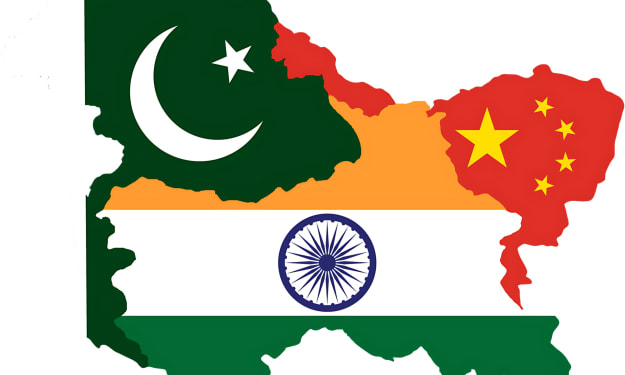
India and Pakistan Face Off Over Kashmir Terror Attack: Is South Asia Headed for a Major Conflict?
rorist attack in Indian-administered Kashmir. The April 22 attack in the scenic town of Pahalgam, a popular destination for Hindu pilgrims, killed at least 26 people and injured dozens more. Claimed by a militant group called *The Resistance Front*, the incident has triggered a wave of retaliation from the Indian government and a strong counter-response from Pakistan, bringing the nuclear-armed neighbors to the brink of confrontation once again. As of late April 2025, both countries have taken dramatic diplomatic, military, and strategic measures that signal a sharp deterioration in relations. This sudden breakdown comes amid an already tense regional atmosphere and raises fears of yet another armed conflict over the disputed territory of Kashmir. The Kashmir Flashpoint: A History of Violence and Dispute The Kashmir region has long been a hotbed of conflict between India and Pakistan, dating back to the partition of British India in 1947. Both nations claim the region in full, but each controls a portion—India administers Jammu and Kashmir, while Pakistan governs what it calls Azad Kashmir. Over the decades, this unresolved territorial dispute has led to three full-scale wars and countless skirmishes along the Line of Control (LoC), the de facto border dividing the two parts of Kashmir. What makes this current situation particularly dangerous is the nature of the attack and its aftermath. The targeting of Hindu pilgrims in Pahalgam has not only shocked India but also inflamed religious and nationalistic sentiments. It is being seen not just as an act of terrorism, but a symbolic attack on India’s cultural and religious heritage. India has accused Pakistan of backing the militant group responsible for the attack, citing long-standing evidence of cross-border terrorism. While Pakistan denies any involvement, the Indian government insists that such organizations operate with impunity in Pakistani territory, using it as a base to strike inside India. India’s Strong Response: Diplomatic and Military Escalation In response to the Pahalgam attack, Indian Prime Minister Narendra Modi’s administration moved swiftly. Within hours, high-level security meetings were convened, and within days, India initiated a series of sweeping actions: Suspension of the Indus Waters Treaty: This landmark water-sharing agreement, brokered in 1960 by the World Bank, has withstood decades of conflict. Its suspension is a rare and bold move that signals how deeply New Delhi views the current crisis. Cancellation of all Pakistani visas: India has revoked all visas issued to Pakistani nationals, effectively shutting down travel and cultural exchanges between the two countries. Expulsion of Pakistani diplomats: Several Pakistani officials were ordered to leave India, and New Delhi recalled its own diplomats from Islamabad. Military freedom of action: The Indian Army has been given “full operational freedom” to respond to provocations along the LoC, indicating the possibility of cross-border operations or retaliatory strikes. These steps mark one of the most severe diplomatic breakdowns between the two countries in recent memory. They also suggest that India is preparing for a range of responses, including potential military retaliation. Pakistan's Reaction: Strategic Posturing and International Appeals Pakistan, in turn, has responded aggressively. Prime Minister Shehbaz Sharif condemned India’s actions and accused New Delhi of using the attack as a pretext to justify harsh measures against Kashmiris and provoke war. Pakistan’s countermeasures include: Closure of airspace to Indian aircraft, affecting both commercial and military flights. Suspension of bilateral agreements, including aspects of the 1972 Simla Agreement, which governs peaceful conflict resolution between the two nations. Mobilization of military forces along the LoC, accompanied by increased patrols and strategic deployments. Capture of an Indian soldier, who allegedly crossed the border accidentally, adding further strain to military relations. Pakistan has also appealed to international bodies such as the United Nations and the Organization of Islamic Cooperation (OIC) to intervene diplomatically. Islamabad claims India is inflaming the situation and using the tragedy to distract from alleged human rights abuses in Jammu and Kashmir. Global Concern: Calls for Restraint Amid Nuclear Risk Given that both India and Pakistan possess nuclear weapons, the situation has alarmed the international community. The United States, European Union, United Nations, and other key players have issued urgent calls for de-escalation and a return to diplomacy. U.S. Secretary of State Marco Rubio has announced plans to speak directly with his counterparts in New Delhi and Islamabad. The goal, according to the State Department, is to prevent any further deterioration of the situation and to encourage dialogue. Meanwhile, China—an ally of Pakistan and a regional power with interests in Kashmir—has issued a cautious statement urging restraint and peace, without clearly siding with either nation. The potential for regional spillover remains high, especially if either country initiates a military strike. Media and Public Opinion: Nationalism on the Rise The media on both sides of the border have intensified nationalist rhetoric. In India, television networks are calling for strong retaliatory action, echoing sentiments of revenge and justice for the victims of the Pahalgam massacre. In Pakistan, state media presents India’s actions as unjustified aggression and highlights the humanitarian crisis in Kashmir. Social media is flooded with polarized hashtags like #StandWithIndia, #StopTerror, #FreeKashmir, and #StopIndianAggression, reflecting deep divisions and the powerful role of digital platforms in shaping public opinion. What Lies Ahead: Dialogue or Confrontation? As the crisis unfolds, the coming days will be critical. If India proceeds with military retaliation, the chances of a wider conflict grow significantly. Past confrontations, like the Balakot airstrike in 2019 and the surgical strikes in 2016, suggest that India may consider limited but high-impact operations to punish militant bases in Pakistan. However, such actions could prompt massive retaliation from Pakistan, potentially leading to a cycle of violence neither side can easily control. The international community will need to act swiftly to mediate, but peace will ultimately depend on whether both governments prioritize stability over political gains. Conclusion The recent terror attack in Kashmir has reopened deep wounds between India and Pakistan, putting South Asia on a knife’s edge. With diplomatic ties unraveling and military forces mobilizing, the risk of escalation is real and immediate. Whether cooler heads prevail or the situation devolves into open conflict will depend on the choices made by leaders in New Delhi, Islamabad, and global capitals in the days to come. India-Pakistan Conflict
By NextGen Mobile Techabout a year ago in The Swamp
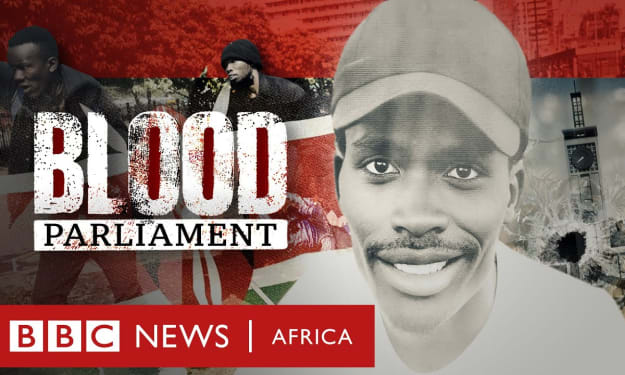
Blood Parliament: BBC Africa Eye Documentary (Kenya Gen Z Protests)
The BBC Africa Eye documentary Blood Parliament investigates the dramatic protests that rocked Kenya in June 2024. It captures the raw energy of a youth-led movement against government policies and highlights the explosive events that unfolded when demonstrators stormed Parliament. The Blood Parliament BBC production offers an unprecedented look into how a generation raised on social media stood up to political authority, reshaping Kenya’s political conversation in the process.
By Marveline Merababout a year ago in The Swamp