corruption
A prime locale to talk bribery, suspect campaign funding, and all other instances of political corruption. The shadier, the better.
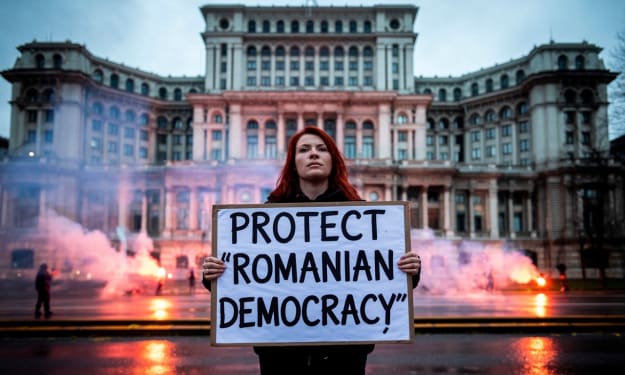
Romanian Democracy Under Siege
Romania's recent political turmoil represents a stark example of establishment resistance to democratic change. The unprecedented annulment of presidential elections and subsequent targeting of nationalist candidates has raised serious questions about the health of Romania's democracy. This analysis offers a counter-perspective to Politico's recent article, "The shadowy warlord behind Romania's wrecked election," by examining the constitutional crisis through a different lens: one that prioritizes electoral sovereignty and questions the narrative of foreign interference.
By The INFORMERabout a year ago in The Swamp
The Bondi Stabbings: how misogyny motivated a psychotic attack. Content Warning.
The Sydney Bondi Westfield shopping mall is one I know extremely well as I live ten minutes away. I would end up in there for an hour or two each week because my physiotherapist is nearby. Since my partner and I sustained life-changing injuries in a fatal tour bus crash, I would, after physio, as my partner had her treatment, walk slowly and cautiously around the mall. I suffer PTSD from the crash; so, crowds and crowded places, loud noise, are enough to cause a panic attack. Slowly, unknowingly, this shopping mall became a safe space for me. I would shuffle around, buy Pokémon cards, Squishmallows to rest my broken back on, and the occasional coffee and cookie combination. I made friends with a few of the store workers. The injuries from the crash left me socially isolated, I can’t do what I did before, I have chronic pain: the crash was life-changing. It is odd to say, but on reflection, the shopping mall became a haven for me; a place to get a little treat after painful physio sessions. On Saturday, 13 April 2024, when I heard the news of the murders, I had a devastating panic attack.
By Josh Clementsabout a year ago in The Swamp
Dirty Dollar
The dollar was crisp, clean, and new—but it smelled of blood, secrets, and silence. New York City, 2023. In the heart of Wall Street, a young financial analyst named Ethan Cole stumbled across something he wasn’t supposed to see. It was just another Tuesday—a blur of screens, coffee, and numbers—until a hidden file named "Project Babylon" landed accidentally in his inbox. One click, and his life changed forever.
By USAMA KHANabout a year ago in The Swamp
"The 2025 Indo-Pak War"
In early 2025, the long-standing tensions between India and Pakistan escalated into one of the most significant military confrontations of the 21st century. Though brief, the conflict shook the South Asian region, drawing global attention due to the nuclear capabilities of both nations. The Indo-Pak War of 2025 lasted only two weeks, but its impact on regional politics, economy, and international relations remains profound. Origins of the Conflict The roots of the 2025 conflict can be traced to a series of skirmishes in Kashmir throughout 2024, which saw increased cross-border shelling and militant incursions. Diplomatic efforts led by the United Nations and regional powers failed to de-escalate tensions. A deadly attack on an Indian Army convoy in January 2025, allegedly orchestrated by Pakistan-based militants, became the flashpoint. India responded swiftly with “Operation Trishul,” a large-scale surgical strike across the Line of Control (LoC), targeting what it claimed were terrorist launch pads and supply routes. Pakistan condemned the strikes as an act of aggression, retaliating with air raids on Indian military positions in Kashmir. This tit-for-tat exchange rapidly spiraled into full-scale conventional warfare. The Course of the War The war officially began on February 10, 2025, when Pakistan launched coordinated artillery and air strikes along the LoC and into Ladakh. India responded by mobilizing troops in Jammu, Punjab, and Rajasthan, leading to battles on multiple fronts. Northern Front (Kashmir and Ladakh): Intense mountain warfare dominated this theater. India deployed its elite high-altitude troops to counter Pakistani advances in the Dras and Kupwara sectors. Indian forces gained the upper hand by capturing key outposts by the seventh day of the war. Western Front (Punjab and Rajasthan): This front saw rapid tank battles and air raids. India’s armored divisions pushed into Pakistan’s Sialkot sector, while Pakistan counterattacked in the Fazilka and Barmer regions. Heavy casualties on both sides marked this phase, but neither side achieved a decisive breakthrough. Naval Engagements: The Indian Navy blockaded Karachi Port temporarily and intercepted Pakistani vessels in the Arabian Sea. Pakistan responded with the deployment of submarines near the western Indian coast, creating tension in vital sea lanes. Though the war remained conventional, both nations issued subtle nuclear warnings through media and diplomatic channels. The threat of escalation prompted urgent international mediation. International Response The global community watched with growing alarm. The United States, China, Russia, and the United Nations called for an immediate ceasefire. Fearing a nuclear confrontation, back-channel diplomacy intensified, with the UAE and Saudi Arabia playing key mediatory roles. On February 24, under mounting pressure and facing economic strain, both countries agreed to a ceasefire brokered by the UN Security Council. The ceasefire restored pre-war territorial boundaries, with both nations claiming strategic and moral victories. Aftermath and Impact Despite the limited duration, the 2025 war had several long-lasting consequences: Human and Economic Cost: Over 5,000 soldiers and an estimated 1,200 civilians were killed on both sides. The conflict displaced tens of thousands, especially in border regions. Economically, both countries suffered a sharp GDP contraction in the first quarter of 2025, with markets plummeting and trade disrupted. Geopolitical Shifts: The war led to renewed calls for Kashmir resolution from the international community. China remained largely neutral but reinforced its border presence in Ladakh, signaling strategic interest. The U.S. and Russia, while advocating peace, used the situation to bolster arms sales and influence in South Asia. Domestic Ramifications: In India, nationalistic fervor surged, strengthening the ruling party’s political hold. In Pakistan, civil-military relations became more strained, with public protests demanding better governance and questioning the cost of perpetual conflict. Cyber and Information Warfare: The conflict also featured unprecedented levels of cyberattacks and disinformation campaigns. Both nations targeted each other’s infrastructure and media, leading to widespread misinformation and paranoia. Lessons Learned The 2025 Indo-Pak War reaffirmed the volatility of South Asia’s security landscape. It highlighted the dangers of unresolved territorial disputes, militant activity, and aggressive nationalism. Though nuclear weapons were not used, the threat hovered perilously close, serving as a reminder of how quickly things can escalate. The war also emphasized the importance of diplomatic engagement, regional cooperation, and conflict resolution mechanisms. While the guns may have fallen silent, the underlying issues—particularly the Kashmir dispute—remain unresolved. Conclusion The Indo-Pak War of 2025 was a sobering event that showcased the fragility of peace in South Asia. Both India and Pakistan walked away with heavy losses and hard-earned lessons. The need for sustained peace efforts, mutual trust-building, and international mediation has never been more critical. As the region looks toward the future, one can only hope that the scars of 2025 will guide its leaders toward dialogue rather than destruction
By Kaleem Ullahabout a year ago in The Swamp
Male 'Heroes' Are Just Janitors Cleaning Up Other Men's Messes.
Name one war started because a woman was "too emotional." Go ahead, I'll wait. You can't name a single one. But you could easily list dozens started by men's wounded pride, fragile egos, and emotional outbursts disguised as political strategy - from World War I (sparked by wounded male honor after an assassination) to the genocide in Rwanda (fueled by male leaders' tribal insecurities). The pattern is undeniable: when men's emotions run hot, people die. When women get emotional, we're told to calm down.
By Amanda Ngcoboabout a year ago in The Swamp
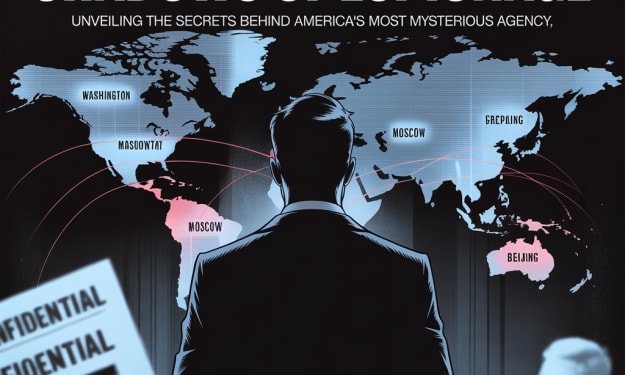
Inside the CIA: America’s Secret Intelligence Agency
From Cold War Tactics to Cyber Wars: The CIA’s Global Reach In the shadows of global politics, where nations maneuver not through diplomacy alone but through secrecy, deception, and surveillance, the Central Intelligence Agency (CIA) stands as one of the most powerful and enigmatic institutions in the world. Born from the ashes of World War II and raised during the height of the Cold War, the CIA has evolved from traditional espionage operations to become a digital-age intelligence giant. Its reach extends across borders, ideologies, and technologies—operating in a world where knowledge is power and information can change the fate of nations. As threats have shifted from Soviet missiles to cyberterrorism and AI warfare, so too has the CIA adapted, making it not only a historical cornerstone of American security but also a critical player in today’s global power struggle. The Origins: An Agency Born in Secrecy The CIA was formally established in 1947 under the National Security Act, but its roots trace back to the Office of Strategic Services (OSS), the United States' first intelligence agency during World War II. Designed to combat Nazi Germany and Imperial Japan through covert operations, the OSS laid the foundation for modern U.S. espionage. When the Cold War began, the United States recognized the need for a peacetime intelligence service capable of gathering foreign information and executing clandestine operations. Thus, the CIA was born—not as a military branch, but as an independent civilian agency reporting directly to the President. Cold War Operations: Spies, Coups, and Proxy Wars The Cold War era defined the CIA’s early years. It was during this period that the agency conducted some of its most controversial and defining operations. The primary adversary was the Soviet Union, and the battlefield was the entire world. Through programs like Operation AJAX in Iran (1953) and Operation PBSUCCESS in Guatemala (1954), the CIA orchestrated coups to install pro-American regimes. It ran surveillance and counterintelligence against Soviet spies and played key roles in proxy wars like Vietnam and Afghanistan. The agency’s use of human intelligence (HUMINT), psychological warfare, and propaganda became hallmarks of its Cold War strategy. However, not all actions met success. The failed Bay of Pigs Invasion in Cuba (1961), an attempt to overthrow Fidel Castro, became a major embarrassment. Nonetheless, these years solidified the CIA’s reputation as a formidable and secretive power broker in international affairs. The Post-Cold War Shift: Terrorism and Rogue States With the collapse of the Soviet Union in 1991, the CIA faced a moment of existential uncertainty. Without its traditional enemy, the agency had to adapt. In the 1990s and early 2000s, its focus shifted to emerging threats: rogue states, international terrorism, and the spread of weapons of mass destruction. After the 9/11 terrorist attacks, the CIA entered a new era. It was at the forefront of the War on Terror, playing key roles in tracking Al-Qaeda, capturing or killing terrorist leaders, and operating secret detention facilities. The agency’s controversial use of “enhanced interrogation techniques”, drone strikes, and black sites ignited debates on ethics, legality, and human rights—questions that still haunt the agency’s legacy. Enter the Cyber Era: Intelligence in the Digital Age Today, the battlefield has shifted again—from deserts and jungles to cyberspace. The rise of cyberwarfare, state-sponsored hacking, and digital espionage has pushed the CIA to evolve once more. The agency now works closely with other U.S. intelligence bodies like the NSA and FBI to counteract threats from nations such as China, Russia, Iran, and North Korea, which use cyberattacks as a form of asymmetric warfare. The CIA has also developed capabilities to monitor global internet traffic, infiltrate secure communications, and conduct offensive cyber operations—all while protecting U.S. national interests from increasingly sophisticated cyber threats. Additionally, emerging technologies such as artificial intelligence, big data analytics, satellite imagery, and biometric surveillance have given the CIA new tools in its intelligence arsenal. With these, it can track individuals globally, predict political upheavals, and identify terrorist plots before they unfold. Global Reach, Ethical Debate Despite its strategic importance, the CIA continues to face criticism and scrutiny. Leaks by whistleblowers such as Edward Snowden and WikiLeaks' Vault 7 disclosures revealed the extent of CIA surveillance and hacking capabilities. These revelations sparked global conversations about privacy, civil liberties, and the balance between security and freedom. Domestically, the CIA is overseen by the Senate Intelligence Committee, but many argue that real transparency is lacking. Internationally, its covert actions often blur the lines between security and interference, leading some to view it as both a protector and a puppet master. Conclusion: A Shadow That Shapes the Future From covert Cold War missions to cyber operations in the digital age, the CIA’s evolution reflects the changing nature of global conflict. Its ability to adapt to new threats has made it a pillar of American defense and foreign policy. Yet with great power comes great responsibility—and the agency’s future will depend not just on its technological capabilities, but also on its commitment to ethics, oversight, and transparency in an increasingly interconnected world.
By World politics about a year ago in The Swamp
Maverick Aoko: Education, Biography, Age, Real Name, Net Worth & More
Maverick Aoko isn’t your typical online commentator. Loud, unfiltered, and unapologetically bold, she’s made a name for herself in Kenya’s digital and political spaces with her razor-sharp takes and fearless opinions.
By Marveline Merababout a year ago in The Swamp
Kasmuel McOure: Biography, Real Name, Tribe, Age, Parents & More
Kasmuel McOure has become one of the most talked-about young personalities in Kenya—known for his sharp wit, bold opinions, and viral presence both online and on stage. Whether he's trending for a skit, a sermon, or stirring up conversation on TikTok, Kasmuel continues to captivate audiences across the country.
By Marveline Merababout a year ago in The Swamp
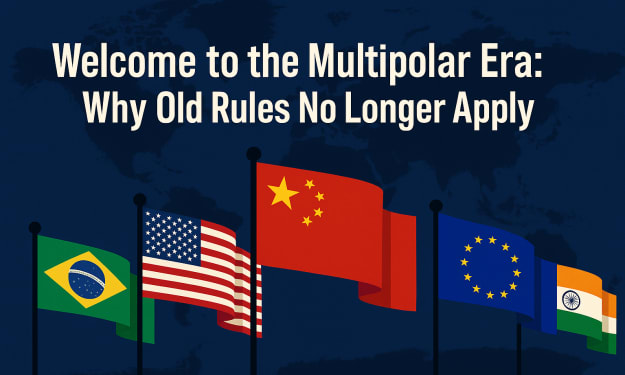
“Welcome to the Multipolar Era: Why Old Rules No Longer Apply”
Welcome to the Multipolar Era: Why Old Rules No Longer Apply Inside the Rise of a World Where No One Power Calls the Shots --- Introduction Not long ago, world politics revolved around a single axis — the United States. Following the Cold War, America’s military might, economic dominance, and cultural influence gave it an unrivaled role in setting global agendas. But that era is fading fast. Today, we live in a world where no single nation can dictate the terms. Power is more distributed, alliances are more fluid, and the rules of engagement are constantly shifting. From Beijing to Brasília, from Ankara to New Delhi, a new set of actors is redefining influence in a chaotic and contested global order. The question is no longer who leads — it's how the world manages without clear leadership. --- The End of Unipolarity The post-Cold War unipolar moment, which placed the U.S. at the apex of global power, is now history. Two decades of military overstretch, internal political divisions, and economic upheaval have eroded America's ability to act as the world's de facto leader. The withdrawal from Afghanistan, inconsistent global policies, and an increasingly inward-looking electorate have signaled a step back from the assertive global policing of the early 2000s. This vacuum hasn't gone unnoticed. Instead of a new hegemon rising to replace the old, what we see is a diffusion of power across multiple regional centers. It’s not a bipolar world of the Cold War era, nor a balanced multipolar structure of the early 20th century. This new landscape is messy, unstable — and permanent. --- China and the Economic Realignment China stands at the forefront of this shift, but even its rise comes with caveats. With the Belt and Road Initiative, Beijing has extended its economic reach into Asia, Africa, and parts of Europe. Its influence over supply chains, infrastructure, and digital technologies challenges the dollar-based global system. However, China's ambitions face resistance. Tensions over Taiwan, territorial disputes in the South China Sea, and pushback from Western nations on tech and trade indicate that its power, while rising, is also contested. China is not replacing the U.S. — it’s carving out its own sphere, one that’s economic rather than ideological, and subject to friction. --- Russia’s Military Gambit and Strategic Isolation Russia, too, has sought to challenge the Western-dominated order, most dramatically through its invasion of Ukraine. While the war has demonstrated Moscow’s willingness to use force to protect perceived national interests, it has also exposed its strategic limits. Sanctions, international condemnation, and battlefield losses have isolated Russia from much of the world economy, while simultaneously deepening its ties with non-Western partners like Iran and China. In trying to redefine regional borders by force, Russia has sparked a renewed unity among NATO members, paradoxically reinforcing the very alliances it sought to divide. --- Middle Powers and Fluid Alliances Perhaps the most defining feature of the multipolar era is the rise of middle powers — nations like India, Brazil, Turkey, and Saudi Arabia that are no longer content to align strictly with the West or East. These countries pursue strategic autonomy, balancing relationships across global fault lines. India, for example, is a member of the Quad (with the U.S., Japan, and Australia) while also maintaining defense ties with Russia and participating in BRICS. Turkey, a NATO member, buys Russian arms and projects influence across Central Asia and the Middle East. These states navigate global politics based not on ideology, but on opportunity and self-interest. --- Global Institutions Under Strain The United Nations, World Trade Organization, and other postwar institutions are increasingly ineffective at managing today’s fragmented world. Vetoes stall progress at the UN Security Council. Trade disputes paralyze the WTO. And new power blocs like BRICS and the Shanghai Cooperation Organization aim to create parallel systems that reflect non-Western values and priorities. The rules-based international order — long championed by the West — now finds itself questioned not only by adversaries, but by allies frustrated with its limitations and hypocrisy. --- Technology, Climate, and the New Arenas of Power While traditional power still matters, influence in today’s world is also determined by less tangible forces. Control over technologies like artificial intelligence, 5G, and semiconductors is becoming as critical as nuclear weapons were in the past. Meanwhile, climate change, pandemics, and migration flows expose the limitations of national solutions to global problems. These issues demand coordination, yet in a fragmented world, cooperation is the first casualty of geopolitical rivalry. --- Conclusion: Embracing Complexity The multipolar era is not just a phase — it is the defining condition of our time. It offers opportunities for a more inclusive, balanced world, but also risks greater instability, miscalculation, and fragmentation. Old rules no longer apply, because the old world no longer exists. The future will depend not on domination, but on how nations adapt, negotiate, and share power in a world where no one — and everyone — leads.
By World politics about a year ago in The Swamp
Pahalgam Terror Attack 2025: Hindu Tourists Killed in Kashmir, Global Reactions and Full Report. Content Warning. AI-Generated.
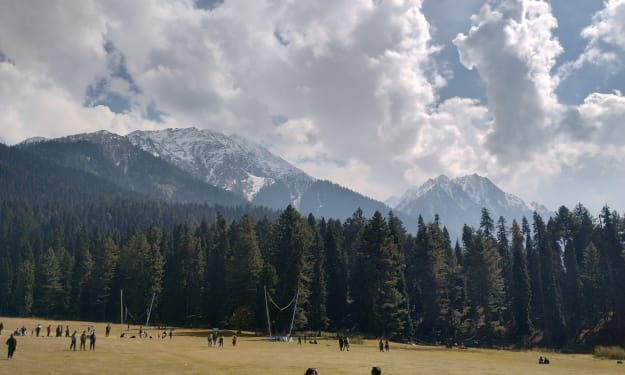
On April 22, 2025, a brutal terrorist attack in Pahalgam, Jammu and Kashmir sent shockwaves across India and the international community. Armed militants opened fire on a group of tourists at Baisaran Valley, deliberately targeting individuals based on their Hindu identity. The attack, which left 26 civilians dead and over 20 injured, is being called one of the deadliest attacks in Kashmir in recent years. The massacre not only exposed the fragile security situation in the region but also reignited global conversations around religious terrorism, Islamic extremism, and cross-border militancy. What Happened in Pahalgam on April 22, 2025? According to survivor testimonies and local authorities, a group of armed terrorists infiltrated the tourist-heavy zone of Baisaran Valley, posing as guides or local pony handlers. They then asked tourists their names and religion. Those who identified as Hindu were separated and shot at close range. Some were reportedly asked to recite the Islamic kalima to verify their faith. This form of religiously motivated violence is a chilling reminder of earlier sectarian atrocities in South Asia. Among those killed was an entire Hindu family from Maharashtra. Shockingly, a local Muslim man, Seyyed Adil Hussain Shah, lost his life trying to protect the tourists. His bravery has since become a symbol of interfaith solidarity in a time of hate.
By Tanushree Dasabout a year ago in The Swamp