
Republicans Are Burning Campaign Cash in States They Never Had to Defend
Kansas, Texas, and South Carolina are suddenly competitive. The reason is a primary system that rewards loyalty over electability, and a president with a net approval of negative 28.
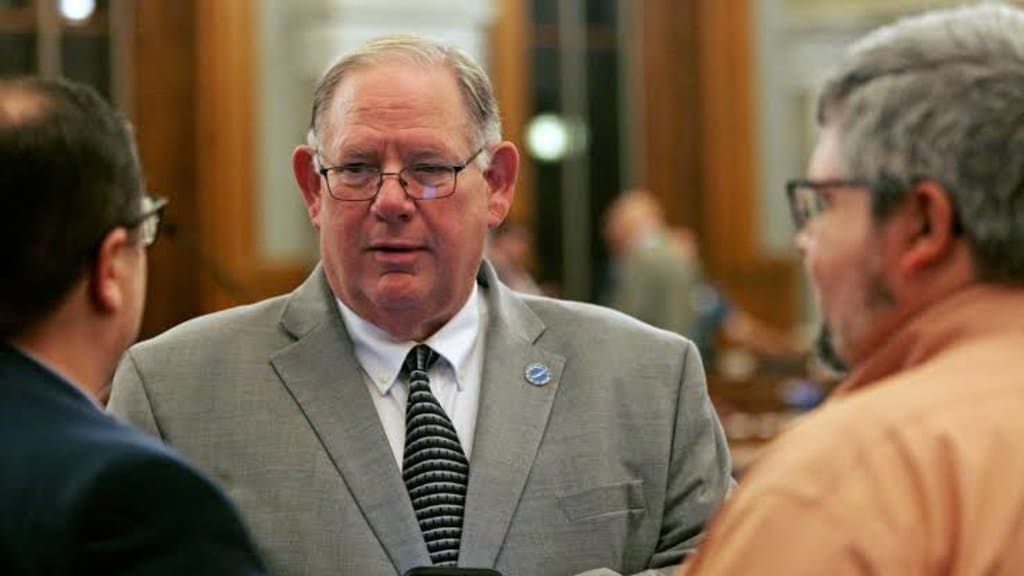
A week before Election Day, an unusual adjustment appeared on a Kansas TV station’s ad schedule: the Republican Senate candidate’s ad slots moved from prime time to late night, while the Democrat’s ads stayed concentrated in the two suburban media markets of Johnson County and Sedgwick County. The schedule does not explain why. It records only who spent how much, and when. Place that schedule next to the same schedule from the previous three Senate cycles, and the comparison is the point: Republican TV spending in Kansas alone had already exceeded the state’s total Senate ad spending across the previous three cycles.
Kansas did not suddenly become a blue state. Democrats have not won a Senate seat there since 1932. The change happened elsewhere: Republicans were being forced to write budgets for states that should not have needed ads.
1. Negative 28
An Economist/YouGov poll in mid-October 2026 produced a number: 34% of adults approved of Trump’s job performance, 62% disapproved, for a net approval rating of -28. NBC’s pre-election poll gave 39% to 61% among registered voters, but in the adult sample disapproval was 66%, with 51% “strongly disapproving.” Both were new highs for his second term. YouGov’s records showed Trump’s current net approval was lower than Biden’s -1 at the same point, lower than his own -10 at the same point in his first term, and lower than the -10 to -20 range shortly after his inauguration a year earlier.
That number shows up in the House popular vote, not on Twitter. The same Economist/YouGov poll showed Democrats leading by 7 points among registered voters and by 8 and 11 points in two likely-voter models. The 11-point gap in the stricter likely-voter model was larger than the 9 points Democrats ultimately won in the national House popular vote during the 2018 “blue wave.”
Senate elections are less nationalized than House elections, but the direction is the same. When a president’s net approval remains in the negative twenties, every Senate candidate in every state gets asked the same question: What is your relationship with Trump? Those who answer “support” get the base and lose swing voters. Those who answer “disagreements” get swing voters and lose the base. This choice is especially hard in deep-red states, because the base is larger and swing voters are fewer. But swing voters are exactly the group that determines whether a red state becomes a battleground.
2. Primary screening: loyalty as a substitute for quality
Trump’s control over Republican primaries was clear in 2026. CBC, reporting on the Texas primary, put it in one sentence: in endorsing Paxton, Trump “chose loyalty over electability.”
Ken Paxton is the specimen of this logic. Texas attorney general; he has been impeached by a Republican-controlled state House, indicted on felony securities fraud charges, accused of bribery and abuse of office, embroiled in an extramarital affair scandal, and reported to the FBI by his own senior aides. Texas Republican voters did not want him to become the nominee in primary polls. That did not affect the outcome. After the 2020 election, Paxton sued as attorney general to try to overturn Pennsylvania’s election results, which made him a darling of the MAGA base. Trump’s endorsement pushed Paxton over the line in the primary runoff, where he won more than 63% and defeated four-term Senator John Cornyn.
Paxton said in his victory speech: “Without question, I will be the Democrats’ number one target in November.” That line was borne out in pre-election polling: the final NYT/Siena seven-state survey showed Democratic state Representative James Talarico leading Paxton by 7 points, 50% to 43%. Trump won Texas by nearly 14 points in 2024. Senate Majority Leader John Thune warned during the primary that Trump’s intervention against a sitting senator could make advancing his agenda “more complicated.” The worry inside the party was more direct: Paxton’s baggage as a nominee could force Republicans to spend tens of millions or even hundreds of millions of dollars extra in a state that should not be competitive.
Kansas’s Roger Marshall showed another version of the same problem. The scandal itself did not necessarily come from MAGA, but the MAGA-fied primary environment deprived Republicans of the ability to correct course by eliminating a damaged candidate during the primary. A September investigation by The New York Times found that during his decades as an OB-GYN, Marshall sued more than 700 patients with unpaid bills; at least 81 people were arrested for missing court dates; patients were routinely charged 18% annual interest; and wages and bank accounts were garnished. One case was on Easter weekend 2007, when Joe Vasquez and his wife were taken from their home by police over a $4,561 emergency hysterectomy bill. They spent two days in jail until their son raised bail. Former patient Misha Zimmerman filed a class-action lawsuit a week before the election, accusing Marshall and his clinic of running a “predatory collection scheme” and charging illegally high interest rates.
Marshall’s response illustrated the behavior pattern of MAGA candidates. According to The New York Times, two weeks before the election he proposed to senior campaign staff that he shoot his own ad responding to the medical-debt attacks. Senior advisers said no. It was too late, and he should pivot back to immigration. Marshall bypassed some senior aides and arranged a camera crew to shoot the ad himself. In the ad, he acknowledged that he “occasionally turned accounts over to collection agencies” but insisted that suing patients was necessary. In debates, he spent much of his energy defending Trump’s policies while carving out a few disagreements: he did not agree with Trump’s move to lower prices on imported foreign beef, and he did not agree with ICE raids at Kansas meatpacking plants. This “bind and cut” posture was hard to sustain in a state where Trump’s net approval was -28. Binding brought the base. Cutting tried to win swing voters. The tension between the two became unmanageable in the final weeks.
The pre-election NYT/Siena seven-state survey showed Democratic candidate and United Methodist pastor Adam Hamilton leading Marshall by 5 points, 49% to 44%. Hamilton was founding pastor of Resurrection, a church in the Kansas City suburbs. He had written more than 30 books on theology and had never held public office before announcing his candidacy in April 2026. He promised in the campaign to “lead from the middle.” He called the border under Biden a “disaster,” backed a “strong defense” for Israel, and criticized Trump’s war with Iran, high diesel prices, and health care cuts. He was not the kind of Democrat who felt culturally alien to rural voters in a deep-red state. He had been registered as a Republican for years and switched parties only last year.
3. Cracks in the map
Kansas is not an isolated case. Nebraska Democrats in 2026 again gave up on fielding their own Senate candidate and instead endorsed independent candidate and labor leader Dan Osborn. The pre-election NYT/Siena poll showed Osborn trailing Republican incumbent Senator Pete Ricketts by 6 points, 43% to 49%. Fifty-five percent of voters saw him as “more of a Democrat” than an independent. In a state Trump won by more than 20 points, only about a quarter of people were satisfied with the Democratic brand. The Democratic “stand down” strategy saved primary spending but did not change Nebraska’s electoral math.
Maine’s Susan Collins has served since 1997. The final NYT/Siena poll showed Democrat Troy Jackson leading by 6 points, 51% to 45%. In the pre-election ECU poll, North Carolina’s Roy Cooper led Trump ally and former Republican National Committee chairman Michael Whatley by 9 points, 54% to 45%, and led by 14 points among independents. Forty-seven percent of voters named the economy and cost of living as their top issue, and on that issue Cooper led 67% to 33%. Republican TV advertising in North Carolina had stopped by the final weeks. A former governor and Democrat running on lowering the cost of living and expanding Medicaid had built a stable lead in a state that had not elected a Democratic senator in nearly two decades.
South Carolina’s Senate race became competitive after a change in the incumbent during the summer. Republicans nominated a candidate who had never held public office. In a televised debate she could not answer basic policy questions and, asked about national security, said it was “not my thing.” A late-October NYT/Siena poll showed her leading her Democratic opponent, pediatrician Anne Andrews, by less than 1 point in deep-red South Carolina. The race was a statistical tie. Most voters said she did not have the experience needed to be an effective senator. Most said Andrews did. Both parties began injecting money into South Carolina in the final weeks, and Trump planned to visit the state again.
Texas was the most expensive example. Talarico’s 7-point lead over Paxton meant Republicans could either accept a “safe” seat turning into a dogfight or spend resources commensurate with the fate of their Senate majority to save it. CNN noted in its eve-of-election summary that Republicans were defending Senate seats in “red states” that had voted for Trump three times. In the final month, Republican total spending on Senate ads was $560 million, compared with $521 million for Democrats. Republicans still led in total ad spending, but the problem was marginal allocation. A large share of money flowed to states that should not have needed ads. Axios reported in July that the National Republican Senatorial Committee had reserved $28 million and $11 million in TV ads in Ohio and Iowa to shore up a red wall that “until recently looked safe.”
4. The ledger does not explain
Put those numbers back into the campaign ledger and an efficiency gap shows up. Republicans still spent more than Democrats on Senate ads overall, but the share of defensive spending was far higher than in a normal cycle. Defensive spending means money spent to hold seats in states Trump won by double digits. Democratic spending in Kansas was less than a third of its opponent’s, in Texas less than half, and in North Carolina it had already forced Republicans to pause spending. Democrats did not offer a nationally appealing policy agenda, and their candidates were not generally charismatic. Kansas’s Hamilton was a pastor who deliberately downplayed party affiliation in a deep-red state. Nebraska Democrats simply gave up on fielding a candidate. North Carolina’s Cooper relied on his personal brand and on “cost of living,” an issue Democrats do not own exclusively.
The change happened on the Republican side. MAGA primaries put loyalty above electability, and Trump’s nationwide unpopularity in his second term punished the candidates most closely tied to him. Paxton, Marshall, and South Carolina’s never-elected nominee were products of the same incentive structure. That structure put them in competitive races. Each defensive dollar in the ledger came from that incentive structure.
A week before Election Day, on a Kansas TV station’s ad schedule, the Republican ad slots moved from prime time to late night. The schedule does not explain why. It records only this: in the same state, the same seat, the same week, one side pulled its ads from prime time, while the other kept its ads in two suburban counties. The ledger does not explain. The ledger only records.
About the Creator
Jin
Writer of reamstories
https://reamstories.com/jin
Enjoyed the story? Support the Creator.
Subscribe for free to receive all their stories in your feed. You could also become a paid subscriber, letting them know you appreciate their work.
Comments
There are no comments for this story
Be the first to respond and start the conversation.