
Portugal Announces It Will Block the Strait Of Hormuz
Once a naval superpower, Portugal aims to become relevant again


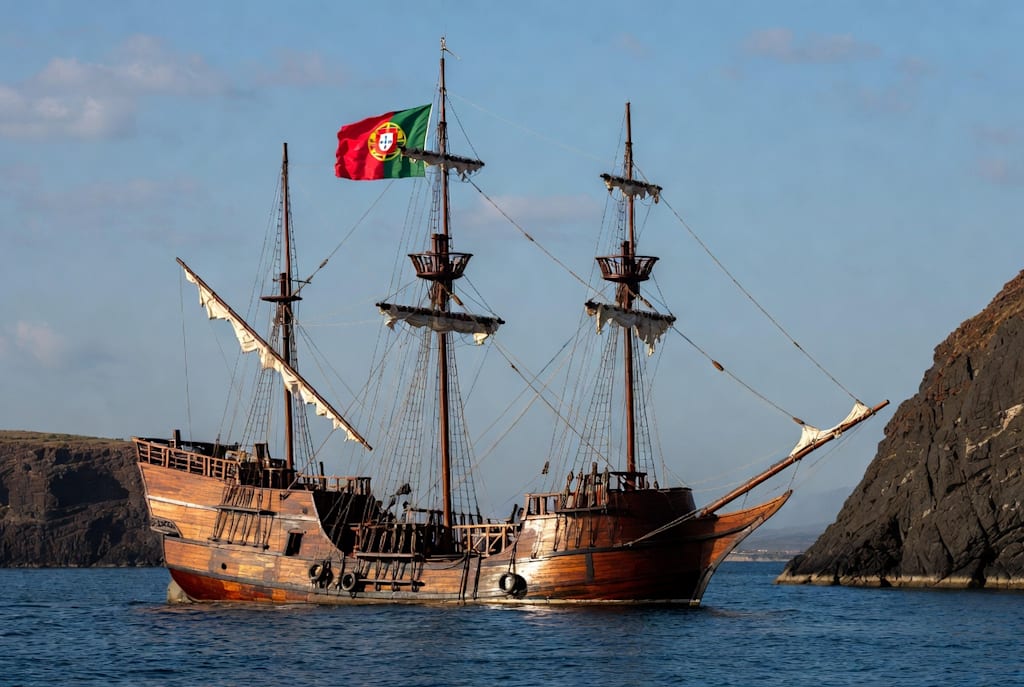
Desperate to reclaim its 16th-century glory, the Kingdom of Portugal announced Wednesday that it would blockade the Strait of Hormuz, joining the United States and Iran in blocking the vital waterway.
King João IV, gave the announcement from a leaky carrack that had to be towed into position by two fishing boats.
"Portugal was once the envy of the world. We discovered routes to India! We had spices! The Pope was on our payroll! Today, the Portuguese navy is back!"
The announcement comes one day after the United States threatened to block the vital shipping lane, prompting a wave of saber-rattling from European nations that haven't mattered on the global stage since the invention of the printing press.
"Blocking the Strait of Hormuz was literally our whole brand in the 1500s," said Admiral Miguel de Sousa, adjusting an oversized feathered hat. "We used to charge tolls on every spice shipment. Pepper? Ours. Cloves? Ours. Nutmeg? Don't even get me started on nutmeg."
Portuguese naval officials unveiled their blockade plan: one slightly rusty caravel will sail to the Strait of Hormuz, unfurl a massive banner that reads "WE WERE HERE FIRST", and if necessary, ram the tankers at a terrifying speed of four knots.
If the tankers then refuse to turn around, the crew will simply sigh loudly and plead, "Doesn't anyone remember Vasco da Gama?" until the Iranians feel bad and let them win.
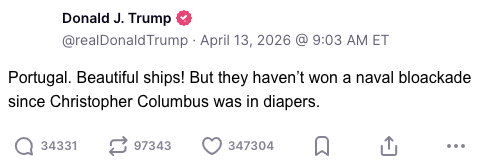
International reaction was swift. The United States responded with a cryptic 3 a.m. Truth Social post that aides are describing as "7D chess."
Iran secretly offered Portugal a peace deal in exchange for half a tanker of unrefined Iranian Heavy Crude.
Meanwhile, the Netherlands, Spain, and Denmark all announced naval blockades of their own.
Much like international protesters once copied "Occupy Wall Street," world governments are appropriating the "Blockade the Strait of Hormuz" movement in a bid to regain historical relevance, or obtain free oil to spark their ailing economies.
At publication time, Portugal was reportedly struggling to find enough able-bodied sailors as most of the kingdom's young men had already volunteered for the Danish navy after hearing they provide better dental coverage and free beer.
***
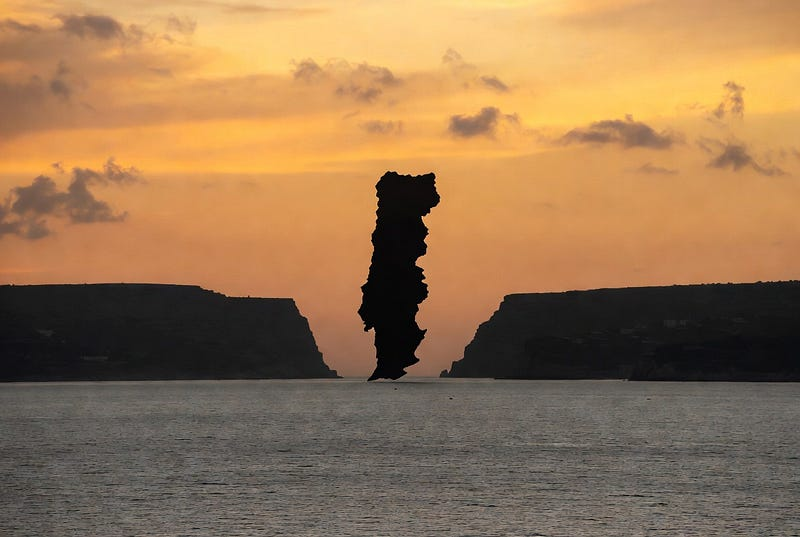
Grok AI's reply to "Create an image of Portugal blocking the Strait of Hormuz".
Some Real Actual History
Portugal’s history in the Strait of Hormuz and the Indian Ocean represents one of the most audacious chapters of the Age of Discovery. In the late 15th century, under King Manuel I, Portugal sought to wrest control of the lucrative spice trade from Muslim merchants who dominated routes through the Red Sea and Persian Gulf.
Vasco da Gama’s pioneering voyage to India in 1498 opened the sea route around the Cape of Good Hope, but true dominance required securing strategic choke points. Afonso de Albuquerque, the brilliant and ruthless “Caesar of the East,” became the architect of this vision. In 1507, he led a small fleet of six ships to Hormuz Island at the narrow mouth of the Persian Gulf. Though initially forced to withdraw, Albuquerque returned decisively in 1515, capturing the island after a swift campaign and overseeing the construction of the formidable Fortress of Our Lady of the Conception.
For over a century (1515–1622), the Portuguese held Hormuz as the jewel of their Estado da Índia. From this heavily fortified base — supported by outposts in Muscat, Bahrain, and Qeshm — they enforced a near-monopoly on maritime trade. Every ship passing through the Strait paid tribute (cartaz system), while Portuguese carracks and naus patrolled the waters, intercepting rivals and diverting commerce to routes under Lisbon’s control. Pepper, cloves, nutmeg, silk, and other luxuries flowed through Hormuz toward Europe, generating immense wealth that funded further expansion.
This control extended across the broader Indian Ocean. With key bases at Goa (captured 1510), Malacca (1511), and Socotra, Portugal created a network of fortified trading posts that allowed a tiny European kingdom to project power across vast distances. They disrupted traditional Arab, Persian, and Venetian routes, fought repeated naval battles against Ottoman fleets, and turned the Indian Ocean into what historians sometimes call a “Portuguese lake.”
The era ended in 1622 when a combined Anglo-Persian force recaptured Hormuz after a prolonged siege, expelling the Portuguese and marking the decline of their Asian empire. Yet for more than a hundred years, a small nation on the edge of Europe had rewritten the rules of global trade through superior ships, cannon, and bold strategy.
About the Creator
Scott Christenson🌴
Born and raised in Milwaukee WI, living in Hong Kong. Hoping to share some of my experiences w short story & non-fiction writing.
Enjoyed the story? Support the Creator.
Subscribe for free to receive all their stories in your feed. You could also become a paid subscriber, letting them know you appreciate their work.
Comments
There are no comments for this story
Be the first to respond and start the conversation.