
Iran Just Stopped Believing in Talks With America
After every negotiation came strikes and sanctions. Now Tehran is using Qatar, Pakistan, and the Strait of Hormuz to make Washington move first.
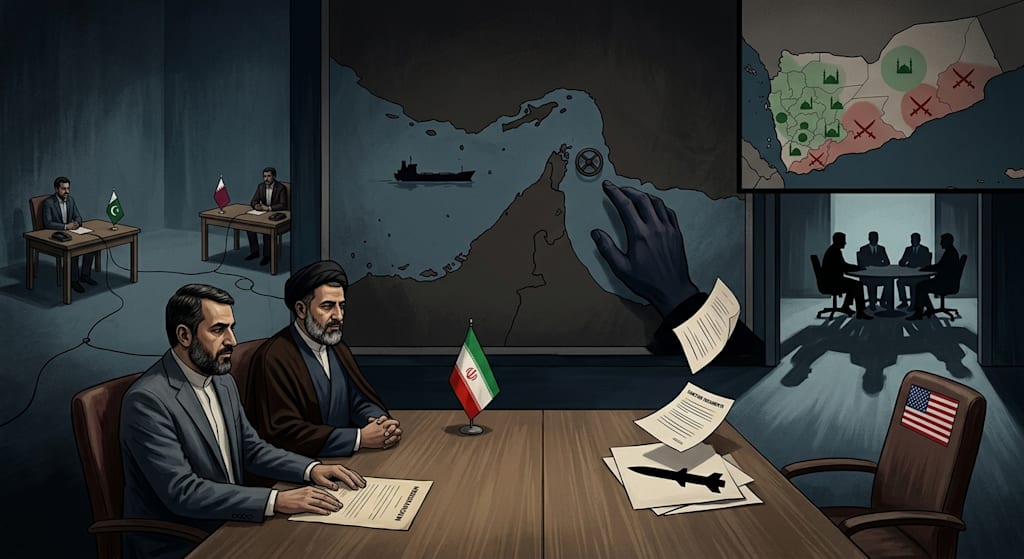
After Talks, Strikes: Why Iran Says It Will Not Talk to Washington
Iranian President Masoud Pezeshkian said on the 26th that Iran no longer trusts dialogue with the United States. His reason: after every round of talks, Washington launches attacks and imposes sanctions. He said Qatar and Pakistan are mediating. The talks rest on a previously signed memorandum of understanding. “The U.S. side must clarify its position on this,” he said. Asked whether he would meet President Trump, he replied: “Why should I meet with the U.S. president? For what purpose? We signed an agreement, and they failed to honor their commitments.”
Tehran is refusing communication without fulfilled commitments. In past rounds, Iran sat at the table and then faced strikes and sanctions. For Iran’s leadership, dialogue has become a way for Washington to buy time and stack pressure. Pezeshkian’s question points to a narrower issue: if a meeting cannot deliver verifiable sanctions relief and security guarantees, the meeting becomes a domestic political cost.
That is why the mediation channel matters. Qatar and Pakistan are not just passing notes. Qatar talks to both Washington and Tehran. Pakistan has ties to Iran, the United States, and Saudi Arabia. Going through a third party lets Iran avoid a direct meeting while putting its conditions first: the United States must clarify its position on the memorandum. Foreign Minister Abbas Araghchi said the Strait of Hormuz can reopen within seven days if the United States takes the necessary actions. Parliament Speaker Mohammad Bagher Qalibaf said the strait will not reopen before Iran’s conditions are met and the United States honors its commitments. Those conditions say more than any statement about being willing to talk.
The Strait of Hormuz is Iran’s most direct pressure point. Pezeshkian said the issue can only be settled through negotiation, not force. “When all channels are closed to Iran, closing the Strait of Hormuz is a natural response.” The statement turns geography into a bargaining chip. Iran does not need a long blockade. Showing it can block the strait is enough to raise oil prices, insurance premiums, and shipping costs, which pressures the United States, Europe, and Gulf oil producers. Iran also knows a full blockade would invite military retaliation, hurt its own oil exports, and push Gulf neighbors closer to Washington. Iran is using the “natural response” as a threat. A full blockade is not the plan.
On Yemen, Pezeshkian said Iran can help settle the dispute between Saudi Arabia and the Houthis, and that Iran will not start a war. Saudi Arabia has been diversifying its security ties, and de-escalation with Iran serves that goal. China helped restore Saudi-Iran ties and has stayed in touch on Yemen. By offering to mediate, Iran wants to look like a constructive regional player and to win neutrality or mediation support from Gulf states in its contest with Washington. Whether Iran can deliver depends on its influence over the Houthis and on whether Saudi Arabia trusts Iran’s intentions.
Pezeshkian also said he met twice with Supreme Leader Mojtaba Khamenei. The first meeting lasted about three hours. The second lasted seven and a half hours. Long meetings suggest deep consultations on policy toward Washington, the Strait of Hormuz, regional proxies, and the domestic economy. By saying this publicly, the president is telling Iranians and foreign governments that the leadership is stable, decisions are unified, and sanctions and military threats will not split it.
U.S.-Iran relations now run on broken trust. Direct high-level talks are unlikely to restart soon, but a complete break is also unlikely. The more probable path is indirect contact through Qatar, Pakistan, or other mediators, with conditional deals over the memorandum, sanctions relief, and passage through the Strait of Hormuz. If Washington keeps pressing, it risks oil price swings, a wider regional war, and unhappy allies. If Iran keeps using the strait as a chip, it risks military retaliation and economic damage. Domestic politics limits compromise on both sides: toughness toward Iran remains a bipartisan position in Washington, and anti-American sentiment runs deep in Iran.
Pezeshkian’s statement answers past rounds of talks followed by strikes. The statement changes the order of diplomacy. Iran wants the United States to fulfill commitments before talks resume and to show action before any meeting is discussed. The Strait of Hormuz, Yemen, and the mediation by Qatar and Pakistan all wait on one question: will the United States stop attacks, lift some sanctions, and honor the memorandum?
About the Creator
Jin
Writer of reamstories
https://reamstories.com/jin
Enjoyed the story? Support the Creator.
Subscribe for free to receive all their stories in your feed. You could also become a paid subscriber, letting them know you appreciate their work.
Comments
There are no comments for this story
Be the first to respond and start the conversation.