
Gaza wasn’t much, mostly walking through rubble and turning whatever structures still stood to more rubble. The only thing that broke the monotony of hiking over mounds of brick and other debris was when one of our Merkava’s was struck by an RPG. The rocket had impacted the treads ,and the tank had to be towed to one of our Forward Operating Bases for repairs. The crew was shaken up, but no one was injured. Well, in all honesty, we were all shaken up. No one had any idea where the rocket had been fired from. We wondered if the next invisible member of the resistance would fire a rocket that would tear through more than just the treads. We laughed it off regardless and joked about how the explosion was a lovely way to spice our day up and get the blood running.
I was to be rotated out of Gaza, since military operations there became limited following the ceasefire. I had hoped for the West Bank. Funnily enough, the only injury I had sustained up until that point was in the West Bank. A kid with a sling launched a stone that connected directly with the back of my head. I had my helmet, of course, but I still suffered a mild concussion.
However, it was decided I would assist in the campaign in South Lebanon. When I heard the news, my lip began to quiver, and I bit it to conceal my nervousness. I was a captain in the most lethal fighting force in the world, not some yellow bellied Brooklynite. Israel was my home, my refuge, and I would fight for it on any front.
I arrived at the barracks at Jabal Blat with the other transfers and could immediately tell that the soldiers who had been here for months were not the type who were in want of enemy attacks to offer a little excitement. I spent most of my first day outside of my barracks smoking cigarettes. I watched as tanks, jeeps, APCs, and supply trucks were towed in through the front gate. They were all still smoldering, while a few still had fire on them. I was too in awe to count how many vehicles were towed in, but I knew the number was higher than the number of losses Haaretz had declared for the entire campaign thus far.
I was told by Captain Lewinsky early the next morning that our brigade was to try to set an FOB somewhere between Jabal Blat and Salhaneh. The target location was on top of a mountain that was directly west of Salhaneh. We would march north first and then cut east until we reached the overlook. It was some hundred of us infantrymen with a dozen JLTVs and a half dozen Merkavas.
Being from Ashkelon, I found the dry heat of south Lebanon to be abrasive. It felt as though the air I was breathing was hollow. Dense rows of pine trees grew on either side of the road we were marching on, and they sprawled across every hill and mountainside in the valley. The pine clogged my nose up to the point that I had to breathe the barren air through my mouth, leaving my lips and tongue dry and cracked. I was not meant to be here. Even after greater Israel was established, I swore I would never come back.
The pine trees quickly became my enemy and not just because of the pollen. They were a natural fortress. The forest was a base of operations for the terrorists that stretched out into the horizon, an endless sea of dark green tree canopies. We had to carve out specific locations within the expanse and plants ourselves there. We had to walk through dirt roads, specific routes already laid out for us by the people of south Lebanon themselves. They could always be certain of where we were or where we might be. A sniper could be thirty feet up a hill to the left of us, fire, and retreat deeper in the woods while we still scrambled to find cover.
Three hours into our march, it dawned on me that we had not seen a single animal. Even the birds were silent, assuming they had not retreated into the woods. There was just the mechanical hum of the JKTVs and the intermittent groaning of the Merkava engines starting back up again after stopping to allow us infantry to surveille for any threats.
These trails were not made by us or for us. They were designed for Shepherds to guide sheep along and for donkeys hauling wooden carts full of olives. We brought steel, lead, rubber, oil, and gunpowder. The natural world condemned us for it. They said that birds go silent when predators are in the area, that their silence is an omen of death. I wasn’t the superstitious type, so I made the simple connection that birds are animals. Animals flee from loud sounds that are foreign to them, nothing else to it.
The night after our first day of marching was spent in the homes of Lebanese families who,presumably, fled north. It was a clustered little settlement of five homes, each two stories tall. They were not spacious despite these extra additions to the home. Both levels were a single room each with rugs laid out for the families to sleep together in one room, though the first floor of each room had brick ovens, pans, strainers, and other rudimentary kitchen items.
The various pens and barbed fences indicated to me that they subsisted off of goats, chickens, and other animals. It was here that I felt as though we had been marching, and now sleeping, in a land of ghosts. Our brigade hollowed everything that was once teeming with life. I imagined what life was like here a few months ago. I imagined the neighbors waking up and having tea before going about tending to the animals. I thought of the sorts of conversations these families shared in these rooms. Whose sleeping mat was I on? I could smell the natural scent of a man whenever I laid on my stomach. It was a pleasant musk, but I was still compelled to sleep on my back. Even then, I found myself breathing in that moistureless air that made the skin at the opening of my nostrils dry and cracked.
When our captain ordered us to move out, I stood right up and started loading my gear. I walked over to the road directly in front of the houses we had been staying in and noticed that some of my comrades had taken souvenirs. One soldier had lingerie panties over his face and others were scrawling on family photos they had found. The man with the undergarment face mask paraded himself around while demeaning the women whose drawers he had raided
Oh forgive me, Allah! I swear I was not trying to keep it hidden from you. The goats stole the men’s attention from me so I had to do something!
We continued our march. The man wore the underwear around his face for the first two hours of the journey. Fifteen minutes into what would have been our third hour of our journey, a missile struck the lead Merkava from the left side. The man with the underwear mask and two others were walking beside the tank when it was struck. The garment was ripped apart by shrapnel, either from the missile itself or from the pieces of steel that compromised the now burning tank. Beneath the wailing of the three men who were rolling in the dirt, painting it with their blood, we could hear the screams of the tank crew as they cooked inside their burning metal tomb.
Does anyone see smo——
The third in line, the one directly behind me, Merkava was struck causing its munitions to immediately begin to cook off. A tower of flame taller than the pine trees shot up from the tank, burning with the concentrated heat of a blowtorch. More men were left rolling in the dirt. The road was littered with debris from the tanks. There were canteens, backpacks, rifles, plate carriers, helmets, and burning pieces of IDF uniform strewn across the ground as well.
I stared at one of the men who had dropped to the ground when the second blast occurred and watched as he stood up. He was shaken up but uninjured. We locked eyes, and I watched as three bullets tore holes through the front of his chest. He fell back stiffly, his eyes now locked with the sun.
I was behind the second Merkava at this point and had been too in awe to move. My hands had not even left my side to reach for my rifle. I ran around to the right side of the Merkava. I heard one of the captains talking over the radio.
We need planes or drones over our position now, and we-we need medevac once the enemies are either found or retreat
I looked through the scope of my rifle. Despite the fact that it had built in thermal imaging, I could see no one. I looked down the line of troops behind my position on the road. They all seemed equally lost. They would look through their binoculars and thermal lenses and turn towards each other and shout at one another in panic.
There appeared to be no technology sufficient for finding ghosts.
The Merkavas fired randomly along the slope, obliterating trees and shrubs. We returned fire, but It was as though the mountain itself had become our enemy. There were men with light machine guns and rockets somewhere on the slope, but the mountain looked as empty as it had just moments ago.
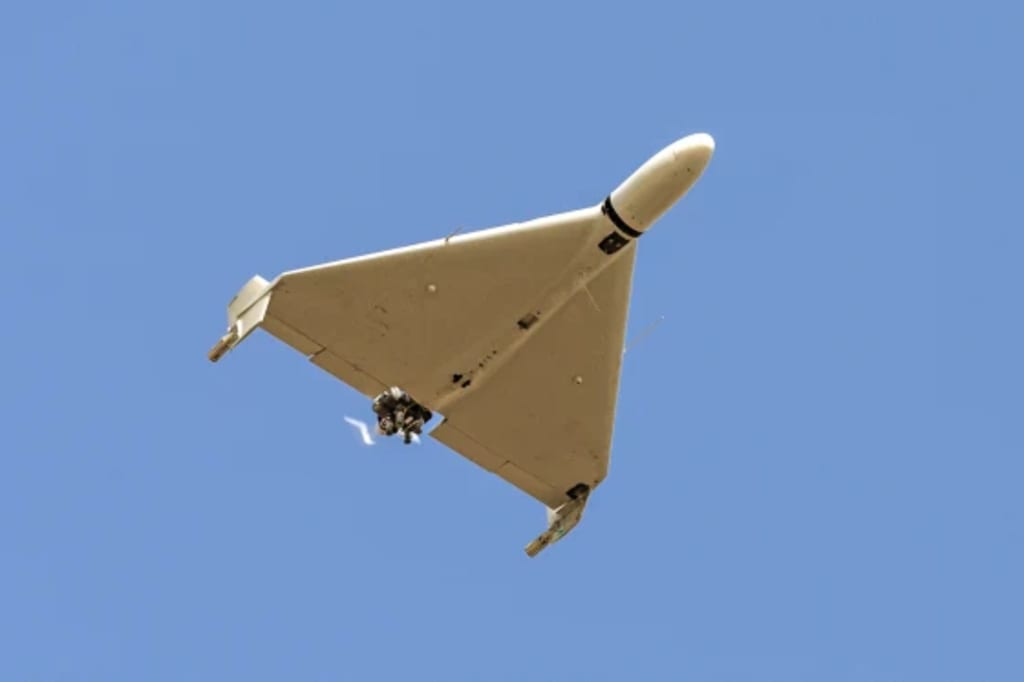
Suddenly I heard a distinct buzzing sound. Thank God. Our Drones have arrived, I thought to myself. I looked in the sky and saw a small device of some sort glide down the side of the mountain, mere feet above the canopy. It flew over one of the Merkavas down the road from me and detonated. There was such a large cluster of men behind the tank that I could not tell the number of men who had been left limp on the ground, torn apart, or wounded from the blast.
The buzzing did not stop, and I realized I was in hell. I thought of Brooklyn. I thought of how I never believed in the holy land. I just wanted something greater, a greater purpose. In all truth, I wanted to conquer. I wanted to win battles and live like some, I don’t know, warrior. I wanted to subjugate the weak and revel in domination. I missed the West Bank and Gaza. Despite being just one of many foot soldiers, I liked to imagine myself as Alexander.
I confessed these things to myself because the buzzing of the explosive devices became all encompassing. And now, I hear nothing. It’s like my ears are full of cotton. I feel a coolness spreading across my legs. I tore what was left of my vest off and saw several lacerations where the device's shrapnel hit me. I turn my head to the right.
Pine trees
There were no pine trees in New York
About the Creator
Stanley Davis
Blood Adderall Rats Rent Tents
Enjoyed the story? Support the Creator.
Subscribe for free to receive all their stories in your feed. You could also become a paid subscriber, letting them know you appreciate their work.
Comments
There are no comments for this story
Be the first to respond and start the conversation.