
FAQ: Remote Work in 2026 — All Answers Inside
Your Complete Guide to Remote Jobs, Work-From-Home Productivity, Digital Careers, and the Future of Flexible Work

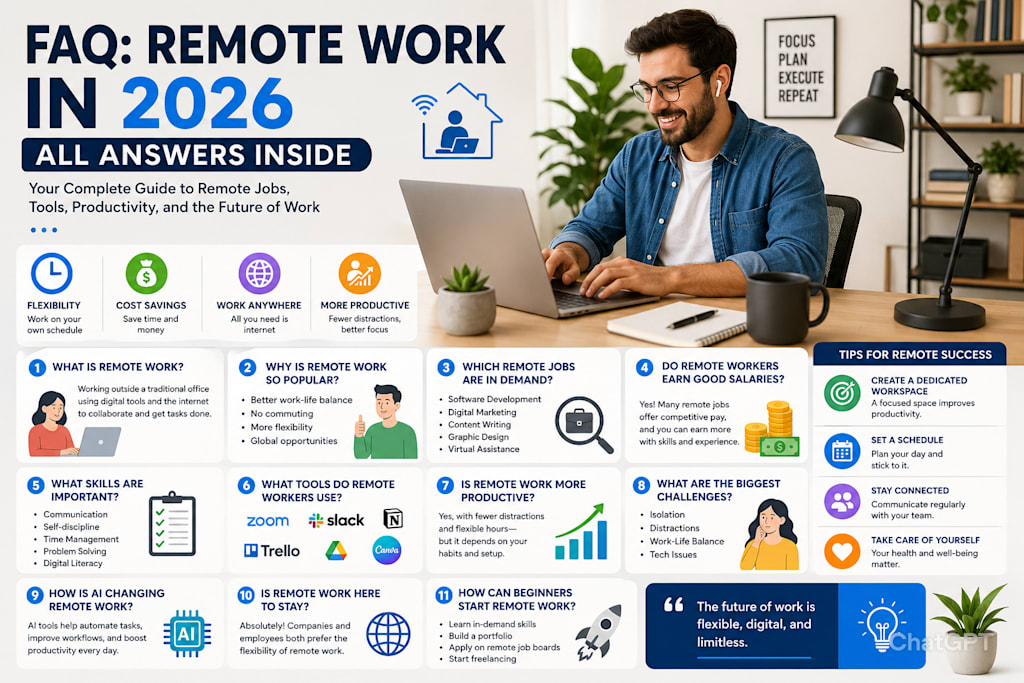
Everything You Need to Know About Remote Jobs, Work-From-Home Careers, Productivity, and the Future of Digital Work
Remote work is no longer just a temporary trend—it has become a major part of the modern global workforce. By 2026, companies around the world are continuing to adopt flexible work models, while millions of professionals are choosing remote careers for better work-life balance, freedom, and income opportunities.
However, many people still have questions about how remote work actually functions in today’s fast-changing digital environment. From productivity concerns and remote job opportunities to AI tools and work-from-home setups, the remote work landscape continues to evolve rapidly.
This FAQ-style guide answers the most important questions people are asking about remote work in 2026.
1. What Is Remote Work?
Remote work refers to a job arrangement where employees or freelancers work outside a traditional office environment. Instead of commuting daily to an office, people can work from:
- Home
- Co-working spaces
- Cafés
- Different cities or countries
Most remote jobs rely heavily on:
- Internet communication
- Video meetings
- Cloud collaboration tools
- Digital project management systems
Remote work allows professionals to complete tasks online while staying connected with teams virtually.
2. Why Is Remote Work So Popular in 2026?
Remote work has become popular because it offers flexibility and convenience for both employees and companies.
Benefits for Workers:
- No daily commuting
- Better work-life balance
- More flexibility
- Ability to work from anywhere
- Reduced transportation costs
- Benefits for Companies:
- Lower office expenses
- Access to global talent
- Increased employee satisfaction
- Flexible hiring options
Technology improvements and high-speed internet have made remote collaboration easier than ever.
3. Which Remote Jobs Are Most In Demand?
Several industries are actively hiring remote workers in 2026.
Popular Remote Careers:
- Software development
- Graphic design
- Digital marketing
- Content writing
- Video editing
- Virtual assistance
- Customer support
- Data analysis
- Cybersecurity
- AI-related jobs
Freelancing platforms and remote job websites continue to grow as businesses increasingly hire global talent.
4. Do Remote Workers Earn Good Salaries?
Yes, many remote professionals earn highly competitive salaries.
In fact, some remote workers earn more than traditional office employees because they can:
- Work with international clients
- Take multiple freelance projects
- Reduce commuting and living costs
Highly skilled remote professionals in tech, design, marketing, and consulting often command premium rates.
However, income depends on:
- Skill level
- Experience
- Industry demand
- Location-independent opportunities
5. What Skills Are Important for Remote Work?
Remote work requires more than technical expertise.
Successful remote professionals usually have:
- Self-discipline
- Communication skills
- Time management
- Problem-solving abilities
- Digital literacy
Because managers cannot physically supervise remote workers constantly, independence and accountability are extremely important.
6. What Tools Do Remote Workers Use?
Modern remote work relies heavily on digital productivity tools.
Popular tools include:
- Zoom for meetings
- Slack for messaging
- Notion for organization
- Trello for workflows
- Google Drive for file sharing
AI-powered tools are also becoming increasingly common in remote work environments.
7. Is Remote Work More Productive?
Research on productivity varies, but many remote workers report increased efficiency.
Common reasons include:
- Fewer office distractions
- Flexible scheduling
- Personalized work environments
- Reduced commuting fatigue
However, productivity depends heavily on:
- Work habits
- Home setup
- Communication systems
- Time management skills
Without proper structure, remote work can also lead to procrastination or burnout.
8. What Are the Biggest Challenges of Remote Work?
While remote work offers many advantages, it also comes with challenges.
Common Problems:
- Loneliness and isolation
- Difficulty separating work from personal life
- Communication misunderstandings
- Internet or technical issues
- Distractions at home
Many remote workers now create dedicated workspaces and routines to maintain balance and focus.
9. How Is AI Changing Remote Work?
Artificial intelligence is dramatically transforming remote work in 2026.
AI tools now help with:
- Writing emails
- Scheduling meetings
- Data analysis
- Content creation
- Customer support
- Automation
Platforms like ChatGPT and other AI assistants are helping remote workers complete tasks faster and more efficiently.
Rather than replacing most workers entirely, AI is mainly enhancing productivity and automation.
10. Can Remote Work Improve Work-Life Balance?
For many people, yes. Remote work can create more time for:
- Family
- Health
- Hobbies
- Personal growth
Eliminating daily commuting alone can save hours every week. However, balance only happens when workers establish clear boundaries between work and personal life. Without boundaries, some remote workers actually end up working longer hours.
11. Is Remote Work Here to Stay?
Most experts believe remote work will remain a permanent part of the global workforce.
Many companies are now adopting:
- Fully remote models
- Hybrid work systems
- Flexible schedules
Employees increasingly prioritize flexibility when choosing jobs. As technology continues improving, remote work opportunities will likely continue expanding worldwide.
12. How Can Beginners Start Working Remotely?
Starting a remote career usually begins with developing valuable digital skills.
Good Starting Steps:
- Learn in-demand skills online
- Build a portfolio
- Create a professional resume
- Apply on remote job platforms
- Start freelancing for experience
Consistency and continuous learning are essential.
Many successful remote workers began with small freelance projects before transitioning into full-time remote careers.
The Future of Remote Work
Remote work in 2026 is no longer viewed as unusual. It has become a major shift in how society approaches employment, productivity, and career growth.
Several trends are shaping the future:
- AI integration
- Global hiring
- Flexible work schedules
- Virtual collaboration tools
- Digital nomad lifestyles
Companies are increasingly focused on results rather than physical office presence.
Final Thoughts
Remote work has transformed modern careers and created opportunities that were almost unimaginable a decade ago. While it comes with challenges, it also provides freedom, flexibility, and access to global opportunities.
Whether you are considering freelancing, applying for remote jobs, or building an online business, understanding how remote work functions in 2026 can help you prepare for the future.
The workplace is evolving rapidly—and remote work is no longer just an alternative.
For millions of people around the world, it has become the new normal.
About the Creator
Robert Redford
i create powerful, easy-to-read articles on everything from history and world events to technology, lifestyle, and thought-provoking ideas. If sparks curiosity, I write about it. Always exploring, always delivering something worth reading.
Enjoyed the story? Support the Creator.
Subscribe for free to receive all their stories in your feed.
Comments
There are no comments for this story
Be the first to respond and start the conversation.