
Crunching numbers to turn us all into police informants
Miami lice sucking away our civil liberties: PART TWO

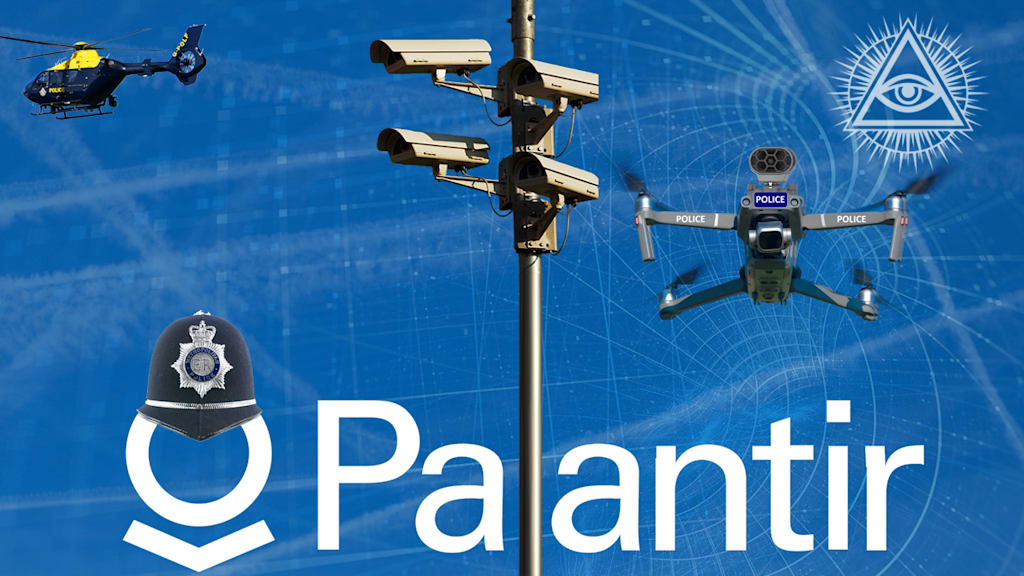
In the first part of this investigation into the “Miami lice sucking away our civil liberties” I suggested the United Kingdom’s Ministry of Defence (MoD) was probably fairly satisfied with its relationship with Palantir, the National Health Service (NHS) less so – although still committed to a seven-year deal signed in 2023 – while British police authorities seemed to have some serious misgivings about the tech giant, however I harbour sneaky suspicions it’s just rhetoric to placate a fragile public perception of the surveillance monster.
Back in June last year The I Paper reported the Home Office had teamed up with Palantir to utilise its AI-powered Foundry data platform as part of Project Nectar, a pilot programme initially focusing on the East Midlands Special Operations Unit (EMSOU) and the Eastern Region Serious Organised Crime Unit (ERSOU).
The pilot would provide police teams, initially focusing on Bedfordshire Police, with a single unified view of data collated from multiple sources allowing them to assess how this type of technology could support and enhance operational policing.
The data could be used to automate time-consuming manual processes, utilise AI to support key actions such as data summarisation and language translation, and support faster response times, more effective investigations and more efficient resource allocation.
However, an internal police memo obtained by The I Paper and Liberty Investigates confirmed an intention to apply the Nectar system “nationally” to generate detailed profiles of suspects, as well as provide information on victims of crime, witnesses and vulnerable individuals, including children, drawing on data such as race, sex life, health and political beliefs.
The memo, which deals with data-protection issues related to Nectar and Bedfordshire Police, outlines the desire of senior officers to roll the software out nationally. “The primary goal is to help Bedfordshire... as well as the Eastern Region Serious Organised Crime Unit… and eventually apply nationally,” the report said. “This will develop tools to better protect vulnerable people by preventing, detecting and investigating crime.”
ERSOU, created in 2010, operates across seven police forces including Bedfordshire, Cambridgeshire, Essex, Hertfordshire, Kent, Norfolk and Suffolk. Already in use by the Bedfordshire force, the document suggested a similar application was being developed for Leicestershire Police that could be used to target “persons suspected of having committed or being about to commit a criminal offence”. However the ability of the technology to access vast amounts of police data, including sensitive personal information, has alarmed campaigners and senior MPs.
A Home Office source, quoted by The I Paper, confirmed the “experience” gathered by forces using the Nectar pilot would be used to assess the effectiveness of the system in comparison to “potential alternatives” but claimed no decision had been made to deploy the Palantir system nationally.
According to the memo Nectar would “be used to access” 11 different types of “special category information” held on an unspecified number of individuals, including information on race, political opinions, sex life, religion, philosophical beliefs, trade union membership and health, with as many as 80 different data sources – from traffic cameras to intelligence files – available to be processed by the software.
“We live in an age where vast amounts of information are available about almost everybody,” the report quotes a police source as saying. “One of the big problems we face is dealing with that body of information in a way that is both lawful and allows us to detect and prevent crime. This is not about indiscriminate snooping – access to this sort of data is really carefully controlled. But at the same time we have to be equipped to do the job the public rightly expects us to.”
The data protection assessment from Bedfordshire Police, which has paid Palantir £1.4 million for its services over the last two years, describes Nectar as offering users “a single source of truth” but senior MPs and privacy campaigners have expressed concerns over its far-reaching implications that allow police to sift through vast amounts of data about individuals and the way in which that information is used and safeguarded.
Former Conservative shadow home secretary David Davis told The I Paper: “There is a real problem with technology being applied to policing without the necessary statutory underpinning and police simply appropriating the powers they want. There are lots and lots of reasons to be concerned by this software and it should be scrutinised by Parliament.”
David Nolan, an expert in algorithmic surveillance at Amnesty International, said: “The establishment and provision of data-driven law enforcement raises severe human rights concerns. The development of a ‘real-time data-sharing network’ across UK law-enforcement agencies... violates people’s right to privacy and establishes a system of indiscriminate mass surveillance.”
The internal memo notes “there may be scepticism or resistance from the public regarding data sharing and privacy concerns” with any breaches of security having the potential to cause significant consequences. However, senior officers stress they are in a technological race with criminals who have already proved adept at harnessing digital tools to commit offences from online fraud to grooming or blackmail.
Palantir, which has built Nectar around its own Foundry software, said it wanted to emphasise the system did not provide any information not already held by police. A company spokesperson said: “It simply organises that data in a way that enables faster, better decision-making.”
According to a Liberty Investigates report from 16 June this year the project has raised alarm from campaigners who fear it will trample over the public’s human rights and “facilitate dystopian predictive policing” and indiscriminate mass surveillance.
Liberty Investigates says a number of police forces, citing risks to law enforcement and national security, had refused to confirm or deny using the software but it suggested more than a dozen forces would be involved ahead of a potential national rollout of the tech giant’s data-mining technology, which it suggests is being used by US law-enforcement agencies to predict future crimes.
Palantir has had several disagreements with law enforcement agencies overseas and in 2017 was involved in a dispute with the New York Police Department over the transfer of data after its contract had ended, while the following year the City of New Orleans cut short its relationship with Palantir after revelations it had been operating a secret “predictive policing” programme. In 2023 police forces in two German states had to review their work with Palantir after a court found data-processing rules relating to some uses of the firm’s software were unconstitutional.
Nolan, a senior investigative researcher in algorithmic accountability at Amnesty, said: “The establishment and provision of data-driven law enforcement and predictive policing technologies by companies such as Palantir... raises severe human rights concerns, particularly given such companies have a history of blatant contempt for human rights.”
In recent years Palantir has drawn severe criticism for providing software to the Israel Defense Forces and for supporting US Immigration and Customs Enforcement deportations, but has been rapidly expanding its presence in the UK’s public services through contracts with agencies such as the Cabinet Office, the Royal Navy and the Ministry of Housing, Communities and Local Government.
But earlier this month five police forces in England announced they would be ending their controversial participation in the pilot programme. The forces – Leicestershire, Derbyshire, Lincolnshire, Northamptonshire and Nottinghamshire – were part of a two-year pilot run by EMSOU and are among 12 of the 43 police forces in England and Wales reported to have been using the Palantir “real-time data-sharing” tool.
According to a report published on 19 September by Liberty Investigates: “To date Palantir has run Project Nectar pilots in 12 forces in England and Wales, according to a Financial Times report this month. Seven forces in the east of England have also been using Project Nectar under a separate ‘rolling pilot’ led by Bedfordshire Police, which has spent £3.6 million on the project, according to procurement analysts Tussell.”
The report said Lancashire Police had also concluded a pilot project with Palantir and had a second contract in place that would “not be extended once that work is completed”.
And, according to a Computer Weekly report on 13 August this year, at least six police forces had “contracts with Palantir worth £7.8 million”. The joint investigation by Computer Weekly and Good Law Project revealed six forces had used Palantir’s data analytics software, while several others were believed to have access through regional taskforces that process large volumes of personal data from crime records, seized digital devices and other unknown sources.
But, according to a Financial Times report on 21 September, EMSOU has said it will end its pilot programme with Palantir this month with no plans to take the project further. Ian Green, EMSOU assistant chief constable, said the pilot had been trialling Palantir’s Foundry software to serve the public interest while upholding “the highest standards of accountability and ethics”.
“Following the scoping work and assessment of what it would deliver, including our future funding streams, we have taken the decision to not take this project further,” Green said, without explaining the decision to opt out but emphasising Home Office funding for the programme had been discontinued.
The Financial Times reported that figures from Tussell, the public procurement information provider, showed many of Palantir’s pilot programmes were offered for low or no cost, often just below levels that require competitive tenders, with critics claiming the pilots opened the way for Palantir to win more valuable follow-on work.
The newspaper said London’s Metropolitan Police had been engaged in a pilot programme with Palantir, seeking to use its systems to identify misconduct by officers. And, while it wanted to sign a wider contract worth up to £50 million over two years the Mayor’s Office for Policing and Crime had blocked the award, criticising the lack of a competitive procurement process and questioning whether the deal represented value for money. Palantir is seeking a judicial review of the decision.
And although the pilot with EMSOU is coming to an end Police Professional, a monthly journal for UK law enforcement, reported this week that the ERSOU contract is ongoing, meaning Palantir’s work with regional policing operations will continue.
So, although police authorities clearly have some misgivings about Palantir, I would argue they probably stem more from cost issues and public perception of the tech giant rather than the service it provides, fuelling a suspicion that severing ties with EMSOU is just part of the rhetoric to relieve growing public pressure while pushing ahead with the implementation of Palantir’s Foundry software.
However, the move suggests the Home Office and Palantir realise they have a tricky public relations crisis developing that needs careful management, which leads this investigation into PART THREE and a wider look at the company’s role in the UK’s public sector infrastructure.
About the Creator
Steve Harrison
From Covid to Gaza and Ukraine... nothing is as it seems in the world. Don't just accept the mainstream brainwashing, open your eyes to the bigger picture at the heart of these globalist agendas.
JOIN THE DOTS: https://not.wildaboutit.com
Enjoyed the story? Support the Creator.
Subscribe for free to receive all their stories in your feed.
Comments
There are no comments for this story
Be the first to respond and start the conversation.