
10 Myths About Investing Busted
Common Investing Mistakes Debunked: Smart Money Strategies for Building Long-Term Wealth and Financial Freedom

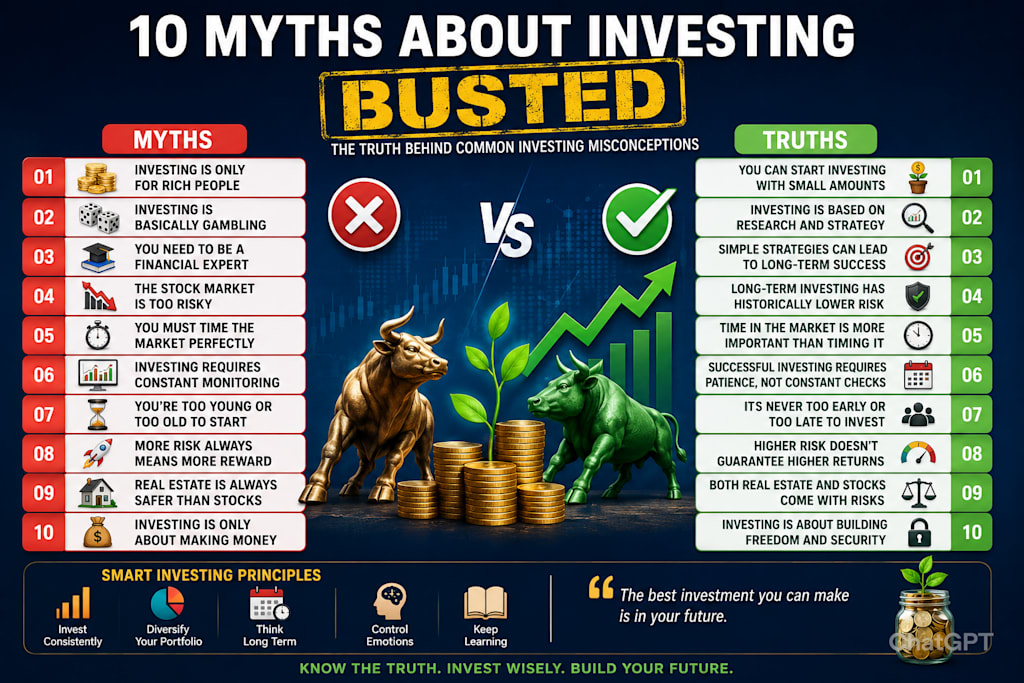
The Truth About Building Wealth, Managing Risk, and Making Smart Investment Decisions
Investing is one of the most powerful ways to build long-term wealth, achieve financial freedom, and secure your future. Yet despite the growing popularity of personal finance and investing, many people still avoid investing because of misinformation and outdated beliefs.
From fears about losing money to assumptions that investing is only for the wealthy, myths continue to prevent millions of people from taking control of their financial future.
The reality is that successful investing is often much simpler and more accessible than people think. Understanding the truth behind common investing myths can help individuals make smarter decisions and grow their wealth with confidence.
Here are ten of the most common myths about investing—and the truth behind them.
Myth #1: Investing Is Only for Rich People
One of the biggest misconceptions about investing is that you need thousands of dollars to get started.
In reality, modern investing platforms allow people to begin with very small amounts of money. Many apps now offer fractional investing, meaning you can buy portions of stocks instead of entire shares.
Even investing small amounts consistently can grow significantly over time thanks to compound growth.
The Truth:
You don’t need to be wealthy to invest. You build wealth by investing consistently over time.
Myth #2: Investing Is Basically Gambling
Many people compare investing to gambling because both involve risk. However, gambling relies mostly on chance, while investing is based on ownership, research, economic growth, and long-term strategy.
When you invest in strong companies, index funds, or real estate, you are purchasing assets that can grow in value over time.
The Truth:
Smart investing is calculated and strategic—not random luck.
Myth #3: You Need to Be a Financial Expert
Another common myth is that only economists, analysts, or finance professionals can invest successfully.
While financial knowledge helps, many beginner investors achieve success by following simple strategies such as:
- Investing consistently
- Diversifying portfolios
- Holding investments long term
Many successful investors use low-cost index funds rather than trying to predict the market daily.
The Truth:
You don’t need a finance degree to become a successful investor.
Myth #4: The Stock Market Is Too Risky
People often focus on market crashes and short-term volatility, which creates fear around investing. While markets do fluctuate, history shows that long-term investors have generally benefited from economic growth over decades.
The real risk is often not investing at all and allowing inflation to reduce the value of your savings.
The Truth:
Long-term investing is historically less risky than keeping all your money idle.
Myth #5: You Must Time the Market Perfectly
Many beginners believe they must buy stocks at the perfect moment and sell before markets decline.
Even professional investors struggle to consistently predict market movements.
Research repeatedly shows that staying invested long term often outperforms trying to time the market.
The Truth:
Time in the market is usually more important than timing the market.
Myth #6: Investing Requires Constant Monitoring
Some people think investing means staring at stock charts all day. In reality, long-term investors often check their portfolios only occasionally. Modern investing strategies emphasize patience rather than constant trading.
Excessive monitoring can actually lead to emotional decisions and unnecessary stress.
The Truth:
Successful investing often requires discipline and patience—not constant activity.
Myth #7: You’re Too Young or Too Old to Start
Age is one of the most common excuses people use to delay investing. Young people often think they have plenty of time, while older individuals believe it’s too late.
The best time to start investing is simply as early as possible—but starting later is still far better than never starting at all.
The Truth:
It’s rarely too early or too late to begin investing wisely.
Myth #8: More Risk Always Means More Reward
While higher-risk investments can offer higher returns, risk does not guarantee success. Many investors lose money chasing high-risk opportunities without understanding them properly. Balanced investing strategies often provide more stable long-term growth.
The Truth:
Smart risk management matters more than taking extreme risks.
Myth #9: Real Estate Is Always Safer Than Stocks
Real estate is often viewed as completely safe compared to the stock market. However, real estate also carries risks:
- Market downturns
- Maintenance costs
- Vacancy issues
- Economic changes
Both stocks and real estate have advantages and disadvantages.
The Truth:
No investment is completely risk-free.
Diversification is usually more important than choosing one asset class over another.
Myth #10: Investing Is Only About Making Money
While financial growth is important, investing is also about:
- Financial independence
- Future security
- Retirement planning
- Protecting purchasing power
Investing allows people to create opportunities and reduce financial stress over time.
The Truth:
Investing is about building freedom and long-term stability—not just profits.
Why These Myths Continue to Exist
Many investing myths survive because of:
- Fear of losing money
- Lack of financial education
- Social media misinformation
- Sensational news headlines
Negative stories spread faster than balanced financial advice.
As a result, many people remain hesitant to invest even when it could significantly improve their future.
The Importance of Financial Education
Financial literacy has become more important than ever.
Understanding concepts like:
- Compound interest
- Diversification
- Inflation
- Risk management
- Long-term investing
can dramatically improve financial decision-making.
People who educate themselves financially are often better prepared for:
- Economic uncertainty
- Retirement
- Emergencies
- Wealth building
Simple Investing Principles That Actually Work
Despite the complexity often associated with investing, many successful investors follow simple principles:
Invest Consistently
Regular investing matters more than investing huge amounts occasionally.
Diversify
Avoid putting all your money into one investment.
Think Long Term
Wealth usually grows slowly over time—not overnight.
Control Emotions
Fear and greed often lead to poor decisions.
Keep Learning
Financial markets evolve constantly.
Final Thoughts
Investing can seem intimidating at first, especially when myths and misinformation create unnecessary fear. But once these misconceptions are removed, investing becomes much more approachable.
You don’t need to be rich, perfect, or an expert to start building wealth. What matters most is starting early, staying consistent, and thinking long term. The biggest mistake many people make isn’t choosing the wrong investment. It’s never investing at all.
By understanding the truth behind these common myths, you can make smarter financial decisions and take meaningful steps toward a stronger financial future.
About the Creator
Robert Redford
i create powerful, easy-to-read articles on everything from history and world events to technology, lifestyle, and thought-provoking ideas. If sparks curiosity, I write about it. Always exploring, always delivering something worth reading.
Enjoyed the story? Support the Creator.
Subscribe for free to receive all their stories in your feed.
Comments
There are no comments for this story
Be the first to respond and start the conversation.