smart contract
Smart contracts, or cryptocontracts, are like automated lawyers for blockchain transactions; these computerized programs ensure both parties meet their end of the deal.
NFT Marketplace Development - An Ultimate Guide To Lead The Crypto Market
NFTs (Non-Fungible Tokens) have become a hot topic in the world of cryptocurrency and blockchain technology. NFTs are unique digital assets that are stored on a blockchain and can represent a wide range of things such as digital art, music, videos, games, collectibles, and more.
By Angelika Candie3 years ago in The Chain
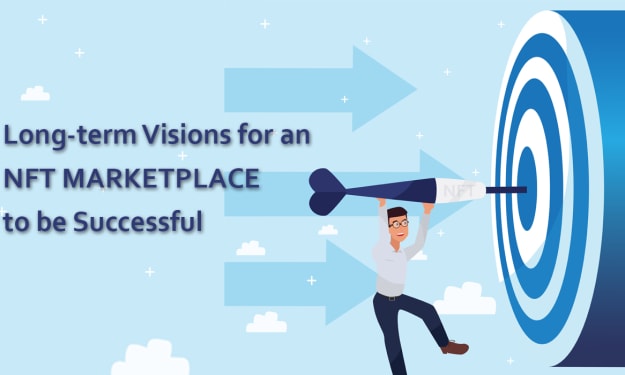
Long-term Visions Your NFT Marketplace Should Have and Ways to Achieve It!
Introduction NFTs or Non-Fungible Tokens have been creating a buzz in the crypto world for quite some time now. These digital assets built on blockchain technology, have brought a revolution in the way we look at ownership and value. NFT marketplaces have sprung up in large numbers, giving creators and buyers a platform to trade and showcase their work. However, like any other business, NFT marketplaces need to have a long-term vision to sustain in the market.
By scottmacyy3 years ago in The Chain
Top Cryptocurrency to Invest in 2023: A Comprehensive Guide for Startups
If you're a startup or entrepreneur looking to invest in cryptocurrency, you may be wondering what the best option is for 2023. With so many different cryptocurrencies available, it can be difficult to know which one to choose. In this guide, we'll take a closer look at the top cryptocurrency to invest in for 2023, as well as the benefits and features of crypto exchanges. While exchanging cryptos, crypto exchanges act as a middleman between buyers and sellers. The majority of revenue is generated by users. Bitcoin exchanges are making billions of dollars in profit owing to these users.
By AdeleneJennifer3 years ago in The Chain
THE ROLE OF BLOCKCHAIN TECHNOLOGY IN SUPPLY CHAIN MANAGEMENT
From the clothes we wear to the food we eat, every product we consume has a journey that begins from raw materials and ends at our doorstep. In today's interconnected world, supply chains have become incredibly complex, involving multiple parties and spanning across continents. Ensuring the authenticity, safety, and quality of products is paramount, but with so many players involved, it can be challenging to maintain visibility and trust across the entire supply chain. That's where blockchain technology comes in, offering a promising solution to address these challenges by providing an immutable, decentralized, and transparent ledger for tracking and verifying transactions. In this article, we'll explore how blockchain technology is revolutionizing supply chain management, bringing greater traceability, transparency, and efficiency to global trade.Supply chain management is the process of overseeing and coordinating the flow of goods and services from the manufacturer to the end consumer. upply chains are complex and involve multiple stakeholders, including suppliers, manufacturers, distributors, and retailers, who must work together to ensure that goods and services are delivered to the end customer in a timely and cost-effective manner. Traditionally, supply chains have been managed using a centralized, top-down approach, with little transparency or accountability. This has resulted in a number of challenges, including inefficiencies, lack of visibility, and increased costs. However, blockchain technology has the potential to completely transform the way that supply chains are managed, by providing a more transparent, secure, and efficient system for managing the flow of goods and services. One of the key advantages of blockchain technology in supply chain management is that it provides a decentralized, transparent, and secure ledger of all transactions and interactions within the supply chain. This means that all stakeholders can access real-time information about the flow of goods and services, and can easily track the progress of each shipment from the manufacturer to the end customer. Additionally, all transactions are recorded on a public ledger, which means that there is a permanent and unalterable record of all interactions within the supply chain. Another advantage of blockchain technology in supply chain management is that it provides a secure and tamper-proof record of all transactions, which can help to prevent fraud and counterfeiting. For example, using blockchain technology, it is possible to track the origin of each item in the supply chain, from the raw materials to the end product. This means that it is possible to verify the authenticity of each item, and to ensure that it has been produced ethically and sustainably. Additionally, blockchain technology has the potential to streamline and automate many of the processes within the supply chain, which can result in significant cost savings and increased efficiency. For example, using smart contracts, it is possible to automate the process of payment and settlement, which can eliminate the need for intermediaries and reduce the risk of fraud and errors. Despite the many advantages of blockchain technology in supply chain management, there are also some challenges that need to be addressed. One of the biggest challenges is the lack of standardization in the industry, which makes it difficult for different stakeholders to communicate and interact with each other effectively. Additionally, the technical complexity of blockchain technology means that it can be difficult for some organizations to implement, especially if they have limited technical expertise. Another challenge is the need for a high level of collaboration and trust between all stakeholders in the supply chain, in order to ensure that the technology is adopted and used effectively. This requires significant investment in education and training, as well as the development of new processes and procedures to support the adoption of blockchain technology. In conclusion, blockchain technology has the potential to completely transform the way that supply chains are managed, by providing a more transparent, secure, and efficient system for managing the flow of goods and services. However, there are also significant challenges that need to be addressed, including the need for standardization, technical complexity, and a high level of collaboration and trust between all stakeholders. Nevertheless, the potential benefits of blockchain technology in supply chain management are too significant to ignore, and it is likely that we will see significant growth and adoption in this space over the next few years.
By Jemimah Essien3 years ago in The Chain
THE FUTURE OF DECENTRALIZED FINANCE (Defi)
Decentralized finance (DeFi) refers to a new financial ecosystem that operates on blockchain technology, without the need for intermediaries such as banks or financial institutions. This new financial landscape has emerged in response to the limitations and inefficiencies of the traditional financial system, and has the potential to completely disrupt the way we think about and use money.
By Jemimah Essien3 years ago in The Chain
Decentralized Cloud Computing: Advantages, Challenges, and Future Prospects
Cloud computing has been around for over a decade, and it has revolutionized the way businesses operate. The cloud has made it possible to store and process vast amounts of data, making it easier for organizations to access and analyze information. However, centralized cloud computing has its limitations. The centralization of data storage and processing poses a significant risk to data security and privacy. Additionally, the cost of maintaining centralized cloud infrastructure is high, and it is not always reliable. Decentralized cloud computing is a new paradigm that promises to address these challenges. In this article, we will explore the advantages, challenges, and future prospects of this emerging technology.
By TeckyBlock3 years ago in The Chain
Exploring the Advantages of Blockchain as a Service (BaaS)
Blockchain technology has revolutionized the way businesses operate by providing a secure and transparent platform for transactions. However, implementing and maintaining a blockchain infrastructure can be a costly and complicated process. This is where Blockchain as a Service (BaaS) comes in, offering a simplified solution for businesses to utilize blockchain technology without the need for extensive knowledge or resources.
By TeckyBlock3 years ago in The Chain
I Own an NFT and You Can't Have It" with a graphic of a locked safe
Non-fungible tokens (NFTs) have taken the digital world by storm, offering a new way to own and collect digital assets. But what happens when someone owns an NFT that they don't want to sell or share with anyone else? In this article, we'll explore the concept of NFT ownership and what it means to truly own a digital asset.
By HUMBALE STORY 3 years ago in The Chain
NFT Marketplace Clone Script: The Shortcut to Build a Thriving NFT Marketplace
As the world is moving towards digitization, NFT (Non-Fungible Token) marketplace development has emerged as a popular trend & it is one of the most well-known crypto communities. The NFT Marketplace platform enables the trade of items in the game such as avatars, characters, virtual 3D homes, and other intangible things. It has been built using several blockchain networks, including BSC, Solana, Polygon, and others. The NFT market doesn't have limitations to improve one particular merchandise. We are all prepared to go further into the reality-based virtual realm, despite it being beyond our capabilities and imagination.
By Akshara Singh3 years ago in The Chain