
One Sold Out at $499. The Other Cost $11,000. Both Were Doing the Same Job.
How Sam’s Club turned two very different winter coats into a price anchor, and why the real product may be your membership.
The 499-yuan down jacket sold out in stores. Four hundred grams of fill. The tag said so. Shoppers compared grams per yuan against Bosideng, Uniqlo, Fila. Sam's Club won by a factor of two or three. The jacket wasn't designed to be beautiful. It was designed to be a number you could check.
That was winter one.
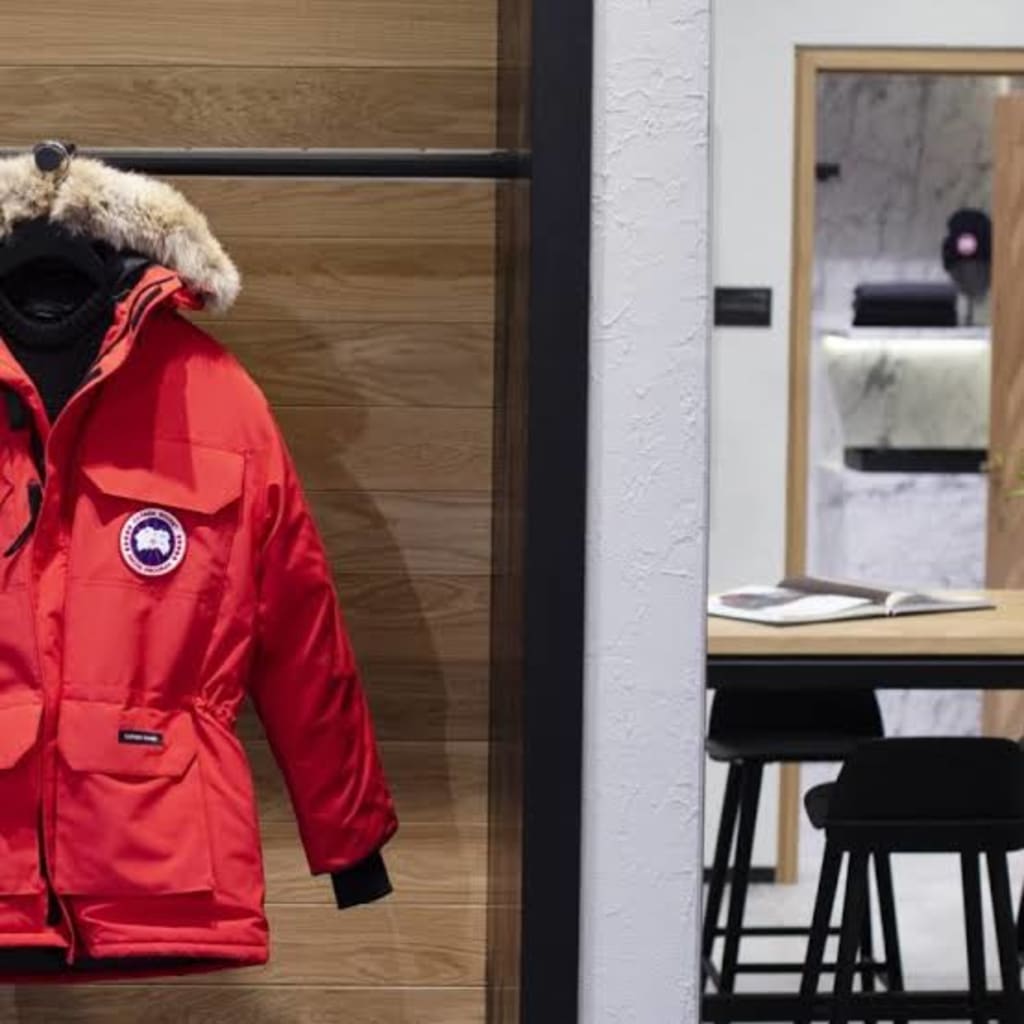
Winter two, the same club listed Canada Goose and Arc'teryx through its Global Buy channel. A women's parka at 10,999 yuan, same style on Tmall for 16,300. An Arc'teryx hardshell at 6,499, official store at 8,200. The items ship from bonded warehouses. They don't appear in stores. You can't try them on. Most don't allow seven-day returns.
The price gap has a plain explanation. Cross-border e-commerce imports get a provisional zero tariff and pay VAT and consumption tax at 70% of the statutory rate. Domestic agents, distributors, store operating costs—all cut out. The brand didn't lower its price. The channel did.
Sam's Club can sell a parka at 11,000 and a jacket at 499 because its profit doesn't come from either. In fiscal 2026, Sam's Club China's all-channel sales passed 140 billion yuan. More than 10.7 million paid members. At roughly 260 yuan a year for ordinary membership, fees alone bring in close to 3 billion yuan—almost equal to profit. Renewal rates: about 92% for Plus members, about 80% for ordinary.
The merchandise side doesn't need high gross margins. It needs members to renew.
Member's Mark does double duty: about 30% of SKUs, about 40% of sales, 56 billion yuan in 2025. Private label removes brand premiums and middle layers. Same quality, retail price at roughly 85% of a traditional brand, retailer keeps more margin. The weak spot is obvious. Shoppers can't easily judge a product with no outside reference. What should a box of Swiss rolls cost? Nobody knows.
Canada Goose and Arc'teryx give them a coordinate. A member who knows the roast chicken sees a parka listed at 16,000 selling for 11,000. The inference: Sam's Club's buying power is strong enough to beat high-end prices. That inference doesn't stay in outerwear. It moves to the Swiss rolls. The impression that Sam's Club sells Canada Goose cheaper than other channels becomes a default layer of trust.
Limited supply is part of the design. Global Buy high-end items are capped at one to several units per person. That controls the hook's supply. It keeps the channel from becoming an endless discount line. For the brand, it signals this is not an open price war. For members, it creates the push to buy now.
The risk in price anchoring is control. Nike is the cautionary tale. When distributors cut prices to move inventory, the same shoe shows wildly different prices across channels. Shoppers learn to wait. The full-price system loosens. Once price signals become messy, the money a brand puts into products and storytelling is hard to see at the register.
Sam's Club Global Buy keeps formal control. The goods don't go through stores. Volume stays limited. After-sales service doesn't match a boutique. At the time of reporting, Arc'teryx official had not confirmed an authorized partnership with Sam's Club. The brand's China region had neither publicly authorized nor priced this cross-border chain. Sam's Club is selling genuine goods through parallel import, not goods after an official price cut. The gap is real, but it sits outside the brand's own pricing system.
The arrangement is still fragile. Parallel import legality is not the same as brand authorization. Warranty gaps, missing returns, version or size differences—costs the shopper carries. The thousands saved come with the removal of the after-purchase backstop. Sam's Club can keep using this channel, but it cannot carry the same category width or volume as private label. It is a narrow traffic tool, not an unlimited discount engine.
The 499-yuan jacket used specs-to-price to show Sam's Club can make a basic functional product that embarrasses traditional brands. Canada Goose and Arc'teryx used the gap between brand price and Sam's Club price to show its supply chain can reach into high-end consumption. The first speaks to price-sensitive members who still care about quality. The second speaks to middle- and high-income members who know brands but still want a deal. Both carry the same subtext: at Sam's Club, the value question should not go against you.
Whether that story holds depends on two things. Sam's Club has to keep delivering convincing quality in Member's Mark so the trust created by the anchor has something to land on. The tension between parallel import channels and brand pricing systems also has to stay isolated rather than turn into open conflict. Down jackets are the first prop on stage. The work that matters happens after purchase and beyond the shelf.
The sellout wasn't purely organic. Store restocking was described as "small amounts, many times." Colors and sizes sold out as soon as they appeared, but restock volumes stayed small. Scarcity amplified social media chatter. The chatter reinforced the idea that the jacket was hard to get. The specs made the product competitive. The supply strategy made it louder.
That is the mechanism in full. A number you can check. A price gap you can verify. A limit that makes you move. The jacket itself is almost incidental. What Sam's Club is selling is the moment when a shopper stops trusting stories and starts reading tags.
About the Creator
Jin
Writer of reamstories
https://reamstories.com/jin
Enjoyed the story? Support the Creator.
Subscribe for free to receive all their stories in your feed. You could also become a paid subscriber, letting them know you appreciate their work.
Comments
There are no comments for this story
Be the first to respond and start the conversation.