
Global Fashion Accessories Market Set to Reach US$1.52 Trillion by 2033 as Personal Style, E-Commerce, and Luxury Trends Drive Demand
Rising Disposable Incomes, Digital Fashion Culture, and Omnichannel Retail Strategies Continue to Transform the Global Fashion Accessories Industry

Fashion has always been more than clothing. It is a reflection of identity, lifestyle, and personal expression. While apparel remains at the center of the fashion ecosystem, accessories have emerged as one of the most dynamic and profitable segments of the global retail landscape. From premium handbags and designer watches to stylish footwear and functional wallets, fashion accessories continue to shape purchasing decisions across all consumer groups.
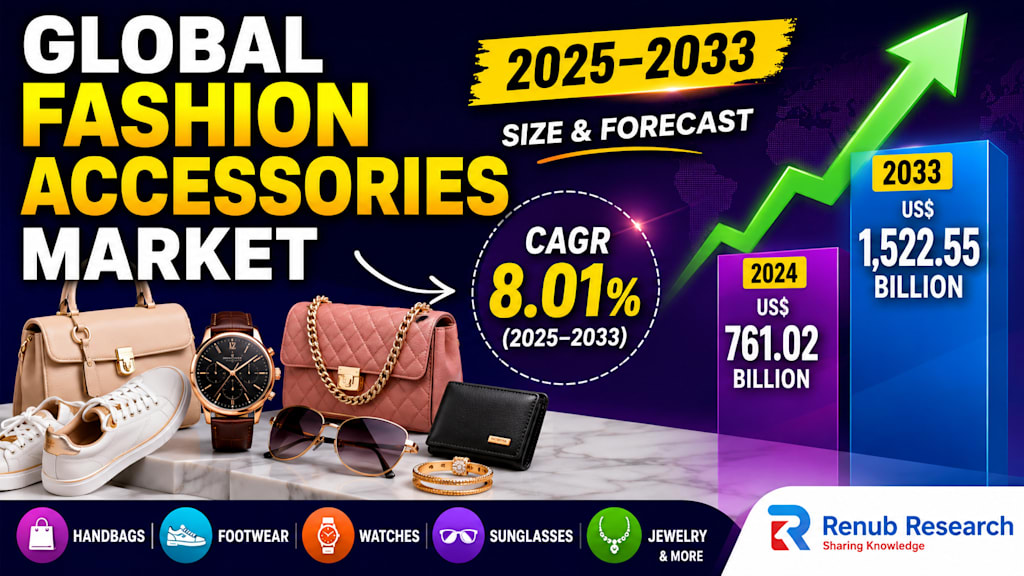
According to Renub Research, the Global Fashion Accessories Market is projected to expand from US$ 761.02 billion in 2024 to US$ 1,522.55 billion by 2033, registering a robust CAGR of 8.01% during 2025–2033. The market's impressive growth is supported by increasing disposable incomes, rapid urbanization, evolving fashion preferences, social media influence, and the continued rise of digital commerce worldwide.
As consumers increasingly seek individuality and convenience, fashion accessories have become essential purchases rather than optional style additions.
Understanding the Growing Importance of Fashion Accessories
Fashion accessories include a wide range of products designed to complement clothing and enhance personal appearance. Popular categories include handbags, wallets, footwear, watches, sunglasses, belts, scarves, jewelry, and hats.
Historically viewed as supplementary items, accessories have evolved into major fashion statements. Modern consumers frequently use accessories to personalize their outfits, express social status, and stay aligned with changing trends. Unlike purchasing an entirely new wardrobe, accessories provide an affordable and flexible way to refresh personal style.
The increasing popularity of influencer culture, celebrity endorsements, and global fashion exposure has significantly elevated the importance of accessories in consumers' everyday lives.
Market Growth Driven by Rising Disposable Income and Urbanization
One of the strongest drivers of the fashion accessories industry is the steady increase in disposable income across developing and developed economies.
As household earnings improve, consumers become more willing to spend on discretionary products that enhance lifestyle and self-image. Emerging economies across Asia-Pacific, Latin America, and the Middle East are witnessing substantial growth in middle-class populations, creating new opportunities for fashion brands.
Urbanization further amplifies this trend. Consumers living in metropolitan areas are more exposed to fashion trends, luxury brands, social media content, and modern retail environments. This exposure increases demand for premium and fashionable accessories that reflect contemporary lifestyles.
The combination of higher purchasing power and growing fashion consciousness continues to support long-term market expansion globally.
Social Media Has Redefined Fashion Consumption
The rise of social media platforms has fundamentally changed how consumers discover and purchase fashion accessories.
Platforms such as Instagram, TikTok, Pinterest, and YouTube have become virtual fashion runways where influencers and celebrities showcase the latest styles. Accessories often become the centerpiece of viral fashion trends, driving immediate consumer demand.
Fashion brands increasingly collaborate with influencers, content creators, and celebrities to launch exclusive collections and limited-edition products. These partnerships generate excitement, increase visibility, and encourage impulse purchases among followers.
Consumers today can instantly purchase products featured in social media content, creating a seamless path from inspiration to transaction. This digital-first shopping behavior continues to accelerate global accessory sales.
E-Commerce and Omnichannel Retail Are Reshaping the Industry
The rapid evolution of e-commerce has dramatically expanded the accessibility of fashion accessories worldwide.
Online marketplaces and brand-owned websites allow consumers to browse thousands of products, compare prices, read reviews, and make purchases from virtually anywhere. Digital channels have removed geographical barriers, enabling brands to reach customers across international markets.
In addition to online shopping, companies are investing heavily in omnichannel strategies that combine physical stores with digital experiences. Virtual try-on technologies, personalized recommendations, AI-powered styling tools, and mobile shopping applications are enhancing customer engagement.
The success of these strategies is evident in recent industry developments. In February 2024, lifestyle apparel brand Dockers partnered with Ace Turtle to strengthen its retail presence in India while launching a dedicated e-commerce platform to support digital growth initiatives.
As online shopping continues to evolve, fashion accessory brands are leveraging technology to improve customer experiences and increase sales conversions.
Footwear Continues to Dominate Fashion Accessory Spending
Among product categories, footwear remains one of the largest and most influential segments of the global fashion accessories market.
Modern footwear is no longer purchased solely for comfort or utility. Sneakers, luxury shoes, boots, sandals, and athletic footwear have become powerful expressions of personality and fashion identity.
The global sneaker culture has transformed footwear into a multi-billion-dollar industry. Celebrity collaborations, limited-edition releases, and designer partnerships frequently generate high demand and long waiting lists among consumers.
Athleisure trends have also contributed significantly to footwear sales. As consumers increasingly prioritize comfort and versatility, sports-inspired footwear continues to gain popularity across both casual and professional environments.
Digital customization options further enhance consumer engagement, allowing buyers to personalize products according to individual preferences.
Watches Continue to Blend Fashion with Technology
The watches segment remains a critical contributor to the fashion accessories market.
Traditional watches continue to appeal to consumers seeking elegance, craftsmanship, and luxury. At the same time, smartwatches have created an entirely new category by combining fashion with advanced technological capabilities.
Consumers increasingly expect wearable products that offer both style and functionality. As a result, manufacturers are introducing hybrid designs that merge classic aesthetics with digital features.
Luxury watches remain particularly attractive in emerging markets where premium accessories often symbolize success and social status. Simultaneously, affordable smartwatches are expanding accessibility among younger demographics.
This combination of luxury heritage and technological innovation continues to support sustained growth within the watches segment.
Men's Fashion Accessories Experience Rapid Expansion
The men's fashion accessories market has witnessed remarkable growth over the past decade.
Changing perceptions of men's grooming and personal style have encouraged greater spending on products such as wallets, belts, watches, sunglasses, bags, and footwear. Today's male consumers are increasingly comfortable expressing individuality through fashion choices.
Social media, sports personalities, entertainment figures, and lifestyle influencers significantly impact purchasing decisions within this segment. Many consumers now view accessories as long-term investments that enhance professional and personal image.
Luxury brands have responded by introducing dedicated collections specifically designed to address the growing demand for men's fashion accessories.
Women Continue to Lead Global Fashion Accessory Demand
Women remain the largest consumer group within the global fashion accessories market.
Handbags, jewelry, scarves, watches, sunglasses, and footwear are essential components of women's fashion across cultures and regions. Frequent style updates, seasonal fashion trends, and special occasions contribute to recurring purchase behavior.
Brand loyalty, trend awareness, and emotional connections with fashion products play significant roles in driving consumer spending among women.
Social media platforms further accelerate demand by continuously introducing new styles and inspiring consumers to experiment with evolving fashion trends.
As a result, women's fashion accessories remain one of the most competitive and innovative segments within the broader industry.
Online Fashion Accessories Market Shows Exceptional Growth Potential
Online sales channels continue to capture an increasing share of fashion accessory purchases worldwide.
Consumers appreciate the convenience of browsing extensive product selections without visiting physical stores. Competitive pricing, customer reviews, flexible payment options, and fast shipping services have strengthened consumer confidence in online shopping.
Advanced technologies such as augmented reality and virtual fitting solutions are improving online shopping experiences by reducing uncertainty and increasing purchase satisfaction.
Social commerce is also gaining momentum as consumers increasingly purchase products directly through social media platforms.
Brands that successfully integrate digital innovation into their sales strategies are expected to achieve significant competitive advantages over the coming years.
Regional Market Analysis
United States
The United States remains one of the largest fashion accessories markets globally.
Strong consumer spending, established retail infrastructure, and a highly fashion-conscious population continue to support market growth. Major fashion hubs such as New York and Los Angeles play important roles in shaping domestic and international fashion trends.
Digital commerce is particularly influential within the U.S. market. Consumers actively engage with online shopping platforms, influencer content, and personalized marketing campaigns.
Fossil Group's introduction of the Gen 6 Hybrid smartwatch demonstrated the growing convergence of traditional watch design and smart technology within the American market.
Germany
Germany represents one of Europe's most stable and mature fashion accessories markets.
German consumers place strong emphasis on product quality, durability, functionality, and sustainability. Environmentally responsible fashion brands are increasingly attracting consumer attention, reflecting broader societal concerns regarding ethical consumption.
The country also benefits from widespread e-commerce adoption and strong retail networks that support both domestic and international brands.
India
India has emerged as one of the fastest-growing fashion accessories markets worldwide.
A large young population, increasing disposable incomes, expanding internet penetration, and growing fashion awareness continue to drive demand. Traditional and modern fashion influences coexist, creating unique opportunities for brands across multiple categories.
The expansion of e-commerce platforms has enabled consumers throughout urban and rural regions to access global fashion trends and international brands.
Saudi Arabia
Saudi Arabia is experiencing strong growth within the fashion accessories sector due to demographic shifts and economic diversification efforts.
Government initiatives under Vision 2030 have encouraged retail development and increased consumer participation in fashion-related spending. Rising female workforce participation and expanding luxury retail offerings are also contributing to market growth.
Premium handbags, watches, and luxury accessories remain highly desirable among consumers seeking status-oriented products.
Sustainability Becoming a Competitive Necessity
While growth prospects remain highly attractive, sustainability challenges continue to reshape industry strategies.
Consumers increasingly expect transparency regarding sourcing practices, labor conditions, environmental impact, and animal welfare standards. Brands that fail to address these concerns risk reputational damage and declining consumer trust.
Many companies are investing in recycled materials, ethical sourcing programs, circular fashion initiatives, and environmentally responsible manufacturing processes.
Although implementing sustainable practices often increases operational costs, it also presents opportunities to build stronger customer relationships and differentiate brands within a crowded marketplace.
10 Recent Developments Shaping the Fashion Accessories Industry
1. LVMH Strengthens Luxury Retail Expansion
LVMH continues expanding its global luxury retail footprint while investing heavily in digital customer experiences and exclusive product launches.
2. Kering Advances Sustainable Fashion Initiatives
Kering has accelerated sustainability targets focused on reducing environmental impact across its fashion and accessory brands.
3. Prada Expands Circular Fashion Programs
Prada continues introducing eco-friendly materials and circular production models to meet growing sustainability expectations.
4. Chanel Enhances Digital Customer Engagement
Chanel has expanded digital marketing and personalized luxury shopping experiences across multiple international markets.
5. Fossil Group Accelerates Smartwatch Innovation
Fossil continues enhancing wearable technology offerings through hybrid and connected watch collections.
6. Tapestry Invests in AI-Driven Retail Solutions
Tapestry has increased investments in artificial intelligence to improve customer personalization and inventory management.
7. Inditex Strengthens Omnichannel Capabilities
Inditex continues integrating physical and digital retail channels to create seamless shopping experiences.
8. Luxottica Expands Premium Eyewear Collections
The eyewear giant has introduced new luxury collaborations and advanced lens technologies.
9. Giorgio Armani Focuses on Global Luxury Expansion
Armani continues expanding premium accessory collections across emerging luxury markets.
10. Dolce & Gabbana Increases Presence in Asia-Pacific
The luxury fashion house has expanded retail operations and exclusive accessory offerings throughout key Asian markets.
Competitive Landscape
Leading companies continue competing through innovation, luxury positioning, sustainability initiatives, celebrity partnerships, and digital transformation strategies.
Major industry participants include:
Giorgio Armani S.p.A.
Luxottica Group SpA
LVMH Moët Hennessy Louis Vuitton
Inditex S.A.
Dolce & Gabbana
Kering Group
Tapestry Inc.
Fossil Group Inc.
Chanel SA
Prada SpA
These companies are investing aggressively in product innovation, digital commerce capabilities, and sustainable business models to strengthen their market positions.
Final Thoughts
The global fashion accessories market is entering a transformative growth phase driven by evolving consumer lifestyles, increasing purchasing power, digital commerce expansion, and growing fashion consciousness. As accessories become central to personal identity and style expression, demand is expected to remain strong across all major regions.
With the market projected to reach US$1.52 trillion by 2033, brands that successfully combine innovation, sustainability, personalization, and omnichannel retail excellence will be best positioned to capitalize on future opportunities. As fashion continues to evolve beyond clothing, accessories are increasingly becoming the defining elements of modern style, making this one of the most exciting and resilient segments within the global consumer goods industry.
About the Creator
Enjoyed the story? Support the Creator.
Subscribe for free to receive all their stories in your feed.
Comments
There are no comments for this story
Be the first to respond and start the conversation.