
Choosing a Front Door: 8 Expert Tips for Style, Security and Lasting Appeal
Expert advice on choosing the right style, material, glass and finishing details to create a front entrance that complements your home and stands the test of time.

Your front door has an outsized influence on how your home looks and feels. It establishes the first impression from the street, contributes to security and energy efficiency, and creates the transition between the exterior architecture and the rooms within.
That makes choosing a front door about considerably more than finding a style or color you like. Proportion, materials, glazing, hardware, exposure to the weather and the architectural character of the house should all influence the decision.
Louis Jammer IV, Vice President of Jammer Doors, says homeowners should approach a front door as both a design feature and a working component of the home. A successful choice needs to look appropriate to the property while standing up to everyday use, weather exposure and the performance requirements of the entryway.
These eight front door ideas offer a useful starting point.
8 Inspiring Front Door Ideas
1. Choose a Dutch Door for Character and Flexibility
Few entrance styles have the immediate charm of a Dutch door. Divided horizontally so the upper and lower portions can operate separately, this style works particularly well with farmhouse, cottage, coastal and traditional architecture.
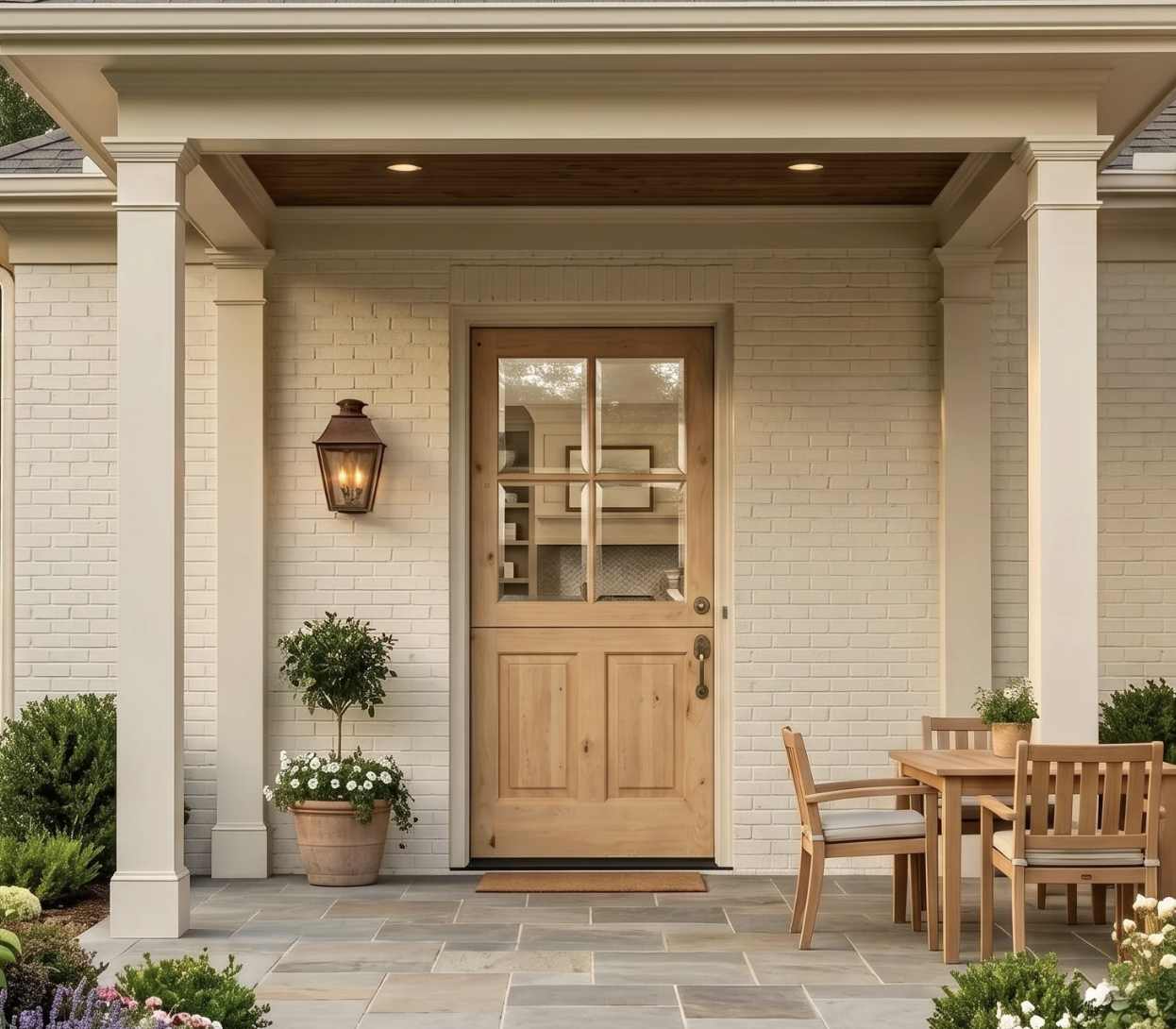
The practical advantages are just as appealing. Opening the upper portion can introduce daylight and ventilation while the bottom remains closed – useful in households with children or pets.
Before choosing one, however, consider weather exposure and sealing. Because the design incorporates an additional horizontal joint, quality construction and installation are particularly important.
For a protected porch or characterful cottage entrance, the result can be both functional and distinctive.
2. Keep Traditional Architecture Grounded With a Paneled Door
Classic paneled doors remain popular because their proportions complement so many established architectural styles.
Six-panel designs are particularly effective on Colonial, Federal and Georgian-inspired properties, where symmetry and orderly detailing are central to the architecture. Simpler four- or two-panel configurations can create a slightly more restrained appearance.
The surrounding architecture matters too. Sidelights, substantial casing and a transom can transform a relatively straightforward paneled door into a much more impressive entrance.
According to Jammer, the mistake is treating the door as a standalone purchase. Homeowners should consider the complete opening – door, frame, glass, hardware and surrounding architectural details – because these elements ultimately determine how successfully the entrance fits the house.
3. Introduce Glass to Connect Traditional and Contemporary Styles
A glazed front door is particularly useful when you want an entrance that feels lighter and more contemporary without abandoning traditional architecture altogether.
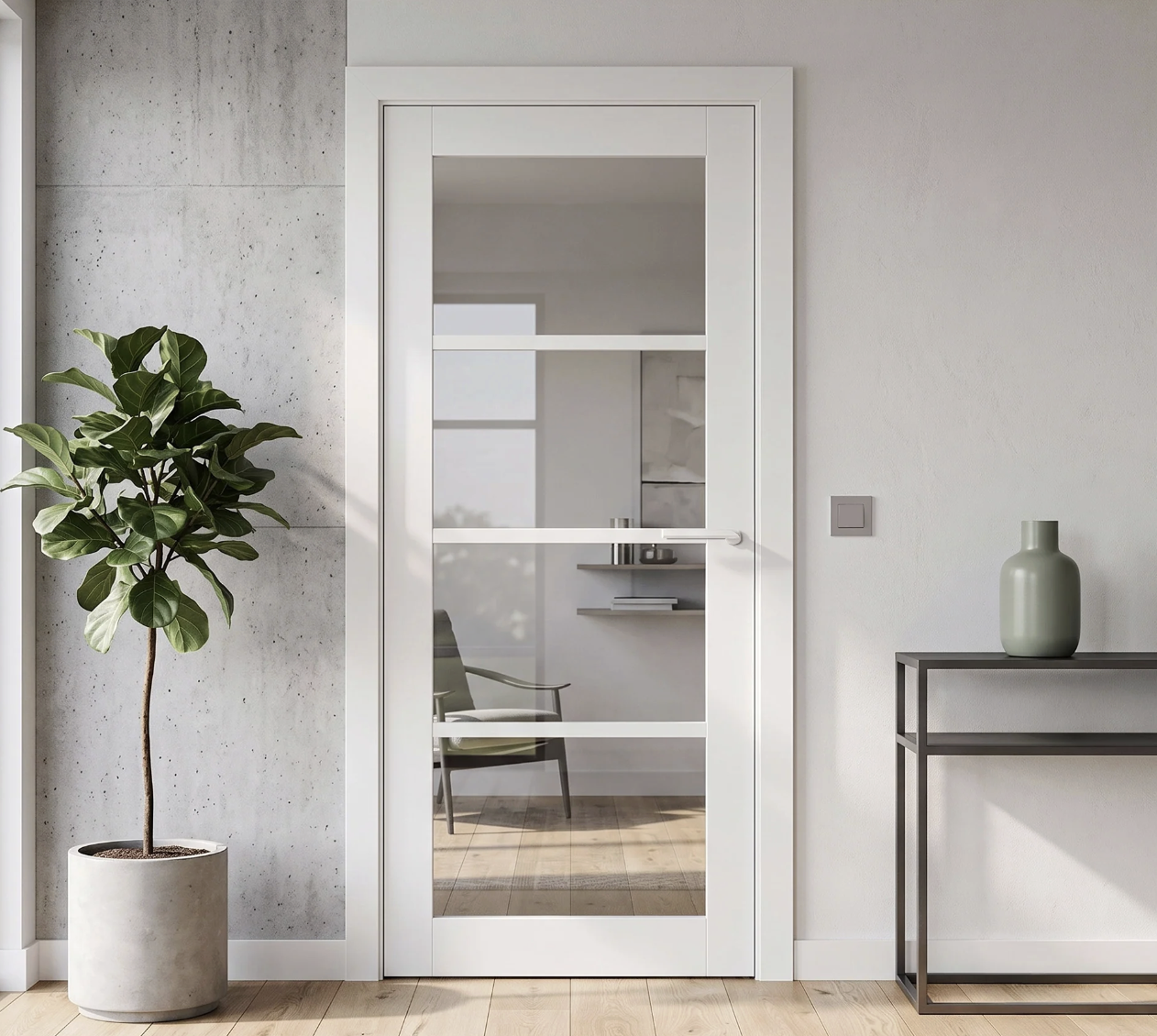
Divided-light designs can reference classic French doors, while larger uninterrupted panes create a distinctly modern impression. The frame material changes the character further: natural wood feels warmer, while steel or dark-painted frames can produce a sharper architectural look.
Glass also changes the experience inside the house.
A dark foyer can benefit enormously from additional daylight, but homeowners should think about what is visible from the sidewalk. Frosted, textured or strategically positioned glazing can provide a compromise between openness and privacy.
4. Preserve Original Character Where It Matters
For a historic property, replacing an old door with the newest design is not necessarily an improvement.
Original doors can contain proportions, panel arrangements, moldings and craftsmanship specifically related to the architecture of the house. When those features are lost, an otherwise carefully restored facade can suddenly feel disconnected.
Where restoration is feasible, retaining an original door can therefore be worthwhile. If the door is beyond repair, use its dimensions and detailing as a reference for a sympathetic replacement.
David Muniz Supple, CEO of New England Design & Construction, works extensively with architecture and design-build projects. His broader approach to historic and residential design emphasizes understanding the architecture as a whole rather than treating individual components independently.
That principle is especially valuable at the front entrance: the more architecturally distinctive the property, the more important it becomes for a replacement door to respect its proportions and visual language.
5. Use Clean Lines for a Contemporary Entrance
Modern architecture generally benefits from restraint.
Rather than elaborate moldings and multiple decorative panels, consider a slab-style door, oversized proportions, simple vertical glazing or a combination of wood, metal and glass.
Natural wood is especially effective against concrete, brick, stucco or dark cladding because it introduces warmth without adding unnecessary ornamentation.
A contemporary entrance does not have to disappear into the facade, however. An oversized pivot-style door or contrasting timber finish can become a strong architectural focal point while retaining the clean lines associated with modern design.
The key is intentional contrast. If the door differs dramatically from the surrounding facade, another exterior element should help connect it to the overall composition.
6. Use Inset Glass When the Entryway Needs More Light
Not every property has room for sidelights or a transom.
A door containing a carefully positioned glass panel can bring natural light into the foyer without requiring a larger structural opening. It is one of the most adaptable solutions because the amount and placement of glazing can be adjusted to the home's architecture and privacy requirements.
For example, a narrow vertical pane can complement a contemporary facade, while small upper lights suit Craftsman and traditional homes.
Performance matters as much as appearance. Homeowners should investigate insulated glazing, weather performance and the thermal properties of the complete door system, particularly in climates with significant temperature swings.
7. Choose a Two-Panel Door for Understated Elegance
A two-panel front door sits comfortably between highly detailed traditional doors and completely minimalist contemporary designs.
Its larger panels produce a cleaner composition than a typical six-panel door while retaining enough architectural detailing for traditional properties. That makes it particularly useful for transitional homes and new construction influenced by Georgian, Colonial or European architecture.
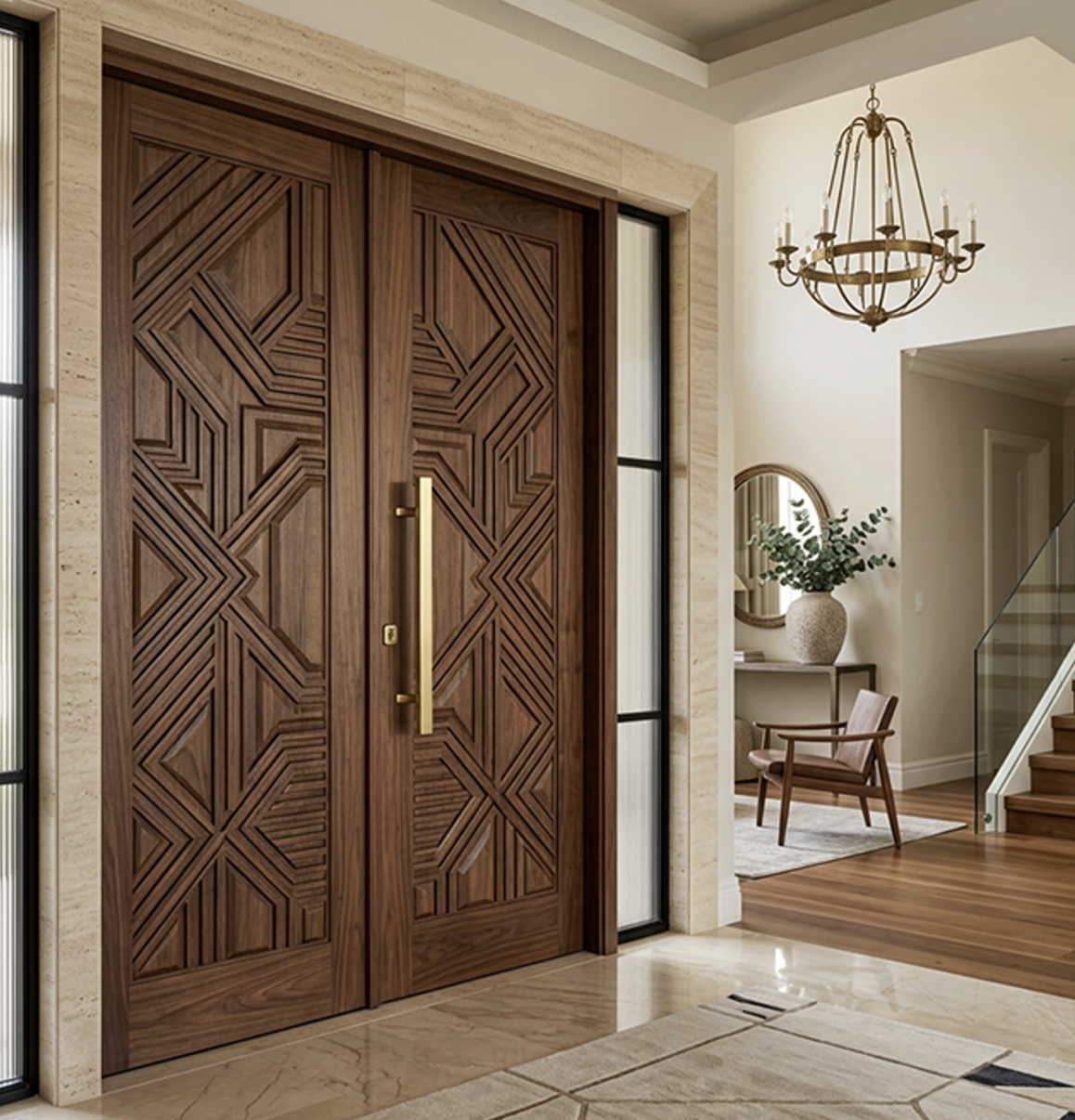
This simplicity also leaves room for other features to take visual priority.
Pairing the door with tall sidelights, an elegant transom, substantial casing or high-quality hardware can create a sophisticated entrance without making the door itself overly decorative.
8. Consider Double Doors for a Grand Entrance
Where the scale of the house supports them, double doors can give an entrance considerably more presence.
They are particularly successful on wide facades, larger porches and homes where the entrance is intended to act as a central architectural feature.
Style should still follow the building. Paneled double doors can complement traditional architecture, glass-heavy designs suit transitional properties, and oversized wood or metal doors can work beautifully on contemporary homes.
Scale is critical.
Installing imposing double doors on a modest facade can overwhelm it, while undersized doors on a large home can appear visually weak. The entrance should feel proportional to the windows, roofline, columns and overall mass of the building.
Common Front Door Mistakes to Avoid
1. Ignoring the Architecture of the House
One of the easiest ways to get a front door wrong is to select it in isolation.
A fashionable contemporary door may look beautiful in a showroom but feel completely misplaced on a historically detailed facade. Equally, an ornate traditional door can introduce unnecessary visual clutter to minimalist architecture.
Start with the house rather than the door. Identify its dominant lines, proportions, materials and period before narrowing your options.
2. Prioritizing Appearance Over Performance
A front door has to work hard.
It is repeatedly opened and closed, exposed to temperature changes and potentially subjected to rain, moisture and direct sunlight. It also contributes to the security and thermal performance of the house.
Wood offers natural character and extensive customization but can require greater maintenance depending on exposure. Fiberglass can combine durability with convincing wood-look finishes, while steel provides strength and suits many contemporary applications.
As Louis Jammer IV advises, homeowners should think beyond how a door looks when it is newly installed. Consider how the material, finish, hardware and installation will perform after years of regular use.
3. Choosing Color Without Looking at Permanent Exterior Materials
The front door is a natural place to introduce color, but it should still relate to the rest of the exterior.
Instead of choosing paint from an isolated sample, compare it against brick, stone, siding, roofing and trim – materials that are unlikely to change frequently.
A bold color can work beautifully when it has a visual relationship with its surroundings. When the undertones conflict with permanent exterior materials, however, even an expensive door can feel misplaced.
4. Adding Too Much Glass
More glazing is not automatically better.
Before selecting a predominantly glass front door, stand inside the foyer and look outward. Consider what someone standing outside would be able to see.
For homes close to sidewalks or neighboring properties, partial glazing, textured glass or higher-positioned panes can introduce daylight without making the entrance feel exposed.
5. Treating Hardware as an Afterthought
Hardware can dramatically alter the perceived quality of a front door.
Handles, locks, knockers, hinges, house numbers, doorbells and smart-home devices all occupy a relatively small area. Too many competing finishes can quickly make the entrance look cluttered.
Instead, establish a consistent visual direction. Traditional brass or bronze hardware can reinforce period architecture, while restrained black, nickel or chrome finishes often complement contemporary doors.
Quality matters here too. The front door is one of the most frequently handled elements of the exterior, making durable hardware a worthwhile investment.
Front Door FAQs
How Much Should You Spend on a Front Door?
There is no single useful budget because front door prices vary substantially according to material, dimensions, glazing, hardware and customization.
Rather than concentrating exclusively on the door slab, calculate the cost of the complete entry system, including frame components, sidelights or transoms where required, locks, hardware, finishing and professional installation.
A less expensive door installed correctly may perform better than a premium door fitted poorly.
What Is the Best Front Door Material?
The best material depends on the property and its exposure.
Wood is valued for natural beauty, craftsmanship and customization but generally requires more maintenance.
Fiberglass is popular where homeowners want durability, insulation and relatively low maintenance, and modern versions can convincingly reproduce timber textures.
Steel offers strength and clean styling and can be particularly appropriate for contemporary properties.
Climate should influence the decision. Fine Homebuilding similarly recommends considering exposure to strong sunlight, prevailing winds and the amount of protection provided by a porch or overhang when selecting an entry-door material.
What Is the Best Color for a Front Door?
There is no universally correct front door color.
Black, deep green, navy, natural wood tones and muted neutrals can create sophisticated entrances, while reds, blues and yellows can turn the door into a stronger focal point.
The better question is whether the color complements the fixed materials already present on the house.
Also consider sunlight. Dark finishes on heavily sun-exposed doors can absorb considerable heat, so material specifications and manufacturer recommendations should be checked before committing to a very dark color.
Should a Front Door Have Glass?
Glass is particularly worthwhile when the foyer lacks natural daylight.
Full-height glazing creates maximum openness, while upper or partial glass panels offer greater privacy. Sidelights and transoms are alternatives when you want to retain a predominantly solid door.
Look beyond appearance and consider insulated glazing and energy performance as part of the complete door system.
How Can You Make a Front Door Look More Expensive?
Start with proportion rather than decoration.
A properly scaled door, substantial trim, coordinated hardware and a well-executed finish usually create a more convincing high-end effect than adding multiple decorative features.
A quality handle set or knocker can provide a strong focal point. On traditional architecture, sidelights, transoms and carefully selected molding can introduce depth and formality. Contemporary homes generally benefit from fewer details, larger proportions and cleaner hardware.
Ultimately, the most successful front door is not necessarily the boldest or most expensive one. It is the door that appears to belong to the architecture while providing the durability, security, light, privacy and everyday performance the household actually needs.
About the Creator
Dan Woodland
Dan is a freelance writer and contributor who explores a wide range of topics, from business, entrepreneurship, technology, design, marketing, and finance to emerging trends, culture, and everyday ideas that spark curiosity.
Enjoyed the story? Support the Creator.
Subscribe for free to receive all their stories in your feed.
Comments
There are no comments for this story
Be the first to respond and start the conversation.