coast guard
Discover the oft-untold endeavors of the Coast Guard and its unyielding dedication to coastal defense, upholding maritime law, search and rescue missions and more.
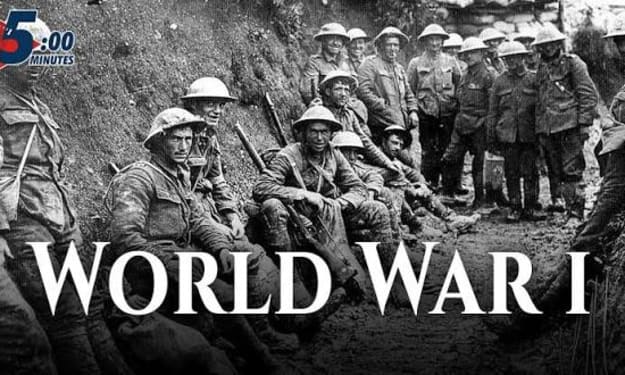
The Impact of World War I: Global Changes and Costs
World War I, often called the Great War, was a conflict that reshaped the political, social, and economic landscape of the 20th century. Beginning in 1914 with the assassination of Archduke Franz Ferdinand of Austria-Hungary, the war quickly escalated due to complex alliances, rising nationalism, and militarism in Europe. Nations including Germany, Austria-Hungary, Britain, France, Russia, and eventually the United States were drawn into a conflict that would last four brutal years and leave an indelible mark on the world.
By shaoor afridi8 months ago in Serve
Will There Be a Third World War?
The question of whether a Third World War will occur has become one of the most debated topics in modern geopolitics. With multiple conflicts happening across the world and rising tensions between major powers, many people wonder if humanity is moving toward another global war. While experts agree that the risk of large-scale conflict has increased, most also believe that a full world war is still unlikely in the immediate future.
By shaoor afridi8 months ago in Serve
Which Countries Did Iran Target in Recent Attacks?”
In recent days, tensions in the Middle East have escalated dramatically as Iran launched a series of missile and drone attacks across the region. These attacks were largely seen as retaliation following military strikes by the United States and Israel on Iranian targets. As a result, the conflict has spread beyond Iran and Israel, affecting several neighboring countries and raising fears of a wider regional war.
By shaoor afridi8 months ago in Serve
China Stand with Iran Against Israel
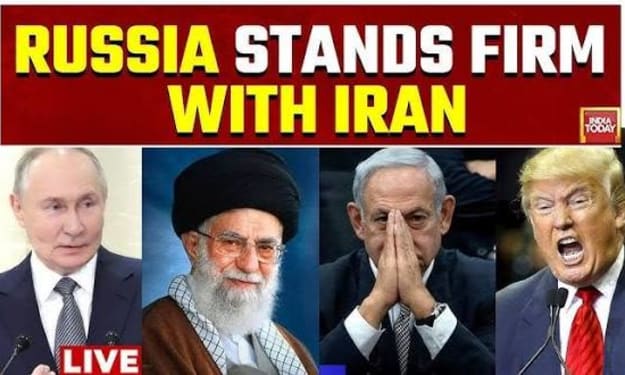
Recent military strikes by the United States and Israel against Iran have triggered not only intense regional violence but also a flurry of global diplomatic reactions. Among the world’s major powers, China’s response has been cautious yet clearly articulated, emphasizing respect for sovereignty, calls for ceasefire, and appeals to diplomacy. While some observers describe this as tacit support for Iran in the face of Western military action, Beijing’s stance is rooted in a mix of principled diplomacy, strategic interests, and geopolitical calculations that reflect both China’s broader foreign policy orientation and its national priorities. �
By shaoor afridi8 months ago in Serve
Putinsnappy” Dead or Alive?
1. Who Is “Putinsnappy”? First, it’s important to explain the name “Putinsnappy.” Searches show that @MrPutinSnappy is a social media or parody account name (likely on platforms like X/Twitter) that presents commentary about world politics and Russia. It is not an official account of the Russian president, nor does it have any authoritative standing. �
By shaoor afridi8 months ago in Serve
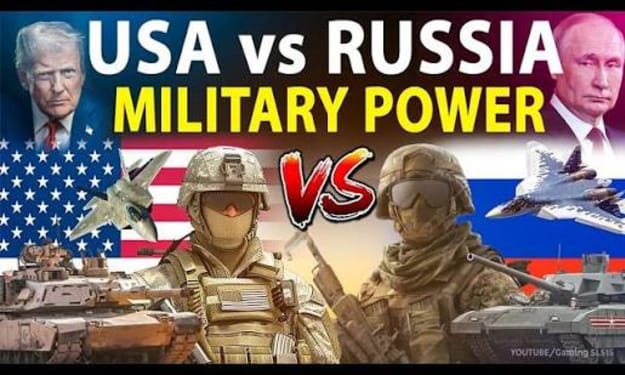
Which Country Is More Powerful Today—America or Russia?
The question of whether the United States or Russia is more powerful today depends on how “power” is defined. Military strength is not measured only by weapons or troop numbers; it also includes technology, global reach, economic capacity, alliances, and strategic influence. When these factors are examined together, a clearer comparison emerges.
By shaoor afridi8 months ago in Serve
Shadow of War Rising America Vs Iran
Historical Fears During World War II, Japan attacked the United States at Pearl Harbor, triggering a massive American military response that ultimately included the use of atomic bombs on Hiroshima and Nagasaki. That history still shapes how people imagine modern conflicts between powerful nations. Some observers fear that if Iran were to strike American airbases or regional forces, the United States might respond with overwhelming force, recalling past examples where escalation led to devastating consequences for civilians and infrastructure alike nearby societies.
By USA daily update 9 months ago in Serve
Middle East on Edge
Escalation on Multiple Fronts The United States and Iran find themselves in a high-stakes standoff that is drawing global concern. In response to mounting tensions with Tehran, Washington has significantly increased its military footprint in the Middle East. This buildup, which includes naval units, air assets, and joint exercises, comes amid heated rhetoric and conflicting strategic aims that could shape the region’s security environment for months — or years — to come.
By USA daily update 9 months ago in Serve
Iran's plan to hit $20 billion asset of USA
U.S. Military Deployment Toward Iran Explained Recently, U.S. President Donald Trump confirmed that a large American naval force — including the aircraft carrier USS Abraham Lincoln and several warships — has been sent toward the Middle East amid rising tensions with Iran. Trump described this as a “big armada” heading in that direction, though he also said he hopes conflict can be avoided.
By USA daily update 9 months ago in Serve
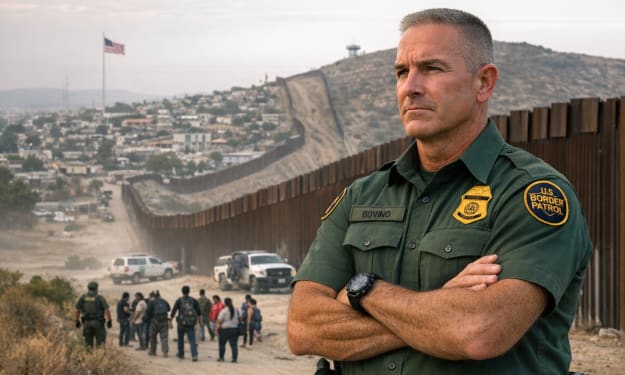
Greg Bovino and the Border Patrol Storm That Shook U.S. Immigration Debates
Greg Bovino and the Border Patrol Storm That Shook U.S. Immigration Debates Greg Bovino is a former United States Border Patrol agent whose name has become closely linked to intense national debates over border security, immigration enforcement, and the role of federal law enforcement in a politically divided climate. His rise to public attention did not come from routine service alone, but from outspoken positions that challenged federal leadership and ignited controversy across political and social lines. Bovino’s story reflects a deeper conflict within American society over how borders should be secured and how much freedom law enforcement officials should have to criticize government policy. During his career, Greg Bovino served as a Border Patrol agent with operational experience along the southern border. His work placed him at the center of one of the most complex law enforcement missions in the country. Over time, he became increasingly vocal about what he described as systemic failures in immigration enforcement. These views eventually moved beyond internal discussions and entered the public arena, transforming him into a polarizing figure. Supporters saw Bovino as a frontline professional willing to speak uncomfortable truths, while critics viewed his actions as politicizing a federal agency and undermining public trust. This divide made his name widely searchable and frequently discussed in relation to Border Patrol controversies. **Who Is Greg Bovino?** Greg Bovino is a former U.S. Border Patrol agent known for his strong opinions on immigration enforcement and border security. After leaving active service, he became publicly recognized for criticizing federal immigration policies and leadership, positioning himself as a vocal advocate for stricter enforcement of existing laws. **Why Is Greg Bovino Connected to Border Patrol Controversy?** Greg Bovino became controversial due to public statements that accused federal authorities of failing to properly secure the border. He argued that political decisions weakened enforcement efforts and placed agents in difficult positions. These claims sparked debate about whether such criticism represented accountability or insubordination. **Did Greg Bovino Hold a Leadership Role in Border Patrol?** During his time in the Border Patrol, Greg Bovino held supervisory and operational responsibilities typical of experienced agents. However, much of the public attention surrounding him emerged after his departure from active duty, when his statements were no longer tied to an official agency role. **Why Did Greg Bovino Speak Out Against Immigration Policies?** Bovino stated that immigration laws were not being enforced as written and that policy directives limited agents’ ability to perform their duties. He believed these restrictions contributed to increased illegal crossings and strained resources, a view shared by many who advocate tougher border control. **Was Greg Bovino Involved in Political Activism?** Following his service, Greg Bovino became increasingly active in political commentary. He participated in public discussions and media appearances focused on border security and government accountability. This involvement blurred the line between former law enforcement officer and political activist. **How Did Social Media Affect Greg Bovino’s Influence?** Social media significantly amplified Greg Bovino’s reach. Online platforms allowed him to communicate directly with large audiences concerned about immigration issues. While this expanded his support, it also intensified criticism from those who felt his messaging oversimplified complex legal and humanitarian challenges. **Did Greg Bovino Face Backlash for His Views?** Greg Bovino faced strong backlash from critics who argued that his rhetoric could damage the credibility of the Border Patrol. Supporters countered that any consequences he encountered were the result of political pressure rather than misconduct, reinforcing his image as a controversial figure. **Why Is Greg Bovino Still Relevant Today?** Greg Bovino remains relevant because border security and immigration enforcement continue to dominate national debate. His name is often referenced in discussions about dissent within federal agencies and the balance between loyalty, free expression, and public accountability. **What Does Greg Bovino Represent in the Immigration Debate?** Greg Bovino represents a larger struggle over the direction of U.S. immigration policy. To some, he symbolizes resistance against political interference in law enforcement. To others, he illustrates the risks of turning federal service into a platform for ideological conflict. In the end, Greg Bovino’s story is not just about one former Border Patrol agent. It is about a nation grappling with how to secure its borders, how to manage internal disagreement within federal institutions, and how individual voices can shape, intensify, or divide public opinion on one of America’s most enduring challenges.
By America today 9 months ago in Serve
RUSSIAN AIR RAIDS ON KYIV A CITY UNDER FIRE AND A NATION IN MOURNING. Content Warning.
RUSSIAN AIR RAIDS ON KYIV A CITY UNDER FIRE AND A NATION IN MOURNING Russian air raids on the Ukrainian capital Kyiv have entered a devastating phase, leaving behind massive destruction and the loss of thousands of civilian lives. The attacks, carried out through repeated waves of missiles and drones, struck residential neighborhoods, vital infrastructure, and public spaces. As Kyiv continues to endure relentless bombardment, the human cost of the conflict has reached alarming levels, transforming daily life into a constant struggle for survival. The strikes were not isolated incidents but part of a sustained campaign that turned the capital into a central battlefield. Families were forced into shelters, emergency crews worked nonstop, and hospitals faced overwhelming pressure as casualties mounted. The impact of these raids extends far beyond physical damage, reshaping the emotional and social fabric of the city. WHY THE UKRAINIAN CAPITAL HAS BECOME A FOCAL POINT OF ATTACKS Kyiv represents the political heart and symbolic strength of Ukraine. By targeting the capital, Russian forces aim to undermine national morale and disrupt the functioning of the state. The city hosts key government institutions and serves as a powerful symbol of Ukrainian sovereignty. Striking Kyiv is intended to send a message not only to Ukraine but also to the wider world about the scale and intensity of the conflict. THE SCALE OF CIVILIAN LOSSES AND DESTRUCTION The human toll of the raids has been severe. Entire apartment blocks were reduced to rubble, trapping residents beneath debris. Thousands of civilians lost their lives, while many more suffered serious injuries. Survivors faced shortages of electricity, heating, and clean water, making everyday survival increasingly difficult. Families were torn apart, and countless children were left traumatized by the violence surrounding them. WEAPONS AND TACTICS USED DURING THE AIR RAIDS The attacks relied on a combination of long range missiles and explosive drones launched in coordinated waves. This approach increased the difficulty of interception and maximized damage on the ground. The use of such weapons in densely populated urban areas amplified civilian casualties and caused widespread destruction of non military targets. THE ROLE OF UKRAINIAN AIR DEFENSE AND EMERGENCY RESPONSE Ukrainian air defense systems managed to intercept some of the incoming threats, preventing even greater loss of life. However, the intensity of the attacks meant that not all projectiles could be stopped. Emergency services, firefighters, and volunteers responded rapidly, pulling survivors from collapsed buildings and providing first aid under dangerous conditions. Their efforts saved lives despite limited resources and ongoing risks. HUMANITARIAN CONSEQUENCES FOR RESIDENTS OF KYIV The humanitarian situation in Kyiv has deteriorated sharply. Thousands of families were displaced, seeking shelter in safer areas or relying on temporary accommodations. Medical facilities struggled to cope with the influx of wounded civilians. Psychological trauma became widespread as residents lived under constant fear of new strikes, affecting mental health across all age groups. GLOBAL REACTIONS AND INTERNATIONAL CONCERNS The air raids on Kyiv triggered strong reactions worldwide. Many governments expressed alarm over the civilian casualties and emphasized the need to protect non combatants. Humanitarian assistance increased, focusing on medical aid, housing support, and relief for displaced families. The attacks intensified global concerns about the long term stability of the region. WHAT THESE ATTACKS SIGNAL FOR THE FUTURE OF THE WAR The continued targeting of Kyiv suggests a prolonged and destructive phase of the conflict. Urban centers are no longer shielded from large scale violence, increasing the risk of further humanitarian disasters. The damage to infrastructure and loss of civilian life will have lasting effects on Ukraine’s recovery and social stability. In the face of devastation, Kyiv’s residents continue to show resilience. Communities support one another, volunteers organize aid, and life goes on despite constant danger. The air raids on Kyiv stand as a stark reminder of the human cost of war and the urgent need for an end to the suffering endured by millions.
By America today 9 months ago in Serve