celebrities
Discover the celebrities using their talents and stature to lend support to those who serve and defend; army base performances, philanthropy, helping military families and more.
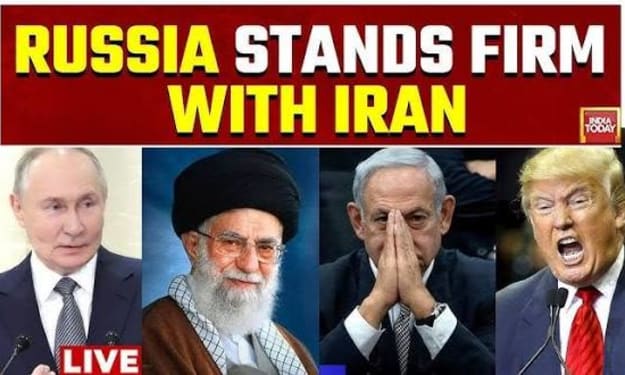
China Stand with Iran Against Israel
Recent military strikes by the United States and Israel against Iran have triggered not only intense regional violence but also a flurry of global diplomatic reactions. Among the world’s major powers, China’s response has been cautious yet clearly articulated, emphasizing respect for sovereignty, calls for ceasefire, and appeals to diplomacy. While some observers describe this as tacit support for Iran in the face of Western military action, Beijing’s stance is rooted in a mix of principled diplomacy, strategic interests, and geopolitical calculations that reflect both China’s broader foreign policy orientation and its national priorities. �
By shaoor afridi8 months ago in Serve
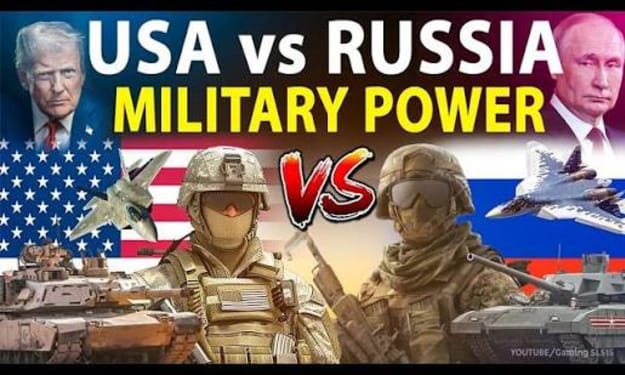
Which Country Is More Powerful Today—America or Russia?
The question of whether the United States or Russia is more powerful today depends on how “power” is defined. Military strength is not measured only by weapons or troop numbers; it also includes technology, global reach, economic capacity, alliances, and strategic influence. When these factors are examined together, a clearer comparison emerges.
By shaoor afridi8 months ago in Serve
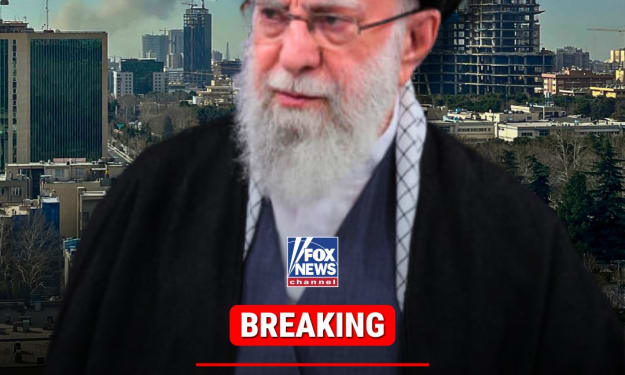
Ayatollah Ali Khamenei Is Dead Or Live?
Israeli and U.S. Officials’ Claims Israeli Prime Minister Benjamin Netanyahu has publicly stated there are “many signs” that Iran’s Supreme Leader Ayatollah Ali Khamenei is dead after a joint U.S.–Israel military offensive targeted Iranian leadership compounds, including sites linked to him in Tehran. �
By shaoor afridi8 months ago in Serve
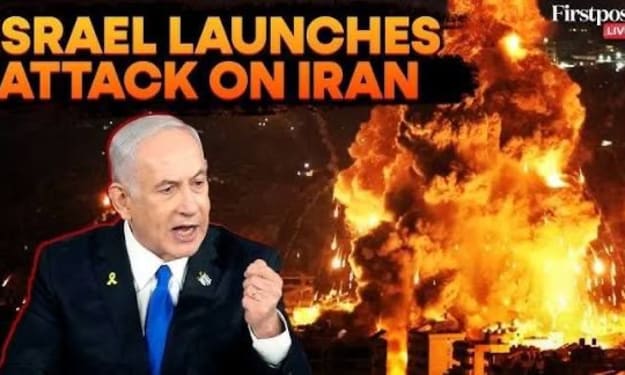
Israel Attacking On Iran
Israel has carried out major air and missile strikes on Iranian targets. Explosions were reported in Tehran and other areas. Israeli leaders say they attacked to stop Iran’s military and missile capabilities before Iran could launch its own large attack.
By shaoor afridi8 months ago in Serve
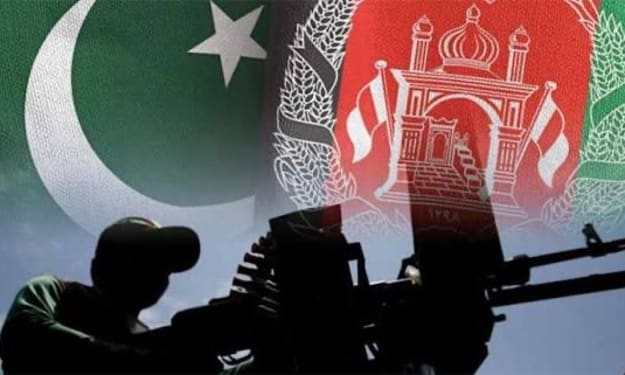
Non Stop War Between Pakistan And Afghanistan
The situation between Pakistan and Afghanistan has suddenly gotten much worse. In late February 2026, Pakistan said it is now in what it calls an “open war” with Afghanistan. Pakistan’s military carried out airstrikes on several major Afghan cities, including the capital Kabul and places like Kandahar and Paktia. This has caused fighting to grow significantly between the two neighbors. �
By shaoor afridi8 months ago in Serve
War Between Pakistan And Afghanistan
Tension Escalates Sharply at the Pakistan-Afghanistan Border What’s happening now? Tensions between Pakistan and Afghanistan have suddenly escalated into heavy fighting along their shared border, known as the Durand Line. Both sides are accusing each other of attacks, and military clashes have intensified in recent days. 
By shaoor afridi8 months ago in Serve
Rising Tensions — The U.S. Embassy Alert in Trinidad and Tobag
Rising Tensions — The U.S. Embassy Alert in Trinidad and TobagoThe recent alert issued by the U.S. Embassy in Trinidad and Tobago has captured international attention, sparking concern across the Caribbean and the United States. The warning came amid rising regional tensions related to U.S. military actions near Venezuela and growing fears that diplomatic and civilian areas might be affected by the expanding conflict. The situation has placed both local authorities and American citizens on high alert.
By America today about a year ago in Serve
How Much Power Does America Have?
When you hear the term “global superpower,” chances are one country comes to mind—the United States of America. From military dominance to technological breakthroughs and cultural influence, America's global footprint is massive. But how much real power does the U.S. wield today? Let’s break it down across six key pillars.
By Engr. Mansoor Ahmadabout a year ago in Serve
Trump’s Citizenship Threats: Fear and Uncertainty for Millions of Naturalised Americans
In a move stirring controversy across political and legal circles, United States President Donald Trump has once again ignited a fierce debate over the security of American citizenship. His recent threats to revoke the citizenship of some high-profile naturalised Americans—including billionaire tech entrepreneur Elon Musk and New York mayoral candidate Zohran Mamdani—have triggered anxiety among millions of immigrants who have made the U.S. their permanent home. The issue strikes at the heart of American identity. More than 25 million people in the United States are naturalised citizens, according to the Department of Homeland Security. These individuals come from all walks of life: engineers, doctors, artists, public servants, and small business owners. Many fled persecution, war, or poverty in search of safety and opportunity. Now, for some, the very idea of secure citizenship seems fragile. Who Is at Risk? President Trump’s threats have raised concerns about the scope of his plans. Could any naturalised citizen be targeted—or only those who have publicly clashed with his administration? While Elon Musk, the South African-born founder of Tesla and SpaceX, has largely enjoyed support from some conservative circles, his unpredictable stance on social media and recent criticism of Trump’s trade policies may have drawn ire. Zohran Mamdani, a Ugandan-born American politician known for his progressive views and advocacy for immigrant rights, represents the kind of left-leaning opposition Trump has frequently demonised. If individuals like Musk—one of the world’s wealthiest and most influential figures—and Mamdani, a democratically elected politician, can be singled out, what does that mean for everyday Americans who gained citizenship through naturalisation? Civil liberties advocates warn that this could be the start of a dangerous precedent, one where citizenship becomes conditional on political loyalty rather than constitutional rights. Legal Grounds and Challenges Under the U.S. Constitution, once citizenship is granted, it is considered a fundamental right. However, the government has long held narrow legal pathways to revoke it, mostly in cases involving fraud during the naturalisation process or actions such as joining a hostile military against the U.S. Legal scholars like Heba Gowayed, a professor of sociology at CUNY Hunter College, argue that Trump's latest threats stretch the limits of these provisions. "Denaturalisation has historically been rare and reserved for cases of fraud, not political disagreements," Gowayed explained in a recent podcast interview. The Trump administration previously attempted to expand denaturalisation efforts during his first term, creating a task force to review old immigration files for inconsistencies. Though the initiative yielded few cases, it sent a chilling message across immigrant communities. If Trump moves forward with revoking citizenship for political reasons, it would almost certainly spark constitutional lawsuits. Civil rights groups like the American Civil Liberties Union (ACLU) and the National Immigration Law Center are already preparing legal challenges, calling the threats "an assault on the integrity of American citizenship." A Political Strategy or Legal Reality? Analysts differ on whether Trump genuinely intends to carry out such revocations or if this is part of his broader political rhetoric aimed at energising his base. During his 2024 re-election campaign, Trump repeatedly vowed to crack down on immigration and "protect American values." Some see these latest threats as another plank in his nationalist platform, designed to appeal to voters who fear demographic change and multiculturalism. Yet critics argue that politicising citizenship endangers the entire framework of American democracy. "Citizenship is not a partisan privilege," said Manuel Rapalo, host of Al Jazeera's podcast The Take. "It’s a constitutional guarantee." Historical Echoes The United States has a complicated history with denaturalisation. During the Red Scare of the 1950s, some immigrants accused of Communist ties were stripped of their citizenship. In the post-9/11 era, there were renewed efforts to scrutinise Muslim immigrants under the guise of national security. However, never before has an American president so publicly and directly threatened prominent individuals with citizenship revocation. Legal experts also draw parallels with authoritarian regimes, where dissenters are silenced by revoking their citizenship or forcing them into exile. Trump's threats have raised alarms internationally, with some leaders and human rights organizations warning that such tactics undermine America’s image as a democratic beacon. The Human Impact For millions of naturalised citizens, the impact goes beyond politics. Families who believed they had secured their future in the United States now face renewed uncertainty. Immigrants from conflict zones like Syria, Afghanistan, and Venezuela, who risked everything for safety in the U.S., now question whether their adopted home truly guarantees them the protection of citizenship. Community organizations report rising anxiety in immigrant neighborhoods. "People are calling our hotline every day asking if they could lose their citizenship for protesting or for having family abroad," said an immigration advocate in New York. The psychological toll is profound. Citizenship, once considered permanent and secure, now feels fragile for many naturalised Americans. What Happens Next? Legally, revoking citizenship is a long and complicated process that must pass through the courts. The Department of Justice would have to file cases proving fraud or illegal conduct during the naturalisation process. Stripping citizenship based solely on political beliefs or criticism of the government is almost certainly unconstitutional. Yet, the fear stirred by such threats can have chilling effects. Legal uncertainty may discourage some naturalised citizens from political participation, activism, or even public speech. So far, Trump’s team has not provided details on the legal mechanism they plan to use. Without specifics, many believe these threats are more symbolic than actionable. But in the climate of heightened political division, even symbolic threats carry real-world consequences. Broader Implications for America’s Future The United States has long prided itself on being a nation of immigrants. Naturalised citizens have contributed to the country’s scientific innovations, military strength, and cultural richness. Figures like Albert Einstein, Madeleine Albright, and Sergey Brin (co-founder of Google) were immigrants who became American citizens. If citizenship becomes a political weapon, critics argue, America risks eroding the very values that have made it a global leader. Elon Musk, with his global influence, and Zohran Mamdani, with his local political presence, are symbolic figures in this controversy. But the real story is the countless teachers, healthcare workers, engineers, and small business owners whose status feels newly vulnerable. Calls for Clarity and Protection Lawmakers from both parties have called on the Trump administration to clarify its stance. Some moderate Republicans expressed unease at the threats, while Democrats pledged to introduce new legislation protecting naturalised citizens from politically motivated denaturalisation. So far, no official revocation actions against Musk, Mamdani, or others have been initiated. But the debate itself reflects a broader struggle over the meaning of American citizenship in today’s polarised political climate. As the legal and political battles unfold, one thing remains clear: the security of citizenship, once thought unassailable, is now part of America’s most contentious debates.
By Ikram Ullahabout a year ago in Serve