
Scientists are taken aback when the Y chromosome acquires a new gene family.
A sex chromosome that is getting smaller

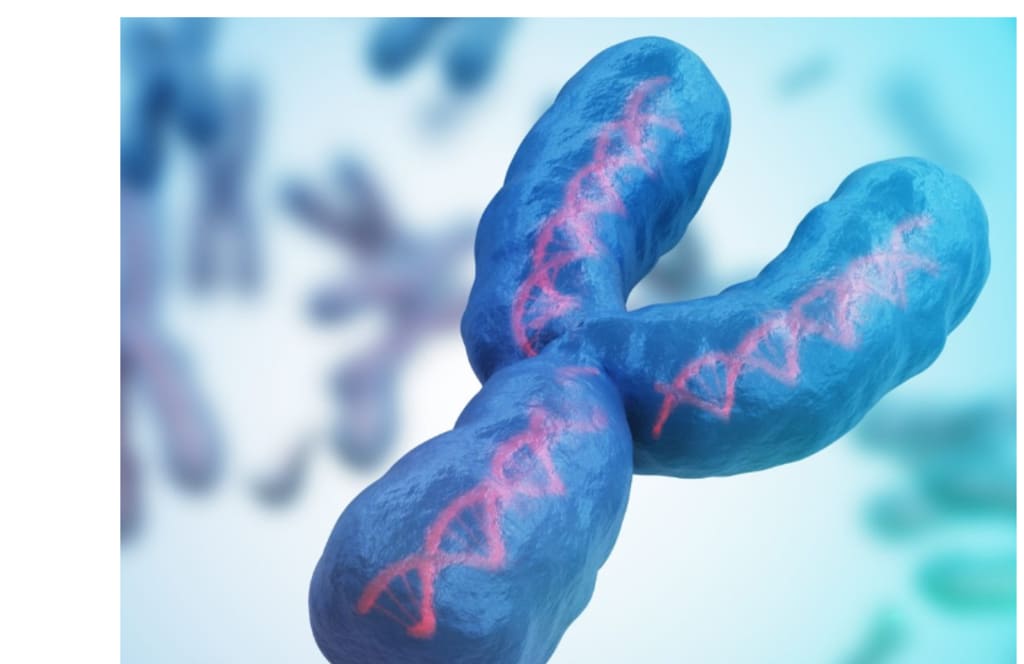
Researchers looking at the Y chromosome anticipate discovering a record of loss. Over millions of years, the Y loses genes while gaining nothing new in every mammal that has been analysed. The working assumption in the field has been that one-way picture.
Then, a group of researchers looking at deer mice discovered a gene that appeared to defy the norm. On a chromosome that science had dismissed as a dead end, the gene had arrived on the Y, replicated itself, and created something new.
A sex chromosome that is getting smaller
In order to prevent copying errors before they become permanent, chromosomes typically move in matching pairs that exchange DNA fragments. Since the Y lacks a true trading partner, damage accumulates and its genes gradually deteriorate.
Nevertheless, the chromosome merits its retention. The Y is necessary for male fertility because the genes that are still present are those that produce sperm. A team under the direction of Ivan F. Mier set out to test that reputation for delayed loss in deer mice. The study was carried out in Dr. Jacob Mueller's genetics lab at the University of Michigan Medical School.
The backup gene issue
The sex chromosomes are stuck when sperm are produced. The cell almost completely turns off the X and Y halfway through, silencing their genes just when they are needed. Because females have two X chromosomes, one can compensate for the other. Men only have one, and they don't have a spare.
Evolution relied on a workaround: transferring important X genes onto chromosomes that remain intact. These copies serve as backups, and one study identified a gene that mammals actually require for sperm in order to replace a mute X gene. It's similar to having a clone of yourself that can step in when you're not around.
A gene that leaped
The researchers tracked a gene that had taken an unusual path in the deer mouse. It started off as Phf8, a common X chromosome gene. It then spun off a copy onto an autosome, which is a chromosome that is not involved in sex. Another copy then arrived at the Y.
That single copy performed the unexpected on the Y. The team termed it Phf8y since it repeatedly reproduced to create a tiny family of almost similar genes. Biologists have recorded numerous instances of genes shifting from the X to an autosome. However, no gene had ever been found to complete the entire trip onto the Y.
"To the best of our knowledge, this is the first instance ever." Mier remarked. The team was taken aback by that direction of travel.
Instead of gathering new gene families, the Y chromosome is the one that loses genes. It appeared to be the opposite of decay as it took on Phf8y and replicated it.
Taking control of the copying equipment
The deer mouse genome included the machinery needed to transfer a gene between chromosomes. Sequences known as "jumping genes," which make up around half of human DNA, are dispersed throughout the DNA of nearly every animal.
Phf8y seems to have taken advantage of that. It appears that the gene used this mobile apparatus to spin off an extra copy and drop it on the Y instead of the typical route. These sequences remain silent most of the time, restrained to prevent them from rearranging the genome. Now and then, one breaks free. The Y reportedly received a whole new gene family as a result of that uncommon occurrence.
An advantage over competitors
Although the team can plainly observe Phf8y turning on in growing sperm, it is still unclear what Phf8y truly performs inside the cell. After that, it's all educated guesswork. Their best guess concerns the packing of DNA.
A sperm cell's DNA gets wrapped down and packed into a much smaller head than that of a regular cell as it develops. That squeeze might be aided by Phf8y. Given the location of the gene, such a job would make sense. According to a pattern one analysis of mouse germ cells, the sex chromosomes are strangely packed with genes that are only active in the formation of sperm.
Rival X and Y genes struggle to determine whether children are male or female in house mice, which suggests why such a gene persists. Phf8y may have a small advantage if it modifies the structure of sperm carrying the Y.
What the finding implies
The Y chromosome's history was one of loss prior to our effort. Phf8y demonstrates that traffic can go in the opposite direction, with a gene completing a full move onto the Y and doubling upon landing. The dead-end chromosome may develop.
This finding modifies biologists' understanding of the evolution of the Y. A population's ability to maintain a consistent sex ratio—nearly half male and half female—is influenced by how new genes get to the Y.
In a another study, sperm production stumbled when mouse Y genes were turned off one at a time. The discovery provides scientists with a tangible solution to a long-standing conundrum: why the sexes remain about equal throughout generations.
Long dismissed as a place of deterioration, a chromosome is subtly acquiring new components. This provides the field with a strong foundation from which to operate.
About the Creator
Enjoyed the story? Support the Creator.
Subscribe for free to receive all their stories in your feed.
Comments
There are no comments for this story
Be the first to respond and start the conversation.