
The Keynotes of the Pharisees
An Investigation into Municipal Terrorism in Ferguson, Missouri

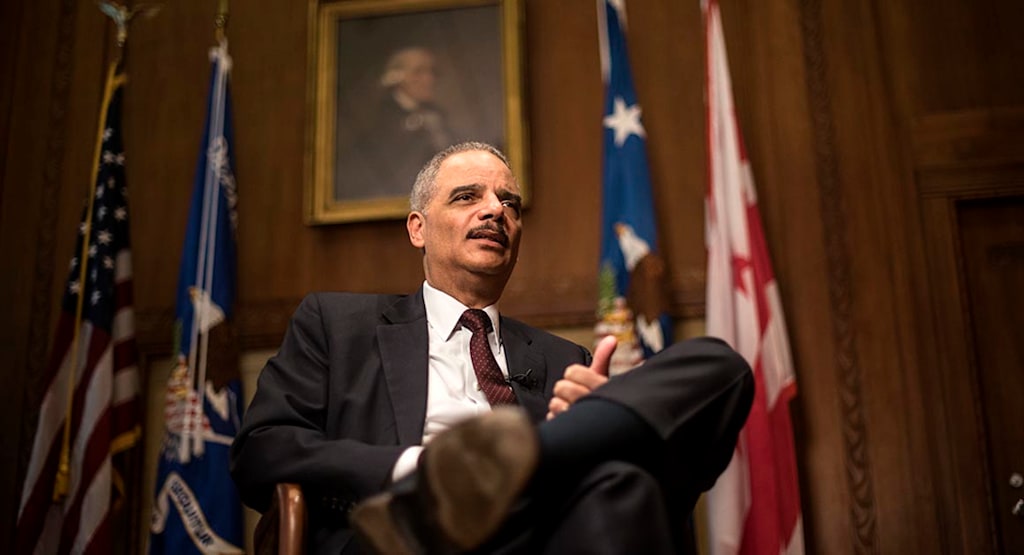
Strip clubs, cluttered yards, tinted windows, bottles of alcohol at parks, and speeding were code words in Ferguson, Missouri for “Let’s crack down on these Obama-loving n*ggers”. According to the U.S. Department of Justice, under the direction of the U.S. Attorney General Eric Holder, 76% of the population of Ferguson, Missouri had arrest warrants on the day that Mike Brown was gunned down. In spite of being unarmed and only accused of walking out of a gas station with a one-dollar item that he didn’t pay for; he was demonized by the Ferguson police and racist White folks and self-hating Black folks worldwide (Dept. of Justice, 2015).
Missouri’s unique position during the Civil War and Reconstruction allowed it to avoid the intense federal oversight that states like Alabama, Mississippi, and Georgia fell under. Missouri also has strict tax regulations that came as a consequence of desegregation, which essentially functioned as protests by racist Whites that don't want to support Black people via publicly funded resources. So when Ferguson experienced a major demographic shift over the course of decades, and then was damaged by a blizzard in 2007 and a tornado in 2011, John Shaw was hired as Ferguon's city manager to boost the financial standing of the city. Overall, the tone of city officials reads like voices of butlers, maids, nannies, cooks, or chauffeurs for a Catholic religious leader. It’s very noticeable. I have studied the Ferguson City Council Minutes over 10 years, and it is the most jarring tone, and is so dystopian when coupled with the city’s 2011 installation of the “computerized traffic cameras”. The way it compliments the city’s militarized, violent, and gangster police department conjures images of a sweet kindergarten teacher bombing her entire elementary school while singing “I Love You” by Barnie and Friends. All of this takes place within the national context of Obama ascending to the Office of President of the United States.
At any rate, to begin our dive into this exploration, in March 2010, the City Finance Director wrote to Chief Jackson that “unless ticket writing ramps up significantly before the end of the year, it will be hard to significantly raise collections next year. . . . Given that we are looking at a substantial sales tax shortfall, it’s not an insignificant issue.” Similarly, in March 2013, the Finance Director wrote to the City Manager: “Court fees are anticipated to rise about 7.5%. I did ask the Chief if he thought the PD could deliver a 10% increase. He indicated they could try.” This shows the clear disregard that Ferguson’s leaders had for their community. Law enforcement was just a for-profit business, nothing more, nothing less (Dept. of Justice, 2015).
The nationally hypnotizing events in Ferguson in 2014 began with the fatal police shooting of Michael Brown on August 9, when officer Darren Wilson shot the unarmed 18-year-old during an encounter on a residential street . Brown’s body remained in the street for hours, which many residents viewed as deeply disrespectful and emblematic of broader tensions between law enforcement and the city’s largely Black community. Within hours, protests began, initially peaceful but fueled by long-standing grievances over policing, inequality, and municipal governance. These protests quickly escalated into a sustained movement, reflecting what scholars and journalists have described as a convergence of local anger and national frustration over police violence. Also, 94% of Ferguson’s police force was White at the time of the shooting.
As demonstrations intensified, the police response became a defining feature of the “Ferguson crisis.” Local law enforcement deployed armored vehicles, tactical gear, tear gas, and rubber bullets, creating images that resembled military operations rather than civilian policing. Civil liberties groups and observers later criticized this response as an example of the growing “militarization” of American police forces . The situation escalated further when the Missouri National Guard was deployed to restore order after nights of unrest, arrests, and clashes between protesters and police . These scenes—heavily armed officers confronting largely unarmed civilians—became central to national debates about policing, race, and state power.
At the federal level, President Barack Obama addressed the situation by calling for calm while also acknowledging legitimate grievances about race and policing. His administration launched a civil rights investigation into the Ferguson Police Department, signaling that the issue extended beyond a single incident. Obama’s response reflected a balancing act: condemning violence and property destruction while affirming the right to protest and the need for systemic reform. Social media played a transformative role in Ferguson, amplifying the event far beyond its local origins. Platforms like Twitter spread real-time images and narratives, helping catalyze the Black Lives Matter movement. Academic research analyzing hundreds of thousands of tweets shows how hashtags such as #BlackLivesMatter became central to organizing, framing the issue as part of a broader pattern of racial injustice, while counter-hashtags like #AllLivesMatter reflected competing interpretations of the events . This digital dimension allowed Ferguson to become not just a protest, but a national and global conversation.
Internationally, Ferguson drew widespread attention and criticism. Media outlets and governments around the world highlighted the apparent contradiction between U.S. advocacy for human rights abroad and the scenes unfolding in Missouri. Organizations like Amnesty International took the unusual step of sending observers to the United States for the first time, later citing concerns about excessive force, restrictions on protest, and treatment of journalists . Protesters abroad, including in the Middle East, even shared tactical advice on coping with tear gas, underscoring the global resonance of the events .
Ultimately, the Ferguson protests did not end with a single resolution. A grand jury later declined to indict Wilson, sparking renewed unrest and reinforcing perceptions of injustice. The episode reshaped American political discourse, bringing issues of systemic racism, police accountability, and inequality to the forefront. It also marked a turning point in the visibility and influence of grassroots activism, particularly through social media. In retrospect, Ferguson was not just a local disturbance but a national inflection point—one that exposed deep structural tensions and helped launch a decade of sustained debate and activism around race and policing in the United States.
The Department of Justice reviewed over 35,000 pages of police records in 2014. They found that in 2013 alone, the court issued over 9,000 warrants on cases stemming in large part from minor violations such as parking infractions, traffic tickets, or housing code violations. In total 16,000 people of about 21,000 people living in Ferguson had warrants. Jail time would be considered far too harsh a penalty for the great majority of these code violations, yet Ferguson’s municipal court routinely issues warrants for people to be arrested and incarcerated for failing to timely pay related fines and fees.
In 2011, the City of Ferguson proposed an ordinance aimed at improving traffic safety by introducing automated red-light enforcement at intersections. The measure, identified as Bill No. 6938, would amend the city’s code to create a new infraction—“violation of public safety at intersections.” Under the proposal, vehicle owners could be cited if their car is detected in an intersection while a traffic signal shows a steady red light, even if they were not driving at the time. City officials justified the ordinance by citing safety concerns, arguing that red-light violations contribute to accidents, injuries, and traffic inefficiency. The proposal also notes that staffing every intersection with police officers is impractical, positioning automated camera systems as a more efficient enforcement tool. Similar programs in other jurisdictions are referenced as having reduced violations and improved safety. The ordinance authorizes the installation of automated photo traffic enforcement systems capable of capturing images of vehicles, license plates, and traffic signals at the moment of a violation. These systems are explicitly not designed to photograph vehicle occupants’ faces.
Citations would be mailed to vehicle owners within 30 days of a recorded violation and would include photographic evidence. Owners would have 30 days to either pay a $100 fine or submit a sworn statement explaining a valid justification, such as yielding to an emergency vehicle, acting under police direction, or cases involving stolen vehicles or plates. While liability is primarily assigned to the registered owner, exceptions allow responsibility to be transferred—for example, to a lessee—if proper documentation is provided. The ordinance also outlines procedures for reviewing disputes, issuing warnings in certain cases, and escalating enforcement for failure to respond. The proposal emphasizes that violations would not carry jail time, framing the measure as a civil infraction rather than a criminal offense. It also allows, but does not require, the placement of warning signs indicating the presence of camera enforcement. City leaders described the ordinance as a public safety initiative intended to reduce accidents and promote compliance with traffic signals, while including safeguards for due process and limited defenses for cited individuals.
Moreover, in the wake of unrest following the 2014 shooting of Michael Brown, officials in Ferguson released a document addressing what they described as widespread misconceptions about city governance, policing, and court practices.The list pushes back on claims about the authority of local officials, clarifying that neither the mayor nor city manager can unilaterally pardon offenses, cancel warrants, or fire the police chief without a supermajority council vote and due process under Missouri law. It also states that while the police chief or city manager could dismiss officer Darren Wilson, doing so prematurely could carry legal consequences during ongoing investigations. City leaders denied that the police department used military-grade equipment during protests, asserting that such resources came from other agencies. They also rejected claims that Ferguson relies primarily on court fines for revenue, stating these make up less than 20% of the city’s budget. On municipal court practices, officials emphasized that individuals are not arrested simply for inability to pay fines if they appear in court, and that the system prioritizes case resolution over detention. They also outlined reforms, including community service options and reduced financial penalties, some of which predated the protests.
The document further denies allegations of racial targeting by law enforcement, attributing traffic stop demographics to the city’s population makeup, while acknowledging the need to rebuild trust with African American residents. It also rejects accusations that the city shielded Wilson, suppressed protests, or lacked transparency, highlighting outreach efforts and public meetings. Additional points address confusion over fees and bonds, clarify that a local “I Love Ferguson” campaign operates independently of city government, and state that hiring public relations firms was intended to manage high volumes of media inquiries. Officials also dispute claims that residents and businesses were leaving the city in large numbers, instead pointing to continued development activity. Overall, the document presents the city’s official responses to criticism during a period of intense national scrutiny, aiming to clarify policies, defend institutional actions, and outline ongoing reform efforts.
In 2015, the U.S. Department of Justice investigated Ferguson’s police department and uncovered a clear and troubling priority: officials placed “the City’s focus on revenue rather than … public safety needs.” City leaders increased their reliance on fines and forfeitures, which nearly doubled from 12 percent to 23 percent of the general fund between 2010 and 2015. They also imposed steep penalties for minor violations, charging over $100 for offenses like “weeds/tall grass,” far more than neighboring communities. Although the DOJ exposed these practices, it did not directly compare Ferguson’s finances to those of other cities.
Census data makes that comparison possible—and it shows that Ferguson stands apart. In 2012, city officials generated 12.9 percent of general revenue from fines and forfeitures. Other Missouri cities collected only 2.5 percent, and similarly sized U.S. cities averaged just 1.8 percent. Even when compared to cities with similar challenges, Ferguson still diverged. Cities that lost large portions of their population relied on fines for only about 1.6 percent of revenue, while cities undergoing similar racial demographic shifts averaged roughly 1.7 percent. These comparisons make it clear that local leaders in Ferguson chose an unusually heavy dependence on fines rather than following a broader national pattern.
Ferguson officials directed a large share of spending toward public safety, allocating about 40 percent of general expenditures in 2012. This level exceeded the 28 percent spent by other Missouri cities and the 29 percent spent by comparable U.S. municipalities. However, most cities prioritize public safety, and Ferguson maintained a consistent budget structure over time. Its spending choices alone do not explain its unusual revenue strategy.
Several policy decisions and structural factors help explain why Ferguson leaders relied so heavily on fines. Missouri voters passed tax limitations in the late 1970s, including the Hancock Amendment, which restricted tax increases and required voter approval for raising them. As property tax revenues declined, city officials turned to fees and fines to fill the gap. At the same time, Ferguson grew more dependent on external funding. State and federal transfers increased significantly in the late 1970s and again in later decades, including during the implementation of the American Recovery and Reinvestment Act. When that federal support declined, officials appeared to compensate by increasing revenue from fines.
Local conditions also played a role. Ferguson’s small size limited its revenue options and made it more vulnerable to financial pressure. Political fragmentation and governance structures may have further encouraged officials to rely on fines rather than pursue tax increases or alternative funding sources. Still, Ferguson does not represent the most extreme case in Missouri; several smaller municipalities depend even more heavily on fines and forfeitures.
The Great Recession intensified these pressures by straining city budgets nationwide. Many municipalities struggled to maintain services, and some faced bankruptcy. Although revenues have improved, ongoing concerns about slow economic growth, wage stagnation, and resistance to taxation continue to shape local fiscal decisions. These conditions create incentives for cities to seek revenue sources that do not require voter approval.
Ferguson’s experience highlights two competing approaches to municipal finance. In one model, city governments provide valued services and ask residents to fund them through taxes and fees. In the other, officials rely on penalties and enforcement to generate revenue, effectively shifting costs onto residents through fines. This approach resembles “tax exporting,” but instead of targeting outsiders, it burdens the city’s own population. Law enforcement should deter illegal behavior—not serve as a primary funding mechanism. Ferguson’s approach, therefore, does not represent a broader trend. As the evidence shows, “this is not the new normal.”
Surveying the Minutes
On January 24th, 2006, Ferguson’s Chief Financial Officer, Joan Jadali, explained that the city was 499,495 dollars in debt, but the city had still somehow managed to spend less than budgeted. This appears to be some attempt to distract citizens from the literal deficit. Then, there were some lengthy discussions of a “Responsible Landlord Bill” that centered on the legality of inspecting people’s houses. Finally, the mayor went on to discuss people cleaning up trash and mentioned that residents could apply for some sort of loan for repairing the exterior of houses.
On April 18, 2006, Krieger mentioned “budget preparation” and that he was “considering a reorganization and had talked to two candidates to fill vacancies". The Mayor then told everyone in Ferguson to remember to cut their grass and clean up trash around their homes to “enhance the city”. He then announced that “May 13 is Spring Clean Up Day and May 20 is the Biggest Yard Sale in History”.
In October, 2006, an ice storm knocked down trees and power lines across much of the St. Louis area producing one of the worst and longest power outages for many people in St. Louis history. Over a half a million customers had no power from the St. Louis area into central Illinois, many in the dark and cold for days.
At another 2006 meeting, minutes read, “Mayor commented on the abuse of the trash ordinance and the possibility of placing warning stickers on the trash cans and at the point the resident becomes an offender, then the resident can be cited for the violation. Mayor commented on the City’s limb pickup procedures and when the City does provide this service to please help the Public Works Department in placing the limbs properly for pick up. Mayor requested neighbors help neighbors and if there are exceptions please contact Public Works” (City of Ferguson, 2006).
“Mr. Larson – thanked the citizens for their perseverance and patience through the power outage. Mr. Larson cannot say anything good about Ameren who sells one product and fails to deliver it and citizens have been out of power for weeks and feels this is just not acceptable. The linemen work very hard, Ameren works hard but not hard enough he feels that there needs to be more preparation ahead of time and more people and equipment and whatever is necessary in place when something like this happens in the future. Mr. Larson agrees with Ms. Faul regarding a Resolution. As one of the hardest hit cities in both power outages he feels Council should be present at the January hearings” (Ferguson, 2006).
The mayor also attended a session on Downtown Revitalization and reaffirmed that the City is doing things right and now needs to start applying the lessons learned to the West Florissant and New Halls Ferry corridors so they become just as attractive and meaningful and economic growth as the downtown area. Also, the City of Ferguson sought out help from the East-West Gateway to help them find a city manager. One part of their mission statement states that they “help local governments be bold, creative, effective, and efficient by providing assistance, by developing thoughtful solutions to problems; aiding inter-governmental cooperation, and by forming new partnerships to tackle persistent or emerging problems”. Their current website places an abnormal emphasis on the racial makeup of the cities that it serves. The organization is 99% white.
On January 5, 2006, the city council introduced a host of bills and resolutions at varying stages in development. The most notable of these were the new contract with an actuary company called EFI Actuaries, the ordinance related to seizing of a private property for the city’s beautification and development, an ordinance related to the disturbing the peace laws in Ferguson, and an ordinance related to Ferguson’s nuisance abatement laws. All in all, it looks like fast municipal money was on the City of Ferguson’s mind. On February 27, another round of fast municipal money bills were discussed– “solid waste” bill , “vegetation, weeds, and vines” bill, “trash and debris” bill, “boarding up buildings” bill , and “adult related business” bill.
In 2006, “Finance Director, Joan Jadali briefly gave the fund highlights and a presentation of the proposed capital projects. Ms. Jadali stated there were no revisions to revenue only to expenditures, then presented each fund and its revisions. Total revenues $20,475,639, and total expenditures $19,985,974. Ms. Jadali further explained the Proposed FY 2006 07 Capital Projects and amounts” (Ferguson City Council, 6.13.2006).
Later in 2006, there was a drama centered on the city manager, A.J. Krieger. Basically, Krieger approved a new air conditioner for a historic building and people were upset that the building was defaced. The minutes read, “Ruth Brown – 425 Wesley Ave. – gave a historical standpoint and the importance Vogt School has to the City of Ferguson, designed by William B. Ittner and built in 1930. In 1985, Vogt School was designated as a Ferguson Landmark. Ms. Brown explained the process of the Ferguson Landmarks Commission and the failure of this process by issuing a building permit for the current work at Vogt School without notifying the Landmarks Commission. Voids have been cut in the brick front façade and the east side to allow for new central air conditioning vents. Ms Brown stated that the Commission was left out of the permit process and did not have its precious sixty days to negotiate with the school district and with the City of Ferguson. Ms. Brown feels that the result is permanent and, quite probably, needless damage to an important and cherished building and further feels that Vogt School is defaced. Ms. Brown further talked about the National and Local Ordinances which makes the process even more important and feels the Commission could have negotiated with Public Works who granted the permit, the School District Personnel, the School Board and, if necessary, appeal to the public at large. Ms. Brown further feels a case could have been made and that Vogt School deserves superior treatment. Ms. Brown feels the damage is done, and the building will never be the same; any opportunity to designate it to the national register is probably lost. Ms. Brown commented that the neighborhood will suffer and everyone will share the loss. Ms. Brown feels the process should be corrected and further suggested some constructive actions. Ms. Brown intends to talk before the School Board and feels that Council‘s actions, with them, would also be persuasive and effective” (City of Ferguson, 2006).
Minutes read “A.J. Krieger – in addressing Vogt School, Mr. Krieger commented that the City will accept responsibility. City Staff made a mistake by not following the proper administrative procedure and did not follow the ordinance. Staff made a mistake. Mr. Krieger does not appreciate any suggestion that it was done intentionally or that anyone on City Staff intentionally worked to subvert the process. It was clearly an innocent mistake and Mr. Krieger will accept the responsibility for it and assure Council and the Landmark Commission Members that it will not happen again” (Ferguson City Council, 6.13.2006).
In October, 2006, minutes read that “Ms. Van Uum further explained that they are approaching many of the Cities in the area seeking their support for a joint application to the Municipal Parks Grant Commission to construct a plaza and seating area at the junction of the two new trails. One of the requirements of the Municipal Parks Grant Commission is a Resolution from the governing body of each participating municipality. Ms. Van Uum further explained the scoring system and grant application process and requested Council’s consideration for one of the two Resolutions presented” (October 24, 2006). Krieger seemed to have some reservations about this.
“Mr. Krieger explained that this project is not within the City of Ferguson. If the City is, in fact, awarded the City will be one of the recipients of grant funds and will then have to enter into a grant agreement that says the City is going to make sure it is going to do everything it says it is going to do in the application. A risk exists that something could go wrong through no fault of the City and the City would be in an awkward position with the Muny Parks Grant Commission. Mr. Krieger’s concern is he felt it put the City in an awkward ill advised position, with respect to guaranteeing the final product and how grant funds would be spent that would not necessarily be entirely under the City’s control. City Council had a lengthy discussion regarding the City Manager’s concerns regarding the grant. Mayor would like to participate with the other cities in their support of the Resolution but also has concerns with risks and issues” (2006).
In another 2006 council meeting, “City Manager, A.J. Krieger – recognized Finance Director, Joan Jadali for the City of Ferguson being awarded its first Distinguished Budget Award from the Government Finance Officer’s Association. This award was earned due to the collaborative efforts of City staff from various levels of the organization. Mr. Krieger is proud of the City’s financial record and transparency of the financial documents. This award has been earned by only a handful of municipalities in the St. Louis area for meeting the highest principles of governmental budgeting. Additionally, only 50% of first time submissions generally earn the award” (Ferguson, 2006).
On November 11, 2006; it is implied that A.J. Krieger was fired or resigned. “The City of Northglenn hired Krieger in October 2006 after a nationwide search. Krieger was selected from 29 applicants. Krieger started with an initial base salary of $120,000”(Larson, 2008).
Still, he continued to serve a few more months. In December 2006, minutes read “City Manager, A.J. Krieger informed Council that City Staff has, in fact, researched the Pershall Property option. Mr. Krieger spoke to the listing agent on numerous occasions, Council is aware that staff has researched the Pershall Property option and based upon the best estimate the minimum cost of constructing a road would be approximately $1.8 million dollars. Mr. Krieger commented that it cannot be accurately said that staff has not researched the Pershall option or it would be anywhere near a more economical option, it just simply is not true”. There is clearly some tension right here, and we may never know the details to this feud.
Then, in that same month, minutes read, “Mr. Krieger – Thanked Council and was a pleasure working with the Council. Thanked FSBD. Mr. Krieger recognized the Department Directors and City staff for the incredible work that they do for the City and it has been Mr. Krieger’s sincere pleasure to work with them. Mr. Krieger feels very good about this community, feels its future is bright and hopes the City is in a better place today”.
Consider this article about Krieger’s tension with Ferguson’s Mayor and Council that illustrates subjective negative feelings that many had about him.
“The direction the council wanted to follow was often questioned and not followed (by Krieger),” former Ferguson Mayor Steven Wegert said. “He was not a good fit for the community.” In July 2004, the leaders of the St. Louis suburb voted 4-3 to suspend Krieger as city manager, after 10 months on the job. The decision created an immediate backlash. Backers collected around 1,000 signatures, planted signs and created a website to rally around Krieger, according to media reports at the time. Less than two weeks later, the council reversed its decision. “We had to backpedal some,” Wegert acknowledged. Former Ferguson City Councilman Bill Duncan, who voted against suspending Krieger, said he helped lead a procession from City Hall to Krieger’s home to tell him to hang in there. “He’s a bright guy, he has a lot of ideas and he can make things happen,” he said. But Duncan also said Krieger lacked critical communication skills, often rolling his eyes impatiently at things he didn’t agree with and coming across as arrogant to some. “He did more for this city than you can imagine, but he didn’t have good people skills,” Duncan said. Krieger said Tuesday that the experience in Missouri was “surreal” but ultimately vindicating. “There are few things as heartening as seeing your staff and the majority of residents supporting you that way,” he said. Though the council members never told him why they initially chose to suspend him, he believes that a “contributing factor” was negative reaction to his uncovering a pattern of fraud perpetrated by two long-term city employees.
On February 20, the council announced that it “approved an agreement” with John Shaw, bringing him on board as Ferguson’s new city manager, following Krieger’s departure. March 13th minutes discuss a “sunset clause” and "alcohol" at Forestwood Park and the city manager’s new contract with Ronna Alaniz Muni Financial. In June it appears they capped the salaries of some part-time employees. Moreover, the minutes for 2007 essentially eliminated the dialogue sections that were found in the 2006 minutes. Two months later, a council meeting interestingly read,“Joe Orlando, 100 Robert Avenue – shared his concerns regarding the number of car thefts within Ferguson. Mr. Orlando would like the City Manager to review the monthly crime rates in auto theft. Mayor Fletcher requested staff to research and compare auto theft numbers with surrounding cities similar to Ferguson” (Ferguson City Council, 4.17.2007).
For clarity, it is important to know that in 2007, the Ferguson area experienced severe winter weather, but it was not technically (from a meteorological lens) a “blizzard” as I described in the first paragraph. To be jargonally accurate, the region was hit by a series of major ice storms, especially in January and February. These storms brought freezing rain, sleet, and some snow, leading to widespread power outages, dangerous road conditions, and significant disruption across Missouri. While many residents remember these events as extremely severe, they lacked the sustained high winds and low visibility required to qualify as a true blizzard. As a result, they are more accurately described as ice storms, which can often be just as damaging due to ice accumulation on power lines and trees.
Moving on, on January 4th, 2008, Ferguson immediately wanted to amend an ordinance related to stalking, harassment, and cyber-harassment.
Note that Barack Obama announced that he was running to be the 44th President of the United States on February 10, 2007. It appears there were some racial tensions on Facebook, Myspace, or some other online platform like Yahoo Messenger possibly. This is based on circumstantial evidence only. Next, on January 11th, 2008, Ferguson pushed to limit the State of Missouri’s role in Ferguson’s affairs. Moving, on February 22, 2008, Ferguson introduced new bills related to trash, alcoholic beverages, weeds, and vegetation again. The details aren’t included in the minutes, but it appears they were increasing the fees for minor violations.
In July 2008, they moved to cracking down on portable storage units and the “theft of copper and other metal materials”. Also, these July minutes repeat a two-year old push to turn residential areas into commercial areas. For some reason, the repetition of this topic became a pattern that was no longer negligible for this historical analysis.
In 2009, they increased the fines on trash and weeds again. They also fixed the salaries of city officers. They increased those fines again in 2010. One particularly noticeable fine increase occurred on March 5, 2010. This fine was related to people with tinted windows on their cars. On February 10, Ferguson hired Tom Jackson as their new Chief of Police. In January 2011, they raised the trash and weeds fines again. 2011 also saw a confirmed and highly destructive tornado event that directly affected Ferguson and surrounding communities. On April 22, 2011, a powerful EF4 tornado moved through the St. Louis metropolitan area, including nearby suburbs such as Bridgeton and Hazelwood. The tornado caused extensive structural damage, impacted thousands of buildings, and severely affected infrastructure, including Lambert–St. Louis International Airport. Tens of thousands of residents lost power, and economic damages reached into the hundreds of millions of dollars. Despite the severity, there were no fatalities, largely due to effective early warning systems. In July 2011, John Shaw was interested in pressuring people with tornado-damaged houses to clean up their properties. This, contextually, seemed so opportunistic when I conducted this research.
Between 2000 and 2015, Ferguson, Missouri experienced a gradual weakening of its economic base alongside growing fiscal strain. The city saw declining access to nearby jobs and long-term population loss, trends common to older inner-ring suburbs, which contributed to a stagnating tax base and reduced reliability of traditional revenues like sales and property taxes. As these pressures mounted, Ferguson increasingly relied on municipal fines and court fees, with revenue from fines rising from roughly $1.3 million in 2010 to over $3 million by 2015 and growing from about 12–13% to as much as 23% of general revenue—far higher than comparable cities. Investigations by the U.S. Department of Justice in 2015 found that this shift was not incidental but embedded in city practices, with policing and municipal courts used in part to generate revenue, especially during periods of budget shortfall. Although taxes still made up the majority of Ferguson’s budget, fines became a critical supplement, tying financial stability to enforcement activity. Overall, the period reflects a city facing economic decline and fiscal stress that increasingly turned to unstable and controversial revenue strategies to compensate for a shrinking traditional tax base.
Moving on, the 2015 investigation by the U.S. Department of Justice found that Ferguson officials, including police supervisors and court staff, routinely exchanged racist emails using city accounts, often during work hours and without any disciplinary consequences. These communications included derogatory stereotypes about Black Americans, such as claims that Barack Obama would not remain president because a Black man could not hold a steady job, as well as messages mocking African American speech and perpetuating stereotypes about absentee fathers, welfare dependency, and criminality. Some emails used dehumanizing imagery, including depicting Obama as a chimpanzee, and others targeted Michelle Obama with racially offensive portrayals. Additional messages included anti-Muslim sentiments and broader racial bias. These emails were not isolated incidents but were widely circulated among officials, including those with supervisory authority, and were neither challenged nor punished. Beyond emails, the report also documented direct racist behavior by officers, including the use of racial slurs and statements indicating a willingness to arrest individuals arbitrarily. Together, these findings showed a pattern of explicit racial bias within Ferguson’s law enforcement culture that the DOJ concluded contributed to discriminatory policing practices.
Now let’s explore the role of the church in this crisis. In an article entitled “Worship is Our Protest, Brian Owen said, “We are not surprised by the lawlessness of man, the arrogance of politics, the irresponsibility of the media, the dishonesty of religious leaders, the false teaching of self-proclaimed modern prophets or the inability of government to bring justice, fairness, equality and peace to this world. Because, after all, it’s the same system that crucified the King of Kings and the Lord of Lords.”
“A lot of clergy could roll into town, be in front of the camera for protests and get in their car and drive back, but that didn’t materially change the state that the people in the community were living in,” said one local pastor.
According to Chance’s study of different Ferguson churches reaction to the Mike Brown shooting, “While the clergy response to the Ferguson Moment seems to indicate that Christianity acted as an opiate for some in Ferguson, the high religiosity coupled with a widespread belief by voters in the community that their church favors social justice may show that the Church at least has the potential to be a force for racial justice in St. Louis. Indeed, many of the voters in our sample feel encouraged to participate in contentious politics because of their faith. However, at the same time, the study provides evidence that religious congregations can be centers of power that reinforce whiteness within their own communities. In Ferguson, Catholic respondents were more likely to believe police narratives about the death of Michael Brown in 2014 when misinformation was rampant and then again in 2016 when more information had been released to the public. High levels of Catholic support for Ferguson’s former white mayor, James Knowles III, provides more evidence for how the church operated in this way” (2022).
Overall, I believe this was a paramilitary response by White leaders who were disgruntled by having a Black president, financial troubles, and watching their city “turn Black” over the course of a few decades. There indeed seems to be some under the table profiting by John Shaw, Judge Brookmeyer, and possibly the previous mayor, but there is no direct evidence. It may not be extreme to suggest these civic leaders were Ku Klux Klan members or Neo-Nazis. Also, the cyberbullying law they passed was so interesting because it seems like the White minority of the city was in a complete rage about Black people celebrating Barack Obama.
References
City of Ferguson Council Minutes 2000– 2020
FERGUSON CITY COUNCIL OUT-GOING/IN-COMING Council Meeting, April 17, 2007
FERGUSON CITY COUNCIL Council Meeting June 13, 2006
FERGUSON CITY COUNCIL Council Meeting Minutes October 24, 2006
Northglenn city manager resigns | 9news.com
Minutes 12/12/06 Public Hearing - Sonic
Minutes 12/12/06 Public Hearing - Sonic
Special Minutes 12/2/06
Special Minutes 12/2/06
Minutes 11/14/06
Minutes 11/14/06
Special Minutes 11/7/06
Special Minutes 11/7/06
Minutes 10/24/06 Public Hearing - Brookfield Manor
Minutes 10/24/06 Public Hearing - Brookfield Manor
Looking back at 70 years of St. Louis weather | ksdk.com
U.S. Department of Justice. (2015). Investigation of the Ferguson Police Department.
https://www.justice.gov/sites/default/files/opa/press-releases/attachments/2015/03/04/ferguson_police_department_report.pdf
American Civil Liberties Union. (2014). War Comes Home: The Excessive Militarization of American Policing.
https://www.aclu.org/report/war-comes-home-excessive-militarization-american-policing
Amnesty International. (2015). On the Streets of America: Human Rights Abuses in Ferguson.
https://www.amnestyusa.org/reports/on-the-streets-of-america-human-rights-abuses-in-ferguson/
Pew Research Center. (2015). Social Media and the Ferguson Decision.
https://www.pewresearch.org/journalism/2015/03/02/social-media-and-the-ferguson-decision/
Freelon, D., McIlwain, C. D., & Clark, M. D. (2016). Beyond the Hashtags: #Ferguson, #BlackLivesMatter, and the Online Struggle for Offline Justice.
Center for Media & Social Impact. (peer-reviewed style research report)
Bonilla, Y., & Rosa, J. (2015). #Ferguson: Digital protest, hashtag ethnography, and the racial politics of social media in the United States.
American Ethnologist, 42(1), 4–17.
The Guardian. (2014). Ferguson unrest and National Guard deployment coverage.
https://www.theguardian.com/us-news/ferguson
Los Angeles Times. (2014). Global reaction to Ferguson protests.
https://www.latimes.com/world
National Public Radio. (2014). Timeline: From shooting to protests in Ferguson.
https://www.npr.org/sections/thetwo-way/2014/08/
The New York Times. (2014–2015). Coverage of Ferguson protests and grand jury decision.
https://www.nytimes.com
Notes: AI Assisted with Syntex
About the Creator
T.J. Greer
Scholarly research, from data collection, to statistical analyses with SPSS; I enjoy every part of crafting relevant and engaging pieces.
Enjoyed the story? Support the Creator.
Subscribe for free to receive all their stories in your feed.
Comments
There are no comments for this story
Be the first to respond and start the conversation.