fact or fiction
Is it a fact or is it merely fiction? Exploring the myths surrounding the effects of alcohol beyond the classic 'beer before liquor, never been sicker'.
How to Taste a Cocktail Like a Pro
Drinking a cocktail is easy. Tasting it? That’s where the real magic happens. Behind every well-made drink is a carefully balanced equation of flavors — spirit, acid, sugar, bitterness, texture, aroma. To truly appreciate a cocktail, whether you're a curious guest or a budding mixologist, it's worth learning how to slow down and taste like a pro.
By Aisha Patelabout a year ago in Proof
From Guest to Regular: Building a Relationship with Your Favorite Bar
We’ve all seen it in movies: someone walks into a bar, and the bartender greets them by name, pouring their usual with a nod and a smile. It seems effortless, cool — like they belong. But becoming a regular at your favorite bar isn’t just about showing up often. It’s about showing up well — with curiosity, respect, and a genuine appreciation for the place and the people behind it.
By Ethan Chenabout a year ago in Proof
Beyond the Menu: How to Order Like a Cocktail Insider
Walking into a bar and scanning the cocktail menu is a familiar ritual. But if you want to go deeper — to taste something truly unique, tailored to your preferences — you’ll need to think beyond the printed page. Ordering like a cocktail insider isn’t about being flashy or pretentious. It’s about understanding the dynamics behind the bar, communicating clearly, and showing curiosity and respect for the craft.
By Ava Mitchellabout a year ago in Proof
Your First Home Bar on a $50 Budget
Setting up a home bar doesn’t have to drain your wallet. With just $50, you can create a surprisingly versatile setup that allows you to mix dozens of classic and creative cocktails. The key is choosing smart essentials that do double duty, deliver big flavor, and give you flexibility.
By Sofia Mertinezzabout a year ago in Proof
Deadly Worlds in Universe
Imagine a planet where taking a single breath doesn't fill your lungs with air—but with acid. Initially, scientists believed Gliese 581c might be similar to Earth and capable of supporting life, based on its location in the so-called "habitable zone" around its star. However, that hope came only from observing it from afar. Upon deeper analysis, the truth was far more terrifying. Gliese 581c: The Illusion of a Second Earth In 2007, the scientific world was electrified by the discovery of a planet orbiting a red dwarf star just 20.4 light-years away from Earth in the constellation Libra. This planet, known as Gliese 581c, was among the first exoplanets identified as potentially Earth-like, sparking widespread speculation that it might host life. Some even hailed it as a possible "second Earth." However, as more data came in, the initial optimism faded. The closer we looked, the more Gliese 581c revealed itself to be not a paradise—but a nightmare. Far from being a haven for life, it turned out to be one of the most hostile environments scientists have studied. With scorching temperatures, a toxic atmosphere, and conditions more reminiscent of Venus than Earth, Gliese 581c represents the dark side of planetary discovery—a world where life would not only struggle to exist but would be instantly destroyed. --- The Discovery and Early Hype Gliese 581c orbits a red dwarf star named Gliese 581, which is smaller and cooler than our Sun. Using radial velocity measurements—techniques that detect wobbles in a star's motion caused by orbiting planets—astronomers identified Gliese 581c as one of several planets in the system. What made Gliese 581c particularly exciting was its position in the so-called "habitable zone", the region around a star where temperatures could, theoretically, allow liquid water to exist. Since water is essential for life as we know it, this placement immediately made Gliese 581c a prime candidate in the search for extraterrestrial life. Its mass is about five times that of Earth, placing it in the category of super-Earths—planets larger than Earth but smaller than gas giants like Neptune. Early reports even suggested it might have an atmosphere and a rocky surface. But as further studies and models were applied, scientists quickly realized that being in the habitable zone doesn't guarantee habitability. In fact, Gliese 581c might be one of the most inhospitable planets we’ve ever discovered. --- A Hellish Greenhouse Effect The primary reason Gliese 581c is so hostile is due to a runaway greenhouse effect, similar to what we see on Venus but likely even more extreme. In a greenhouse effect, certain gases in the atmosphere—like carbon dioxide—trap heat from the star, causing surface temperatures to rise dramatically. On Gliese 581c, this process is thought to be so intense that surface temperatures may exceed 500°C (932°F)—more than enough to melt lead. Any oceans that may have once existed would have long since evaporated, and the resulting water vapor would only further intensify the greenhouse effect, creating a vicious feedback loop. This leads to a horrifying paradox: while Gliese 581c orbits within the habitable zone, it’s far too hot for any form of Earth-like life. The planet's atmosphere likely contains high levels of carbon dioxide, sulfur dioxide, and perhaps even acidic vapors, making it not only oven-hot but also chemically toxic. --- Atmosphere of Death While we haven't directly sampled the atmosphere of Gliese 581c (which would require incredibly advanced spacecraft), models based on its mass, distance from its star, and star type suggest a thick, dense atmosphere composed mainly of greenhouse gases. If humans were somehow able to teleport to the surface, the experience would be instantly fatal. You wouldn’t be able to breathe; instead of air, you'd inhale acidic, corrosive gases. The pressure would be crushing, the heat unbearable, and the atmosphere would likely burn your lungs before you could even scream. Any exposed metal equipment would corrode, and electronic systems would quickly fail due to the heat. It’s the kind of environment where not even extremophiles—life forms that survive in Earth’s harshest conditions—could endure. --- Tidal Locking and Permanent Extremes Another challenge is the likelihood that Gliese 581c is tidally locked. This means one side of the planet always faces its star, while the other is in permanent darkness—similar to how the Moon always shows the same face to Earth. This would result in extreme climate zones: The day side would be a blazing wasteland, with continuous exposure to its star’s radiation. The night side would be a frozen, icy abyss. Only a narrow strip of land along the terminator line—the border between night and day—might have semi-stable temperatures. But even here, atmospheric chaos would dominate, with gale-force winds, violent storms, and pressure differences that make it nearly impossible for any form of stable climate to exist. --- Lessons from Gliese 581c Gliese 581c serves as a sobering reminder that appearances can be deceiving. Just because a planet is in the habitable zone doesn't mean it's actually habitable. Planetary conditions depend on a delicate balance of atmospheric composition, geological activity, magnetic shielding, and more. In the early days of exoplanet discovery, Gliese 581c ignited dreams of alien worlds teeming with life. But today, it stands as a symbol of false hope and harsh reality—a planet that looked promising from afar, but up close is nothing less than a living hell.
By Faizan Khanabout a year ago in Proof
90s Party Cocktails to Bring the Vibe Back
If you’re throwing a 90s-themed party, you’ll need more than flannel shirts, chokers, and a playlist full of TLC and Nirvana. You need cocktails that capture the spirit of the decade — bold, fun, and unapologetically colorful. The 1990s were a wild time for drinks, filled with bright hues, fruity flavors, and over-the-top garnishes. It was an era of experimentation and, yes, a little sugar overload.
By Sofia Mertinezzabout a year ago in Proof
The Courage to Speak the Truth
Riya sat on the edge of her bed, her hands trembling as they clutched the edges of a letter she had rewritten three times that week. The room was dim, the fading evening sun casting long shadows on the walls. Outside, the world moved on — horns honked, children laughed, birds fluttered home — but inside her, a storm raged. It had been six months since the incident, and the weight of silence was beginning to crush her.
By MIne Story Nestabout a year ago in Proof
Acidity in Cocktails: Not Just About Lemons and Limes
Acidity is the sharp, refreshing backbone of most great cocktails. It lifts the sweetness, cuts through richness, and brings balance to the glass. Most of us associate acidity with lemon or lime juice — and with good reason. These citrus fruits are bar staples for a reason: they’re bright, accessible, and incredibly versatile.
By Ava Mitchellabout a year ago in Proof
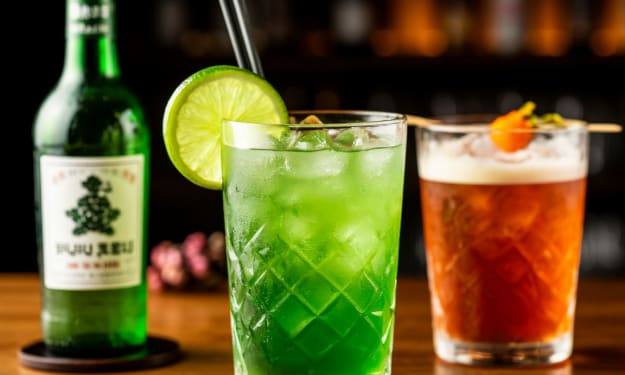
The Rise of Soju Cocktails from Korea
For years, soju has been a staple of Korean dining culture — poured generously at barbecues, shared between friends, and often accompanied by laughter, clinking shot glasses, and late-night karaoke. But lately, this clear, subtle spirit has stepped out of its traditional setting and into the hands of mixologists around the world.
By Ava Mitchellabout a year ago in Proof
Balkan Spirits in the Glass: Rakija, Slivovitz & More
The Balkans are known for their rich traditions, vibrant cultures, and hearty hospitality — but one of the region’s most enduring treasures is its array of distinctive fruit brandies and spirits. From Serbia to Bulgaria, Croatia to North Macedonia, local distillates like rakija, slivovitz, komovica, and loza have long been a symbol of celebration, community, and family legacy.
By Ethan Chenabout a year ago in Proof
Plant-Based Spirits: The Future of Non-Alcoholic Cocktails
The cocktail world is evolving — and fast. As more people embrace wellness, mindfulness, and moderation, non-alcoholic cocktails are no longer an afterthought. At the forefront of this movement? Plant-based spirits — sophisticated, botanical-driven alternatives to traditional alcohol that are reshaping how we think about drinking.
By Sofia Mertinezzabout a year ago in Proof
The Role of Local Spirits in Global Cocktail Culture
In today’s rapidly evolving cocktail landscape, bartenders and home mixologists alike are looking beyond vodka, gin, and whiskey for inspiration. The spotlight is now shining brightly on local spirits — unique, often centuries-old liquors that reflect the culture, climate, and history of their place of origin. From Brazil’s cachaça to Korea’s soju and Mexico’s mezcal, local spirits are taking a leading role in global cocktail culture.
By Ethan Chenabout a year ago in Proof