bartenders
You might just see bartenders as a means to getting your liquid courage, but there's plenty to learn about their culture, behavior and fascinating idiosyncrasies.
Liquid Language: Using Flavor to Tell Stories Without Words
There are stories we tell with words — and then there are those told in taste. A well-crafted cocktail is more than just a drink; it’s a kind of sensory language, with each flavor speaking in metaphor, each texture delivering mood, and every temperature shift evoking an emotional tone. Just like music or painting, a drink can express the ineffable — nostalgia, longing, joy, rebellion, or even grief — all without uttering a single word.
By Ethan Chenabout a year ago in Proof
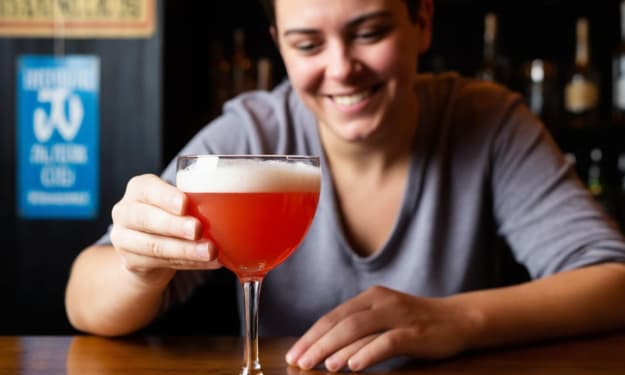
Shaken or Stirred: What Your Cocktail Style Says About You
When James Bond famously ordered his martini “shaken, not stirred,” he wasn’t just being picky — he was revealing something about himself. Beneath the surface of that iconic line lies a philosophy of personality. Your cocktail preparation preference, whether you lean toward the dynamic shake or the gentle stir, speaks volumes about your temperament, your rituals, and even the way you engage with the world.
By Sofia Mertinezzabout a year ago in Proof
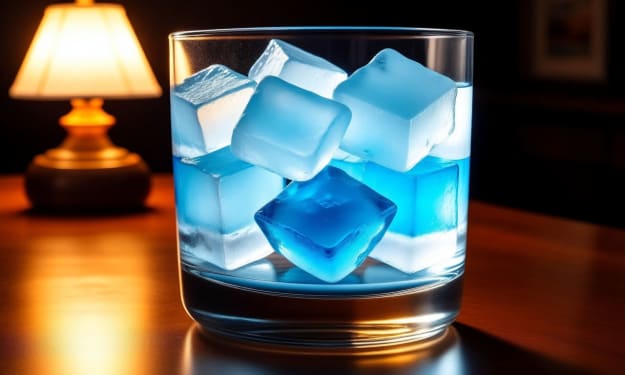
The Alchemy of Ice: How Temperature Shapes Emotion in a Glass
We often overlook ice, treating it as a neutral background player in the theater of cocktails. But ice is more than frozen water — it’s emotional architecture. It shapes not just the temperature of a drink, but its texture, dilution, and how each note in the flavor profile reveals itself over time. Ice is time made tangible. It paces a drink. It holds and releases. It suspends a moment, then lets it melt.
By Ava Mitchellabout a year ago in Proof
Bittersweet: The Emotional Palette of Cocktail Ingredients
Cocktails are more than just beverages — they’re emotional compositions in liquid form. A Negroni’s bite can taste like resilience. A French 75’s sparkle might feel like celebration. The ingredients we choose don’t just combine flavors; they blend states of being. Just as a painter uses color to evoke mood, the mixologist selects ingredients to summon emotional resonance. The bitter, the sweet, the sour, the smoky — each has its place in the emotional spectrum of the cocktail experience.
By Aisha Patelabout a year ago in Proof
Sip by Sip: The Slow Art of Drinking in a Fast World
In a world that constantly demands more — more speed, more productivity, more connection — it’s no surprise that we often carry that urgency straight into our evenings. Even the things that are meant to relax us become rushed: we gulp down dinner, we mindlessly scroll during a glass of wine, we multitask our way through moments that could be meaningful. But what if the simple act of drinking — one sip at a time — could become a practice in slowing down?
By Ethan Chenabout a year ago in Proof
A Drink to Mark the Moment: Toasting Life’s Tiny Wins
We’re taught to wait for the big moments — the promotions, the birthdays, the milestones — before we raise a glass. But life, in its truest form, is made up of tiny, barely noticeable victories. The email you were dreading that you finally sent. The plant you kept alive for three months. The hard conversation you managed with grace. These aren’t “Instagram-worthy” wins, but they are yours. And they deserve to be toasted.
By Sofia Mertinezzabout a year ago in Proof
Mixology as Meditation: Stirring, Sipping, Breathing
In a world driven by productivity, where every moment is scheduled and every breath is rushed, there’s something quietly radical about slowing down. Mixology — the art of crafting a cocktail — might not be the first thing that comes to mind when we think of meditation, but the two are more connected than they seem. When practiced mindfully, the process of making and enjoying a drink becomes a sensory ritual, a meditative pause in the blur of daily life.
By Ava Mitchellabout a year ago in Proof
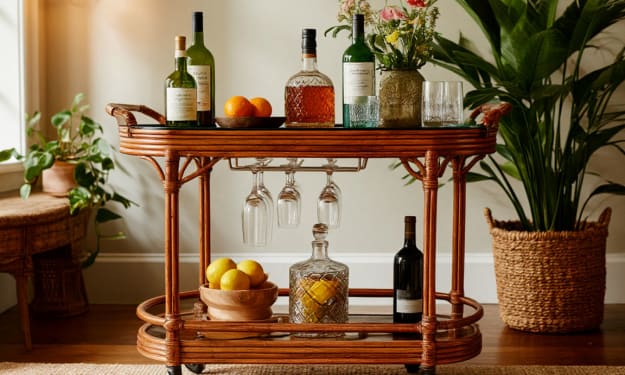
Designing a Mood-Based Bar Cart for Every Emotion
A bar cart isn’t just a place to store bottles and glassware—it’s a reflection of your mood, personality, and the atmosphere you want to create at any given moment. Designing a mood-based bar cart means going beyond the basics and thinking about how each ingredient, garnish, and cocktail recipe can resonate with different emotions. Whether you’re seeking comfort, excitement, relaxation, or inspiration, your bar cart can become a personalized toolkit to help you get there.
By Aisha Patelabout a year ago in Proof
Cocktail Astrology: What to Drink Based on Your Sign
Astrology has long offered insight into our personalities, desires, and challenges. But what if your zodiac sign could also guide you to the perfect cocktail? Whether you're a fiery Aries or a dreamy Pisces, there's a drink that reflects your inner essence — not just in flavor but in mood, energy, and emotional resonance. Think of it as sipping in sync with the stars.
By Ethan Chenabout a year ago in Proof
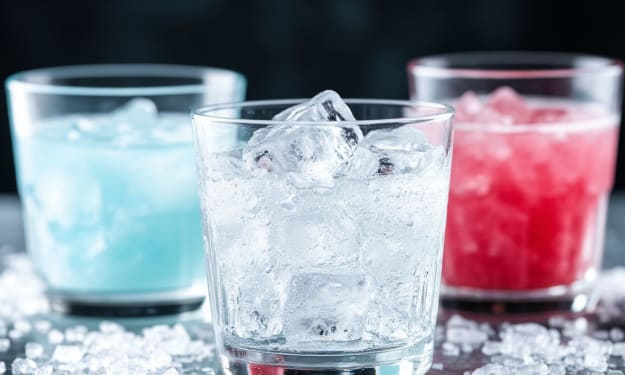
What Your Ice Says About You: Personality Through Preparation
We often overlook the simplest element in our cocktails — the ice. But ice isn’t just functional; it’s expressive. The way you freeze, crack, or cube your ice can quietly tell the story of your personality. Crystal-clear blocks suggest intention and care. Crushed ice evokes a playful, go-with-the-flow vibe. Hand-chipped spheres? A flair for the dramatic. Like the clothes we wear or the music we play, our ice habits reflect how we move through the world.
By Sofia Mertinezzabout a year ago in Proof
"I Made a Copy of a Labubu Doll — It Was Easier Than You Think"
I’ve always loved the charm and quirkiness of designer toys, but one figure in particular had captured my heart: the Labubu doll. With its mischievous grin, oversized ears, and wild hair, Labubu looked like something straight out of a dream—or a nightmare, depending on your perspective. The problem? The real ones were either sold out or insanely expensive on resale sites. We're talking $200 and up for a six-inch toy. At first, I just stared longingly at photos online. Then I had a wild thought: Could I make one myself? I’m not an artist. I’ve never sculpted anything beyond a sad little clay bowl in grade school. But I figured, why not try? Worst case, I waste a weekend. Best case, I end up with my very own DIY Labubu. So, I gathered supplies. I went to a local art store and picked up: Polymer clay (the kind you bake in the oven), A set of small sculpting tools (nothing fancy, just some plastic ones), Acrylic paints and tiny brushes, A wire frame for structure, Some fluffy yarn for hair. It all cost me around $30—way less than the real thing. I set up at my kitchen table with a YouTube tutorial playing on repeat. The artist wasn’t even making Labubu specifically, but their method of building a figure from wire and clay gave me the foundation I needed. I started with a basic skeleton made from aluminum wire. Think of it like a tiny stick figure with thicker limbs. This would hold the shape of the doll while I sculpted around it. Covering it with clay felt like putting muscle on a bone—it began to look like a creature. The hardest part was the face. Labubu’s expression is iconic. It’s sly and weirdly cute at the same time. Mine… looked like he’d just smelled something awful. But I kept going. I realized something quickly: perfection wasn’t the goal. I wasn’t recreating Labubu down to the last detail. I was making my own version of him, and that gave me freedom. By the time I finished the sculpt and baked it in the oven, I was exhausted. The doll stood about six inches tall and looked like a haunted squirrel. But I loved him. Painting was the fun part. I mixed different shades of gray and brown to give him some texture, painted the eyes glossy black, and gave the teeth a cartoonish shine. For the hair, I glued on tufts of yarn and fluffed them out with a comb. It looked surprisingly close to the original. When I stepped back and looked at the finished doll, I laughed. Not because it was bad, but because I’d actually done it. My little DIY Labubu sat proudly on my shelf, slightly crooked ears and all, looking every bit as mischievous as the real ones. I didn’t expect what happened next. I posted a photo on Instagram with the caption: “Made my own Labubu because I couldn’t afford the real deal 😂”. Within an hour, I had comments like: “Wait… you MADE this???” “Can you make me one??” “This is actually better than the original!” That gave me an idea. I started documenting the process more seriously. I took step-by-step photos, shared tips, and even recorded a timelapse of my next attempt. My second DIY Labubu was smoother, more refined. I started giving them personalities—one had a tiny backpack, another wore little goggles. What started as a personal weekend project turned into a full-blown hobby. People began requesting custom versions. I never sold any (out of respect for the original artist, Kasing Lung), but I made a few as gifts for friends who were also fans of Labubu. The best part? I learned something unexpected along the way: creativity doesn’t require permission. You don’t need to be a professional sculptor or have an art degree to make something meaningful. You just need to try. Sure, my first doll was a little lopsided. But it was mine. It had personality, quirks, and most importantly, a story. I also realized how accessible creativity has become. The internet is full of tutorials, communities, and affordable materials. You can learn almost anything with a bit of curiosity and patience. Today, my handmade Labubu army sits on a shelf next to my computer. Every time I glance at them, I’m reminded of that first moment—of choosing to create instead of consume, of making something with my hands instead of just scrolling and wishing. So if there’s a designer toy you love but can’t afford, or a piece of art you admire from afar, I have one piece of advice: try making your own. It doesn’t have to be perfect. In fact, the imperfections might be the best part. Because sometimes, the copy has more heart than the original.
By Nizam khanabout a year ago in Proof
Creating a Mindful Aperitif Moment Before Dinner
In the blur of modern life, dinner often arrives as a rushed endpoint — something to throw together between obligations or consume in front of a screen. But what if you reclaimed the space before dinner as a moment of presence? Enter the mindful aperitif: a gentle pause, a sip of intention, a way to ease from day into evening with grace.
By Ava Mitchellabout a year ago in Proof