
Inside 1000L Spirit Distillation: Equipment, Capacity, and Craft
Discover what to consider when selecting a reliable distillation setup for gin, whisky, and other premium spirits.

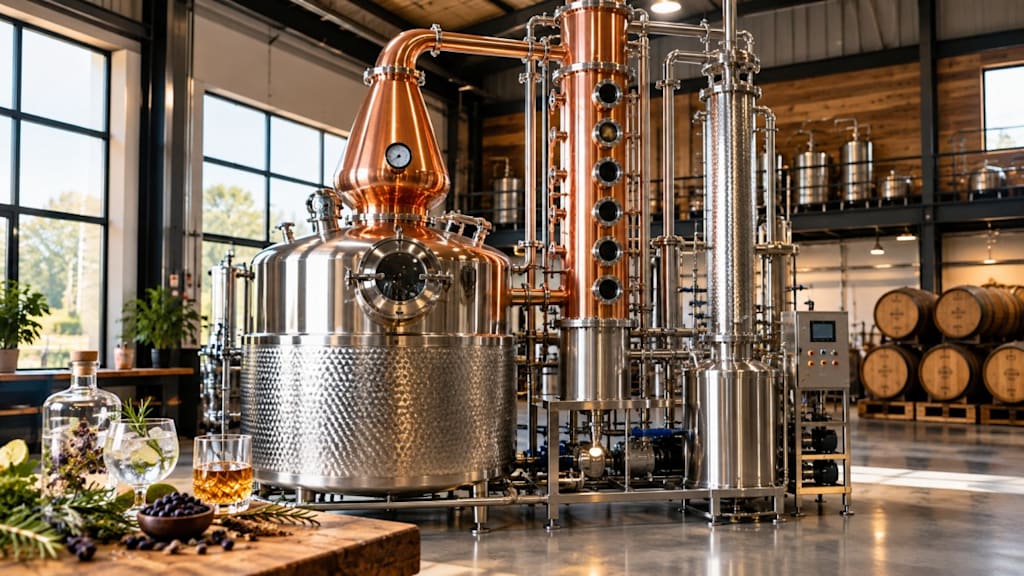
Understanding the Role of a 1000L Distillation System
For a growing distillery, equipment capacity is more than a number on a specification sheet. It affects batch size, production planning, energy use, cleaning routines, and the ability to maintain consistent results. A 1000L distillation system sits in an interesting position because it can provide meaningful commercial capacity without the footprint of a much larger industrial installation.
Modern 1000L systems can be designed for several types of spirits, including gin, whisky, vodka, rum, and brandy. Depending on the configuration, producers can choose between pot still, hybrid, or column distillation approaches. Some systems also combine stainless steel construction with copper components to provide durability while supporting the characteristics required for particular spirits.
For craft producers, this flexibility can be especially valuable. A distillery may begin with one primary spirit and eventually introduce seasonal or specialty products. Investing in equipment capable of handling different production methods can therefore reduce the need for a completely separate still later.
How Equipment Design Influences Spirit Quality
Distillation is fundamentally a separation process. Heat causes components in a fermented liquid to vaporize, and those vapors are subsequently condensed back into liquid. However, professional spirit production involves much more than simply heating a fermented wash.
The design of the still, column, condenser, heating system, and associated controls can influence how the distiller manages the process. A modern 1000L system may include temperature monitoring, reflux control, condensers, collection systems, and different column configurations to give producers greater control over the finished spirit.
This matters because consistency is one of the biggest challenges in commercial production. A distiller needs to be able to repeat a process rather than rely entirely on intuition from one batch to the next. NDPAC's 1000L systems, for example, are described as supporting stable batch distillation with options for pot still, hybrid, and column configurations.
For whisky producers, the equipment needs to preserve the desired character of the fermented wash while allowing unwanted compounds to be managed. The Scotch Whisky Association notes that single malt Scotch whisky is produced by batch distillation in copper pot stills, illustrating the importance of still design in traditional whisky production.
Copper Columns, Gin Baskets, and Flexible Production
Copper is a familiar material in spirit distillation, particularly where producers want equipment suited to aromatic and traditional spirits. A copper column can be incorporated into a hybrid system alongside stainless steel components, creating a setup that combines practical durability with the properties associated with copper distillation.
A flexible system can also be useful when producing gin. Unlike whisky, gin production places significant emphasis on botanical character. Depending on the production method, botanical ingredients may be introduced during redistillation using equipment such as a gin basket.
This is one reason a configurable system can be more useful than a basic still designed for only one product. Some 1000L commercial systems offer different heads, rectification columns, dephlegmators, condensers, and gin baskets that can be configured around the spirit being produced.
For producers comparing gin distillation equipment, practical questions include:
Is a gin basket required for the intended production method?
Can the column configuration be adjusted?
Is the condenser appropriately sized?
Can the equipment handle the desired botanical profile?
How easily can the system be cleaned between different products?
These details can have a greater impact on everyday production than simply choosing equipment based on capacity.
Choosing the Right Heating and Cooling Configuration
Heating and cooling are two of the most important operational elements in any distillery system. A 1000L still needs a heating method that provides reliable control while matching the utilities available at the production site.
Steam and electric heating are common options. Some equipment can also be customized around other heating requirements. The appropriate choice depends on factors such as available infrastructure, operating costs, local regulations, and the distillery's production schedule. NDPAC's published 1000L equipment specifications list steam and electric heating among the available configurations.
Cooling is equally important because the vapor leaving the distillation system must be condensed efficiently. Shell-and-tube and coil-style condensers are among the configurations used in commercial distillation equipment.
A good system should therefore be considered as a complete process rather than a collection of individual components:
Component Main purpose
Boiler or pot Holds and heats the fermented liquid
Distillation column Supports separation and reflux
Copper components Can support the desired spirit character
Condenser Converts vapor back into liquid
Gin basket Allows botanical infusion during suitable gin processes
Control system Helps monitor operating conditions
CIP system Simplifies cleaning and maintenance
What Distilleries Should Consider Before Buying
Buying a 1000L system is a significant decision, so it is worth looking beyond the equipment's headline capacity. A distillery should first establish what it actually intends to produce and how frequently the equipment will operate.
The following questions can help narrow down the right configuration:
What spirits will be produced? A whisky-focused operation may need a different setup from a distillery specializing in gin or high-purity neutral spirits.
What batch size is practical? A nominal 1000L capacity does not necessarily mean every batch will operate at the same working volume.
Which heating system is available? Existing steam infrastructure may make one configuration more practical, while another facility may prefer electric heating.
How will cleaning be handled? CIP features can make routine cleaning more efficient, particularly in commercial environments.
Is future expansion planned? Modular equipment can make it easier to add fermentation, storage, cooling, or other production capacity later.
The available 1000L systems vary considerably in configuration. Published specifications for one NDPAC system, for example, list an effective working volume of approximately 800 to 900L, while other configurations can be customized around different production requirements.
For buyers, this highlights an important point: equipment should be matched to the complete production plan rather than purchased solely because a particular capacity sounds suitable.
Conclusion
A 1000L distillation system can provide a practical foundation for craft and small-to-medium commercial spirit production. Its value comes from the combination of capacity, flexibility, process control, and the ability to configure components around different spirits.
Copper columns, suitable condensers, flexible heating options, gin baskets, and effective cleaning systems can all contribute to a more practical production environment. At the same time, the best equipment choice depends on the spirit being produced, expected batch volumes, available utilities, cleaning requirements, and future growth plans.
For distilleries seeking reliable whisky distillation equipment or flexible systems for gin and other spirits, understanding these factors before purchasing can make the difference between simply owning a large still and having equipment genuinely suited to the production process.
About the Creator
MUHAMMAD SHAFIE
Muhammad Shafie is a writer and blogger passionate about digital culture, tech, and storytelling. Through insightful articles and reflections, they explore the fusion of innovation and creativity in today’s ever-changing world.
Enjoyed the story? Support the Creator.
Subscribe for free to receive all their stories in your feed.
Comments
There are no comments for this story
Be the first to respond and start the conversation.