
No You Don't Have To Cancel Every Brand To Be A Good Queer
The Uncomfortable Truth About Cancel Culture

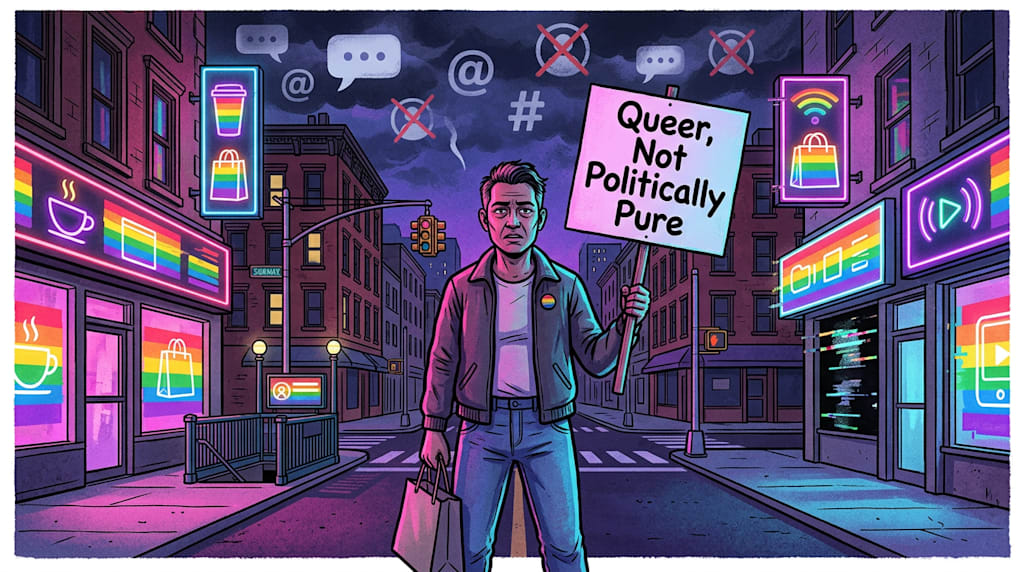
If you’re queer right now, you’ve probably been told your shopping cart is a political statement.
Which coffee you drink, which streaming platform you use, which sneaker brand you wear—everything is supposed to signal perfect alignment with your values or expose you as a secret traitor. It’s exhausting, it’s dishonest, and it quietly turns queer life into a 24/7 performance review.
The truth: you don’t have to cancel every misaligned brand to be a good queer. You do need to know the difference between boycotting, canceling, and real accountability—and be brutally honest about what you’re actually doing.
Boycott, cancel, accountability: three very different things. Let’s get our terms straight, because right now they’re a mess.
Boycotting: “I want you to change."
- Boycotts are old‑school consumer activism: we temporarily withhold money or attention to pressure a company to change specific behaviors.
- Historically, queer communities have used boycotts effectively—from targeting anti‑LGBTQ+ donors to pressuring companies that platform hate—precisely because the goal is change, not permanent exile.
- Research on consumer activism is clear: boycotts are about leverage, and they usually come with demands and a path back if the company actually shifts.
Canceling: “I want you gone."
- Canceling, as it’s evolved, is more extreme: it aims at permanent disengagement and social death, not reform.
- Academic work on brand cancellation shows that people who “cancel” often aren’t interested in whether the company ever changes; they’re signaling their own morality and don’t plan to return.
- In queer spaces, that looks like: “We’re done with them forever, and if you’re not, you’re part of the problem.”
Accountability: “I want the harm addressed and repaired.”
- Accountability is not a shopping behavior; it’s a process: naming harm, listening, changing practices, and, when possible, making repair.
- Transformative justice thinkers have warned for years that when we treat cancellation as accountability, we actually weaken movements: we get punishment without change, exile without learning.
- Real accountability asks: Who was harmed? What do they need? What will stop this from happening again? How will we know it’s real?
When you call everything “cancel culture,” you blur these lines.
That’s how you end up feeling guilty for keeping Netflix while also organizing a targeted boycott of a company funding anti‑trans legislation—as if those are the same thing. They aren’t.
A queer framework: three buckets for brands. Here’s a simple framework you can actually live with, rooted in what consumer‑activism research and queer history say works.
Bucket 1: Boycott (strategic “no”)
Use this for brands where:
- There is a specific, identifiable harm (funding anti‑LGBTQ+ groups, rolling back DEI, platforming hate) and a clear demand for change.
- There’s evidence that economic pressure and reputational damage could move them.
Queer and allied consumers have real leverage; when brands back down from LGBTQ+ support to appease bigots, they risk losing more customers overall, especially among younger and progressive buyers. Recent reporting shows that companies that ghost Pride or roll back queer support have taken tangible hits in reputation and, in some cases, market value.
What this looks like in practice:
- You stop buying.
- You communicate why (emails, petitions, posts with clear demands).
- You keep the door open if they make real, verified changes.
Bucket 2: Cancel (rare, permanent “no”)
Reserve this for the truly non‑negotiable cases, and be honest about what you’re doing. Research finds that canceling is typically:
- Permanent: canceling assumes no path to redemption; once canceled, the brand is dead to you.
- Social: the motivation is often virtue signaling—demonstrating one’s own morality or avoiding shame—more than actually changing corporate behavior.
For queer folks, that might mean:
- A brand that repeatedly and unapologetically funds anti‑LGBTQ+ terror, not just bad optics.
- A company that doubles down after being called out, mocks the community, or escalates harm.
If you cancel, own it:
“I’m not trying to get them to change. I’m done with them. This is about my own line in the sand, not a campaign for reform.”
Bucket 3: Conscious contradiction (honest “yes, but”)
This is where most of modern life actually lives.
Use this when:
- The brand is messy—performative Pride, inconsistent allyship, DEI one year, beige silence the next—but also woven into infrastructure, art, or community in ways that aren’t easily replaced.
- You don’t believe a full boycott will be impactful enough to justify the personal cost—or you’re simply not willing to make that sacrifice right now.
Here, your job is honesty, not purity:
- “I keep my subscription because I love queer shows on this platform, and I also hate how they treat trans creators. I’m watching them and talking about it, not pretending it’s clean.”
- “I still shop there, but I spend part of my budget at explicitly queer‑owned or justice‑centered businesses to build alternatives.”
This is where you refuse to gaslight yourself. You admit you’re living with contradiction instead of pretending that buying the “right” brand will single‑handedly liberate anyone.
How to decide: five questions before you “cancel”
Before you tweet, boycott, or nuke a brand from orbit, run through these:
1. Is my goal change, punishment, or safety?
- Change → boycott / advocacy.
- Punishment → be honest you’re canceling.
- Safety → block, mute, and set boundaries; that’s about your nervous system, not a public campaign.
2. Who pays the price for my choice?
- Executives? Shareholders?
- Or front-line queer workers, contractors, and small creators who depend on that platform or paycheck?
3. Is there a clear demand or just vibes?
- “Stop funding X group, disclose donations, commit Y.”
- Or just “do better”? Boycotts without demands rarely change anything.
4. Is there any path back?
- If no amount of change would make you re‑engage, that’s canceling, not accountability.
- That’s fine—but name it as such so others can decide their own approach.
5. Am I telling the truth about what I still use?
- If you secretly keep the subscription you told everyone to cancel, the issue isn’t the brand—it’s the performance.
The queer uncomfortable truth: our power is bigger than our purchases. Consumer activism matters. Boycotts have helped queer communities push companies to drop anti‑LGBTQ+ donations, restore Pride collections, and publicly commit to our rights when it wasn’t easy. But serious organizers and justice movements are clear: boycotts and canceling are tools, not the whole toolbox.
If all we know how to do is cancel, we end up with:
- No nuanced strategy for change.
- No room for companies (or people) to evolve.
- A lot of loud purity, and surprisingly little power.
Our power is bigger than our receipts. It lives in how we organize, where we show up, what policies we fight for, what mutual aid we fund, and how loudly we demand that brands who claim us in June stand with us in November. You don’t have to cancel every brand to be a good queer.
You do have to get specific about when you’re boycotting for change, when you’re canceling for your own line in the sand, and when you’re choosing to live with contradiction and say so out loud.
That’s not political purity. That’s political adulthood.
Written where human nervous systems and machine logic collide. AI‑assisted, human owned.
About the Creator
Joshua Estrin, PhD
Queer AI anarchist tracking unit economics, politics, and pop culture as the world spirals toward full Handmaid’s Tale. Built $48M in revenue - Superman hat non‑negotiable
Enjoyed the story? Support the Creator.
Subscribe for free to receive all their stories in your feed.
Comments
There are no comments for this story
Be the first to respond and start the conversation.