
BRACELET

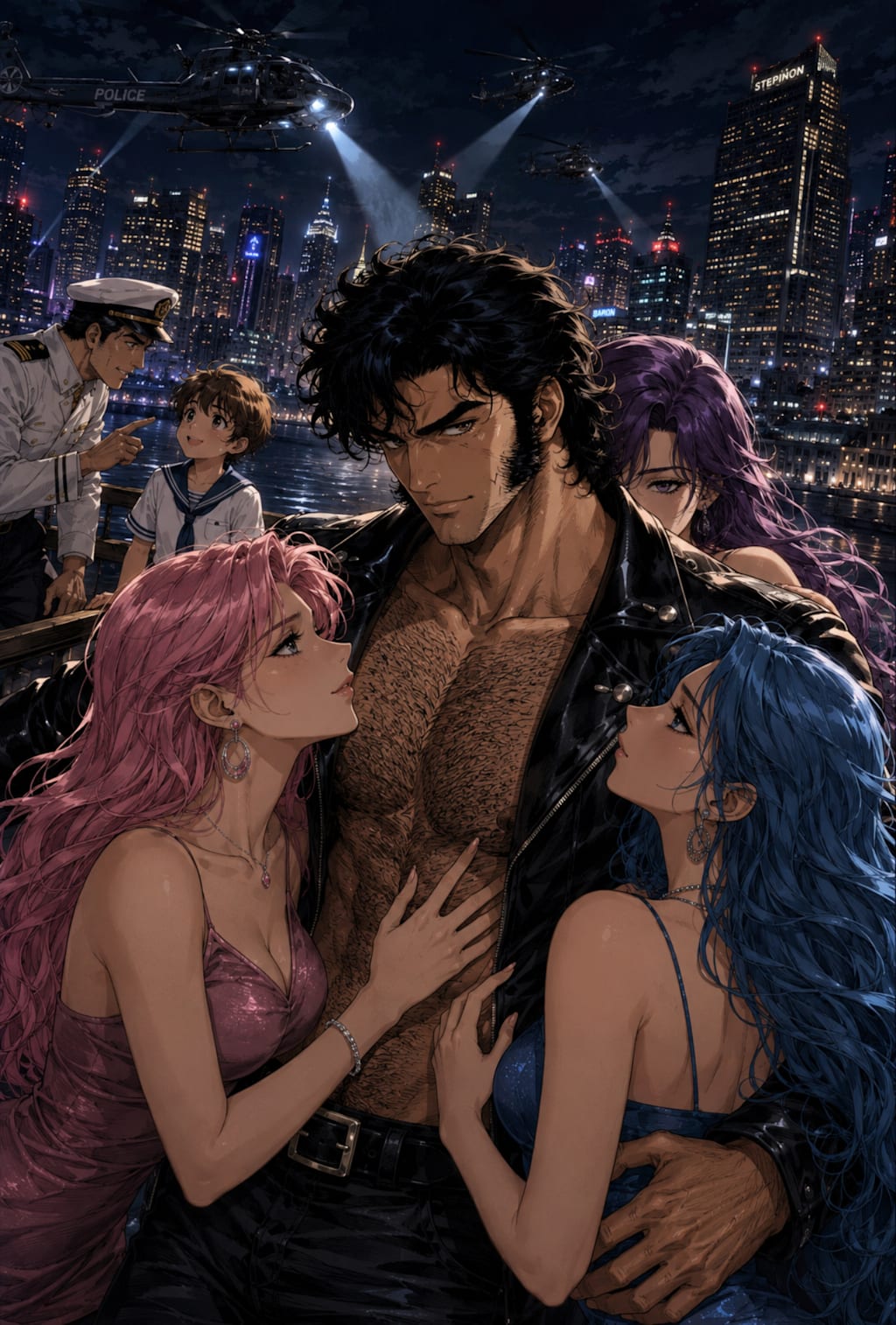
CHAPTER 1
THE BARON OF STEPHIÑON
Miami Highs Public School was a rusted ruin abandoned by the state.
The walls were covered in blood, obscene graffiti, gang threats, and the names of boys sentenced and executed before turning fifteen years old. Ceiling fans hung overhead making an unbearable metallic noise:
clack… clack… clack…
Outside, the entire neighborhood smelled of burnt gasoline, cheap fried food, humidity, and gunpowder.
Police cruisers with tinted windows moved slowly like exhausted sharks.
Children learned to recognize gunshots before they learned to read.
A group of gangsters celebrated the death of a rival leader and their new alliance with two corrupt cops.
The youngest entered the room of his dying grandmother. The smell of a three-day-old corpse was almost unnoticeable to those restless, drugged young minds.
—Damn, grandma… maybe this afternoon they’ll let me go get your medicine. Don’t go dying on us…
But the old woman was already halfway gone.
Then his brother arrived, the one who had spent weeks in prison after doing dirty jobs for those corrupt cops. He walked in to greet his grandmother.
—Hey grandma!!
But the dead do not speak.
When he saw the frozen expression on the corpse, he noticed the smell too.
—The boss needs me today. I’ll stop by for the medicine while I’m out.
But the young man pulled his little brother aside.
—I think we should leave her alone.
He knew his little brother could not leave without the boss’s permission. And by trying to protect him, he had let her die.
He checked the refrigerator and found a bottle of yellowish water and a radish.
—My grandma doesn’t love me anymore!
The drugs twisted his thoughts into something distorted.
—Did you eat anything?
—Pancha gave me some apples. Want the last one?
He picked up the radish and felt sadness crawl through him.
“I have to do something… my family is disappearing.”
—I got an idea. What if we go eat hot dogs?
—But I have to go see the boss.
—Fine, we’ll go there too. But whatever you gotta do… I’ll do it for you.
So he took him out for hot dogs, and afterward they headed to the Port of Miami. In the distance he spotted a young girl.
It was Camila, one of his classmates.
—Hey… what are you doing here after all this time? And isn’t that kid a little too young?
—He’s my brother. I need you to distract him while I leave. Talk to your dad and have him take the kid to Bimini as an assistant. Bring him back in three or four months.
—Haha! My dad isn’t looking for assistants, especially not tiny ones. Try a kindergarten instead.
—Then let him hide on the boat and—
—And what do I get out of helping you?
—Well… my affection.
—I want more than your affection.
—First let me prove my affection. Then you can add whatever’s missing afterward.
—And what’s missing would be money, idiot. Can you get me that by tonight?
—You know what? I changed my mind. Pancha’s a way better friend than you.
—Yeah, but she works for the boss. And she doesn’t have a father like mine.
—You’re not promising me anything.
—I’ll do what I can. I don’t know if my dad sails tonight or tomorrow. I don’t know if your brother will stay quiet or if they’ll open the crate where I hide him on the ship.
—Hey, no. Forget it.
—First you tell me—
But suddenly he started crying.
Meanwhile his little brother stared at the boats. One hatch opened, and a mustached man smoking a pipe began talking to him.
Camila noticed from afar that her father had already met the boy.
And when she saw the tears running down her friend’s face, she lowered her eyes.
Then she heard him say:
—My grandma died while my brother was high… I don’t even know for how long.
—Look… just go handle your business.
—But—
—Leave your brother with me. Tonight we’ll sort things out. Meet me where Pancha is.
—Pancha and I got some issues and—
—I know. That’s exactly why I’m meeting her. We’re gonna drink something my dad forgot.
—Hey, I don’t want trouble. It could—
—What, you gonna get jealous?
—No, you girls can do whatever you want. I’m talking about the drugs.
—Relax, my dad doesn’t do drugs. What he forgot was a bottle of wine. And I want to share it with you guys.
—Oh… alright then.
—You coming?
—Of course. I’ll be there. Though…
He thought for a second:
“Once my little brother is safe, I’ll kill that bastard boss. Then I’ll bury grandma.”
And he smiled.
—What?
—Better get ready. Because I’m not letting you go.
—Haha! We’ll see if you can handle the voltage of two hungry she-wolves.
—Same goes for you.
Camila noticed her father handing the boy a real apple.
He devoured it immediately.
—One more thing…
—What now?
—Bring condoms.
The young man disappeared into the city, leaving his brother to Camila’s plans.
As she walked toward her father she thought:
“This looks easy enough. They already became friends.”
Her father asked:
—And your friend? He’s not taking the little guy?
—Well, the little guy doesn’t really have anywhere to go. Or maybe he does… traveling with you.
The boy looked around and realized his brother was gone.
—Where’s my brother?
—He’s waiting for you in Bimini. He’s handling some business with—
—Okay. Mister, do you have more of these?
—Very funny…
Camila’s father was a compassionate man. Without asking too many questions, he understood the situation.
He looked at the child and, finding him likable, smiled.
Camila helped the boy onto the boat.
—Ever been on one of these before?
—No, but I’d sure like to know more apples. I thought they were small and sour.
The man welcomed him and offered him food.
—If you do what I say, you’ll discover better things. Hungry?
—Very.
Camila said goodbye and stepped into a small office at the port, sheltering beneath an abandoned roof. From there she watched her father’s boat sail away while she pulled a wine bottle from beneath some blankets.
That night the sky was red.
Not sunset red.
Red from fires.
An explosion shook three entire blocks.
BOOOOM.
Windows trembled violently. Alarms screamed in every direction. People shouted while a police truck flew through the air after an improvised grenade launcher hit it from below.
—RUN!
—LOCK THE DOORS!
—GET DOWN!
Military helicopters flooded the avenues with gigantic white spotlights. Their rotors roared like mechanical beasts above the buildings.
Beneath that urban storm, a figure sprinted across the rooftops.
Pitch black.
Dark mask.
Coat whipped by the wind.
He leaped between buildings with impossible, almost circus-like agility, using pipes, electrical wires, and antennas as though he had been born among the heights.
It was The Baron of Stephiñon.
Fifty patrol cars followed behind him.
Two military tanks smashed through street stands, hydrants, and abandoned motorcycles while setting up barricades.
People ran in terror.
An old woman prayed behind a laundromat while hot shell casings fell around her like golden rain.
—There he is! FIRE!
Tacatatatatata—
Automatic rifles lit up the night.
But The Baron of Stephiñon twisted through the air, slid down a clothesline, and crashed through an open window just before a missile struck the building.
BOOOOM.
Bricks, fire, and smoke swallowed the street.
The boss had fallen.
Some strange figure had shot him point-blank.
Then she appeared.
Americana the Captain.
Black boots.
Tactical jacket.
Hair thrashing in the wind.
She ran across the rooftops after the fugitive without fully understanding what was happening. She only knew two things:
someone was spreading chaos…
and everyone seemed far too desperate to catch him.
—Baron! STOP!
He barely glanced back.
Even while fleeing, he looked calm.
He jumped toward another rooftop.
Americana the Captain followed.
The helicopters descended so low that windows exploded from the pressure.
People in the neighborhood shouted excitedly, watching the chase like some illegal spectacle.
Then The Baron of Stephiñon vanished.
Simply vanished.
A silhouette appeared where the old woman’s corpse rested. When he removed the mask, the human feeling of grief returned to him… but mixed with satisfaction.
—I did it, grandma!!
The dead woman remained frozen, her pupils wide and empty.
He pulled from his pocket a strange device stolen from the boss.
A bracelet covered in electronic lights.
He grabbed the corpse’s rotten arm and placed it there.
The body dissolved into white ether.
And suddenly Tristania appeared.
—Where am I?
The woman looked around, wrapped in a white sheet.
—No time for answers… you’ll have your chance to tell me your story too, said the Baron of Stephiñon while she smiled.
—I thought it was over when I found the old man’s skeleton in the desert…
—I have no idea what you’re talking about, but you probably crossed a temporal portal.
She looked around and noticed walls instead of that desolate wasteland.
—What year is this?
—2026.
While introducing themselves, he handed her a large shirt to cover her nudity.
—Sorry, but I don’t wear these things.
—Trust me. You’ll need it.
Suddenly the door burst open.
The two jumped out the window.
Falling from the tenth floor, he grabbed her waist and held tightly to a rain pipe with his other hand. She reacted instantly, clutching the aluminum structure as they descended gracefully into an alley.
A motorcycle sped past nearby.
They hid behind garbage containers while the Baron noticed a sewer entrance.
Americana the Captain stopped abruptly.
She looked around in confusion.
Then she heard it.
CLANG.
An open manhole.
She ran toward it.
All she could see was black water moving between rats and floating filth.
—No way…
The smell nearly made her vomit.
Below, The Baron of Stephiñon and Tristania pushed through the filthy water, diving desperately.
He had lost his mask.
And Tristania had been swept away by the current.
But the Baron had bigger problems.
Police were throwing grenades, and shrapnel had wounded him badly.
Now his face was covered in blood and sewage.
At one point he surfaced to gasp for air.
“The strange girl slipped away. She’s probably dead already. I have too much to process.”
He inhaled once more before diving again.
Terrible idea.
His stomach twisted violently.
But escape was his only option.
Holding the little air left in his lungs, he smiled bitterly:
“At least I’m skipping grandma’s funeral.”
He laughed harder this time.
Like a naïve child accidentally trapped in a war far too large for him.
Deep down, he still didn’t fully understand the political and criminal monster he had unleashed by killing the boss… and stealing that strange artifact.
Fortunately, he heard the sound of pressurized water nearby.
Warm water.
“There’s gotta be a bathroom close.”
He smashed upward.
Tiles shattered.
It was the bathroom of a pharmacy.
He emerged disoriented, covered head to toe in filth.
He grabbed something from a shelf.
Then a voice froze him in place.
—Hold it right there, thief.
But the Baron of Stephiñon escaped skillfully, throwing himself once more into the chaos of a mad pursuit.
Meanwhile, inside Pancha’s apartment above an old souvenir shop near Miami’s maritime station—
—Yeah, Camila, turn that radio off.
Soft music played.
Perfect for wine and something more.
The fan spun lazily overhead.
Camila laughed while sitting on the kitchen counter as Pancha smoked beside the rain-covered window. Then they clinked glasses.
They were completely different.
Like two kittens trying to survive through happiness alone.
Pancha lived driven by impulse, desire, adrenaline, and chaos. She flirted even while arguing. She seemed incapable of emptiness.
There was something dangerous in her eyes.
A cruel beauty.
A way of speaking that always felt poisoned.
Camila, on the other hand, was sweet and gentle, though she often pretended hardness to protect herself from the world. She believed in love.
And she kept her promises.
For a brief moment, while staring into Pancha’s wild eyes, Camila realized she had reached the limits of her kindness. Deep down, she only wanted to get closer to the mysterious Baron of Stephiñon.
“Do I really love him? Maybe it’s just obsession. But… what do I do with this woman? Well, if the Baron sleeps with her for whatever reason… maybe I should too…”
Suddenly—
The door exploded open.
Both women jumped in fright.
The Baron of Stephiñon stood there drenched, covered in liquid sewage, breathing like a hunted animal.
Camila and Pancha screamed.
—Dear God… look at you…
Pancha covered her nose.
—You look like a sewer with legs.
—Thanks, replied the Baron, exhausted.
Camila approached laughing.
—You smell like shit.
The Baron barely understood why these women still helped him.
Pancha tossed him a towel.
—Go shower before you kill someone with that smell.
—Yeah… okay…
Obedient and completely drained, he walked into the bathroom.
He turned on the shower.
Water mixed with blood and decomposing filth.
Then—
Gunfire outside.
TATATATATATA—
Sirens.
Screams.
Doors being smashed open.
Americana the Captain stormed in alongside armed police.
—NOBODY MOVE!
Camila slowly raised her hands.
Pancha didn’t even stop smoking.
The Baron of Stephiñon stepped out wearing only a towel.
Everyone stared.
Absolute silence.
One cop finally spoke:
—…That’s the terrorist?
—I’m not a terrorist.
Americana the Captain interrupted.
—You’re under arrest for stealing condoms from a pharmacy. And what else? she asked another officer.
—Commissioner, he’s detained—
But the Baron defended himself.
—This neighborhood’s always been paradise for gangsters and criminals!
—Well now order and justice have arrived. Someone eliminated the worst bastard around.
—But—
—Shut up. We caught you stealing and running away.
—I only needed one condom. Camila demanded it.
—Don’t drag me into this. I said it because of Pancha.
The Baron stood there wrapped only in a towel, terrified they might connect him to the boss’s death.
Then he looked at the women.
Pancha seemed more interested in helping if there was something entertaining in it for her.
—Pancha!! Help me!
Pancha, who was covering herself with both hands, stretched one arm out and snatched the towel from him to cover herself instead.
Camila stared at his naked body and thought:
“We’re definitely having a threesome.”
So she decided to help.
—Come on Pancha, just pay for the condoms.
—No.
—But Pancha—
The Baron pleaded while covering himself with a nearby pillow.
Police wrapped another towel around him and nearly handcuffed him.
—Everything you say can and will be used against you—
—Wait, I think I have a dollar.
—Where?
—Pancha, remember when you asked me for cigarettes that cost nineteen dollars? I gave you a twenty.
—That dollar went to poor children.
—But I’m poor too! And I stole that condom to avoid children. Or do you want to get pregnant?
—I don’t have the dollar anymore.
—Pancha, what about these coins?
Camila picked up some coins and handed them to the police.
The officers slowly counted them.
—You’re two cents short.
—Wait, I think Pancha has more in her purse.
When they opened the purse they found pills and stacks of hundred-dollar bills.
—Liar. You said you had no money.
—I never said I had none.
—And this?
—Those aren’t dollar bills. Those are hundreds.
While they argued, the police examined the pills.
—Prescription medication?
—Hey, that’s mine and we weren’t talking about pills.
—Selling pharmaceuticals at school is illegal.
—Do I look like I’m at school right now?
—Answer the question.
—I’m not falling for your little game. If I answer once, you’ll keep asking questions, and I’m not in the mood for that.
Camila grabbed a hundred-dollar bill and handed it to the police.
—You got change?
The officer pocketed the bill and replied:
—You got off cheap this time. Let’s go.
But Pancha nudged Camila with her elbow.
—And the change?
—Look, guys, the chase was exhausting. We burned fuel, energy, smashed the station door trying to rush out all at once, two patrol cars practically had heart attacks from the shock and now they’re in the shop, we’re sweaty, exhausted, and we spent every kind of ammunition. When I get home my wife won’t let me near her because I smell like sweat. Soap is expensive, and cologne doesn’t help in situations like this. All those costs get deducted from our salaries unless we can justify a corpse, an arrest, or something major. But someone else killed the neighborhood mob boss. So who’s going to justify this one for us?
—But that’s our money.
—We’re only charging ninety-nine dollars, and honestly that’s cheap.
Pancha argued with them.
—You cops are corrupt.
—Then do you want to continue the interrogation about the pills in your purse down at the station?
—Are you blackmailing me?
Americana the Captain took the coins and told the officer:
—We came because of the condom incident.
—Look, Commissioner, this is how these situations are handled around here.
While they argued, The Baron of Stephiñon had enough time to get dressed and escape with Camila.
One week later, Camila was released from state prison after cooperating with Americana the Captain in capturing three more drug trafficking networks that had also been selling illegal pills in schools and on the streets.
The Baron of Stephiñon and those two beautiful women became inspired by Americana the Captain and began patrolling at night wearing tight leather suits and masks, delivering justice and capturing thieves. Their fame grew so much that Americana the Captain herself publicly honored them, making them an example of justice.
But did Tristania survive?
Yes. It turned out the bracelet teleported her once again, this time to Bimini, and she returned aboard Camila’s father’s boat together with the boy.
Although Tristania still struggled with her mental condition, she had learned to pretend well enough. Still, during that maritime adventure she developed genuine affection for the child. A tropical storm had stretched what should have been a three-week trip into an entire month.
When they returned to Miami, the Baron of Stephiñon was shocked to see his younger brother arriving alongside Tristania, who immediately threw herself into his arms upon recognizing him. Camila understood nothing. Yet she did not feel jealous, because she fully knew that the Baron of Stephiñon’s heart overflowed with affection, and that he possessed enough passion for an army of women.
—What were you doing with my brother? And why are you dressed only in a loincloth?
—I think destiny wants me beside all of you.
His little brother hugged the Baron tightly and said:
—I’ve learned more about animals with her than I ever learned in school.
—Did you two become friends?
—Can we keep her?
Pancha lit a cigarette before speaking, exhaling a thick cloud of smoke that carried her opinion.
—If she knows how to cook, she’s welcome.
Everyone laughed while Camila hugged her father gratefully.
—And what’s been happening around here, daughter?
—Well, now we’re part of a support group, and we’ve reduced crime almost down to ten percent.
—That’s right. Americana the Captain trained us to fight crime, earn money honestly, and bring justice!
Several days later, Tristania had already learned how to use the quantum bracelet. By making small jumps through time, she obtained food, ingredients, and whatever she needed to impress her guests. She also joined the justice brigade and used that power to capture criminals.
Meanwhile…
Rain fell across the giant windows of the old Miami maritime station as though the sky itself were slowly unraveling above the ocean. Pancha watched the harbor lights with a trace of nostalgia, holding a glass of wine between her fingers. The city breathed in relief: engines, neon lights, distant music, and the humid scent of the summer night.
Several days had passed since the disappearance of The Baron of Stephiñon.
He had been captured by criminals attempting to reorganize the mafia.
Nine weeks had passed since that dawn when he left behind a damp letter with clues about a possible antisocial group on the kitchen table and vanished behind absurd rumors: that he had gone out to buy cigarettes. Nobody knew what was true.
Camila did know one thing.
She knew Pancha had never stopped waiting for him. And that made her a little jealous.
Even though they slept together. Even though they shared elegant dinners, domestic silences, and genuine affection built through patience and stitched-up wounds. Camila loved her in a calm, mature way… but sometimes, when Pancha stared at the rain for too long, Camila felt as though she were kissing an empty woman.
That night she wore a black backless dress. Lightning flashes illuminated her bronze skin with an almost ghostly softness.
—You’re far away again —Camila murmured as she approached.
Pancha barely smiled.
—I was just thinking.
Then she grabbed Camila roughly, brushed the dark hair away from her neck, and kissed her slowly. There was tenderness there, but also restrained hunger. Their days together had taught them how to touch each other slowly, like people who already knew every reaction.
Pancha’s fierce hands slid down Camila’s waist while the rain battered the windows harder and harder. Camila closed her eyes. The scent of soap mixed with wine and strong cigarettes awakened an ancient warmth inside her chest. A shadow faded across the window.
—Don’t look at me like that —Camila whispered.
—Like what?
—Like you want to devour me.
Camila let out an ironic laugh.
—Maybe I’ve been trying to tell you that for days.
—Tell me what?
—That being with you only makes me love the Baron of Stephiñon more.
—Well, get used to the idea…
—The idea? Yeah, I already know we’re alone.
She kissed her again, deeper this time. Pancha responded by slowly wrapping her arms around her neck. The desire between them was wild; thick, emotional, charged with lust and silence. Her fingers slid across Camila’s bare back while the electric city seemed to disappear behind the storm. A shadow crossed the window.
Then someone knocked on the door.
Three knocks.
Dry.
Pancha opened her eyes immediately.
Camila froze as well.
Something strange passed through the room.
When Pancha opened the door, the world seemed to stop.
There stood The Baron of Stephiñon.
Paler than Pancha remembered. His hair longer. His face marked with thin elegant scars like cracks in ancient marble. His dark coat was soaked by the storm, and his eyes… his eyes still held that dangerous intensity that had once unraveled both of their youths.
Pancha felt the air vanish from her lungs.
The Baron of Stephiñon looked at her like a man finding a beloved ghost.
—You still watch storms the same way you used to.
Camila clenched her jaw.
There was never pure hatred between them. There never had been. The terrible thing was something else: they knew each other far too well.
The three of them became trapped inside an unbearable silence.
Then Pancha spoke with a trembling voice:
—I buried you a hundred times inside my head. I thought you were dead. I deciphered the note, and later realized the cigarette excuse was just your way of going alone and handling things your own way.
The Baron of Stephiñon barely smiled.
—And even so, you still left the light on for me.
Camila took his soaked jacket, and he did not stop at removing only the coat. He grabbed Camila with one hand and kissed her fiercely, even splitting her lip slightly before continuing to kiss her. Pancha approached slowly, but she too was pulled in roughly and kissed. The three of them kissed at once while undressing.
The tension began breathing between their bodies like an invisible animal. Outside, the ocean roared against the docks.
That night none of them would sleep.
The next morning, Tristania arrived with the boy to greet the Baron of Stephiñon.
—Wake up, guys, I brought breakfast.
Camila opened one eye while adjusting herself beside her lovers and friends…
—It’s early, it’s… —she looked at the clock— eight in the morning. I have classes, come on Pancha…
But Tristania signaled to the boy, who turned around and covered his eyes. Then she pulled away the blanket, revealing the three of them naked.
After getting dressed and sitting down for breakfast, the boy noticed a used condom.
—What’s this?
Pancha laughed.
—The best ninety-eight cents I’ve ever spent in my life.
—Don’t touch that, throw it in the trash.
The boy tossed it away, then sniffed his fingers.
—Eww!!
—That’s right, little one. Someday you’ll understand how filthy grown-ups can be.
—I want to watch television.
Pancha turned on the TV, and the news anchor was saying:
“Two weeks ago the vigilante returned to the American Republic, and many of us felt abandoned. But yesterday a local vigilante not only escaped his kidnappers, he also dismantled a criminal network attempting to seize control of the city once again. We are talking about The Baron of Stephiñon.”
Camila approached him and kissed him.
—My hero.
Pancha kissed him too.
—You scared me. And…
Then the boy asked:
—How did you escape?
The Baron of Stephiñon lowered his glass of orange juice and began telling the story…
—I was tied hand and foot and hanging from a vine, with hungry crocodiles below me. My kidnappers tortured me trying to get information, but I never told them where you were. Eventually they considered me less dangerous tied up like that, so they started playing cards while waiting for instructions from the new boss. After several hours my head felt ready to explode, and I could feel blood dripping from my ears and nose. Suddenly the phone rang, and I heard everything: the location and where they were headed. As usual, a group of corrupt cops was involved. So when one of my kidnappers came to kill me, I decided to pretend I was already dead. When he noticed the knot holding the vine was strangely tight, he couldn’t throw me to the crocodiles. Then they all left, leaving me alone. I started thinking about Grandma and how I would end up a corpse just like she did. And mysteriously, Tristania appeared. She got me out of there.
I’m deeply grateful to her. She deserves all the credit.
—It was nothing. Besides, I felt a powerful vibration and suddenly teleported into the Everglades. After rescuing him, capturing the criminals was easy.
—Exactly. Then I went to the police and turned in the kidnappers, and they gave up their boss.
The boy interrupted:
—Why didn’t they mention Tristania on the news?
—Very simple. If the world learns about her power, they’ll take the bracelet away from her. And if they take it away, she’ll die and return to her own time as a corpse again.
—Was my grandma really a dead woman?
—That’s right. Maybe Grandma is back in the desert alongside…
—An old hermit who raised me since childhood.
—What would you prefer, little guy?
The boy clung tightly to Tristania’s bare torso.
—I prefer her here with me.
CHAPTER 2
Tristania
The old man used to say the world was beautiful.
He said it while the freezing wind split their lips open with cracks.
He said it while boiling bitter roots inside a rusted can.
He said it while watching crimson dawns from the peak of that mountain where nothing grew except stones, thorns, and silence.
And Tristania listened without understanding.
She never understood anything related to happiness.
At ten years old she reached the old hermit’s cave crawling through dust and vomit. She could not remember who her parents were. She barely remembered a burning wagon, bodies black as charcoal, and dogs fighting over a human arm beneath the rain.
The old man took her in believing time would heal her.
But the years passed.
And the girl remained empty.
It was not sadness exactly.
Sadness at least burns.
What she had was worse.
Anhedonia dried her soul the way the desert dries a puddle. She felt no joy while eating, no true fear in danger, no tenderness when the old man embraced her. Sometimes she cried for hours, but even the crying felt as though it belonged to another body.
—What do you feel when you look at the sunrise? —the old man asked.
—Cold.
—And when you eat honey?
—Texture.
—And when you sleep beside the fire?
—Less cold.
The old man sighed.
He was incredibly tall and bony. He lived naked out of poverty and philosophy. He said that if the world intended to take everything from him, he would simply surrender it first.
Tristania grew up like him: barefoot, silent, and naked among the desert stones.
The old man tried teaching her songs.
He tried teaching her to laugh.
He tried making jokes.
Once he fell into a barrel while trying to catch a wild chicken.
—Did you see that? —he shouted from inside the barrel—. I have discovered how to cook old men!
She stared at him for a long time.
—Did you die?
—Not yet.
—Oh.
That was all.
At eighteen, Tristania was tall, sun-golden, with immense ash-colored eyes. Beautifully shaped, dark hair reaching her waist, and an unsettling serenity that made anyone lower their voice near her.
But inside she was still an empty room.
The old man became sick during the cruelest winter.
He coughed blood.
His legs stopped responding.
One dawn, while snow battered the cave entrance, he called Tristania with a weak voice.
—Come here… little sadness.
She knelt beside him.
The old man had woven two dry leaves together using plant fibers.
His hands trembled while positioning them between the girl’s legs.
—Please, Tristania… remember we are on a very high summit and three years away from the nearest village across the desert. Try to protect yourself with these little leaves covering your vulva… remember to lift the leaf when you urinate. And do not pee standing up or you might wet your legs.
—What about water?
The old man pointed toward a yellowed plastic bottle.
—You will have to ration it.
—And if it runs out? It’s a very long walk.
—Then you’ll have to drink your own urine… and store it in the bottle.
She stared at the bottle for several seconds.
—That sounds unpleasant.
—Believe me… sometimes living is unpleasant too.
Tristania tilted her head.
—I do not want to live.
—I know.
The old man looked at her one last time. He brushed her hair behind her ears like when she was little.
Then he hugged her.
And died.
There was no music.
No revelation.
Only the wind entering the cave.
Tristania remained embracing him until the following morning, waiting to feel something.
But she felt nothing.
Not even relief.
Then she started walking.
⸻
The desert seemed endless.
The dunes changed colors depending on the hour.
Golden at dawn.
White at noon.
Purple at sunset.
Tristania saw them the same way someone observes rocks on the ground.
She could not feel wonder.
Anhedonia stole the colors from the world too.
Hunger was only a distant pressure.
Thirst, a mechanical burning.
Sleep, a brief blackout.
Months later the leaves fell apart while she urinated behind a rock.
She watched the fragments carried away by the wind.
—What am I going to do?
The question tormented her for days.
Not out of shame exactly.
But because she understood that other humans considered covering themselves important. And she wished to pass unnoticed.
But the desert had no eyes.
So eventually she became accustomed once again to walking naked beneath the burning sun.
Her only valuable possession was the bottle filled with recycled urine.
The liquid turned dark.
Thick.
Rotten-smelling.
Sometimes she vomited after drinking it.
Her body began deteriorating.
Split lips.
Nosebleeds.
Trembling muscles.
Kidney pain.
The nights were worse.
She heard hyenas laughing in the distance.
She heard giant insects crawling beneath the sand.
She heard lizards mating between the rocks.
The old man had explained once:
—Animals do not think too much. Desire pushes them.
She had seen scorpions dancing before mating.
Male foxes biting each other over females.
Snakes coiled together for entire hours.
Tristania observed them strangely.
Animals seemed possessed by something she would never know.
One night she found two wild camels mating beneath the moon.
The male groaned like a dying demon.
She watched them for several minutes.
—It must be important for you.
Then she kept walking.
⸻
The fever began during the second summer.
She sheltered inside a cavern believing she was going to die.
—I think I’m finished… —she whispered with a dry voice—. I’ll die of thirst now.
Curiously, that did not frighten her either.
Only exhaustion.
A rat bit her hip while she deliriously slept.
Tristania reacted by instinct alone: she grabbed the animal and sank her teeth into it.
Hot blood filled her mouth.
It tasted horrible.
Metallic.
Thick.
But she drank every drop.
Then she threw the corpse toward the entrance.
That attracted hyenas.
First one.
Then five.
Then twenty glowing eyes shining in the darkness.
The hyenas’ laughter echoed like drunken people.
Tristania picked up a stone.
—I do not feel like being eaten today.
The hyenas advanced.
Then she slowly stood up.
Tall.
Thin.
Covered in dust and blood.
Something in her stillness made the animals step backward.
Half an hour later, one hyena returned carrying a living squirrel between its teeth.
It dropped the animal before her.
Then sat wagging its tail.
Tristania blinked.
—Is that for me?
The hyena released something resembling laughter.
She drank the squirrel’s blood.
The hyena seemed satisfied.
That was how a strange friendship began.
For an entire week the hyenas brought her lizards, rabbits, and tiny desert foxes.
One even tried bringing her an entire cactus and ended up with thorns all over its snout. Tristania spent half an hour removing them while the animal whimpered indignantly.
—You are incredibly stupid.
The hyena smiled as though it were praise.
⸻
When she recovered her strength, she left the cavern.
An army of hyenas waited outside.
All laughing at once.
Tristania did not find it funny.
But she followed them.
The hyenas guided her toward an oasis hidden among black stones.
The water was cold.
Crystal clear.
For the first time in years she felt something close to physical relief.
Not happiness.
Only the temporary absence of pain.
She drank until she vomited.
She bathed.
Washed the dirt from her hair.
Then she used animal bladders as containers to carry water.
And continued her journey.
For two years the hyenas walked beside her.
Several died hunting.
Others disappeared during sandstorms.
The last was an old nearly blind female.
She died resting her head upon Tristania’s legs.
Tristania spent hours stroking her.
—I think I’m going to miss you… which is strange because I barely feel anything.
Then she cut the tongue from the corpse and used it to cover herself.
The village lights appeared days later.
Small.
Trembling.
Like fallen stars scattered across the earth.
⸻
A group of musicians smoking marijuana near the road saw her approaching.
She tried to flee.
But there were too many of them.
They surrounded her laughing.
—Hello beautiful!!
—I come on behalf of the old hermit.
—Why should we care? Dance instead!!
—I don’t know how to dance.
One of the musicians stared curiously at her while unfastening his pants. The others crowded around her, touching her while refusing to let go.
—And I suppose you’re sad.
—I suppose so.
The men burst into laughter.
—Well, we’re going to cure your sadness.
Then he revealed himself to her.
—I know what you intend. I saw animals doing it, but what I suffer from has only one remedy. I will take my own life.
—Smoke this and those ideas will disappear.
—No thank you. Could you let me go?
—But we’re welcoming you.
She struggled against them, uncomfortable and frightened by the chaos around her.
—I would appreciate it if you stopped. I understand that you cover your bodies because humans fear vulnerability.
But they were too consumed by intoxication and desire to listen.
One of them lifted the strange object she wore.
—What is this?
—A hyena tongue.
—That animal is dangerous.
Even while speaking, the man continued touching her while she tried to pull away.
—Please let me go. The old man covered me with leaves precisely so others would not see me differently.
—You’re naked and that invites pleasure.
—Please release me. I’m incapable of pleasure.
Her voice cracked between desperation and confusion.
To Tristania, the terrifying part was not physical sensation. It was realizing she could not understand whether what was happening was good or evil.
The old hermit had rarely touched her except through affection and protection.
But this was different.
Chaotic.
Violent.
Hungry.
The musicians laughed, sang foolish verses, drank, and ignored her pleas while she struggled to escape.
Eventually exhaustion defeated her voice.
The night dragged on beneath the dying stars.
When dawn finally arrived, they released her.
—So you didn’t enjoy it?
—I swear to you, I cannot feel pleasure like you do.
—Well, we let you go now. You may leave… boring girl!
She picked up the hyena tongue and turned away.
—Please understand that I have an illness that prevents me from feeling pleasure.
One musician sighed awkwardly.
—Yeah, alright. Go then.
She looked toward the distant village and tried uselessly to tie the hyena tongue back around herself.
“What was the point of this thing anyway?” she wondered. “The old man feared exactly this would happen.”
Then another musician spoke:
—There’s a brothel in town. You could work there in exchange for food.
That forced her to think beyond survival.
—The old man told me eating was important.
—Then maybe that place is for you.
When they reached the village square, the musicians introduced her to the brothel’s madam.
The woman wrapped her in a cloak immediately, but Tristania handed it back.
—No. This is how I am. And I am willing to work only for food.
The madam slowly smiled and opened the door.
—Welcome.
And so Tristania entered the brothel.
There she was fed.
And despite feeling nothing, she worked harder than the others.
The brothel gained more clients.
Tristania even refused payment from the poorest men.
One customer offered her a cigarette.
—Want one?
—I’m sorry. I would feel nothing if I smoked.
—But did you feel anything when I touched you?
Tristania pretended pleasure well enough to survive, but she did not wish to lie outright.
—Tell me… does it matter to you whether a woman feels something or not?
The man hesitated.
—I come here to feel pleasure myself.
—Exactly. Everyone feels what they need.
He looked at her sadly.
—Sometimes we pretend to be happy.
—Perhaps we become happy only after dying.
The man stared at her in silence.
For the first time, someone understood the terrifying emptiness beneath her calm expression.
Years passed.
Tristania learned to imitate pleasure perfectly.
She learned to imitate enthusiasm.
To imitate warmth.
Eventually people traveled from distant places simply to be with her.
Yet every night after work she cried alone without knowing exactly why.
It was not pain.
It was emptiness.
Her body began failing too.
Insomnia.
Chronic fatigue.
Memory loss.
The sensation that reality itself was false.
Sometimes she looked into mirrors and felt she was staring at another person.
Rosadita, one of the women at the brothel, grew old beside her.
One night she asked:
—Were you ever happy? Even for one second?
Tristania thought for a very long time before answering.
—When the old hyena rested her head on my legs… I felt something small. As if the world was less cold.
Rosadita smiled through tears.
—That was love.
Tristania lowered her gaze.
—I know someone who loved me.
And remembering the old hermit, she understood he too had protected her like the hyena had.
“I must do something more for him.”
Decades later she joined an expedition returning to the desert to search for the hermit’s remains.
Many abandoned the journey early.
Some were devoured by lions and hyenas.
Others by fear.
Others by exhaustion.
The desert remained just as cruel.
Just as immense.
Eventually Tristania continued alone for six more months. Her mind blurred memory and hallucination together until the past returned in fragments.
Old.
Bent.
Hands trembling…
She stumbled and fell into a pit. When she climbed out, there was the oasis.
The old hyena came running toward her like a dog, licking her affectionately.
—Easy, little one… you know I cannot feel anything.
Her voice echoed strangely around the oasis.
Then a violent tremor shook the ground.
Fever overtook her.
“I need water…”
She entered the oasis and submerged herself.
There, beneath the surface, she found a mirror of light.
She could not feel the coolness of the water, yet she saw her own reflection merging with it.
Then a voice from the past screamed inside her:
“Mommy!! Daddy!!”
She saw the caravan burning again.
A blood-covered hand dragging her half-dead through smoke and fire.
When she awoke days later, she was lying on the sand.
“No doubt it was a mirage.”
She walked three more weeks.
And found the cave during winter.
The old man’s bones were still there.
Seated against the wall.
Waiting for her.
Tristania fell to her knees.
She wanted to feel something immense.
She wanted to love life at least once before dying.
But the anhedonia had exhausted her completely, silent as a dry well. It had sentenced her to a life without pleasure.
So she rested her head against the old man’s bones.
Outside, the wind sounded like distant laughing hyenas.
And for the first time in all her existence, Tristania felt something close to peace.
So small.
So weak.
That she barely recognized it before dying.
Then she closed her eyes.
And as she collapsed, a burst of quantum electricity made her disappear.
At the same moment, an elderly woman dressed in futuristic clothing fell upon those ancient bones.
It was the grandmother of the Baron of Stephiñon.
A moment later, she began to move…
THE END
About the Creator
Stephen Betancourt
poems have different melodies, which shapes their theme; they are meant to be read soft or in a strong voice but also as the reader please. SB will give poetry with endless themes just to soothe and warm the heart.
Enjoyed the story? Support the Creator.
Subscribe for free to receive all their stories in your feed.
Comments
There are no comments for this story
Be the first to respond and start the conversation.