
Why is Supplier A quoting $65 for a full French lace unit while Supplier B is quoting $110? What quality differences am I likely overlooking?
French Lace Hair System Price Guide: $65 vs $110 in 2026

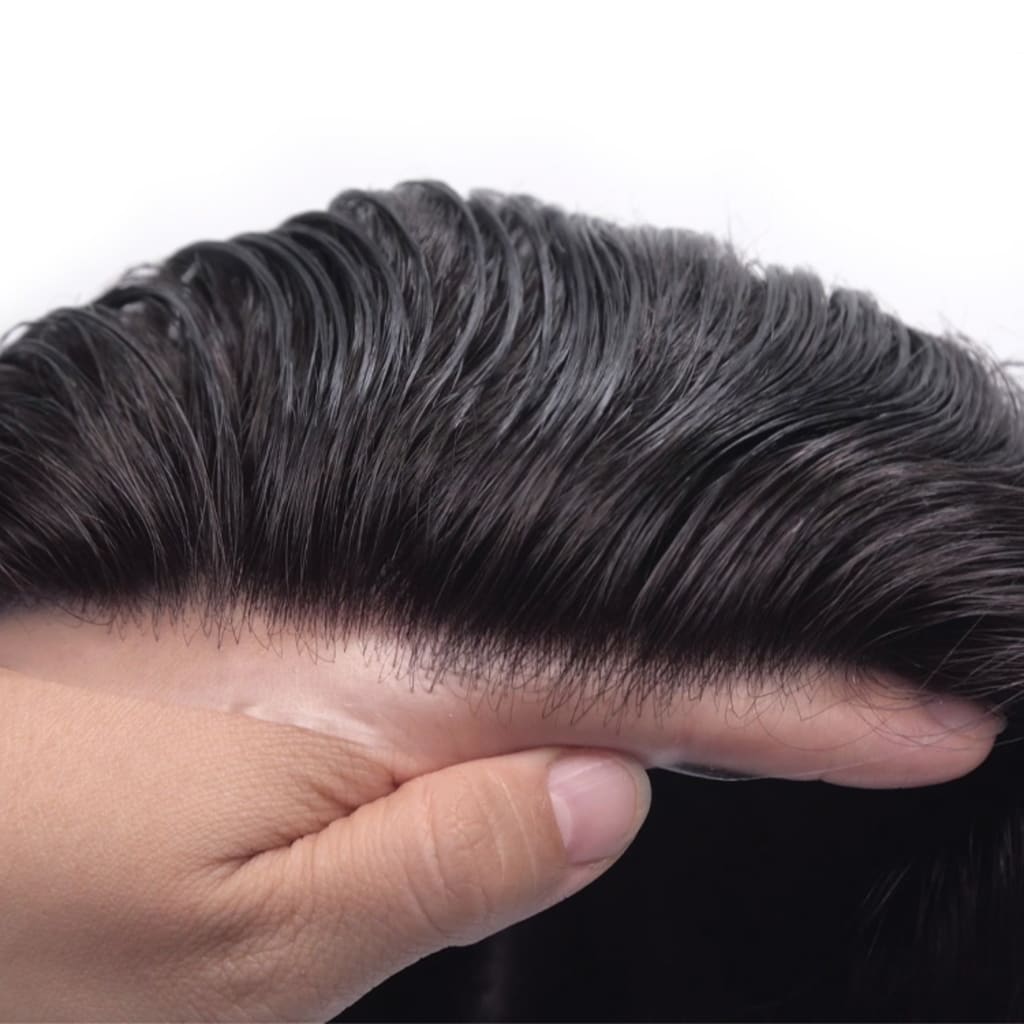
Why is Supplier A quoting $65 for a full French lace unit while Supplier B is quoting $110? What quality differences am I likely overlooking?
Hair system pricing jumps all over the place, even if two different quotes both say "Full French Lace." A basic label just doesn't reveal the actual lace grade, hair quality, density, or the real finishing work behind a French lace unit.
We'll walk you through how to spot those hidden factory-level details. That way, you can compare quotes with total confidence, protect your salon's budget, and keep your clients coming back.
Key Takeaways
Compare written specifications covering hair quality, lace grade, density, knotting, treatments.
Cuticle-intact hair usually lasts longer than heavily acid-processed alternatives.
Calculate total ownership costs before choosing the lowest initial unit price.
Decoding the $65 vs. $110 Wholesale Hair System Quote Gap
Why the big price jump between hair system suppliers? A $65 quote and a $110 quote might carry the exact same stock label, yet they come from entirely different supplier levels. That label just names the base construction. It doesn't tell you anything about the lace grade, hair quality, or factory finishing standards.
For retailers and salons, you can't just make a quick guess on that $45 difference. You need to look at it line by line. Since the hair itself usually eats up about 60% of the manufacturing costs, it's the very first place you should check. Simple as that.
Factor 1 — Raw Hair Origin and Acid-Wash Processing Levels
Where the raw hair comes from and how it's chemically processed changes a hair system's wholesale price way more than the stock label shows. Hair makes up about 60% of the total manufacturing cost. Because of this, a supplier's hair choice directly impacts the upfront price and how the unit actually performs after installation.
If you run a retail shop or salon, the real question isn't just "Why is this unit cheaper?" You need to ask what happened to the hair long before it ever touched the lace base.
Cuticle-Intact Remy Hair vs. Floor Hair Sourcing
Cuticle-intact Remy human hair costs a premium. This happens because the strands are gathered and kept facing one natural direction, right from the root down to the tip. Think of cuticle alignment like roof shingles. Each layer lies flat over the next one instead of catching against it. The payoff is hair that combs easier and survives normal washing and styling much better.
"Floor hair" is just an industry term for the hair swept up after cutting. It usually has mixed root directions and an unpredictable origin. It can definitely still be turned into a functional hairpiece. But mixed cuticles constantly rub against each other, meaning the unit will probably tangle a lot faster.
Sorting all that hair by length, color, and direction requires real manual labor. That extra handling explains a big chunk of the price difference your client can't spot at first glance.
The Industrial Acid Bath and Depigmentation Process
Lower-tier factories often rely on harsh chemical processing to strip the hair's surface and pull out the natural pigment. This step makes mixed or darker hair much easier to dye consistently. It helps these factories pump out cheaper units in massive volumes, including those budget systems priced around $65. The catch? Heavy processing permanently weakens the hair shaft.
So, what are the main red flags for "processed" hair in budget lace units? Look out for hair that feels oddly slick right out of the box, but then turns dry, rough, or totally tangled after a few washes. A heavy silicone coating creates that super smooth first impression. It works exactly like cheap furniture polish making worn wood look brand new for a few days.
Processed hair isn't automatically bad. But when you're sourcing products for repeat clients, always ask how the hair was picked, colored, and finished. Doing this lets you set realistic expectations for daily wear and long-term maintenance.
Factor 2 — The Base Mesh: True French Lace vs. Heavy Denier Substitutes
So, does a French lace unit actually use true French lace, or is it just a heavy denier substitute? The base material directly impacts scalp visibility, airflow, and exactly how the hairpiece sits after you install it.
True French lace features a finer, much more even mesh than bulky synthetic alternatives. But the mesh itself is really only half the cost story. Tying hair through those tiny openings takes serious handwork.
Mesh Denier, Hole Uniformity, and Scalp Breathability
Denier basically describes thread thickness. A lower-denier lace uses finer yarns, meaning its openings look smaller and way more consistent across the base. When your client parts their hair or wears an exposed hairline, that uniform pattern helps the mesh completely vanish into the scalp. You definitely don't want a coarse grid showing through.
Real breathability comes from the open spaces between the threads, not just from seeing the word "lace" on a label. True French lace is typically lighter and less bulky than heavy synthetic mesh, letting way more air flow through the base material. Ask for a close-up picture against a light background. Check if the hole size stays even from the center all the way to the edge. Uneven holes? That can easily make one area look denser or much more visible right after bonding.
Longevity and Tensile Strength Under Daily Wear
Thicker lace isn't automatically stronger or longer-lasting. A heavy, low-grade mesh might feel rigid, but inconsistent yarn and uneven weaving create weak points. These spots can stretch, fray, or split during removal. Daily bonding puts a ton of stress on the hairline and perimeter, especially when you lift the adhesive.
High-grade French lace balances a fine look with solid construction. Still, it always needs careful handling. For your salon, true longevity means watching how the base handles repeated attachment, removal, and cleaning—not just judging it by how thick it feels. French lace vs. Swiss lace: which actually gives you better value for your money? Honestly, neither wins every single time. You have to compare mesh consistency, your client's daily wear routine, and realistic replacement expectations before making a choice.
Factor 3 — Ventilation Artistry: Hand-Tied Knots and Worker Hours
What does Hand-Tied Knot Ventilation actually add to a lace system's price? It adds skilled worker time. Each hair has to be tied through the lace by hand instead of being punched in a fast, uniform pattern.
The knot style and density plan completely change how natural the unit looks at the hairline. They control how evenly the base holds tension, too. For salon owners, these details explain why two lace systems that look identical can carry wildly different manufacturing costs.
Single Split Knots vs. Bulky Double Knots
Single knots just take more time. The worker has to handle each placement with serious control. A single split knot uses less hair at one spot, meaning the knot sits flatter against the lace. Around an exposed hairline, this flat profile creates a much softer transition from the client's skin right into the system hair.
Double knots lock hair in firmly, but they dump more bulk at every single tie point. They're great for areas where thick coverage matters way more than an invisible finish, like the less visible sections of the base. If you want a natural front, careful knotting can take roughly twice the worker hours compared to fast double-knotting. More handwork directly equals a higher manufacturing cost. It's not just a fancy label.
Hair Density Distribution Across the Base Topology
Hair density shouldn't stay exactly the same from the front edge all the way to the crown. A skilled worker gradually builds up the density just behind the hairline. It's a lot like a natural scalp, where the front looks a bit lighter before getting fuller. This slow build-up prevents that harsh, machine-made edge that instantly gives a lace system away.
How does hair density affect the pricing of custom lace systems? It all comes down to placement time. The worker has to follow the base shape, control the spacing of every tied hair, and keep the transitions smooth across curved spots. A flat density pattern goes fast since every section gets the exact same treatment. A graduated pattern takes a lot longer to finish, but it gives your client a perfectly believable hairline and balanced coverage.
Factor 4 — Frontal Hairline Bleaching: Precision vs. Chemical Degradation
Bleaching the knots is supposed to soften those harsh dark dots at the lace hairline. But it shouldn't leave the lace feeling brittle, yellowed, or totally overprocessed. A careful bleach job hits the knots directly while keeping the lace and hair strands perfectly safe.
So, how do you spot high-quality bleached knots on a hair system? Just look for an even color, flexible lace, and zero obvious breakage or shedding. That's it. You really want to catch this early, because hidden chemical damage usually only shows up after you've actually started wearing the unit.
The "Silicone Coating Trap": Why Cheap Units Mat After Three Washes
The real issue with cheap French lace units usually hides on the hair shaft itself, not the lace. A lot of budget pieces rely on a heavy silicone coating. This makes rough, damaged cuticles feel silky smooth right out of the box—just like wiping wax over a scratched table.
But after a couple of washes, that fake shine washes right down the drain. Once exposed, the raw hair snags, tangles, and mats way faster. So, before you talk to your next vendor, ask them exactly how the hair holds up after a wash. And don't forget to request a basic quality checklist.
The Hidden-Specs Sourcing Checklist for Hair System Buyers
Weighing Supplier A against Supplier B? Figuring out hair system durability versus price means matching the actual specs, not just looking at the sticker price. You need to check the lace type, base thickness, hair density, hair length, knot treatment, and whether there's a silicone coating on the hair.
Get each supplier to confirm these details in writing. A cheaper unit price might just mean they're using a thinner lace base, or hair that loses its smooth finish right after washing. And these specific build details don't just affect how long a unit holds up for your client. They also determine what it's really costing your business over time.
Total Cost of Ownership: Balancing Unit Price Against Lifespan
A $110 French lace system can actually cost less to run over six months than a $65 unit. How? It stays wearable longer and needs fewer replacements. The sticker price is really just the starting point.
For salons and retailers, the real math involves lifespan, replacement frequency, and the service time each unit eats up. Lace construction and hair quality both drive that final result.
Unit Replacement Frequency and Client Chair Time
The debate over hair system durability versus price gets real clear when a cheaper unit sheds early, tangles after washing, or mats during normal wear. Every single one of these problems can turn a standard maintenance visit into a headache of extra detangling, styling, or an unplanned replacement appointment.
French lace and better-processed hair hold their looks longer. On the flip side, a lower-priced unit might need attention way sooner. Think of it like a shirt that looks great on the rack but totally loses its shape after a few washes.
Your client's chair time has real value. If a $65 unit needs two replacements in six months while a $110 unit stays in good shape, that lower upfront price doesn't save the salon money anymore. Simple math.
Client Retention Rates and Brand Reputation Exposure
Is a $65 hair unit worth it for long-term wear? It can be. But that's only if its construction and hair quality match the client's actual wear routine and maintenance schedule. Unexpected shedding or matting will quickly ruin trust, especially when the client expected a stable, natural-looking result.
Clients rarely separate a poor-performing hair system from the salon that sold it to them. They'll just remember the extra appointment, the ruined style plan, and the extra cash spent replacing a unit way sooner than they planned.
A clear chat about sourcing protects your reputation. Ask suppliers about expected lifespan, lace type, hair processing, and care limits before placing any order. Newtimes Hair can help you compare these practical details so you source for repeat business, rather than just chasing a lower unit price.
How to Perform Factory Sample Inspections Before Bulk Purchasing
How do you know if a hair system is actually good quality? Run a comb through a small section from root to tip. Make sure the hair flows in one direction and doesn't catch or flip around. Next, check the base under a bright light to spot any loose, uneven, or missing knots.
Gently part the hair near the base instead of yanking on it. A solid sample shouldn't shed at all when you do this. Getting clear results from a test like this makes it way easier to pick a manufacturing partner who's open and honest about how well they build their products.
Streamlining Your Supply Chain with Newtimes Hair
Newtimes Hair gives salon owners a much smoother path from getting a sample approved right through to repeat orders. Because you're communicating directly with the factory, you can quickly confirm the base material, lace choice, hair quality, and order details. No more messages bouncing around multiple supplier tiers.
Consistent manufacturing means your salon can easily reorder the exact wig specs your returning clients already expect. This cuts out those frustrating product variations and makes client consultations a lot smoother. And ultimately, it leaves you with way more time to focus on fittings and customer service.
Frequently Asked Questions About Hair System Sourcing
What is a full French lace hair system?
A full French lace unit uses fine, breathable lace across the entire base. Natural-looking, yes. Fragile compared with heavier bases.
Why do hair system prices vary between different suppliers?
Hair is roughly 60% of manufacturing cost. The $65 unit may use heavily processed, silicone-coated hair; $110 can buy better lace, hand-tied ventilation, and finishing.
What are the quality differences in French lace hair units?
Check mesh consistency, cuticle-intact hair, density graduation, single knots, and bleaching quality. "French lace" alone tells you almost nothing.
How long does a French lace hair system typically last?
No fixed lifespan. Processing, knot work, density, and care decide it. Cheap silicone-coated hair often turns dry, rough, and tangled after a few washes.
About the Creator
Leo
Passionate men's hairstylist with a keen eye for detail and a knack for creating on-trend looks. Dedicated to delivering hair restoration education that enhances individual style.
Enjoyed the story? Support the Creator.
Subscribe for free to receive all their stories in your feed.
Comments
There are no comments for this story
Be the first to respond and start the conversation.