
Where can I buy quality hair extensions products online? The Ultimate 2026 Comparison Guide
What's Best Place to Buy Hair Extensions Online? (2026)

Where can I buy quality hair extensions products online? The Ultimate 2026 Comparison Guide
Getting quality hair extensions isn’t just about picking a supplier. When you buy hair extensions online in 2026, ethical transparency and real technical quality—like verified virgin cuticles—are what shape the market. Salon owners expect tight standards for tape-ins and wigs. This guide starts with the basics, then moves into a more clinical look at the 2026 market landscape.
Key Takeaways
- Test hair authenticity immediately: use the burn test for synthetics and feel for cuticle friction to avoid acid-stripped bundles.
- Prioritize double-drawn hair; the higher upfront price yields better cost-per-wear by eliminating thin, unusable ends.
- Boost salon margins by utilizing factory-direct OEM/ODM suppliers rather than paying premium markups for major brands.
- Transition to ultra-thin 2026 trends like Genius Wefts and seamless tape-ins for undetectable, flat installs.
- Select raw origins strategically: use Indian hair for flexible waves and Vietnamese hair for thick, heat-resistant durability.
The 2026 State of Online Hair Sourcing: Beyond the Marketing Fluff
The online extension market is split into two extremes right now. You’ve got “catfish” vendors hiding chemical processing behind clever lighting, and high-integrity suppliers who treat hair like a raw commodity. Salon owners can’t afford to guess which is which. Securing 100% Remy Human Hair now means treating vendor claims with the kind of scrutiny an independent auditor would use.
Ethical sourcing isn’t just a buzzword anymore. It’s the baseline if you want to make sure your clients don’t walk out with compromised tape-ins that tangle after two washes. Building unbroken trust with your salon clients means looking past the packaging and straight at the raw materials. To move through this market, you first need to understand the technical benchmarks of quality.
What is the highest quality of hair extensions?
The absolute gold standard in the industry is unprocessed Virgin Hair sourced from a single individual. Mixing strands from multiple people creates messy structural alignment. Single Donor Hair fixes that by making sure every strand reacts the same way to washing, styling, and coloring.
You need to pay close attention to cuticle integrity. The cuticle is the hair’s natural defense system. When factories use acid baths to strip cuticles from low-grade hair, they coat it with silicone to fake a healthy shine. That silicone wears off in about three weeks. And what’s left is a matted mess.
Intact, unidirectional cuticles keep moisture in and friction out. That leads to a lifespan of 12 to 24 months with regular salon maintenance. This level of raw material quality directly shapes how the bundle is constructed.
Double Drawn vs. Single Drawn: Why Price is a Liar
A low upfront price usually isn’t a win for your bottom line. Single drawn extensions have a natural taper, meaning they’re thick at the root and thin at the ends. That mirrors natural hair growth, but it forces salon professionals to cut away up to three inches to get a blunt, full hemline.
Double Drawn Hair shifts the financial equation. Workers manually remove the shorter hairs, leaving a bundle that stays thick from top to ends. You’ll pay more upfront for that precision. But your real metric is cost per wear. Because you waste zero inches during the install cut, a double drawn weft or clip-in gives you far more usable volume than a cheaper option.
Don’t just take the label at face value. You need to know how to physically check these density claims the moment you unbox a new shipment.
The "Scam-Proof" Protocol: How to Spot Quality in 30 Seconds
Buying in bulk online comes with real financial risk. You need a quick, no-nonsense system to check new vendors before putting your salon’s money on the line. Start with strict donor verification. If a supplier can’t clearly explain where and how they source their bundles, that’s a major red flag. Real authenticity checks go beyond reading reviews. You have to test the product yourself. Smart salon owners use verified vendor lists or grab exclusive discount codes to order samples first. Once you know the raw material is genuinely sourced, you can move on to the specific 2026 trending methods.
How can you tell if hair extensions are 100% remy human hair?
Labels can lie. You need to test the hair as soon as it arrives. Take a single strand and burn it. Real human hair turns into soft ash and smells like burnt feathers. If it melts into a hard plastic bead, it’s mixed with synthetics.
Next, run your fingers up the hair shaft toward the root. You should feel a bit of resistance. That slight friction shows the cuticles are still intact. If it feels completely smooth both ways, the factory likely stripped it with an acid treatment.
Chemical-free processing keeps cuticles aligned in one direction. That’s the only way to ensure a truly tangle-free result for your clients. Once the hair passes these checks, it’s time to look at the installation method.
The Unboxing Reality: What Your 2026 Order Should Look Like
High-end extensions smell neutral. If you open a shipment and get hit with strong chemical odors, the supplier probably over-processed the hair to hide poor sourcing.
Shake the bundle firmly and run a comb through it. A good weft should shed no more than zero to two strands during this first test. Look for natural texture and a soft shine. Stay away from anything overly glossy or glassy.
Top suppliers get how salons operate. They often offer private label options and ship in clean, branded-ready packaging so you can present the hair as your own line. Once the bundles meet your physical standards, the next step is comparing the year’s most popular attachment methods.
Top-Rated Hair Extension Companies for Professional Stylists
Finding the best professional hair extension brands in 2026 means looking past clever marketing. Salon owners need steady quality and margins that actually make sense. Most leading companies run on very different supply chain models. Some lean into big marketing budgets, while others stay focused on the factory floor.
When you buy in bulk, wholesale pricing shapes your salon's bottom line. You have to decide if you want the brand recognition of a major label or the stronger margins that come from ordering straight from the source. Many salons now skip middlemen entirely by using OEM/ODM solutions to build their own private labels. This shift changes how you source inventory. Here's a clear example of a manufacturer offering full direct-to-factory transparency.
Newtimes Hair: The Factory-Direct Advantage for Professionals
Newtimes Hair cuts out the middleman completely. As a primary source for high-inventory, ethically certified hair systems and extensions, they give salon owners full control over their supply chain. Direct factory pricing means your profit stays with you, not a distributor.
Quality control isn’t left to chance here. They operate under strict ISO 9001 Certification, so every bundle of Remy human hair meets tough global manufacturing standards. You get consistent cuticle alignment and no harsh chemical smell right out of the box.
Building your own salon line becomes much simpler when you work directly with the manufacturer. Instead of paying extra for a label, you're just paying for the raw material and the craftsmanship. This factory-direct setup creates a clear gap in profit potential compared to boutique US-based brands.
Bellami vs. Glam Seamless: The Battle of the US Giants
Choosing a major US distributor gives you instant credibility with clients. Bellami leads the market with huge variety and heavy celebrity marketing. Their reputation does a lot of the work for your salon sales, but that recognition comes with a higher upfront cost.
Glam Seamless takes a slightly different route. They built their name around tape-in extensions, focusing on faster application methods that reduce chair time. Picking between them usually comes down to whether your salon values wide color matching or more specialized, quick-install options.
Both companies are still top choices for professional salons that want reliable domestic shipping and strong education programs. They offer marketing support and the kind of brand recognition clients trust. But the industry keeps moving. As demand shifts toward fully undetectable installs, these big players are investing heavily in the 2026 move toward "invisible" weft technology.
2026 Trending Methods: Hybrid Wefts and Genius Wefts
Clients want installs that fully disappear. The bulky seams from older methods are basically done. Today’s shift is all about ultra-thin, low-profile applications that sit flat against the scalp.
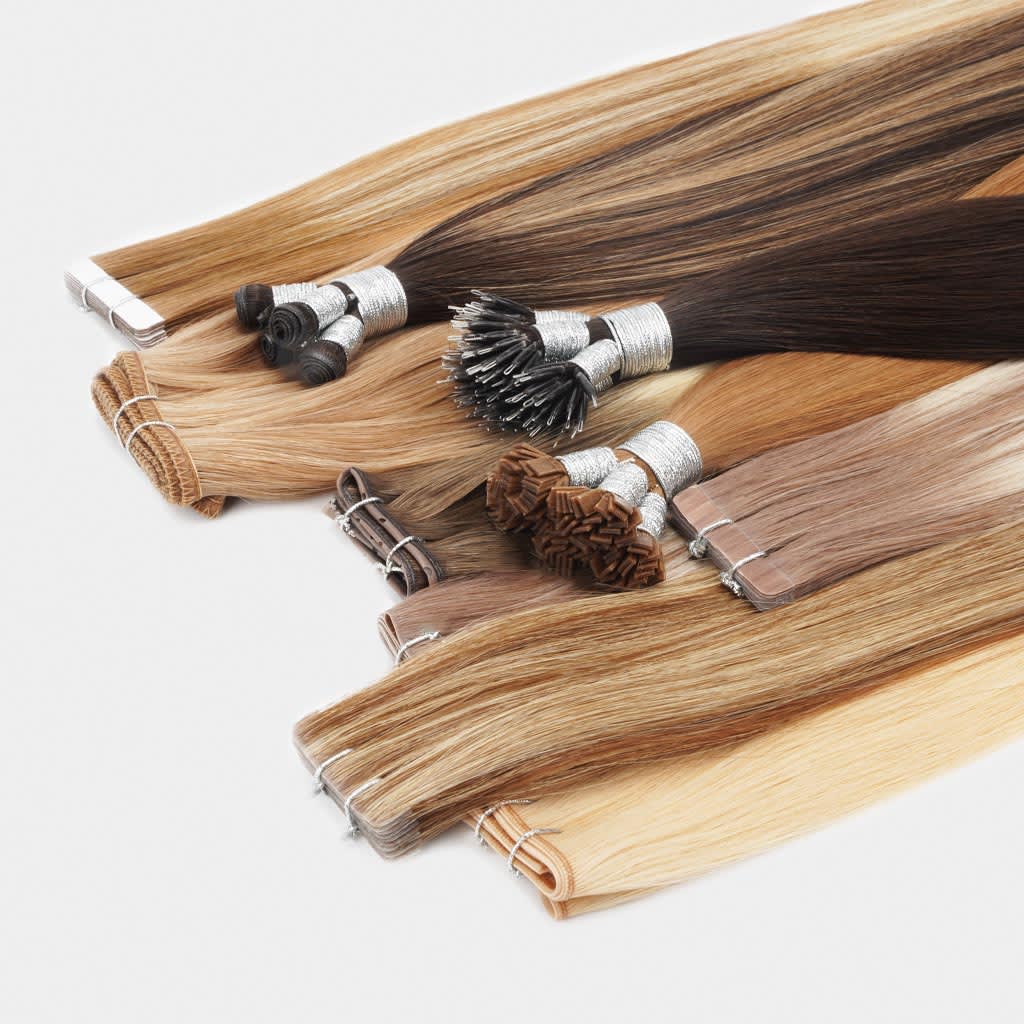
The Genius Weft is leading the way. It blends the extreme thinness of hand-tied wefts with the strength of machine-sewn tracks. You can cut it without shedding. That’s a huge win behind the chair.
Hybrid wefts take it a step further by mixing techniques for a more custom fit. These micro-methods need highly durable materials to hold up through the delicate production process. Before mastering the install, salon owners should take a close look at where these precise wefts actually come from.
Are hybrid wefts and seamless tape-ins still trending for 2026?
Yes. These ultra-flat methods dominate the 2026 market and aren’t slowing down. Fine-haired clients are driving this demand. Traditional extensions tend to show through thinner hair, creating visible bulk and tension damage.
Seamless tape-ins fix this by placing the hair closer to the scalp without heavy adhesives. The attachment point becomes nearly invisible. The flat weft follows the same idea. It removes the return hair—the itchy “mustache” at the top of a standard track—so it can stack cleanly.
Texture realism matters a lot here. Clients expect extensions to match their natural growth patterns exactly. Getting that flawless blend isn’t just about how thin the track is. It comes down to the geographic origin of the hair chosen during production.
Sourcing the Source: Vietnamese vs. Indian Raw Hair
Not all premium hair performs the same. Understanding where it comes from directly affects how your salon’s extensions will behave. When buying online, having a verified vendor list helps protect your bulk investment from mixed-batch issues.
Raw Indian Hair is known for its flexibility. It has a natural wave that blends easily with many hair types. You can bleach it, style it, and match color without much trouble. But it does need a gentle hand.
Vietnamese Hair brings a different edge. It’s very thick, naturally straight, and extremely durable. The intact cuticles make it one of the strongest raw materials available. It’s a great choice for clients who heat-style often.
Locking in your hair source ensures a consistent performance standard. But both options require real maintenance. That long-term quality depends heavily on how well your clients stick to proper at-home care.
The Hidden Costs of Quality: Maintenance and Longevity
High-end extensions come with hidden "last-mile" costs. Better strand strength lowers your cost per wear. Simple.
Sustainable practices help the hair handle daily styling. You need to know which brands actually last past the one-year mark.
The Longevity Score: Which Brands Last 12+ Months?
Month one looks perfect. Month twelve tells the truth.
Real longevity means strong resistance to shedding. Strict Remy Certification and cuticle-aligned hair stop matting. This helps you line up suppliers with your specific business needs.
Choosing Your Best-Fit: Persona-Based Recommendations
"Budget Conscious" buyers need dependable clip-ins. "Hair Virgins" want easy, low-maintenance options.
"Professional Stylists" need custom branding and global shipping to grow private label hair businesses. This leads into the final technical comparison of the most durable weft types.
Evaluating the "Battle of the Wefts" in 2026
Weft construction shapes your salon's profit margins and your client's comfort. Machine Wefts bring durability and lower price points, which is why bulk buyers rely on them. Hand-Tied Weft options create an ultra-thin, seamless lay against the scalp. They need precise installation but can charge premium service rates.
And then there are Genius Wefts bridging the gap. They cut like a machine weft but lay flat like hand-tied options. Your choice directly affects install time and how well they wear over time.
Understanding these technical details helps you weed out low-quality suppliers. Next, you need a solid plan to actually source these products without putting your budget at risk.
How to Choose Newtimes Hair Products for Your Salon
Stock orders move quickly. Custom orders build exclusive brand loyalty. Finding the balance between the two is what drives maximum ROI for salon owners.
When working with a wholesale hair vendor, start by testing their stock clip-ins and tape-ins. This gives you instant inventory to check cuticle alignment and shedding resistance. Once you confirm the quality, move into custom orders to lock in specific lengths for your high-end clients.
Sourcing from Newtimes Hair gives you access to both fast stock delivery and detailed custom production. Always protect your upfront investment by confirming the vendor offers 30-60 day return policies on unused stock. That safety net matters before you commit to larger volumes.
Securing the right inventory is only half the job. You also need to show your clients exactly where that hair comes from.
The Ethical Anxiety: Verifying 2026 Sourcing Claims
"Fair Trade" often gets thrown around as a marketing buzzword. Real ethical sourcing needs proof. Your clients want to be sure their premium extensions aren't linked to exploitative labor.
A truly transparent supply chain depends on documented audits, not just polished website badges. Ask for third-party ethical sourcing certifications before signing any vendor contract. If a supplier avoids the question, walk away. Simple.
Many salons now choose to work only with women-owned brands to better match their core values. These partnerships often lead to tighter quality control and clearer records of where the hair comes from.
Getting these vendor checks right sets your business up for long-term growth. Next up are the most common roadblocks buyers run into.
Frequently Asked Questions About Buying Hair Online
What is the difference between virgin hair and remy hair quality?
Virgin means untouched. Never dyed or bleached. Remy just means the cuticles face the same direction to stop tangling. Remy can still be chemically processed. Virgin is your top-tier raw commodity.
Which hair extension installation methods are most popular this year?
Ultra-thin is taking over. Genius Wefts and seamless tape-ins dominate 2026. Clients demand flat, completely undetectable installs. Bulky traditional wefts are dead.
What are the top rated hair extension companies for professional stylists?
Skip the major retail brands. Smart salons use factory-direct OEM suppliers like Newtimes Hair. You get the exact same double-drawn quality without the massive premium markup. Better margins for your business.
How long do tape-in extensions last compared to clip-in hair extensions?
Apples and oranges. Tape-ins stay glued in for 4 to 8 weeks before needing a move-up. Clip-ins are temporary daily wear. Take them out at night and a good set easily lasts over a year.
About the Creator
Leo
Passionate men's hairstylist with a keen eye for detail and a knack for creating on-trend looks. Dedicated to delivering hair restoration education that enhances individual style.
Enjoyed the story? Support the Creator.
Subscribe for free to receive all their stories in your feed.
Comments
There are no comments for this story
Be the first to respond and start the conversation.