
The Secrets of Celebrity Hair Loss and Restoration, Jon Hamm balding, and the Rise of Hair Systems
Jon Hamm / Don Draper's Hair Loss!!! Is He Wearing A Celebrity Hair System?

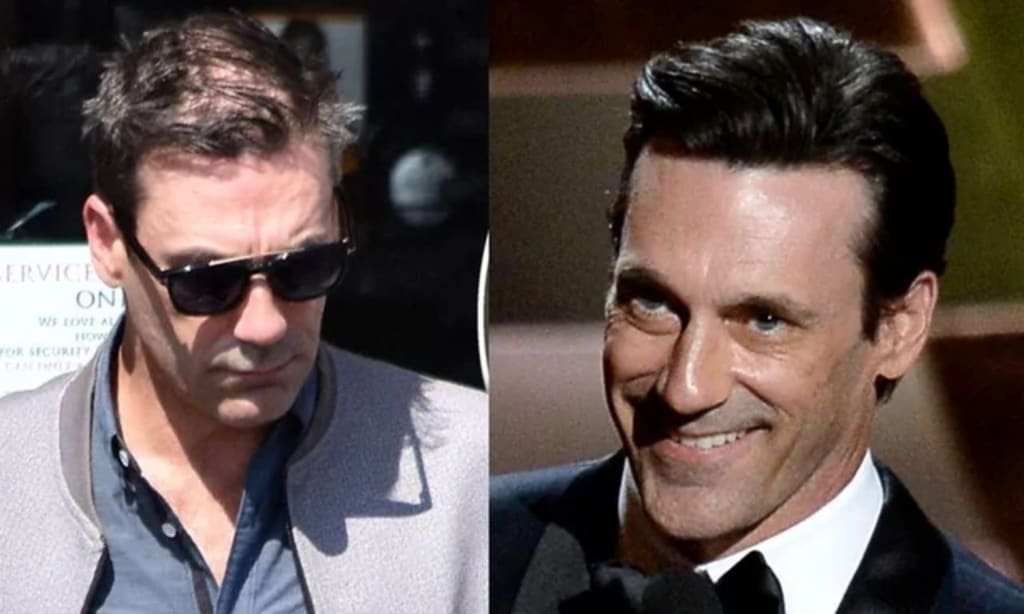
The Secrets of Celebrity Hair Loss and Restoration, Jon Hamm balding, and the Rise of Hair Systems
Celebrity hair restoration shows that even Hollywood’s elite can’t dodge the biological reality of male pattern baldness. Today’s discreet hair systems have totally changed how actors handle their public image. This look at Hollywood’s smoke and mirrors starts with the most talked-about case study of the decade: the curious case of Jon Hamm’s hairline.
Key Takeaways
- Modern hair systems deliver instant, undetectable coverage without the high costs or months-long recovery of surgical transplants.
- Use a "stealth restoration" strategy by gradually increasing a hair system's density over several months to avoid obvious, sudden changes.
- Advanced 0.03mm bio-skin and lace bases create breathable, realistic hairlines for a predictable cost of roughly $300 per quarter.
- Medical-grade adhesives allow you to swim, sleep, and exercise normally, requiring just a 45-minute maintenance reset every few weeks.
- For minor thinning or events, keratin hair fibers and dry shampoo provide a quick, temporary volume boost.
The Jon Hamm Hairline Enigma: Fact vs. Fiction
Rumors about Jon Hamm balding have been floating around the internet for years. Fans often point to a clearly receding hairline and visible temple recession in candid photos. But when he shows up on a red carpet, his hair suddenly looks much thicker. That contrast isn’t random. It’s a carefully managed image. Leading men depend on looking youthful to land major roles, which makes a full head of hair a real career asset. These sudden shifts make a great example of how modern celebrities deal with hair loss behind the scenes. To figure out whether this is just natural aging or something more, we need to look at the clinical signs.
Clinical Analysis: Natural Aging or Surgical Change?
Natural aging leads to slow, predictable thinning. A man in his fifties doesn’t just regain lost density without some kind of help. When you line up Hamm’s early TV appearances with his recent film premieres, the pattern just doesn’t match a typical biological process.
Around 2015, high-definition cameras showed more scalp near his frontal hairline. Jump ahead to recent red carpets, and that same area looks dense and even again. His crown coverage also shifts a lot depending on the event. Hair follicles don’t shrink and then randomly grow back months later. That’s not how it works.
Hair transplant surgery leaves clear signs and comes with months of awkward regrowth. Hamm hasn’t stepped out of the spotlight long enough to hide that kind of recovery. That absence of downtime points away from surgery. Instead, it lines up with the broader “Hollywood Playbook” of modern, non-surgical fixes.
The "Don Draper" Effect: Maintaining an Iconic Image
Playing an iconic role comes with pressure. Don Draper set a huge visual standard. That slick, perfectly styled hair became a signature look for an entire era of TV. Fans expect the actor to match that image, which creates real pressure to stay the same over time.
For actors from major shows like Mad Men, managing their look becomes part of the job. Studios want leading men who appear mature but still have a full head of hair. Walk into a casting call with visible thinning, and it can instantly make you seem older than the role allows.
Surgery is too unpredictable for tight production schedules. That kind of pressure pushes actors toward temporary solutions instead. Modern hair systems deliver instant, camera-ready density without the permanence or long recovery tied to medical procedures.
PROTECTED KEYWORDS (DO NOT TOUCH):
**Who/What**:, **How/Why**:, **Speculative/Search-Driven**:, Jon Hamm hair loss 2015 vs 2025: What changed?
The Hollywood Grooming Playbook: Beyond the Red Carpet
You don’t need surgery to look like a leading man. Hollywood groomers lean on a specific toolkit to create the look of perfect density on demand. They use cosmetic cover-ups to hide thinning patches before an actor ever steps in front of a camera. These quick, non-surgical fixes deliver instant results with zero medical downtime.
A fast touch-up can totally change how a hairline reads under harsh studio lights. Stylists rely heavily on hair fibers to fill in gaps right before a red carpet moment. It’s quick, safe, and washes out easily at the end of the night. But these fixes have limits. Fibers may work for cameras, but many celebrities need something stronger and longer-lasting.
The Role of Hair Fibers and Dry Shampoo in Instant Volume
Instant density often starts with a simple powder. Stylists use brands like Toppik to shake keratin fibers directly onto thinning spots. These tiny particles latch onto existing strands using static electricity. The result? Hair that looks instantly thicker.
Powder alone doesn’t always hold up through a long night. Groomers usually add dry shampoo for volume, lifting the roots and giving the style some structure. Some even dab on a tinted moisturizer on the scalp to reduce the contrast between dark hair and lighter skin. That cuts down the shine of a bald spot under strong flashes.
These tricks work great for a quick shoot. Step into the rain, though, and the illusion disappears fast. And applying it every day gets old. You want something that stays put at the gym or in the shower. That’s where the focus shifts—from temporary powders to more structured hair systems.
Why Celebrities Prefer Modern Hair Systems Over Transplants
Surgery can keep actors out of the spotlight for months. So non-surgical options have become a quiet standard in the industry. High-definition cameras pick up every detail, which means actors need a clean, natural hairline from day one. Modern hair systems deliver full density instantly, without the uncertainty of surgery.
Today’s systems use advanced integration methods that blend real human hair with the wearer’s own. Brands like Lordhair create ultra-thin, breathable bases that closely mimic the scalp. You attach them with glue or tape, and they stay secure for weeks. Even in extreme close-ups, the transition line is nearly impossible to spot.
That level of realism changes everything for men dealing with hair loss. You get a tailored, age-appropriate look without ever stepping into a clinic. The bulky, obvious toupees from the past are gone. Modern systems are light, subtle, and built for real, everyday life.
Decoding the Rise of Modern Hair Systems
Hair loss fixes aren't just for Hollywood elites anymore. Today, modern Hair Systems give the average guy a high-tech, basically undetectable way to bring back his hairline. You don't need a huge budget or a personal stylist now. Men are skipping clinics and going for advanced non-surgical options because they offer instant, reliable results.
Using materials like bio-skin, these pieces copy the exact look and feel of a real scalp. Add lace-front tech, and the front edge almost disappears into your forehead. It looks like hair growing straight out of your head. This skips the unpredictable outcomes and long recovery tied to traditional surgery. And the key to that realism comes down to how the base is made.
Lordhair’s Innovation: Making Hair Systems Invisible
Realism starts with the base material. Lordhair designs its units to stay unnoticed, even under bright lights or close inspection. They use ultra-thin skin measuring just 0.03mm thick. It sticks to your scalp like a clear second layer.
You get a smooth blend that feels completely natural. People can get inches away and still won't see an edge. Pair that with breathable lace, and heat and sweat escape easily. So your head stays cool when you're lifting at the gym or dealing with intense summer heat.
Comfort matters just as much as looks. A bulky, heavy piece is a dealbreaker for everyday use. These lightweight designs move with you all day. You can shower, swim, and sleep without taking it off. It just becomes part of your routine. But here's the thing. What happens when you walk into work with perfect hair overnight?
The "Stealth Restoration" Timeline: Transitioning Without Detection
Walking in on Monday with perfect, full hair gets attention. Most guys want to dodge that situation. That's why a gradual transition works best with modern hair restoration. You don't have to jump from bald to full coverage in one go.
Instead, you build it step by step. Stylists use something called gradual density to copy natural regrowth. They start you with a system that has a slightly receding hairline and lighter density. It just looks like your natural hair improved a bit.
Over the next few months, you switch to fuller units. Each one adds a little more volume. Coworkers assume you started vitamins or stepped up your grooming. By the end, you’ve got full coverage without raising eyebrows.
The cost setup makes this pretty practical. A premium piece runs about $300 and lasts around three months. Compare that to a $10,000 upfront cost for surgery that can take a full year to show final results.
Comparing the "Big Three": Transplants vs. Systems vs. Medications
Fighting hair loss really comes down to three main paths. Each one has a very different cost-benefit tradeoff. Medications like Minoxidil and Finasteride help stabilize thinning. They need daily use and ongoing spending, but they rarely bring back a fully receded hairline. Then there are hair systems. These give you instant density and sharp hairlines at a predictable quarterly cost, with no downtime. Finally, there’s surgery. An FUE transplant moves real hair across your scalp for a permanent fix, but it comes with a big upfront price and real recovery time. Here’s a closer look at the surgical route many celebrities eventually choose.
The Reality of FUE and FUT Surgical Procedures
Surgical hair restoration physically moves your existing hair. You pay a steep upfront cost, usually between $5,000 and $15,000, for a permanent result.
Follicular Unit Extraction is the most common method today. Surgeons take individual follicles from the back of your head—your donor area—and place them into bald spots. The older FUT method removes a strip of skin instead, which leaves a linear scar.
Recovery takes patience. Your scalp stays red and scabbed for about two weeks. After that, the transplanted hair falls out. This is normal. But it also means waiting six to twelve months to see full growth.
Surgery works well if you have enough healthy donor hair. If you’re completely bald on top, a surgeon can’t create new hair out of nowhere. You also face the risk of future thinning behind the new hairline. This permanent, high-cost commitment stands in sharp contrast to the instant, predictable results of modern hair systems.
Maintenance and Lifestyle: Can You Swim in a Hair System?
Yes. You can swim. You can sweat heavily at the gym, and you can shower like normal.
Modern hair systems use medical-grade adhesives to stay firmly attached to your scalp. These waterproof liquid bonds and double-sided tapes create a strong hold that stands up to intense workouts and full submersion underwater. You don’t take the system off at night. It stays on for two to four weeks at a time.
Your day-to-day life barely changes, but maintenance does require a new routine. Every few weeks, you take the unit off, clean away the old adhesive, wash your scalp, and apply a fresh bond. The whole reset takes about 45 minutes at home.
Daily care is simple. Use a leave-in conditioner and avoid rough scrubbing. With basic upkeep, the unit stays secure and hard to detect. Hair systems offer a very practical middle ground for instant coverage. Let’s go over the final points before moving into the most common questions.
Frequently Asked Questions About Celebrity Hair Secrets
What did Elon Musk use to regrow his hair?
Multiple hair transplants. Period. He likely had FUT or FUE procedures moving follicles from the back of his head to the front. No magic pills or serums do that. Just top-tier surgeons and deep pockets.
How do celebrities fix advanced stage 4 male pattern baldness?
Two options. Massive surgical transplants or undetectable hair systems. Many use 0.03mm bio-skin systems costing around $300 a quarter. They do a stealth restoration by slowly increasing density over months so nobody notices the sudden change.
Can hair be restored to full density without undergoing a surgical procedure?
Yes. But not with pills. You need a modern hair system. A lace or bio-skin base glued with medical adhesive gives instant full density. You can swim and sleep in it. Maintenance takes 45 minutes every few weeks.
What is the standard medical protocol for stopping a receding hairline?
Finasteride and Minoxidil. That is the gold standard. Finasteride blocks the DHT hormone killing your follicles. Minoxidil stimulates blood flow to keep them alive. Start early. Once the follicle is dead, medication will not bring it back.
About the Creator
Leo
Passionate men's hairstylist with a keen eye for detail and a knack for creating on-trend looks. Dedicated to delivering hair restoration education that enhances individual style.
Enjoyed the story? Support the Creator.
Subscribe for free to receive all their stories in your feed.
Comments
There are no comments for this story
Be the first to respond and start the conversation.