humanity
The real-life lives of pot advocates, influences, growers, users, advocacy and more.
Quitting Smoking Is Better Than All Anxiety Medications — A Detailed Look at Causes and Solutions
Anxiety is becoming more common in today’s busy, competitive, and stressful lives. Its causes can be many, including physical illnesses, hormonal changes, mental trauma, social pressure, and drug or alcohol abuse. Alcohol and smoking in particular have been recognized as major contributing factors in the development of anxiety.
By Echoes of Lifeabout a year ago in Potent
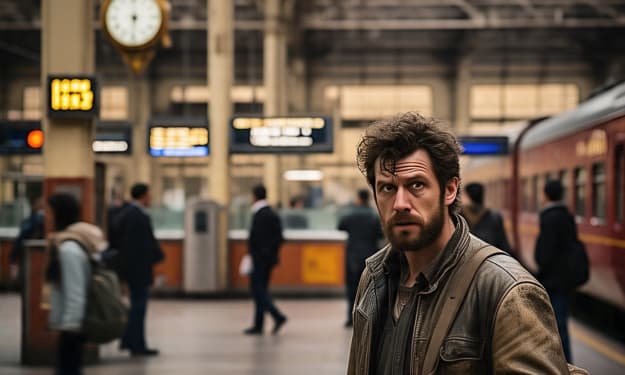
He Disappeared 12 Years Ago. Last Week, I Saw Him at the Train Station"
I was never the type to believe in miracles—or ghosts. But that all changed last week. Twelve years ago, my best friend and cousin, Adil, disappeared without a trace. We were both 17, fresh out of school, and planning to move to Lahore to start college together. One day, we went to the market to buy books. I turned around for just a few seconds, distracted by a street performer. When I looked back, Adil was gone. At first, we thought it was a prank. He was famous for them. But hours turned to days, and the police could find nothing. His phone was off. His ID was left at home. No CCTV footage. Just… nothing. The town changed after that. My aunt and uncle moved away out of heartbreak. My own life spiraled for years—haunted by guilt and endless “what ifs.” I stopped going near that market, stopped trusting people, and eventually, stopped believing in closure. But last week—everything changed. I was waiting at the train station for a delayed service to Rawalpindi. The platform was crowded and noisy. I was scrolling through my phone, half-awake, when I felt it—an odd sensation, like someone was staring at me. You know that prickling feeling on your neck? That’s what it was. I looked up. About twenty feet away, standing by the tea stall, was a man with a grey hoodie, slightly hunched, and carrying a dusty old backpack. He looked... familiar. Too familiar. He turned his head slightly, and that’s when I saw him properly. My heart skipped a beat. My throat tightened. It was Adil. His face was older, but unmistakable—those same deep eyes, that crooked eyebrow from our childhood bicycle accident, and a small mole on his chin. I froze. It felt like time stopped. I stood up and shouted, “Adil!” He turned, startled—eyes widening just slightly. He stared at me for a full second. Then, without saying a word, he turned and walked quickly toward the exit. I pushed through people, yelling his name, but by the time I got to the gate—he was gone. Vanished. Again. I waited for hours. Checked every camera, every tea stall, every bench. Nothing. No one had seen him. No trace. For days, I’ve tried to convince myself I imagined it. Maybe I just wanted to see him. But it felt too real. That expression. That hesitation when he saw me. He knew who I was. I filed a report again. The officer laughed nervously—“After 12 years?” But he promised to check. I knew he wouldn’t find anything. Last night, something happened that pushed me over the edge. I found an old shoebox of our childhood stuff—photos, movie tickets, coins we collected. Inside it was a note I had never seen before. Folded neatly. Dated the day after Adil disappeared. It said, in his handwriting: “I didn’t run away from you. I had no choice. One day, I’ll explain everything. Until then… don’t stop living.” I sat there, holding that piece of paper, shaking. Who made him disappear? Why couldn't he come back? Why now? I don’t have the answers. But I know this: Adil is alive. And for some reason, he wanted me to know—now. Maybe he was trying to say goodbye again. Or maybe it was a warning. Or a clue. I’ve started going back to that station every day. Sitting. Waiting. Watching. Not just for Adil. But for the truth. Because some stories don’t end when people vanish. Sometimes, they begin again—on a crowded platform, with a familiar face in the distance… and a thousand unanswered questions in your heart. Since that day at the train station, I’ve become obsessed. I started visiting the places Adil used to love—our old school, the cricket ground near our neighborhood, and the tiny corner café where we used to eat fries after school. I even visited the abandoned house near the hilltop where we once carved our names on a stone. People think I’ve lost my mind. My mother thinks I’m under emotional stress again. My friends offer sympathy, but I see the doubt in their eyes. They think I saw a stranger who looked like him. But I know better. That hesitation in his eyes—only someone who recognized me could show that. Last night, I went through my old phone messages. Most were silly chats and meme forwards. But in one thread from a year ago, I found something strange—a message from an unknown number that read: “You’ll find the truth at the same place we buried the blue marble.”
By Movies Channelabout a year ago in Potent
Once Again, I Reveal the Crimes of Pakistan’s Military and State.Pakistan Military and State Launch a New Wave of Brutal Crimes — Targeting Children and Women
My message is a bit long, but I kindly ask all friends to read it till the end and raise their voices for the oppressed children and women.
By Najibullahabout a year ago in Potent
Indian-Pakistan Conflict May 2025
Tensions between India and Pakistan have significantly risen in May 2025. The current crisis began with a deadly terrorist attack on April 22 in Pahalgam, Indian-administered Kashmir. In this attack, 26 people, including 25 Indian tourists and one Nepali national, lost their lives. India blamed the attack on the Islamic Resistance Front, a group linked to Pakistan-based Lashkar-e-Taiba. They also identified Hashim Musa, a former Pakistan Army Special Forces soldier, as a key suspect.
By Syira Husairi about a year ago in Potent
What Today's Ultra-Potent Weed Really Means for Your Mind: Beyond the Buzz.. AI-Generated.
Cannabis has undergone a transformation unlike any other recreational drug in the past two decades. The mellow weed of the 1970s had THC (tetrahydrocannabinol) levels of about 2% to 3%, whereas today's strains frequently have potencies that exceed 25%. Dabs and oils, for example, can contain as much as 90% THC. However, despite the fact that headlines scream about "super weed" and its mind-melting potency, focusing solely on potency misses the real problem: our understanding of cannabis has not kept up with its evolution. Yes, today's marijuana is much stronger. However, this does not automatically make it riskier. The fact that we don't know much about how these high-potency strains affect the developing brain, mental health conditions, and long-term cognition makes it dangerous. We have adopted a permissive attitude that frequently overlooks the science—or lack thereof—as cannabis culture enters the mainstream and legalization spreads. Psychological effects of cannabis have been undervalued due to its laudation as a "natural" or "safe" alternative to drugs, alcohol, and opioids. Even though cannabis is physically and addictively less harmful than many legal substances, that does not mean it is harmless. The dangers are real, especially for young users. High-potency cannabis use is linked to higher rates of anxiety, depression, and even psychosis, according to recent research. In 2019, research was published in The Lancet Psychiatry indicating that daily use of high-strength cannabis was linked to a fivefold increase in the risk of developing psychotic disorders, particularly in urban areas where high-strength weed is widely available. Nevertheless, despite this data, many casual users continue to be unaware of the potential effects on mental health. The lack of public understanding is even more troubling. We have barely scratched the surface of understanding how these changes affect the brain, particularly in adolescents, with cannabis now being a lab-enhanced, genetically modified powerhouse. Cannabis interacts with the endocannabinoid system, which is important for brain development, mood regulation, and stress response. During crucial developmental years, regular interference with that system may have ripple effects, which we are just beginning to investigate. The issue of regulation and consistency comes next. In contrast to pharmaceuticals, the potency, chemical composition, and quality of cannabis products can vary greatly, particularly in markets where there is no strict oversight. Users can't always tell what they're consuming, and researchers can't always see clear cause-and-effect relationships because of this inconsistency. So, what concerns should we have? Not only is the weed potent, but we are also flying blind. Our cultural, legal, and medical frameworks haven't changed fast enough to help people with mental health issues related to cannabis, create safety standards, or educate people on responsible use. The nuance has been lost as the conversation about cannabis has shifted from prohibition to normalization. This is not a defense of legalization. In point of fact, legal regulation is one of the few means of ensuring that products are safer, education is improved, and research is more robust. But it is a reason to slow down our enthusiasm for culture and ask better questions. Not "How high can I go with this?" but rather "How will this impact me in the long run?" In the end, the issue is more than just the potency of today's marijuana. The assumption that we already comprehend it is the problem. We are not. And until we do, not only our lungs but also our minds may be at risk.
By Ashfaque Mahmud 🇧🇩about a year ago in Potent
⚡ Burnout Doesn’t Look Like What You Think—Here’s How to Spot It Before It Swallows You Whole
We glamorize hustle. We romanticize being “booked and busy.” But here’s the truth no one wants to admit: burnout doesn’t start when you collapse—it starts when you convince yourself it’s fine.
By Rukka Novaabout a year ago in Potent
Draw Closer to the Light: A Gentle Journey Toward Growth
✨ Introduction ✨ Standing at the crossroads of life, I often find myself looking back at the figures who once seemed so far ahead—those who inspired me with their presence, their discipline, their light. Over time, I’ve come to realize: they aren’t unreachable myths, but living mirrors. They reflect our limitations and quietly ignite our desire to grow.
By hedgehog_talkabout a year ago in Potent