Latest Stories
Most recently published stories in Potent.
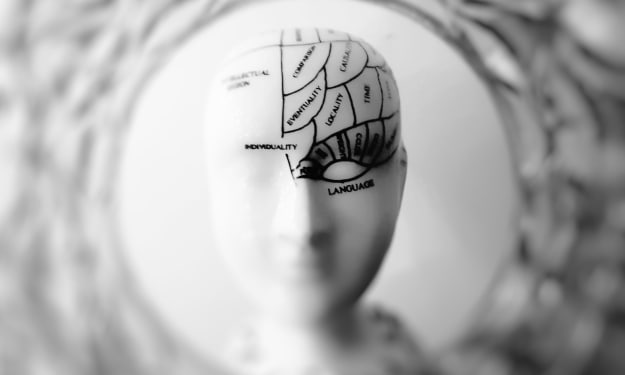
Understanding Neuroplasticity and Learning: Unveiling the potential of a Brain
The acquisition of knowledge is a crucial part of human progress and maturation, but it is frequently accompanied by inquiries into why certain individuals grasp information more effortlessly than others. Dr. Lara Boyd, a distinguished cognitive scientist at the University of British Columbia, delves into these enigmas and imparts her wisdom on the remarkable notion of neuroplasticity – the brain's capacity to modify and adjust as we age. In this piece, we delve into the innovative concepts that Dr. Boyd unveils, illuminating the profound possibilities of our brain's transformative capabilities. Unveiling the Dynamic Nature of the Brain
By Syed Waqar Mohammed Hussaini3 years ago in Potent
Title: Unveiling the Enigma of the SIGMA Male: Redefining Cool in the Modern Era
In a world awash with personality labels and social archetypes, there's a new player in town - the enigmatic SIGMA male. Move over, Alphas and Betas, the SIGMA male is here to rewrite the rulebook of coolness and charisma. Emerging as a buzzworthy topic among the young generation, the SIGMA male is captivating hearts and minds with their intriguing blend of independence, mystery, and quiet confidence.
By Murali Karthick M3 years ago in Potent
The Ugly Truth About Coffees Effects On Your Body
The Ugly Truth About Coffee’s Effects On Your Body coffee is one of the most consumed beverages in the world some people drink it daily some people drink it five times a day today we're going to be talking about all the effects that it has on your body that you would not expect coffee hyped most people associate coffee with the sudden urge to go to the bathroom and that is true for some people the reality is that coffee affects our gi systems differently and for some it can actually cause constipation as opposed to diarrhea and we're quick to blame caffeine for this urge to go but the reality is we have research showing that decaf coffee has similar effects leading us to believe that it's actually the result of the secretion of the hormone named gastric which actually promotes digestion coffee can absolutely wreck your ability to sleep throughout the day your body produces
By brahim jbari3 years ago in Potent
Headache behind the skull and eyes
Headache behind the skull and eyes welcome pain behind the eyes occipital neuralgia pulling behind the skull they all go hand in hand together the nerve that comes underneath the suboccipital area the main nerve is the greater occipital nerve root it goes over the head behind the eyes as a result of forward head posture rounded shoulders keeping our arms in an elevated position out in front of us prolonged periods of time these upper trap muscles behind us continue to squeeze contract pulling underneath the base of the skull where they attach into the external occipital
By brahim jbari3 years ago in Potent
Depression is an insidious disorder that tries to convince you that it is a permanent part of who you are
Depression is an insidious disorder that tries to be a part of your personality Your depression is lying to you. It tells you that you are a depressed human being. That by some ill glance of fate, that you drew the short genetic straw, and now you're stuck with feeling depressed, and crappy, and down for the rest of your life. Or at the very best, coping with depression. Your depression has told you that you are broken, deficient, flawed, but you are not. The essence of a disorder is that it's disordered. So that means that the organ that isn't working is your brain. That means that your thinking doesn't work right. The essence of a depressive disorder
By brahim jbari3 years ago in Potent
Why would you use time travel to kill baby Hitler..?
Note: AI is used for assistance in this article In a charming hotel meeting room adorned with an array of whimsically scattered clocks, the scene was set for a conversation that transcended the bounds of time itself. Standing before the peculiar display was none other than James Gleick, the author of the captivating book, "Time Travel: A History." Among the myriad enigmas of time travel, one question loomed larger than the rest: Would Gleick, a scholar of temporal exploration, journey back in time to eliminate the nascent threat of baby Hitler? The query appeared deceptively straightforward, yet Gleick's response held a tantalizing air of uncertainty, a hint of complexity concealed beneath its surface. Let's rewind and delve into the origins of this conundrum. The tale of baby Hitler, like clockwork, resurfaces periodically, akin to a ubiquitous phenomenon. Whether it be through a New York Times poll or a casual query posed to a former Presidential candidate like Jeb Bush, the moral puzzle reverberates through the annals of history. However, its roots trace back further than the viral sensations of the modern era. It peels back layers of contemplation about time itself, illuminating how we perceive both the past and the present. The notion of time travel, a concept intriguingly novel, emerges from the tapestry of human thought. Its origins are nebulous, lurking at the intersections of stories such as Mark Twain's "A Connecticut Yankee in King Arthur's Court," where a modern man is whisked away to the medieval past after a blow to the head. An enthralling Spanish novel thrusts its protagonists into diverse epochs, from the 1860s to the distant reaches of history. Yet it was H.G. Wells' masterpiece, "The Time Machine," that united the words "time" and "travel" in a transformative synthesis. As history unfurled its majestic tapestry, the confluence of technological advancement set the stage for Wells' creation. In earlier epochs, envisioning the inexorable march of progress proved elusive; a new plow was an accidental innovation, not an emblem of an inevitable trajectory. By Wells' era, however, the cadence of technology reverberated with the swift beat of telegraph wires, transmitting global news with a mere tap or click. His time machine, a marvel reminiscent of the era's most futuristic gadgets, incorporated elements of the contemporary zeitgeist—its quartz rods echoing the bicycle's mechanics that fascinated society. Peering into the core of Wells' narrative reveals a striking revelation: his time machine, a masterpiece of prose, hinged on the marvel of the bicycle. This contraption, emblematic of novelty and adventure, unfurled the limitless possibilities of temporal journeys. Yet, the tale's true essence lay in its ingenious questions—what if one encountered their past self? Could the fabric of time withstand such paradoxes? Wells' fanciful tale was a catalyst for deeper contemplations, transcending the bounds of adventure into the realm of philosophy. Enter Roger Sherman Hoar, a multifaceted individual whose literary prowess extended from state politics to intricate explorations of unemployment insurance. Under the pen name Ralph Milne Farley, Hoar etched his name into history with "I Killed Hitler," the progenitor of the time-travel assassination genre. Nestled within pulp magazines aimed at a teenage audience, Farley's narrative preceded the events of Pearl Harbor. With audacious creativity, he concocted a scenario wherein Hitler's cousin travels to 1899 to thwart the tyrant's rise, birthing an enduring ethical quandary. The dichotomy embedded in time travel encapsulated both scientific and ethical enigmas. Could such an escapade be plausible, or was it a mere flight of fancy? Moreover, the act of altering history, the ripple of consequences, posed a profound moral dilemma. This genre, rife with intrigue, burgeoned, enshrining assassination plots as a narrative staple. From artful science fiction films like "La Jetée" and "12 Monkeys" to the sinewy spectacle of Arnold Schwarzenegger's time-travel exploits, the assassination trope cascaded across mediums, capturing the imagination. Remarkably, the tale of killing Hitler endures not through the death of its titular character, but through the unexpected resurgence of his malevolent spirit. Farley's audacious act of assassination led to an unforeseen outcome—the narrator, victorious in eliminating one menace, inadvertently morphed into another. The echoes of this narrative, juxtaposed against the backdrop of future President Jeb Bush's contemplations, unearth the haunting echoes of unintended consequences. Embedded within the sands of time, Gleick's insightful musings weave a tapestry of momentous decisions. History, an intricate tapestry, unfurls at every juncture, each action a brushstroke shaping the grand mural. From the monumental to the mundane, each action potentially reshapes the course of events, yet the bell that tolls these pivotal moments remains silent. In the midst of the complexity, a poignant lesson emerges—every action is a turning point, a potential catalyst for unforeseen transformation. In the throes of this enigmatic landscape, the allure of erasing a malevolent figure from history tantalizes, yet it also reveals the fragility of certainty. The hypothetical eradication of baby Hitler raises questions that transcend the bounds of a singular act. These inquiries transcend the realm of temporal mechanics, delving into the depths of morality and human agency. Amidst the intricate labyrinth of causality, the thread of contemplation weaves a moral fabric. Ultimately, the essence of time travel pivots not on the act of erasure, but on the poignant realization that altering history does not yield the desired outcome. Gleick's astute observations illuminate the dichotomy between intention and consequence. The narrative of killing Hitler serves as a cautionary tale, an emblem of the intricate web that interconnects past, present, and future. With resolute humility, Gleick's concluding sentiment resonates—an acknowledgment that personal agency, bound by the complex dance of time, holds the power to shape our world. In conclusion, the multifaceted realm of time travel, as explored through the captivating narrative of killing Hitler, transcends mere speculation. It offers a nuanced lens through which to ponder the delicate interplay of technology, morality, and human agency. From H.G. Wells' bicycle-inspired marvel to Farley's audacious assassination plot, the saga unfurls, inviting us to traverse the corridors of time and contemplate the intricate tapestry that is history. Through the thoughtful exploration of James Gleick's insights, we're reminded that every moment is a turning point, a brushstroke upon the canvas of existence, offering the power to reshape the course of events in ways both profound and unforeseen.
By Shubham Bajaj3 years ago in Potent
Marijuana Moment: Navigating the Changing Landscape
Recently, global attitudes on cannabis have undergone dramatic transformation, driven by shifting attitudes, scientific advances, and evolving legal frameworks. At the center of this evolution lies Marijuana Moment, an influential platform which provides news analysis and insight into cannabis legalization issues. In this article we investigate Marijuana Moment, its origins, influence and importance within today's society discussions about marijuana.
By HempWhyNot3 years ago in Potent
SCHOOL IS A SCAM?
Title: The School System: A Critical Examination of Its Efficacy and Impact Introduction: The traditional school system has long been regarded as an essential institution for imparting knowledge, skills, and preparing students for success in their future endeavors. However, an increasing number of voices are questioning whether the current education system truly lives up to its promises or if it might, in some cases, resemble a "scam." In this article, we will delve into some of the concerns surrounding the school system, exploring both its merits and potential pitfalls.
By Kelly Emma3 years ago in Potent