
How should hair replacement salons compare French lace hair system vs Swiss lace hair system on quality
French vs. Swiss Lace Hair Systems: 2026 Quality Guide
How should hair replacement salons compare French lace hair system vs Swiss lace hair system on quality
Both French and Swiss lace make for a comfortable, breathable hair system. But their pros and cons impact client happiness and your salon's daily workflow in completely different ways.
Any hair replacement salon needs a reliable way to judge the feel, durability, and expected wear time for every single client. Bono Hair helps salons turn lace quality into clearer consultations, smarter stock choices, and way fewer unnecessary refits.
Key Takeaways
French lace suits active clients who need a more forgiving base.
Swiss lace suits clients prioritizing a subtle hairline with gentle care.
Supplier samples plus refit records validate durability claims before bulk orders.
Evaluating Salon Stakes: Why the French vs. Swiss Lace Decision Shapes Reputation
A Hair System or Toupee can really boost a salon's reputation when its Base Material actually fits a client's daily routine. Both French and Swiss lace offer a comfortable, breathable fit, but they serve totally different needs.
Making the right call protects your service quality. It cuts down on extra refits and helps people feel confident in their choice. Good consultations start with knowing exactly where each lace type might fall short. Simple as that.
How Misaligned Base Selection Drives Client Complaints and Returns
A base mismatch usually turns into a headache long before a client asks for a replacement. Say a highly active client gets a delicate lace base that needs gentle care. Normal daily wear might lead to tearing or shedding way too early. The client might blame the Hair System's quality, even if the real issue was just a bad recommendation.
The maintenance level has to match the person, not just the look they want. Ask how often they wear the system and how carefully they'll handle it. Can they actually follow your salon's care plan? Jot those answers down in your notes so your whole team gives consistent advice.
Returns and complaints eat up your schedule and mess with stock planning. Bono Hair helps salons use lace quality as part of a repeatable matching process. This way, clients get a base that fits their life, and the salon keeps their trust long after the install.
Managing Expectations: Realism vs. Durability in Professional Consultations
People usually pick Swiss lace when they care most about a Natural Hairline and close-up Undetectability. But French lace is often the smarter choice if a client needs a base that handles regular touching and less strict upkeep. Neither option is right 100% of the time. The best fit just depends on what the client expects every day.
Lay out this trade-off clearly during the very first chat. Explain that a super subtle hairline takes a lot more care, while a tougher lace might not look as perfect up close. Clients need to hear this before the install, not after they spot an issue.
Use that consultation to get on the same page about comfort, breathability, looks, and upkeep. Bono Hair gives salons an easy way to talk about lace quality without making promises you can't keep. It's a simple step that builds client happiness and keeps them coming back.
Comparing Comfort and Breathability: The Core Scalp-Feel Differences
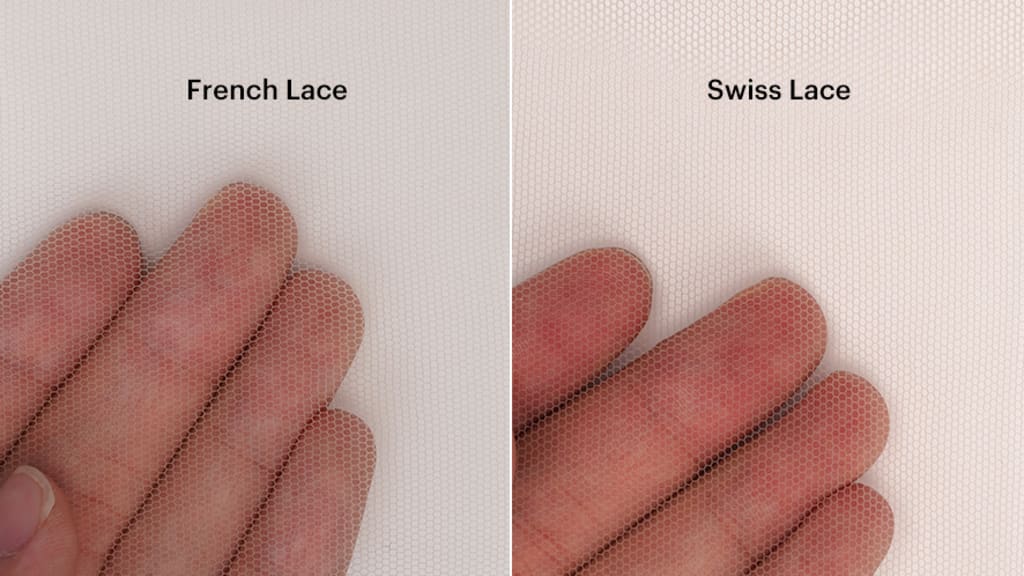
French and Swiss lace can both feel breathable, but the difference really matters when a client sweats heavily or reacts to texture. French lace gives salons a more structured option. Swiss lace prioritizes a finer feel against the scalp.
For Bono Hair consultations, comfort needs to match heat exposure, activity level, and any history of irritation. This cuts down on comfort-related refits and sets clear expectations.
Heat Retention and Airflow Across Mesh Hole Sizes
Both lace types use an open mesh, so neither traps heat like a solid base. In practice, Swiss lace's finer build might feel less present on the scalp. French lace's structured texture can feel a bit more noticeable during long, sweaty wear. Airflow alone isn't a reliable promise for comfort.
You'll need to confirm mesh opening size and denier with your supplier because these details vary by lace grade. A larger opening might move more air, but it can also change how the base feels and how the hair density looks. A finer denier might cut down on bulk without automatically making the system cooler.
For clients in hot climates or who work out a lot, record their sweat level, exercise frequency, and wear time during the consultation. Have them handle both lace samples before you order. Bono Hair can help salons turn those notes into solid base recommendations, rather than treating "breathable" as a one-size-fits-all pitch.
Scalp Sensitivity and Tactile Softness Against the Skin
Swiss lace is usually the gentler choice for clients sensitive to texture. Its softer, finer surface cuts down on the rubbing sensation a client might notice during all-day wear. French lace is sturdier and more structured. But that firmer feel might be less comfortable for a scalp that gets irritated easily.
Softness matters most where the lace stays in close contact with the skin, especially around the hairline and sweaty areas. A client with a sensitive scalp might prefer Swiss lace, even if French lace better suits their daily handling routine. Still, neither base can guarantee irritation won't happen.
Use a dry lace sample during the consultation so your client can feel the material before installation. Note any past discomfort, redness, or sensitivity in your service logs. Bono Hair helps salons use lace quality as a practical comfort standard. This means better client matches and fewer avoidable adjustments.
Structural Durability and Longevity Benchmarks
French lace usually gives salons a more structured base, while Swiss lace is finer and softer. But here's the thing: neither label gives you a verified lifespan, denier, or tensile-strength figure right out of the gate.
When you're buying, don't just look for a universal number of weeks. Look at whether the supplier documents mesh thickness, tensile testing, intended density, and how it actually holds up under your salon's normal refit schedule.
Lifespan Expectations and Tensile Strength Under Daily Wear
No verified industry benchmark proves French lace lasts a specific number of weeks longer than Swiss lace. The material labels don't show a fixed denier or tensile-strength rating, and those details change based on grade and supplier. So, treat any lifespan claim without a clear test method like a sales pitch, not a hard buying spec.
French lace has a more structured build. This is great for clients whose systems see a lot of handling at the hairline. Swiss lace, on the flip side, trades that structural margin for a less noticeable, softer feel. Still, you have to measure tensile strength on the actual mesh. Don't just assume it based on the names "French" or "Swiss." A thicker denier adds material, sure. But it doesn't automatically mean better tear resistance without real test results.
For every salon maintenance cycle, keep track of refit dates, edge damage, mesh stretching, and repair outcomes by lace grade. Bono Hair can help salons compare those documented lace details directly with your service records. That way, your longevity expectations come from hard evidence, not just some generic promise.
Hair Density Capacity and Knot Bleaching Integrity
Hair density has to match mesh strength. More hair and bigger knots put a heavier load on a fine lace base. There's no verified density ceiling for either French or Swiss lace, so don't promise your clients that one type safely holds a specific percentage. Always confirm the approved density range for the exact lace grade and ventilation method you're using.
Swiss lace creates a softer, finer hairline. But its delicate mesh leaves less room for aggressive density or repeated knot bleaching. French lace has a structured build that might offer a bit more tolerance. Even so, it still needs a supplier-approved density instead of a blanket high-density order. Keep in mind that knot bleaching only lightens the visible knots. It doesn't prove the knot or the mesh is actually structurally sound.
Make sure to ask for unbleached and bleached samples at your planned density. Then, closely check for mesh distortion, knot hold, and hairline visibility before you approve any bulk orders. Bono Hair helps salons align lace quality, density requests, and client comfort expectations, cutting down on avoidable remakes and refits.
Side-by-Side Professional Comparison Matrix
French lace usually feels a bit more structured, while Swiss lace is finer and softer. But here's the thing. Neither name actually guarantees a set mesh thickness, strength, density limit, or lifespan.
When buying for your salon, the base material name is just a starting point. You'll want to use supplier samples and your own refit records to see how each lace grade actually holds up during real client appointments.
Performance areaFrench laceSwiss laceSalon checkFeel and comfortFeels more structured against the scalpFiner, softer feelAsk clients about comfort during wearHairline visibilityMight be less subtle than a really fine meshUsually creates a softer-looking hairlineCheck samples under normal salon lightsBreathabilityDepends on the exact mesh and open areaDepends on the exact mesh and open areaVerify airflow claims using samplesHandling marginMight hold up better to frequent handlingDelicate mesh needs a gentler touchTrack stretching and edge damage during refitsDensity and bleachingVerify approved density and bleaching methodsVerify approved density and bleaching methodsTest the planned density before placing bulk orders
Bono Hair can help your salon compare lace samples based on client comfort, daily service routines, and actual refit results.
Client-Matching Framework: Selecting Lace Based on Wearer Lifestyle
A salon needs to match lace to the client's routine long before worrying about a softer look or lower maintenance level. The right recommendation always balances comfort, breathability, hairline appearance, and how often the client handles the system.
Use your consultation notes and refit records to build a matching process you can repeat. Bono Hair can back that up with samples your team can easily check out under normal salon conditions.
The First-Time Wearer vs. The Active Athlete (French Lace Priority)
French lace is usually the safer starting point for newbies or clients who sweat, work out, or wash their hair a lot. Its structured feel gives salon teams a bit more breathing room during fittings, removals, cleanings, and refits.
For a first-timer, this really matters. Early appointments usually bring up lots of questions about adhesive use, scalp comfort, and daily care. A base your team can handle with confidence helps cut down on annoying edge damage while the client gets used to the routine. Just confirm the comfort and breathability with a sample first, since lace grades change from supplier to supplier.
For an active athlete, you have to look at their whole routine. Think about training days per week, sweat levels, shower frequency, and how often they'll take the system off. Don't promise a set lifespan just because it says "French lace" on the label. Track any stretching, fraying, and client feedback during their refits.
Bono Hair helps salons compare French lace samples against the wearer's actual routine. So, your recommendations are based on real service results, not just material labels.
The High-End Perfectionist vs. The Hybrid Base Option (Swiss Lace Priority)
Swiss Lace is great for clients who really care about having a soft, subtle natural hairline and don't mind handling it carefully. Its finer feel can boost comfort for people who usually notice a thicker base. But, salon teams should still check its performance using samples and watching how it holds up over time.
Suggest a pure Swiss Lace base if the client mainly wants a super realistic front hairline and can stick to a gentle care routine. Make sure you explain the trade-off clearly. Delicate lace needs way more careful removal, cleaning, and attachment work compared to a stiffer option.
A hybrid French-center/Swiss-front base works well for clients who want that subtle hairline but don't want fine lace everywhere. The French center gives your techs a much easier area to grab during service, while the Swiss front puts the focus right where it's most visible.
Before making either option your standard go-to, test the hairline under your salon lights and note how comfortable the client feels after normal wear. Bono Hair can help your salon compare those results and match lace quality straight to customer satisfaction.
Salon Operational Care: Maintenance, Cleaning, and Handling Protocols
Taking off adhesive is usually when fine lace tears during a refit. Having a controlled routine protects the base and keeps that soft texture intact. It also helps your technicians figure out exactly when a hair system is safe to use again.
Start off by holding the lace flat with your hand while you loosen the adhesive in small sections. Make sure to use a remover that actually matches the adhesive your salon put on, and let it do its job to release the bond before you try lifting the base. Don't ever pull lace away from sticky gunk. And definitely don't scrape it with your fingernails, the teeth of a comb, or any sharp tools.
Wipe the residue off the lace using light, outward strokes instead of rubbing the same spot over and over. Swiss lace requires a really gentle touch since its delicate build can easily stretch or split, especially right at the front hairline. French lace gives your techs a bit more breathing room, but it still needs gentle cleaning and careful drying.
Write down any tears, stretched edges, or stubborn buildup every single time you do a refit. This turns the maintenance level into a core part of the client's service plan, rather than just an afterthought. Bono Hair can help salons check lace samples and create handling standards that keep clients happy and improve coordination with your supplier.
Leveraging Bono Hair Lace Quality for Salon Business Growth
Sticking to a consistent lace selection gives a Hair Replacement Salon an easier way to match clients to a system for comfortable, breathable daily wear. French lace and Swiss lace really belong in separate service categories. Why? Because their handling needs and client expectations just aren't the same.
Bono Hair can help with sample reviews and handling standards, letting technicians clearly explain these differences before fitting a piece. This makes consultations much more reliable. Plus, it cuts down on nasty surprises during refit appointments, which naturally keeps clients coming back.
Growing your inventory is a lot safer when the salon tracks each client's lace preference, cleaning results, and replacement schedule. You can use those records to predict repeat orders by lace category, rather than stocking a random, untested mix. Keeping a focused selection ensures your familiar French lace and Swiss lace options are always ready to go. It's a smart way to stop tying up your cash in slow-moving stock.
Frequently Asked Questions About Hair System Lace Types
Which is better, Swiss lace or transparent lace?
Neither, universally. Swiss lace is softer and finer; "transparent lace" describes color, not durability. Check the actual mesh grade.
How good is Swiss lace?
Very good for an undetectable, natural hairline. It feels soft and breathable, but needs gentler handling than French lace.
What is a French Lace hair system?
A hair system built on French lace: an open, breathable mesh base that is more structured and forgiving for regular daily wear.
How long does a Swiss lace hair system last?
No fixed lifespan exists. Lace grade, supplier, handling, cleaning, and client routine decide it; labels alone prove nothing.
Is Swiss lace durable enough for daily wear?
Yes, with gentle care. For heavy workouts, frequent touching, or rough handling, French lace is usually the safer salon recommendation.
About the Creator
Leo
Passionate men's hairstylist with a keen eye for detail and a knack for creating on-trend looks. Dedicated to delivering hair restoration education that enhances individual style.
Enjoyed the story? Support the Creator.
Subscribe for free to receive all their stories in your feed.
Comments
There are no comments for this story
Be the first to respond and start the conversation.